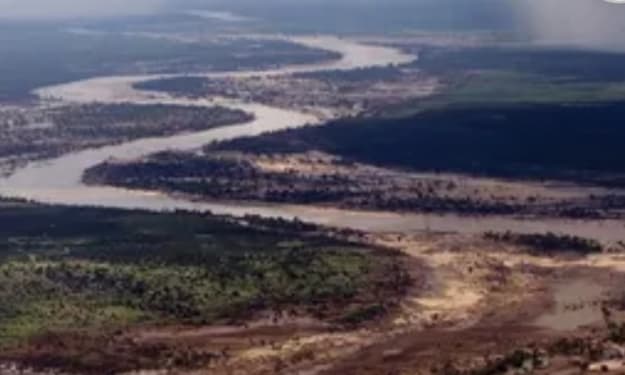
The Limpopo River.
Limpopo River, river in southern Africa that rises as the Krokodil (Crocodile) River in the Witwatersrand, South Africa, near Johannesburg, and flows on a semicircular course first northeast and then east for about 1,100 miles (1,800 km) to the Indian Ocean. From its source the river flows northward to the Magaliesberg, cutting the Hartbeespoort Gap, which is the site of an irrigation dam. It then flows across the fertile Bushveld basin to open granite country, where it is joined on the left bank by the Marico River. From there it is known as the Limpopo River. (The name may be Sotho for “river of the waterfall.”) Turning northeastward, the river forms the border for about 250 miles (400 km) between Limpopo province, South Africa, and Botswana, receiving seasonal tributaries. After swinging eastward between Limpopo province and Zimbabwe, the Limpopo River receives the Shashi River and flows about 150 miles (240 km) to Mozambique, where it reaches the fall line. In this zone the river drops about 800 feet (250 metres), with most of the drop concentrated in 27 miles (43 km) of rapids, especially those at Malala, Molukwe, and Quiqueque. The Limpopo River is unnavigable until its confluence with the Olifants River, 130 miles (209 km) from the coast. Though partially blocked by a sandbar at its outlet, the river can be entered by coastal steamers at high tide. The Limpopo River is dammed about 62 miles (100 km) from its mouth—near Guijá, where an agricultural settlement has been developed.