
Gateway to the gold fields
Marysville -gold rush era and beyond.


The area to become Marysville started as a land grant to Theodore Cordua from the Mexican government and began as a trading post in the remote and wild west. He called the area New Mecklenburg. Since he himself was a transplant from Mecklenburg Germany. But the greater area was known as the Cordura Ranch, situated in the Central Valley, at the junction of the Feather and Yuba rivers, 50 miles (80 km) north of Sacramento. It was established as a trading post in 1842 by Theodore Cordua on land leased from Captain John Sutter.In 1848 Charles Covillaud, a former employee of Cordua, discovered lots of gold in the gold fields and bought half of the Cordua ranch, including the land on which the town would be located. The town was laid out (1849–50) by Auguste Le Plongeon.
Charles Covillaud married Mary Murphy, a survivor of the ill fated Donnor party when they were trapped in snow high in the Sierra Nevada mountains near Truckee during winter while on their trek to California.Half the people in the party died of starvation and the rest survived by eating the frozen flesh of those that died. The new town of Marysville was named after her on January 18th, 1850.
During the Gold Rush, the ranch became a stopping point for the riverboats from Sacramento and San Francisco that brought prospectors to the digging grounds.
Marysville grew as a miner’s supply depot and collection point.
By 1853, Marysville’s tent city had been replaced by brick buildings, mills, iron works, machine shops and factories. Schools, churches and two daily newspapers had brought ‘civilization’ to Marysville. The population was nearing 10,000. Marysville prospered during the Gold Rush era, becoming one of the largest cities in California. In 1857 alone, over $10 million in gold was shipped from Marysville’s banks to the U.S. Mint in San Francisco. Before the end of the 1800’s, Marysville had become one of the largest and most cosmopolitan cites in the state of California.
The first mayor was chosen in 1851. The populace was nearly 10,000 by 1857. Marysville had established mills, iron workshops, sweatshops, machine plants, faculties, cathedrals, and two daily papers.
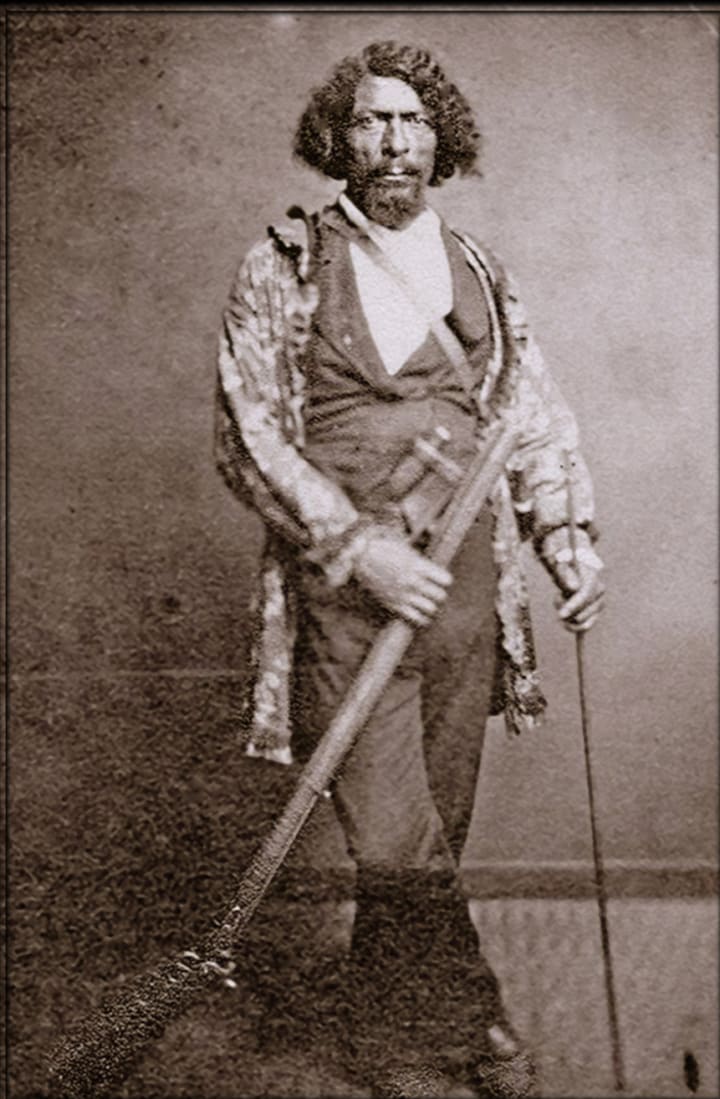
Marysville had become one of The Major Cities in California, owing to its strategic position. The city’s forefathers anticipated Marysville becoming “The New York of the Pacific.”
once the miners and other travelers arrived at the Marysville docks on the Yuba River, they transferred to ox driven wagons or horses, or walked up the trail following the Yuba River all the way to Nevada City and the gold fields. On the way they stopped at Browns Valley (where I live now) which at that time was a bustling town of 1,500 people with several hotels, bars and businesses in it, and 15 gold mines. The small creek I have to cross to get to my property is called Dry Creek, not because it has no water but because it had no gold found in it by the early placer miners who stopped there on their way to the digging fields of Nevada City.Today there is no town, just a ranching community of 1,000 residents and a post office and a bar. Continuing on, the travelers would get to placer mine on the banks of the Yuba River until they arrived at Grass Valley, where there was the Empire mine, and Nevada City. Just before arriving at those towns they would have to ford the river, which was fast flowing and rough at this point. The covered bridge that was built is the oldest covered bridge in California, called Bridgeport. Gold flakes can still be panned at this section of the river.
The Yuba River still bears the ravages of hydrolic mining, 180 years later, silt from the runoff has clogged the river and it cannot be navigated by steam paddle boats like it used to. Highway 20 is the modern road that follows the miners trail. There is still a settlement of Maidu Native Americans at Sycamore grove on the banks of the Yuba River, in Browns Valley, most of that tribe was resettled away from the area to make room for the early miners and ranchers.
‘From Marysville to Nevada City, the gold rush era is still alive, gold can still be found in the rivers and creeks in the area. Even gold coins dropped by prospectors on the old dock yards of Marysville have been found using metal detectors.
About the Creator
Guy lynn
born and raised in Southern Rhodesia, a British colony in Southern CentralAfrica.I lived in South Africa during the 1970’s, on the south coast,Natal .Emigrated to the U.S.A. In 1980, specifically The San Francisco Bay Area, California.
The Wicked Wife or the Secret Spy?
In the shadows of war, truth is often the first casualty. Few stories prove this more powerfully than that of Mata Hari — a woman who was branded a traitor, condemned as a seductress, and executed as a spy. To some, she was a wicked wife who betrayed loyalties for wealth and desire. To others, she was a secret agent who played a dangerous game among powerful men. Yet, more than a century later, historians still debate whether she was truly guilty — or simply a convenient scapegoat.
By Irshad Abbasi a day ago in History
Review of 'Man on the Run'
My wife and I saw Man on the Run, a nearly 2-hour documentary on Amazon Prime, about Wings, Paul McCartney's group that flew around the world from shortly after The Beatles broke up in early 1970 to shortly after John Lennon was murdered at the end of 1980, making a Beatles reunion forever impossible.
By Paul Levinson4 days ago in Beat


Comments
There are no comments for this story
Be the first to respond and start the conversation.