Futoshi Tachino
Bio
Futoshi Tachino is an environmental writer who believes in the power of small, positive actions to protect the planet. He writes about the beauty of nature and offers practical tips for everyday sustainability.
Stories (44)
Filter by community
The Methane Accountability Shift
Methane rarely gets top billing, yet the toolkit to curb it has matured rapidly—and mostly out of the spotlight. A decade ago, most oil-and-gas methane was estimated, not measured. Today, facility-scale detections are published to open portals, regulators are writing leak detection and repair (LDAR) into law, and importers face disclosure—and soon performance—requirements. The result is a practical pathway to large, near-term climate cuts by turning leaks into reportable, repairable line items [1–4,12].
By Futoshi Tachino13 days ago in Earth
The Invisible Grid Build-out
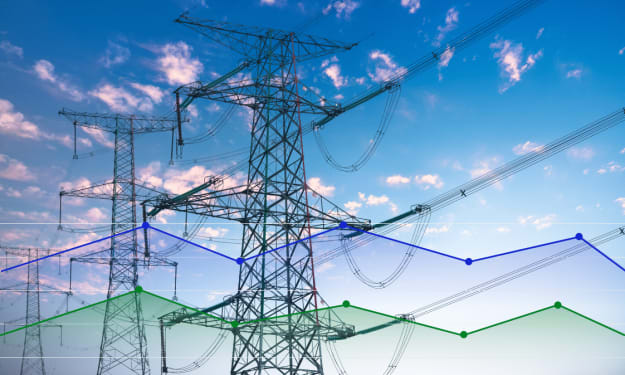
by Futoshi Tachino Why this is under-the-radar progress Everyone talks about how slow it is to build new transmission lines. Less noticed is how much capacity is being freed — right now — on the wires we already have. Three families of “grid-enhancing technologies” (GETs) are scaling fast: (1) advanced reconductoring with modern high-performance conductors that can double capacity within existing rights-of-way; (2) dynamic and ambient-adjusted line ratings (DLR/AAR) that raise safe operating limits based on real weather, not worst-case assumptions; and (3) power-flow control, topology optimization, and other software tools that route power away from bottlenecks to under-used lines. Together, these are connecting more renewables, cutting curtailment and congestion, and buying precious time while big new lines are planned and built [1–3,13–14].
By Futoshi Tachinoabout a month ago in Earth
Cement's Quiet Pivot
Why this is under-the-radar progress Cement and concrete account for a sizable slice of global CO₂, but the fastest cuts right now aren’t headline-grabbing moonshots — they’re practical shifts already filtering through specifications, standards, and procurement. Three forces are converging: (1) modern cement standards that enable big clinker reductions with reliable performance; (2) rapid market adoption of Portland-limestone cement (PLC) and new ternary blends such as limestone–calcined clay cements (LC3); and (3) public buyers setting embodied-carbon requirements that move the market. Together, these are driving real-world emission declines from the most-used construction material on earth — often without changing how structures are designed or built [8].
By Futoshi Tachino2 months ago in Earth
Regenerative Agriculture's Quiet Revolution
by Futoshi Tachino Regenerative agriculture — a holistic approach to farming that restores soil health, biodiversity, and resilience — has rapidly gained traction in recent years. This shift remains largely underappreciated by the public; in a 2024 survey, around 43% of U.S. consumers had never heard of regenerative agriculture (and another 28% had only minimal awareness) [4]. Despite this low profile, tangible developments in regenerative farming are delivering robust results. Farmers are proving that it’s possible to maintain high yields with fewer chemical inputs, improve profitability, and enhance ecological outcomes — all at once. This article explores the evidence-backed progress of regenerative agriculture across regions, the policies and technologies driving its adoption, and why this overlooked sustainability success story deserves greater recognition.
By Futoshi Tachino2 months ago in Earth
The Refrigerant Transition
Cooling seldom features in climate headlines, yet it is one of the quietest success stories of the last decade. Under the Kigali Amendment to the Montreal Protocol, countries are phasing down hydrofluorocarbons (HFCs)—super-pollutant refrigerants—while retailers and manufacturers rapidly switch to ultra-low-GWP “natural” refrigerants such as carbon dioxide (R744) and propane (R290). Fully implemented, Kigali alone can avert roughly 0.4–0.5°C of warming by 2100; paired with efficiency improvements, the avoided warming can be closer to ~1°C—an enormous contribution from a single policy family [1–2].
By Futoshi Tachino2 months ago in Earth
The Grid's New Backbone
by Futoshi Tachino Among the most consequential, least appreciated climate gains is the rapid build-out of grid-scale energy storage. Batteries (and modern pumped storage) are now being deployed at record pace on four continents, shifting midday solar into the evening, cushioning wind variability, and trimming fossil peaker use. This is not a niche story: global additions are on track for another record in 2025, with most capacity arriving in utility-scale projects [1].
By Futoshi Tachino3 months ago in Earth
The Quiet Transport Revolution
by Futoshi Tachino When most people picture the electric transition, they see cars. Yet the biggest and least acknowledged gains are happening on two and three wheels. In dozens of countries, small electric motorcycles, scooters, and rickshaws are cutting oil demand, shrinking urban air pollution, and saving drivers money — often much faster than electric cars can. In 2024, two- and three-wheelers (2/3-Ws) were the most electrified road segment on earth: over 9% of the global fleet was already electric, and roughly 15% of new 2/3-W sales were electric — about 10 million vehicles that year [1, 2].
By Futoshi Tachino3 months ago in Earth
The Under-The-Radar Shipping Pivot
by Futoshi Tachino Maritime transport seldom makes sustainability headlines, yet the sector has moved from pilot projects to concrete deployment. Three forces are converging: binding rules that now bite on real voyages, an orderbook filled with ships capable of running on cleaner fuels, and a rapid return of wind—this time via rotor sails and wings. The result is a structural shift in how ships will be powered and paid for over the coming decade [1–3, 13].
By Futoshi Tachino3 months ago in Earth
Energy Revolution
by Futoshi Tachino The global energy system is tilting decisively toward renewables—and the fulcrum is not any single country. From Latin America’s near-zero-carbon grids to Europe’s wind-and-solar surge, from North Africa’s desert mega-projects to Australia’s rooftop revolution and India’s rapid scaling, the transition is now propelled by cost, security, and industrial strategy. Policy oscillations in the United States may affect its own mix, but they no longer set the pace for the world [2–4,5–7,9–14,18–20].
By Futoshi Tachino4 months ago in Earth
Steam, Not Smoke
by Futoshi Tachino In Kenya’s Rift Valley, the ground exhales. Around Naivasha, at a place called Olkaria, wells tap rock-hot water and steam that have already helped Kenya become Africa’s geothermal leader — and one of the few countries where clean, firm power anchors the grid. Recent analyses put geothermal’s share of Kenya’s electricity around the mid-40s, with some reports citing roughly 47 percent in 2024. That matters in a drought-prone region where hydropower is variable and diesel is expensive.
By Futoshi Tachino4 months ago in Earth
Tuvalu's Three-Layer Plan for Continuity
by Futoshi Tachino At high tide on Fogafale—the long, thin islet that holds Tuvalu’s capital—you can stand on the lagoon shore and see the ocean through the breadfruit trees behind you. There isn’t much “away” in a place only a couple of meters above sea level. So Tuvalu has done something extraordinary: it is building a future on three layers at once—physical, legal-human, and digital—so that Tuvaluans can keep being Tuvaluans, no matter what the water decides.
By Futoshi Tachino4 months ago in Earth
Burps, Bottles, and a Bay in Tasmania
by Futoshi Tachino On Tasmania’s east coast, the tides in Spring Bay don’t just bring boats to harbor; they feed a farm. Here, Sea Forest cultivates a native red seaweed, Asparagopsis, that—when fed in tiny amounts to cows—can throttle the methane produced in their stomachs. It’s a climate fix born of the shoreline and aimed squarely at one of Oceania’s knottiest problems: livestock emissions. In both Australia and New Zealand, agriculture is a top emitter, and enteric methane from ruminants is the elephant (really, the cow) in the room. What’s different in Tasmania is that the solution now has a retail label, not just a lab result.
By Futoshi Tachino4 months ago in Earth