
Burps, Bottles, and a Bay in Tasmania
How Seaweed Is Rewiring Dairy Methane in Oceania


by Futoshi Tachino
On Tasmania’s east coast, the tides in Spring Bay don’t just bring boats to harbor; they feed a farm. Here, Sea Forest cultivates a native red seaweed, Asparagopsis, that—when fed in tiny amounts to cows—can throttle the methane produced in their stomachs. It’s a climate fix born of the shoreline and aimed squarely at one of Oceania’s knottiest problems: livestock emissions. In both Australia and New Zealand, agriculture is a top emitter, and enteric methane from ruminants is the elephant (really, the cow) in the room. What’s different in Tasmania is that the solution now has a retail label, not just a lab result.
The science came first. Over the past five years, controlled trials have shown that Asparagopsis can cut cattle methane dramatically—often by half or more—without hurting meat quality or animal growth. A 2021 study led by UC Davis reported up to an 82% reduction in beef-cattle methane with minuscule inclusion rates, while an earlier Australian trial by Kinley and colleagues demonstrated near-elimination of methane in high-grain beef diets at feedlot scale. Results in dairy have been more variable but still substantial in many settings, with several studies showing 50–65% reductions under controlled conditions.
Tasmania is where those findings crossed the farm gate. In mid-2024, Ashgrove Dairy began feeding a stabilized Asparagopsis oil to part of its herd and launched “Eco-Milk” in supermarkets across the state—an everyday product marketed on the strength of lower enteric methane. Reported on-farm cuts hovered around 25% in the early phase, a pragmatic figure reflecting pasture systems and careful dosing rather than idealized lab diets. But the bigger milestone is social: shoppers could, for the first time, pick up milk shaped by a methane-cutting seaweed grown a few hours away along Tasmania’s coast.
What makes the Tasmanian approach distinct isn’t just geography; it’s formulation and delivery. Sea Forest now produces multiple formats—oils blended into feed, pellets, and solid “lick blocks” that animals self-dose from in the paddock—designed for Oceania’s pasture-based herds that don’t eat a total mixed ration twice a day. That matters, because many methane inhibitors (like the well-studied 3-NOP) work beautifully in barns but are harder to deliver to animals grazing on ryegrass kilometers from the dairy shed. A seaweed-based additive that can live in a block or a drench broadens the use-case.
The regulatory scaffolding is also maturing. In March 2025, Standards Australia published AS5404:2025, a national product standard for Asparagopsis feed materials that sets testing, contaminant limits, shelf-life, labeling, and traceability—essential for farmer confidence and export markets. And because Asparagopsis is treated as a feed ingredient rather than a veterinary drug in Australia, producers can supply it within existing feed rules so long as safety and labeling criteria are met. Together, these moves turn “interesting seaweed” into a defined commodity with obligations and assurances.
Does it actually work on real farms? The short answer is yes, with caveats that researchers are frank about. Efficacy depends on diet composition (beef feedlot vs. high-forage dairy), inclusion rate, and delivery method. Trials show stronger, more consistent methane cuts in beef systems and high-concentrate diets than in pasture-heavy dairies; nevertheless, multiple Australian field studies now report meaningful reductions in grazing herds using liquid and pelleted Asparagopsis, with no negative impacts on milk safety.
Safety is the other pillar, and it’s getting the scrutiny it deserves. The active compound in Asparagopsis is bromoform, which disrupts the final step of microbial methanogenesis in the rumen. Peer-reviewed work to date indicates that, at practical feeding rates, residues in milk and meat remain at or below detection limits and within safety thresholds; sensory panels have also found no organoleptic differences in milk from Asparagopsis-fed cows. Ongoing studies continue to monitor iodine and bromine metabolism, and regulators are insisting on transparent residue testing as the industry scales. That vigilance is appropriate—and part of what will make consumers comfortable choosing low-methane milk and beef.
Scaling up is the hard part. Seaweed aquaculture has to deliver consistent biomass, bromoform content, and price—through storms, heatwaves, and biofouling. Sea Forest and peers are building out ocean leases and land-based tanks, while governments are testing incentives. In late 2024, Tasmania earmarked funding to put Asparagopsis into tens of thousands of cattle across dairy and beef farms, helping bridge early-adoption costs and generate the data investors and grocers want to see. If that sounds like industrial policy, it is—tied to a resource that Oceania can grow at scale along its vast coastlines.
The market signal needs to keep pace. Ashgrove’s Eco-Milk has been priced modestly above generic milk and is testing whether consumers will pay a little more for a product with a measurable, local climate benefit. Early coverage suggests cautious optimism: if shoppers accept a small premium—and if supply chains (think: large retailers, airlines, quick-serve restaurants) start to preference low-methane dairy and beef—Asparagopsis could move from niche to normal. The precedent from cage-free eggs and deforestation-free soy is clear: procurement policies can change entire categories.
For Oceania, the upside is strategic. A shore-to-shelf climate solution built in the region, suited to pasture systems, and already sitting in supermarket fridges is rare. It complements—rather than competes with—electrification and reforestation; it tackles a methane stream with fast climate payback; and it can travel across the Tasman, where New Zealand is searching for tools that fit grazing dairy at national scale. The risks—supply chain hiccups, variable efficacy, and the need for ironclad safety data—are real, but they are exactly the kind of challenges standards, transparency, and patient capital are designed to solve.
The image that sticks with me is simple: a bottle of milk that owes its climate claim to a living edge of the sea. It’s a reminder that some of our best decarbonization tools aren’t abstract technologies or far-off megaprojects. They’re biochemistry and husbandry, tuned to a place, priced for a family grocery shop, and carried home in a backpack.
Sources
Angellotti, M., et al. (2025). “Asparagopsis taxiformis supplementation to mitigate enteric methane emission in dairy cows: Metabolism of bromine and milk safety.” Journal of Dairy Science (in press). https://www.sciencedirect.com/science/article/pii/S0022030224014309
Eason, C. T., et al. (2025). “Methane reduction, health and regulatory considerations for Asparagopsis in ruminant diets.” New Zealand Journal of Agricultural Research, 68(1), 1–19. https://www.tandfonline.com/doi/full/10.1080/00288233.2023.2248948
Food Standards Australia New Zealand (FSANZ). (2024). Annual Report 2023–24 (regulatory overview; recalls and standards context). https://www.foodstandards.gov.au/sites/default/files/2024-10/FSANZ%20-%20Annual%20Report%202023%E2%80%9324.pdf
FutureFeed / CSIRO. (n.d.). “FutureFeed: Red seaweed for lower methane livestock.” https://www.csiro.au/en/research/animals/livestock/futurefeed
Japan Times. (2025, May 15). “Australian seaweed farm tackles livestock burps to combat climate change.” https://www.japantimes.co.jp/environment/2025/05/15/climate-change/australian-seaweed-farm-climate/
Kinley, R. D., et al. (2020). “Mitigating the carbon footprint and improving productivity of ruminant livestock agriculture using a red seaweed.” Journal of Cleaner Production, 259, 120836. https://www.sciencedirect.com/science/article/pii/S0959652620308830
Muizelaar, W., et al. (2021). “Safety and transfer study: Transfer of bromoform present in Asparagopsis taxiformis to milk and urine of lactating dairy cows.” Foods, 10(3), 584. https://pubmed.ncbi.nlm.nih.gov/33802209/
Reuters. (2024, July 22). “Tasmanian ‘Eco-Milk’ tests shoppers’ thirst for climate-friendly dairy.” https://www.reuters.com/business/environment/tasmanian-eco-milk-tests-shoppers-thirst-climate-friendly-dairy-2024-07-22/
Roque, B. M., et al. (2021). “Asparagopsis taxiformis reduces enteric methane production from beef steers up to 82% in vivo.” PLOS ONE, 16(3), e0247820. https://journals.plos.org/plosone/article?id=10.1371/journal.pone.0247820
Sea Forest. (n.d.). “News and media (product formats; scale-up).” https://www.seaforest.com.au/news
Standards Australia / FutureFeed. (2025, March 13). “AS5404:2025—Product quality standard for Asparagopsis feed materials.” https://www.future-feed.com/updates/standardsaustralia
The Global Methane Hub. (2024, September). State of the Science: Asparagopsis (synthesis of efficacy and safety findings). https://www.globalmethanehub.org/wp-content/uploads/2024/09/State-of-Science-Asparagopsis.pdf
The Australian Pesticides and Veterinary Medicines Authority (APVMA). (2024, October 11). “Animal feed products (regulatory guidance for feed ingredients).” https://www.apvma.gov.au/registrations-and-permits/chemical-product-registration/animal-feed-products
Small Farms Magazine. (2024, July 1). “World-first low-emission milk.” https://www.smallfarms.net/world-first-low-emission-milk/
About the Creator
Futoshi Tachino
Futoshi Tachino is an environmental writer who believes in the power of small, positive actions to protect the planet. He writes about the beauty of nature and offers practical tips for everyday sustainability.
Keep reading
More stories from Futoshi Tachino and writers in Earth and other communities.
Rotterdam's Delta-Linked Climate Strategy
by Futoshi Tachino In Europe’s busiest river mouth, Rotterdam has learned to treat water as both antagonist and ally. The city’s climate playbook reads like delta pragmatism: keep the surge out, make room for the rain, reuse the heat, stash the carbon, and choreograph daily life so the low-carbon choice is the easy one. It’s a system, not a showpiece—barriers and basins, blue-green roofs and hot-water pipes, all pulling together.
By Futoshi Tachino6 months ago in Earth
UK must double down on renewables as wars drive up energy costs, experts say
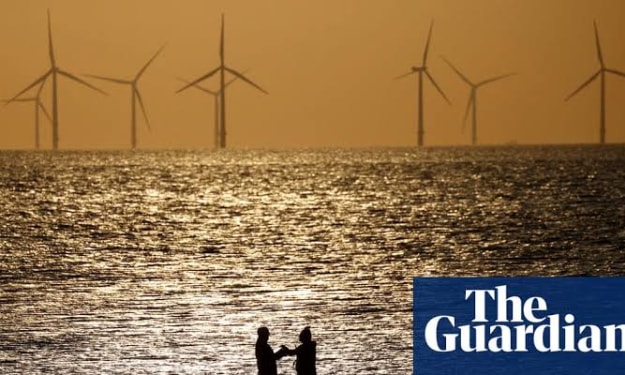
Britain must accelerate its transition toward renewable energy sources as geopolitical conflicts continue to drive global energy prices higher, according to leading energy analysts and climate policy experts. The warning comes as wars and political tensions across key energy-producing regions expose the vulnerability of countries still heavily reliant on imported fossil fuels. In recent years, the United Kingdom has made significant progress expanding renewable energy capacity, particularly in offshore wind and solar power. However, experts argue that the pace of the transition remains insufficient to shield the country from the volatility of international energy markets. Conflicts in the Middle East and Eastern Europe have demonstrated how quickly supply disruptions can translate into rising costs for households and businesses. Energy economists say the lesson from recent global crises is clear: the more dependent a country is on imported oil and gas, the more exposed it becomes to geopolitical shocks. Britain imports a substantial portion of its natural gas and refined fuel products, meaning instability in global supply chains can quickly affect domestic energy bills. During periods of international conflict, oil prices often spike due to fears that shipping routes or production facilities could be disrupted. Even rumors of attacks near key energy chokepoints — such as major pipelines or shipping lanes — can cause markets to react sharply. These fluctuations, analysts say, ultimately filter down to consumers through higher electricity and heating costs. Renewable energy sources offer a potential solution to this problem because they rely on domestic resources such as wind and sunlight rather than imported fuels. Once renewable infrastructure is built, operating costs remain relatively stable because there is no need to purchase fuel on global markets. The United Kingdom already operates some of the world’s largest offshore wind farms, and renewable energy now accounts for a significant share of the country’s electricity generation. Government data indicates that wind power alone has become one of the largest sources of electricity in Britain, particularly during periods of strong weather conditions. Despite this progress, energy specialists argue that further investment is essential. Expanding renewable generation capacity requires not only building more wind and solar farms but also upgrading the national electricity grid. A modernized grid would allow energy produced in remote offshore locations to be transmitted efficiently to cities and industrial centers. Energy storage is another critical piece of the puzzle. Because renewable sources like wind and solar are intermittent, large-scale battery systems or alternative storage technologies are needed to ensure a stable supply of electricity during periods when generation drops. Developing these systems will require both technological innovation and sustained financial investment. Some experts also emphasize the importance of diversifying the country’s renewable portfolio. While offshore wind remains a cornerstone of Britain’s energy strategy, solar power, tidal energy, and green hydrogen could also play important roles in the future energy mix. The government has already announced plans to increase renewable capacity dramatically over the next decade. Officials argue that reducing reliance on fossil fuels will not only strengthen national energy security but also help the country meet its climate targets. However, critics say policy uncertainty and slow planning approvals have sometimes delayed renewable projects. Industry leaders have urged authorities to streamline regulatory processes and provide clearer long-term incentives for investors. For many analysts, the link between energy security and climate policy has never been more obvious. Wars and geopolitical tensions have shown that fossil fuel dependence can create economic vulnerability, while domestically produced renewable energy offers greater stability. “The global energy system is changing,” said one energy policy researcher. “Countries that invest early in renewable infrastructure will be better protected from geopolitical shocks and price spikes.” As international conflicts continue to reshape global energy markets, the debate over Britain’s energy future is likely to intensify. For supporters of renewable power, the current moment represents both a warning and an opportunity — a chance to accelerate the transition toward a more secure and sustainable energy system.
By Fiaz Ahmed 6 days ago in Earth



Comments
There are no comments for this story
Be the first to respond and start the conversation.