
Steam, Not Smoke
Kenya's Geothermal Parks Turn Volcanic Heat Into Low-Carbon Industry


by Futoshi Tachino
In Kenya’s Rift Valley, the ground exhales. Around Naivasha, at a place called Olkaria, wells tap rock-hot water and steam that have already helped Kenya become Africa’s geothermal leader — and one of the few countries where clean, firm power anchors the grid. Recent analyses put geothermal’s share of Kenya’s electricity around the mid-40s, with some reports citing roughly 47 percent in 2024. That matters in a drought-prone region where hydropower is variable and diesel is expensive.
But the innovation I want to spotlight isn’t just turning steam into electrons. It’s using geothermal heat directly — no turbine in between — to decarbonize the kinds of processes that normally burn heavy fuel oil, diesel, LPG, or coal. Think greenhouses warmed against night chills, milk pasteurized with hot water pulled from below, fish ponds kept at optimal growth temperature, grain dried without smoke, and even a public spa that doubles as a demonstration center for communities and investors. Kenya has moved this “direct use” from pilot to practice, and it’s quietly rewriting what industrial energy can look like in East Africa.
Start with flowers. For years, Oserian Development Company near Olkaria has piped geothermal brine through heat exchangers to warm its greenhouses. By nudging nighttime humidity and dew-point temperatures, growers cut back on fungicides and hold quality steady — an agronomic win that’s also a climate win when you tally avoided chemical use and fossil heating. Early technical papers and training notes also describe a clever add-on: routing CO₂ from wells to the greenhouses to enhance photosynthesis, reducing the need to truck in bottled gas. The model is now evolving beyond a single farm into a utility approach that supplies neighboring growers with heat alongside power and water.
Move north to Menengai, where the state-owned Geothermal Development Company (GDC) has turned a cluster of lower-pressure wells into a direct-use campus. There, hot water pasteurizes milk in 150-liter batches; tilapia ponds are kept around 29 °C to speed maturity; greenhouses and a containerized laundry run on geothermal heat; and grain dryers slash energy costs compared to diesel burners. These are not glossy renderings — they are operating demos built to prove economics and de-risk private investment. GDC’s next step is a geothermal-powered industrial park that leases process heat and steam to tenants who need thermal energy more than electricity.
Why is this a meaningful climate solution? First, process heat is hard to decarbonize. Across the world, cement, food processing, textiles, and chemicals rely on steady heat in the 60–200 °C range — a niche where solar PV alone can’t substitute. Kenya’s resource delivers hot water in precisely that band, hours a day, months a year, regardless of cloud cover. Second, it’s efficient. Every conversion step wastes energy; if you can pump heat straight into a pasteurizer or dryer and then cascade the cooled fluid to a greenhouse or spa before reinjecting it, you squeeze far more value from each kilogram of fluid than if you only generate power. Engineers call this the Lindal “cascade” concept, and Kenyan teams have been localizing it for agriculture and small industry.
Third, it stabilizes livelihoods. In Naivasha’s flower belt, heating greenhouses with geothermal brine protects yields from cold snaps and humidity spikes. In Menengai, keeping fish ponds warm reduces time-to-market and improves quality; pasteurizing milk without diesel smoke can extend shelf life and boost margins for dairies. The public-facing Olkaria Geothermal Spa, meanwhile, draws domestic tourism and school visits while showcasing low-carbon heat in everyday life.
None of this is effortless. Direct-use requires fit-for-purpose infrastructure — insulated pipes, heat exchangers, corrosion control, and a strong reinjection regime to keep reservoirs healthy. It also needs governance that shares benefits locally and manages risks like hydrogen sulfide emissions, land access, and induced seismicity. Kenyan scholarship has been clear about the social footprint of geothermal — jobs and roads are welcomed, but communities expect consultation and tangible benefits. The upside is that, once built, direct-use systems often have lower running costs and more predictable pricing than diesel or LPG, which is why Kenya’s developers are courting food processors, cold-chain operators, and laundries as anchor tenants.
The fourth reason this matters is strategic: industrial parks powered by heat. KenGen, the national generator, has published plans for an Olkaria Energy Park that supplies steam and hot water to steam-intensive industries right next to the wells — shrinking transmission losses, cutting capex for tenants, and turning geology into a competitive advantage. Analysts now talk seriously about siting data centers, cement component drying, beverage bottling, and other heat-hungry activities where clean, firm energy is a location asset. It’s an “Iceland play” adapted to the tropics, and Kenya has the wells, roads, and transmission to make it real.
Is the grid context compatible with this push? Yes — and it helps. When peak demand surged in July 2025, geothermal again carried a large share of the system, cushioning hydropower swings and keeping tariffs steadier than they would be under oil-fired peakers. That reliability is precisely what industrial tenants value when they sign long-term heat contracts.
What should come next? First, scale what already works: standard-design pasteurizers, dryers, greenhouses, and laundries that plug into heat loops at Menengai and Olkaria. Second, write bankable contracts for heat supply that match investor expectations (capacity payments for heat, uptime guarantees, indexed tariffs). Third, embed training — Kenyan technicians already operate turbines; with targeted programs they can master corrosion chemistry, heat-exchanger fouling, and reinjection management. Finally, measure and publish: lifecycle emissions, fuel savings, and job impacts. Transparent numbers build the coalition this approach needs to spread to Baringo-Silali and beyond.
The bigger story is philosophical. Climate solutions often ask us to imagine what we lack: more dams, more lithium, more transmission. Kenya’s direct-use geothermal story starts with what’s underfoot. It takes a resource that is local, weather-proof, and continuous and points it at daily needs — milk, fish, flowers, clean bathing water, dependable factory heat. The result is decarbonization you can touch, not just read on a grid-mix chart. And for a continent balancing industrial ambition with climate risk, that’s a template worth copying — and iterating — in the hot seams of the Great Rift.
Sources
Ahsan, T. M. A., et al. (2025). Geothermal energy application for greenhouse climate management. Agricultural and Forest Meteorology (in press/early access). Abstract: https://www.sciencedirect.com/science/article/abs/pii/S0375650524002955
GDC (Geothermal Development Company). (2021/2023). Aah! GDC pasteurizes milk using geothermal heat; and GDC marks 15 years… https://www.gdc.co.ke/blog/aah-gdc-pasteurizes-milk-using-geothermal-heat/ ; https://www.gdc.co.ke/blog/gdc-marks-15-years-with-significant-milestones-cementing-its-impact-on-the-geothermal-landscape-cleanenergyweek/ (gdc.co.ke)
GDC & GRMF. (2022). Direct-Use Project site at Menengai (brochure). https://grmf-eastafrica.org/wp-content/uploads/2022/05/DU_GDC.pdf (grmf-eastafrica.org)
Guardian, The. (2024, January 25). ‘Our contribution to a cleaner world’: How Kenya found an extraordinary power source beneath its feet. https://www.theguardian.com/environment/2024/jan/25/our-contribution-to-a-cleaner-world-how-kenya-found-an-extraordinary-power-source-beneath-its-feet (The Guardian)
KenGen. (2025, July 25). Kenya hits record peak power demand as KenGen leads with geothermal. https://kengen.co.ke/index.php/information-center/news-and-events/kenya-hits-record-peak-power-demand-as-kengen-leads-with-geothermal-2.html ; and Alternative Business & Partnerships Booklet (Olkaria Energy Park). https://kengen.co.ke/images/docs/Alternative-Business-and-Partnerships-Booklet.pdf (KenGen)
Lund, J. W., & Chiasson, A. (2007). Geothermal direct-use engineering and design guidebook (Lindal cascade concept). (Cited in) Ronoh, I. J. (2020). Geothermal fluid for industrial use in the KenGen Green Energy Park. Stanford Geothermal Workshop paper. https://pangea.stanford.edu/ERE/db/GeoConf/papers/SGW/2020/Ronoh.pdf (Pangea)
Mburu, M., & Kinyanjui, M. (2011). Direct use of geothermal resources in Kenya (Oserian case). Geothermal Resources Council Transactions (training paper). https://publications.mygeoenergynow.org/grc/1029226.pdf (publications.mygeoenergynow.org)
Ngethe, J. (2021). Optimization of geothermal greenhouse design for Kenyan fresh-cut flowers (Oserian). Proceedings, Stanford Geothermal Workshop. https://pangea.stanford.edu/ERE/db/GeoConf/papers/SGW/2021/Ngethe.pdf (Pangea)
Rotich, I. K., Chepkirui, H., & Musyimi, P. K. (2024). Renewable energy status and uptake in Kenya. Energy Strategy Reviews, 54, 101453. https://www.sciencedirect.com/science/article/pii/S2211467X24001603 (ScienceDirect)
UNU-GTP (United Nations University Geothermal Training Programme). (2017). A case study of Olkaria geothermal project (direct-use examples). https://rafhladan.is/bitstream/handle/10802/17033/UNU-GTP-SC-25-0908.pdf?sequence=1 ; and Geothermal exploration in Kenya (CO₂ enrichment at Oserian). https://rafhladan.is/bitstream/handle/10802/16119/UNU-GTP-SC-25-0701.pdf?sequence=1 (rafhladan.is)
ThinkGeoEnergy. (2012–2025). Oserian’s geothermal use; GDC industrial park plans. https://www.thinkgeoenergy.com/kenyan-flower-company-utilizing-geothermal-power-and-heat/ ; https://www.thinkgeoenergy.com/gdc-planning-geothermal-industrial-park-at-menengai-kenya/ (ThinkGeoEnergy)
Tourism/education notes on the Olkaria Geothermal Spa as a public demonstration site. Kenya Wildlife Service partners and tour operators. Example overview: https://www.nairobinationalparkkenya.com/accommodation/olkaria-geothermal-spa/ (Nairobi National Park Kenya)
Additional background: IMF. (2022). Kenya taps the earth’s heat. https://www.imf.org/en/Publications/fandd/issues/2022/12/country-case-kenya-taps-the-earth-heat (IMF)
Futoshi Tachino is an environmental writer who believes in the power of small, positive actions to protect the planet. He writes about the beauty of nature and offers practical tips for everyday sustainability, from reducing waste to conserving energy.
About the Creator
Futoshi Tachino
Futoshi Tachino is an environmental writer who believes in the power of small, positive actions to protect the planet. He writes about the beauty of nature and offers practical tips for everyday sustainability.
Keep reading
More stories from Futoshi Tachino and writers in Earth and other communities.
Tuvalu's Three-Layer Plan for Continuity
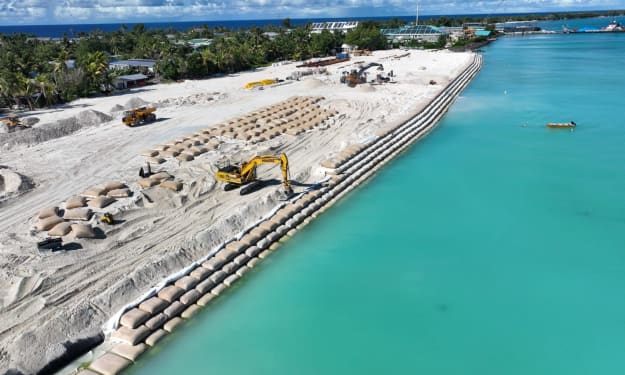
by Futoshi Tachino At high tide on Fogafale—the long, thin islet that holds Tuvalu’s capital—you can stand on the lagoon shore and see the ocean through the breadfruit trees behind you. There isn’t much “away” in a place only a couple of meters above sea level. So Tuvalu has done something extraordinary: it is building a future on three layers at once—physical, legal-human, and digital—so that Tuvaluans can keep being Tuvaluans, no matter what the water decides.
By Futoshi Tachino4 months ago in Earth
Patio Covers Tacoma: A Practical Solution for Damp Weather
At first, I thought patios were mostly for sunny areas, not a place like Tacoma, where the sky is more often gray than not. However, after living through the seasons here, you quickly learn the issue isn't extreme weather; it's the constant dampness. Light rain, mist, cloudy afternoons, and that chilly moisture that lingers even when it’s not raining.
By Backlinks Cart4 days ago in Earth


Comments
There are no comments for this story
Be the first to respond and start the conversation.