Deji Akomolafe
Bio
Stories (512)
Filter by community
A 700-Year-Old Templar Sword Unearthed: A Glimpse into a Dark Chapter of History
Deep in a small, private forest in England, an extraordinary discovery has shed light on one of history’s most enigmatic and tumultuous periods. Beneath a tree, within the confines of an ancient cave, archaeologists uncovered a 700-year-old sword believed to have belonged to the Knights Templar. This stunning find provides not only a tangible connection to the medieval order but also a glimpse into their desperate struggle for survival during the persecutions of 1312.
By Deji Akomolafeabout a year ago in History
The Roman Rock Crystal Jar: A Jewel of the Galloway Hoard
Unearthed in 2014 in a field in Galloway, Scotland, the Roman rock crystal jar from the Viking age is a remarkable artifact that bridges the gap between antiquity and the early medieval world. This extraordinary find, now part of the Galloway Hoard, measures a mere 5 centimeters (2 inches) in height but carries immense historical and cultural significance. Wrapped in intricate gold thread and preserved in a silk-lined leather pouch, the jar exemplifies the sophistication of early medieval craftsmanship and the cross-cultural interactions of the time.
By Deji Akomolafeabout a year ago in History
The Mysterious Disappearance of the 9th Legion and the Rise of Hadrian’s Wall
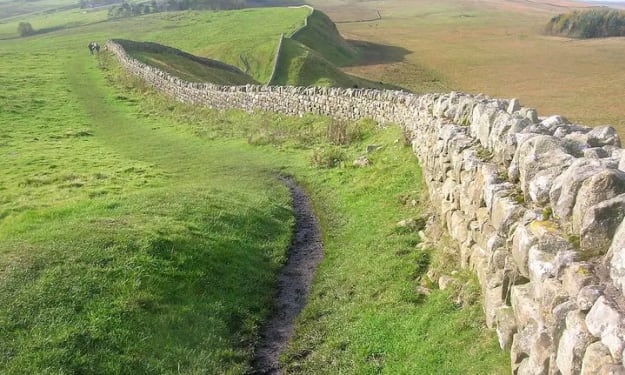
One of ancient Rome’s most perplexing mysteries is the disappearance of the 9th Legion, Legio IX Hispana, an elite Roman military unit that vanished from history between AD 108 and AD 122. The legion's fate has been the subject of speculation for centuries, with theories ranging from annihilation in battle to reassignment elsewhere in the empire. Their absence, however, played a pivotal role in shaping Roman Britain’s future.
By Deji Akomolafeabout a year ago in History
The Titanic Cat: Jenny’s Uncanny Warning That Saved a Life
The sinking of the Titanic remains one of the most tragic and widely discussed maritime disasters in history. Stories of heroism, coincidence, and premonitions surrounding the ill-fated ship have captivated people for over a century. One such tale is that of Jenny, the Titanic’s feline mascot, whose curious behavior may have saved lives—especially that of her caretaker, Jim Mulholland. This is the remarkable story of the "Titanic Cat" who foresaw doom and took her kittens to safety before the ship’s fateful voyage.
By Deji Akomolafeabout a year ago in History
The 4,800-Year-Old Artificial Eye: A Glimpse into Ancient Ingenuity
Archaeological discoveries often transport us to a world far removed from modernity, revealing insights into ancient civilizations' ingenuity, culture, and way of life. One such discovery made headlines in recent years: the finding of a 4,800-year-old prosthetic eye in the skull of a woman in Iran. This remarkable artifact, crafted from tar and animal fat, has been described as one of the oldest known prosthetic eyes in human history. Beyond its functional significance, it sheds light on ancient craftsmanship, social structures, and the lives of those who lived millennia ago.
By Deji Akomolafeabout a year ago in History
Uncovering a Grim Chapter at Jamestown: Evidence of Cannibalism Among the First English Settlers
In the heart of what would become the United States, the story of Jamestown, the first permanent English settlement, has long been etched into history. Founded in 1607, this colony in Virginia faced brutal hardships that nearly wiped out the settlement entirely. One of the darkest and most revealing discoveries came to light in 2012, when archaeologists unearthed the skull and leg bones of a 14-year-old girl among butchered animal bones and discarded food scraps. These bones carried a haunting story of survival, a desperate chapter that brings a new perspective to the winter of 1609-1610, known as the "Starving Time."
By Deji Akomolafeabout a year ago in History
The Pons Fabricius: Rome's Oldest Standing Bridge and a Testament to Ancient Engineering
In the heart of Rome, where centuries of history are woven into every corner, stands the Pons Fabricius, a bridge that has miraculously survived the ages in its original state. Built in 62 BC, this ancient structure holds the title of Rome’s oldest surviving bridge and serves as a remarkable testament to the ingenuity and durability of Roman engineering. With its two symmetrical arches spanning the Tiber River, the Pons Fabricius continues to connect the bustling city to Tiber Island, captivating visitors and locals alike with its understated elegance and rich history.
By Deji Akomolafeabout a year ago in History
Carn Brea Castle: A Glimpse into Cornwall’s Rich History and Heritage
Perched atop Carn Brea Hill, overlooking the sweeping landscapes of Cornwall, stands Carn Brea Castle, a remarkable 15th-century relic with a history as dramatic as the landscape it surveys. Originally constructed as a hunting lodge, this granite structure offers more than its sturdy walls; it presents visitors with a tangible link to Cornwall's past, evoking tales of ancient hunters, local legends, and neolithic settlers. Over the centuries, while a few modifications were made, Carn Brea Castle has retained much of its original charm, nestled next to what is believed to be Cornwall’s oldest neolithic settlement, making it a must-visit site for history enthusiasts and adventurers alike.
By Deji Akomolafeabout a year ago in History
The False Eyes of Tigers: Nature’s Ingenious Defense Mechanism
In the world of big cats, the tiger stands out not only for its majestic beauty but also for its fascinating adaptations that have helped it become one of nature’s top predators. Among these adaptations, one of the most intriguing is a pair of unique markings on the backs of its ears, known as “false eyes.” These markings serve a purpose far beyond aesthetics, providing a form of defense that allows tigers to intimidate and deter potential threats. In this article, we’ll explore the science behind these “eyes,” why tigers evolved to have them, and how this adaptation plays a critical role in their survival.
By Deji Akomolafeabout a year ago in Petlife
The Mummy of Queen Nodjmet: A Glimpse into Egypt's 21st Dynasty
In the world of ancient Egyptian history, Queen Nodjmet’s mummy stands as a stunning relic that offers a vivid glimpse into the lives of the royal figures who once ruled along the banks of the Nile. Preserved over three thousand years, her remains reveal a fascinating story about life, death, and belief in the afterlife in Egypt’s 21st Dynasty, around 1000 BC. Nodjmet, known as the "Black Queen" for her carefully braided hair, was an influential queen whose lineage and legacy remain of significant interest to Egyptologists and historians alike.
By Deji Akomolafeabout a year ago in History
Mousa Broch: A Remarkable Legacy of Iron Age Scotland on Shetland’s Remote Shores
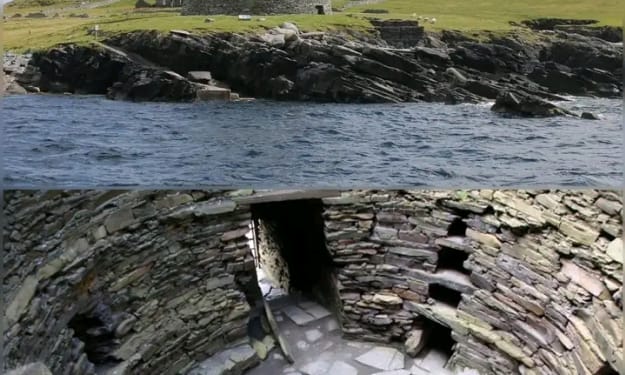
On the rugged Shetland island of Mousa, standing amidst wild landscapes and facing the relentless North Sea, lies a structure so ancient and well-preserved that it has captivated historians, archaeologists, and travelers alike. Mousa Broch, an architectural marvel of Iron Age Scotland, was constructed around 300 BC and has withstood more than two thousand years of weather, human activity, and change. Rising an impressive 43 feet (13 meters) high, Mousa Broch is one of the best-preserved broch structures in Scotland, offering a remarkable insight into ancient life and engineering.
By Deji Akomolafeabout a year ago in History
Dunluce Castle: The Haunting Beauty and Storied Past of Northern Ireland’s Cliffside Fortress
Perched dramatically on the edge of a basalt cliff overlooking the North Atlantic, Dunluce Castle stands as one of Northern Ireland’s most iconic medieval ruins. With a history spanning centuries, marked by feuds, fierce storms, and a series of notable inhabitants, Dunluce Castle is as much a testament to Ireland’s turbulent past as it is a symbol of enduring beauty. Built in the 13th century, Dunluce has captivated onlookers for generations, drawing visitors who come for its breathtaking views and a tangible sense of history that permeates the crumbling stone walls.
By Deji Akomolafeabout a year ago in History