
The Mysterious Disappearance of the 9th Legion and the Rise of Hadrian’s Wall
Ancient Wall

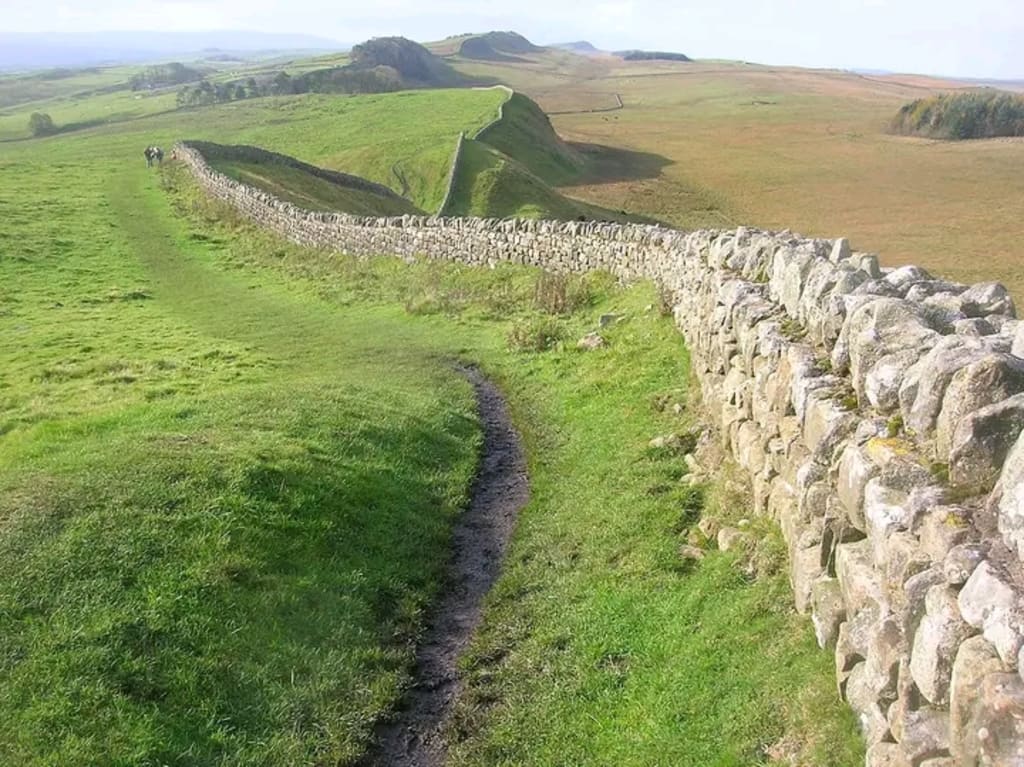
One of ancient Rome’s most perplexing mysteries is the disappearance of the 9th Legion, Legio IX Hispana, an elite Roman military unit that vanished from history between AD 108 and AD 122. The legion's fate has been the subject of speculation for centuries, with theories ranging from annihilation in battle to reassignment elsewhere in the empire. Their absence, however, played a pivotal role in shaping Roman Britain’s future.
In AD 122, Emperor Hadrian arrived in Britain, determined to secure Rome's northern frontier and assert control over the often-rebellious tribes of Caledonia (modern-day Scotland). To accomplish this, Hadrian brought with him the 6th Legion, Legio VI Victrix, and tasked them with constructing one of the Roman Empire’s most iconic structures: Hadrian’s Wall.
This blog explores the mystery of the 9th Legion’s disappearance, the arrival of the 6th Legion, and the monumental engineering feat of building Hadrian’s Wall.
---
The 9th Legion: A Fateful Disappearance
The 9th Legion was a highly decorated unit with a long and storied history. Founded in the first century BC, it served in several key campaigns across the Roman Empire, from Caesar’s conquest of Gaul to Claudius’s invasion of Britain in AD 43. The legion was stationed in Britain for decades, where it became a cornerstone of Roman rule in the province.
By the early second century, the 9th Legion was headquartered in Eboracum (modern-day York), tasked with defending Rome’s northernmost borders. The lands beyond these frontiers were inhabited by fierce and independent tribes who frequently resisted Roman incursions. Sometime between AD 108 and AD 122, the 9th Legion vanished without a trace.
While historical records provide no definitive answer, several theories attempt to explain their disappearance:
1. Massacre by Northern Tribes: The most popular theory suggests the legion was wiped out in a catastrophic battle against the Caledonian tribes. With limited Roman reinforcements in Britain at the time, such an event could have easily occurred.
2. Reassignment and Obscurity: Another possibility is that the legion was reassigned to another part of the empire, such as the Parthian frontier, and was later disbanded or absorbed into other units without further record.
3. Political Cover-Up: Some historians speculate that the loss of an entire legion may have been deliberately omitted from Roman records to avoid embarrassment or political repercussions.
Regardless of the cause, the disappearance of the 9th Legion created a vacuum in Britain’s defense, necessitating a significant response from the Roman Empire.
---
Hadrian’s Arrival in Britain
In AD 122, Emperor Hadrian traveled to Britain as part of his extensive tour of the empire’s provinces. By this time, Rome was struggling to maintain control of its vast territories. In Britain, the northern frontier faced constant pressure from tribes who refused to submit to Roman rule. The rebellion that possibly claimed the 9th Legion’s lives underscored the need for a more secure border.
Hadrian’s solution was bold: a permanent defensive structure spanning the width of the island, from the River Tyne in the east to the Solway Firth in the west. This wall, known as the Vallum Aelium (Hadrian’s Wall), would not only serve as a military fortification but also as a powerful symbol of Roman authority.
To carry out this monumental task, Hadrian brought with him the 6th Legion, Legio VI Victrix (the Victorious).
---
The Rise of the 6th Legion
The 6th Legion had earned its reputation in earlier campaigns in Hispania and Germania. By the time they arrived in Britain, they were a seasoned and disciplined force, well-equipped for the challenges ahead.
Upon reaching Eboracum, the 6th Legion set to work replacing the 9th Legion as the primary military presence in the region. They immediately began construction on Hadrian’s Wall, a feat of engineering that would stand as a testament to Roman ambition and ingenuity.
---
Building Hadrian’s Wall
The construction of Hadrian’s Wall was no small undertaking. Stretching approximately 80 Roman miles (73 modern miles), the wall required vast resources, skilled labor, and meticulous planning.
1. Design and Purpose: The wall was built of stone and turf, with a height of up to 15 feet and a width of about 10 feet. It was fortified with a series of milecastles, watchtowers, and forts that housed soldiers and supplies. The wall was designed not just as a barrier but also as a means of controlling movement and trade.
2. Labor Force: The bulk of the work was carried out by Roman soldiers, including the 6th Legion. Skilled engineers and laborers ensured the wall’s construction adhered to Roman standards.
3. Logistics and Supply: Constructing such a massive structure required transporting materials across difficult terrain. Local quarries supplied stone, while Roman roads facilitated the movement of equipment and personnel.
4. Cultural Impact: Hadrian’s Wall was more than a defensive measure—it marked a clear boundary between the Roman-controlled south and the untamed north. It became a powerful symbol of Rome’s reach and its ability to shape the landscape.
---
Legacy of the 6th Legion and Hadrian’s Wall
The 6th Legion remained stationed in Britain for centuries, becoming one of the province’s most enduring military units. Their work on Hadrian’s Wall left a lasting legacy, as the structure became one of the most iconic remnants of Roman Britain.
Hadrian’s Wall served its purpose well, providing a secure border and facilitating communication and control. While it could not completely prevent incursions, it significantly reduced large-scale attacks and demonstrated Rome’s commitment to maintaining its empire.
---
Conclusion
The disappearance of the 9th Legion remains one of Rome’s greatest mysteries, but its absence set the stage for significant changes in Britain’s history. The arrival of the 6th Legion and the construction of Hadrian’s Wall transformed the northern frontier, providing security and stability in a turbulent region.
Hadrian’s Wall, a product of Roman engineering and military might, stands as a lasting monument to an empire that once spanned the known world. It also serves as a reminder of the resilience and determination of the Roman legions, whose efforts shaped the course of history in Britain and beyond.
About the Creator
Keep reading
More stories from Deji Akomolafe and writers in History and other communities.
The Titanic Cat: Jenny’s Uncanny Warning That Saved a Life
The sinking of the Titanic remains one of the most tragic and widely discussed maritime disasters in history. Stories of heroism, coincidence, and premonitions surrounding the ill-fated ship have captivated people for over a century. One such tale is that of Jenny, the Titanic’s feline mascot, whose curious behavior may have saved lives—especially that of her caretaker, Jim Mulholland. This is the remarkable story of the "Titanic Cat" who foresaw doom and took her kittens to safety before the ship’s fateful voyage.
By Deji Akomolafeabout a year ago in History
Ancient Egyptian Tomb Yields Newly Discovered Mummified Remains of Royal Goldsmiths
In a remarkable archaeological discovery in Egypt, a team of researchers has uncovered a series of mummified remains belonging to royal goldsmiths within a previously unexplored tomb. The find, located near Luxor in the Valley of the Kings, offers an extraordinary glimpse into the lives of highly skilled artisans who served the pharaohs of ancient Egypt.
By Irshad Abbasi 6 days ago in History



Comments
There are no comments for this story
Be the first to respond and start the conversation.