
The Pons Fabricius: Rome's Oldest Standing Bridge and a Testament to Ancient Engineering
Rome's Oldest Bridge

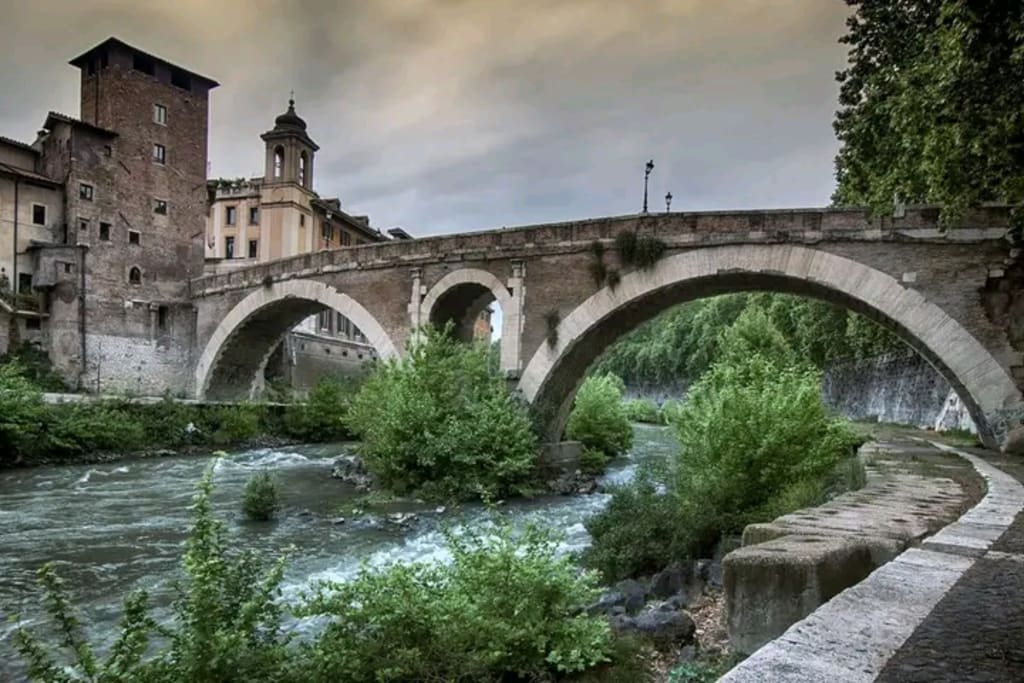
In the heart of Rome, where centuries of history are woven into every corner, stands the Pons Fabricius, a bridge that has miraculously survived the ages in its original state. Built in 62 BC, this ancient structure holds the title of Rome’s oldest surviving bridge and serves as a remarkable testament to the ingenuity and durability of Roman engineering. With its two symmetrical arches spanning the Tiber River, the Pons Fabricius continues to connect the bustling city to Tiber Island, captivating visitors and locals alike with its understated elegance and rich history.
The Origins of Pons Fabricius
The Pons Fabricius was commissioned by Lucius Fabricius, a curator of Rome’s roads, in 62 BC. Originally designed to replace an earlier wooden bridge, this stone bridge was meant to provide a reliable and sturdy crossing over the Tiber River, connecting the left bank of the city to Tiber Island. As indicated by its Latin inscription, which still survives on the bridge’s parapet, Lucius Fabricius intended for his name to be associated with this enduring structure.
The bridge’s purpose was both practical and symbolic. In ancient Rome, bridges were essential for the movement of people, goods, and ideas. Connecting the mainland with Tiber Island—a sacred place in Roman culture with its Temple of Asclepius, the god of healing—the Pons Fabricius served as a vital link, symbolizing Rome’s commitment to facilitating connections within the city and beyond.
Engineering Marvels of Ancient Rome
Roman engineers were renowned for their expertise in creating lasting structures, and the Pons Fabricius is an outstanding example of their mastery. The bridge is built from blocks of tuff and travertine, materials chosen for their strength and durability. To ensure stability against the river’s currents and seasonal floods, Roman architects crafted two large arches, each spanning approximately 24.5 meters, as well as a smaller central arch to allow the water to flow smoothly, reducing pressure on the main structure.
The Romans understood the importance of flexibility in construction, which is why the arches of the Pons Fabricius are semi-circular, a design that disperses the weight evenly across the bridge, making it capable of withstanding heavy loads and shifts in the river's flow. The strategic use of volcanic stone and the arch design collectively give the bridge its remarkable resilience, allowing it to withstand nearly two thousand years of traffic, floods, and weathering.
Inscriptions and Legends
One of the unique aspects of the Pons Fabricius is its series of inscriptions, which give insight into the history and people who built it. Near the top of the bridge, an inscription in Latin reads, “L . FABRICIUS . C . F . CVR . VIAR . FACIVNDVM . COERAVIT,” translating to “Lucius Fabricius, son of Gaius, superintendent of roads, oversaw the making of this.” Another part of the inscription states that the bridge was inspected and confirmed to be safe by Fabricius. These inscriptions are not merely decorative; they serve as a reminder of the ancient practice of accountability in Roman infrastructure projects, as officials often placed their names on public works to affirm quality and durability.
Legend also surrounds the Pons Fabricius. The bridge’s parapets feature four-faced herms, marble pillars depicting the head of the god Janus on four sides. Janus, the Roman god of beginnings and transitions, was also the deity of bridges and passageways, symbolizing the movement between realms. These herms add an air of mystery to the bridge and contribute to its nickname, the "Bridge of the Four Heads." According to legend, the heads represent two architects who were executed for tampering with the bridge, although this story lacks historical evidence. Regardless, the imagery of Janus gazing in four directions has added to the Pons Fabricius’s mystique and symbolic significance over time.
The Pons Fabricius Through the Ages
While many of Rome’s ancient structures have fallen or been rebuilt over the centuries, the Pons Fabricius stands proudly in its original form. This endurance is particularly remarkable given Rome’s turbulent history of floods, fires, and conflicts. The bridge has witnessed the rise and fall of the Roman Empire, the transformations of the Middle Ages, and the cultural renaissance of modern Rome, all while remaining a functioning piece of infrastructure.
During the Middle Ages, the bridge was known as the “Ponte dei Quattro Capi” and was occasionally altered to adapt to changing needs, but it largely retained its original design. Unlike many other Roman bridges that required extensive repairs or complete reconstruction, the Pons Fabricius needed only minor maintenance throughout the centuries, proving the foresight of its builders.
A Living Monument of Rome
Today, the Pons Fabricius is more than just a bridge; it’s a symbol of Rome’s historical endurance. It remains a busy pedestrian bridge, allowing locals and tourists to cross between the mainland and Tiber Island while offering scenic views of the river and city. For anyone visiting Rome, the bridge provides a direct link to the ancient past—a chance to walk where Romans once did and experience a structure that has quietly persisted for millennia.
Stepping onto the Pons Fabricius is an invitation to marvel at the strength of Roman engineering and reflect on the thousands of lives that have crossed its arches. It is a humbling reminder of the capabilities of ancient builders who, with limited technology, constructed something so enduring that it has outlasted empires and civilizations.
Preserving the Pons Fabricius
As with all ancient monuments, preserving the Pons Fabricius remains a priority. Conservation efforts are periodically undertaken to ensure the bridge can withstand modern wear without compromising its historical integrity. Given its long-standing resilience, the bridge symbolizes a harmonious balance between human innovation and respect for natural forces.
Conclusion: A Timeless Connection Across the Ages
The Pons Fabricius is not just Rome’s oldest surviving bridge; it is a lasting symbol of the ingenuity, craftsmanship, and vision of ancient Roman engineers. In a city known for its rich history and grand monuments, the Pons Fabricius may appear modest. Yet, its legacy is monumental. From its humble beginnings as a practical means of crossing the Tiber River, the bridge has become an enduring connection between the ancient and modern worlds.
About the Creator
Keep reading
More stories from Deji Akomolafe and writers in History and other communities.
Carn Brea Castle: A Glimpse into Cornwall’s Rich History and Heritage
Perched atop Carn Brea Hill, overlooking the sweeping landscapes of Cornwall, stands Carn Brea Castle, a remarkable 15th-century relic with a history as dramatic as the landscape it surveys. Originally constructed as a hunting lodge, this granite structure offers more than its sturdy walls; it presents visitors with a tangible link to Cornwall's past, evoking tales of ancient hunters, local legends, and neolithic settlers. Over the centuries, while a few modifications were made, Carn Brea Castle has retained much of its original charm, nestled next to what is believed to be Cornwall’s oldest neolithic settlement, making it a must-visit site for history enthusiasts and adventurers alike.
By Deji Akomolafeabout a year ago in History
Year 2016 in Review: Fun Facts, Trivia, and Historic Highlights
This quick read is a collection of fun facts, trivia, and historical events from the year 2016. Discover the year’s top news stories, most influential people, sports facts, historic firsts, entertainment trivia, and much more.
By Gregory DeVictor6 days ago in History
Top tipple tricks
Been thinking a lot about drinking, lately. Not least because of a recent episode of over-indulgence and the inevitable after effects. Some readers may recall the earlier articles I wrote about beating the booze. Here I set out an experiment in techniques for cutting down on my alcohol intake. The experiment was successful, the techniques worked, and I have armed myself with an arsenal of weapons in the war against the demon drink. I have yet to fire the first round however. It's all a question of timing (perhaps procrastination).
By Raymond G. Taylor6 days ago in Psyche




Comments
There are no comments for this story
Be the first to respond and start the conversation.