
The Roman Rock Crystal Jar: A Jewel of the Galloway Hoard
Ancient Discovery

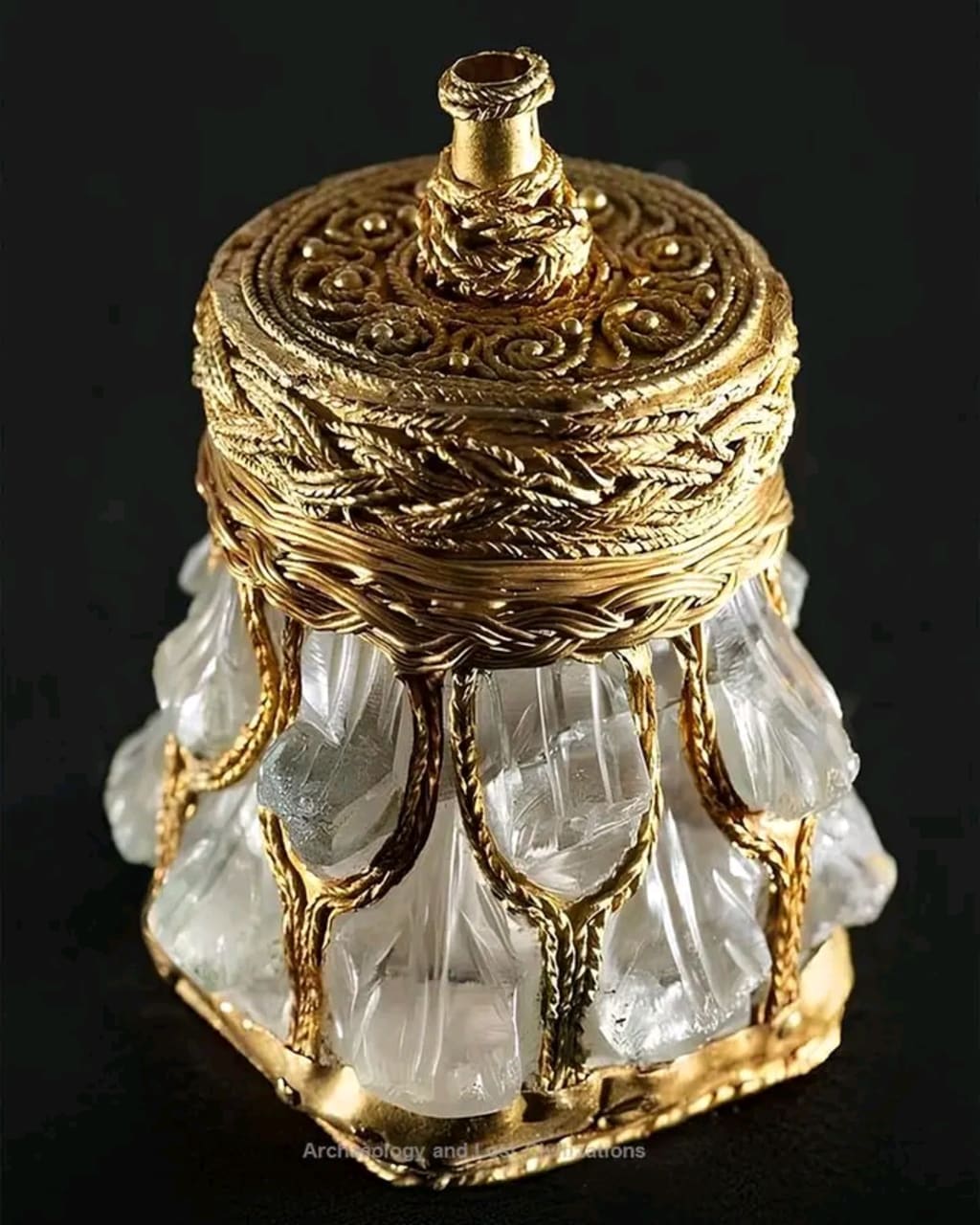
Unearthed in 2014 in a field in Galloway, Scotland, the Roman rock crystal jar from the Viking age is a remarkable artifact that bridges the gap between antiquity and the early medieval world. This extraordinary find, now part of the Galloway Hoard, measures a mere 5 centimeters (2 inches) in height but carries immense historical and cultural significance. Wrapped in intricate gold thread and preserved in a silk-lined leather pouch, the jar exemplifies the sophistication of early medieval craftsmanship and the cross-cultural interactions of the time.
Now housed at the National Museum of Scotland, the jar provides invaluable insight into the luxurious items that were prized during the Viking Age and offers a glimpse into the complex relationships between the Roman, early medieval, and Viking worlds.
---
Discovery of the Galloway Hoard
The Galloway Hoard was discovered by a metal detectorist in a field in Dumfries and Galloway, Scotland, in 2014. This treasure trove consists of more than 100 items, including silver arm rings, gold ornaments, brooches, textiles, and objects of diverse origins. While the hoard primarily dates to the Viking Age (approximately the late eighth to early ninth centuries), many of its artifacts, like the rock crystal jar, are far older.
The jar itself stands out as one of the most exquisite pieces in the collection, demonstrating the high value placed on objects from antiquity during the early medieval period.
---
The Roman Rock Crystal Jar
The jar, crafted from rock crystal, is a Roman artifact, likely dating back to the first few centuries AD. Rock crystal, a clear and naturally occurring form of quartz, was highly valued in the ancient world for its purity and brilliance. This small jar would have originally been used by the Romans to hold precious substances such as perfumes, oils, or ceremonial liquids.
By the time it came into Viking hands centuries later, the jar had been transformed. Skilled artisans from the late eighth or early ninth century encased it in gold thread, creating a dazzling contrast between the crystalline clarity of the jar and the intricate metallic framework. This level of craftsmanship speaks to the importance of the object, as only highly skilled goldsmiths could have created such fine work.
---
Purpose and Symbolism
The precise purpose of the jar during the Viking Age remains a matter of speculation, but its elaborate presentation suggests it was no ordinary possession. Experts believe it may have been used in royal or religious ceremonies, possibly holding anointing oils, perfumes, or other sacred substances.
In Viking society, prestige and power were often displayed through the ownership and exchange of luxury goods. Objects like the rock crystal jar, with its Roman origins and medieval embellishments, would have been highly prized for their rarity, exoticism, and connection to antiquity.
The jar's preservation in a silk-lined leather pouch further underscores its significance. Silk, a luxury material imported from the Byzantine Empire or the Islamic Caliphate, was a symbol of wealth and status in early medieval Europe. The combination of silk and leather suggests that the jar was not only a treasured item but also carefully protected to maintain its condition over generations.
---
A Testament to Cross-Cultural Exchange
The journey of the rock crystal jar—from the Roman Empire to a Viking hoard in Scotland—illustrates the extensive networks of trade, conquest, and cultural exchange that characterized the early medieval world.
1. Roman Craftsmanship: The jar’s Roman origins highlight the advanced artistry and technology of the ancient world. Rock crystal objects required precise carving, a skill that flourished in Roman workshops.
2. Viking Appreciation of Antiquity: The Vikings were not merely raiders; they were also traders and collectors who valued artifacts from other cultures. The presence of this Roman artifact in the Galloway Hoard reflects their appreciation for ancient luxury items and their integration into Viking prestige systems.
3. Goldsmithing of the Early Medieval Period: The goldwork encasing the jar demonstrates the technical and artistic capabilities of early medieval craftsmen. The repurposing of an older object with contemporary embellishments exemplifies how ancient artifacts were reimagined and reintegrated into new cultural contexts.
4. Silk’s Long Journey: The silk-lined pouch housing the jar points to the vast trade networks that brought exotic materials from the East to northern Europe. Such trade routes connected the Vikings to the Byzantine Empire, the Islamic Caliphate, and beyond.
---
Restoration and Display
Since its discovery, the rock crystal jar has undergone meticulous restoration to uncover the full extent of its beauty. Conservators carefully cleaned the crystal and gold thread, revealing the intricate details of its construction.
Today, the jar is displayed at the National Museum of Scotland as part of the Galloway Hoard collection. Its presentation highlights the intersection of Roman, Viking, and early medieval cultures, inviting visitors to reflect on the complex layers of history embodied in a single object.
---
What the Jar Teaches Us
The Roman rock crystal jar is more than just an artifact—it is a window into the past. It tells a story of human ingenuity, the value of material culture, and the interconnectedness of civilizations across time and space.
For the Romans, it was likely a luxurious vessel for precious liquids. For the Vikings, it was a symbol of power, prestige, and a tangible link to the past. For modern audiences, it serves as a reminder of the shared heritage that connects ancient and medieval worlds.
---
Conclusion
The Roman rock crystal jar from the Galloway Hoard stands as a testament to the craftsmanship, trade, and cultural exchange that defined the Viking Age. Encased in gold and protected in silk, it encapsulates the values and aspirations of the people who owned it, transcending the centuries to become a bridge between civilizations.
As we marvel at this tiny yet exquisite object, we are reminded of the enduring human desire to create, preserve, and cherish beauty—and the stories such artifacts can tell about the worlds they once inhabited. The jar, now carefully preserved in the National Museum of Scotland, is a jewel of history, connecting us to the Roman Empire, the Viking Age, and the artisans who left their mark on this remarkable piece.
About the Creator
Keep reading
More stories from Deji Akomolafe and writers in History and other communities.
The Mysterious Disappearance of the 9th Legion and the Rise of Hadrian’s Wall
One of ancient Rome’s most perplexing mysteries is the disappearance of the 9th Legion, Legio IX Hispana, an elite Roman military unit that vanished from history between AD 108 and AD 122. The legion's fate has been the subject of speculation for centuries, with theories ranging from annihilation in battle to reassignment elsewhere in the empire. Their absence, however, played a pivotal role in shaping Roman Britain’s future.
By Deji Akomolafeabout a year ago in History
Mummified Monkey Found at Minnesota Department Store
Shoppers expect to find clothing, household goods, seasonal decorations, and maybe the occasional odd collectible at a department store. What they do not expect to find is a mummified monkey. Yet that is exactly the kind of bizarre discovery that has captured attention in Minnesota, where reports say a preserved monkey was found inside a department store, leaving employees, customers, and local authorities both puzzled and fascinated.
By Irshad Abbasi 2 days ago in History



Comments
There are no comments for this story
Be the first to respond and start the conversation.