Deep Knowledge Hub
Bio
Deep Knowledge Hub: Providing a wealth of deep and in-depth knowledge through curated, insightful, and engaging content!
Stories (39)
Filter by community
Parliamentary System - M Laxmikanth Indian Polity Book Notes - Part II
Parliamentary System - M Laxmikanth Polity Book Notes - Part II Read the comprehensive notes of "Parliamentary System" from the book "Indian Polity" written by M Laxmikanth (Part II)
By Deep Knowledge Hubabout a year ago in Education
Indus Valley Civilization - UPSC History Notes - Part I
Indus Valley Civilization - UPSC History Notes Part I The Indus Valley Civilization, also known as the Harappan Civilization, is one of the world's earliest urban cultures. Flourishing around 2600 BCE to 1900 BCE, it spanned parts of present-day Pakistan and northwest India.
By Deep Knowledge Hubabout a year ago in Education
Indus Valley Civilization - UPSC History Notes - Part II
Indus Valley Civilization - UPSC History Notes Part II In this part, we will look into the art, religion, technology & innovations, trade and economy and the decline of the Indus Valley Civilization (IVC), Understanding these aspects provides a comprehensive view of this ancient society's cultural and historical significance.
By Deep Knowledge Hubabout a year ago in Education
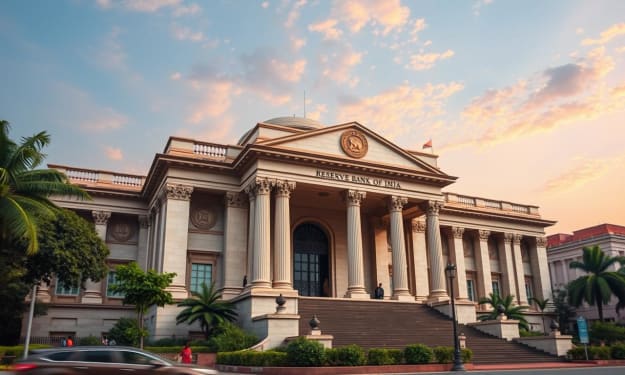
Reserve Bank of India - UPSC Economics Notes - Part I
Reserve Bank of India - UPSC Economics Notes - Part I The Reserve Bank of India (RBI) is India’s central bank, responsible for regulating and supervising the country’s monetary and banking systems. It plays a critical role in maintaining the stability of the Indian economy.
By Deep Knowledge Hubabout a year ago in Education
Reserve Bank of India - UPSC Economics Notes - Part II
Reserve Bank of India - UPSC Economics Notes - Part II In this part of the notes, we will dive deeper into the monetary tools used by the Reserve Bank of India, its pivotal role in promoting financial inclusion, and the challenges faced by the RBI. A thorough understanding of these topics is crucial for UPSC aspirants preparing for both Prelims and Mains.
By Deep Knowledge Hubabout a year ago in Education
Reserve Bank of India - UPSC Economics Notes - Part III
Reserve Bank of India - UPSC Economics Notes - Part III In this final part of the notes, we will discuss the regulatory role of the Reserve Bank of India, its contribution to India’s economic reforms, and an overview of key RBI-launched schemes and policies.
By Deep Knowledge Hubabout a year ago in Education
The Himalayas - UPSC Geography Notes Part I
The Himalayas - UPSC Geography Notes Part I Did you know the Himalayas, the world's highest mountain range, stretch 2,400 kilometers across 13 Indian states? This vast range not only changes the earth's shape but also affects the climate and biodiversity. The average height of the Himalayas is about 6,100 meters, with Mount Everest reaching 8,849 meters.
By Deep Knowledge Hubabout a year ago in Education
The Himalayas - UPSC Geography Notes Part II
The Himalayas - UPSC Geography Notes Part II Greater Himalayas Overview The Greater Himalayas stretch for about 2,400 km, home to some of the world's highest peaks. This mountain range, averaging 6,100 m in height, greatly influences the area's climate and ecology. Peaks like Mount Everest and Kanchenjunga draw adventurers and researchers.
By Deep Knowledge Hubabout a year ago in Education
Buddhism - UPSC Important Notes - Part I
Buddhism - UPSC Important Notes - Part I Buddhism is a major religious and philosophical tradition that started in the sixth century BCE. As UPSC aspirants study this subject, it's key to find good Buddhism study material. This should cover its history, teachings, and how it affects society.
By Deep Knowledge Hubabout a year ago in Education
Buddhism - UPSC Important Notes - Part II
Buddhism - UPSC Important Notes - Part II The Formation of the Buddhist Sangha The Buddhist Sangha is a key part of Buddhist practice. It is a monastic community made up of monks and nuns. This group helps keep Buddhist teachings alive and shares them with others.
By Deep Knowledge Hubabout a year ago in Education
Buddhism - UPSC Important Notes - Part III
Buddhism - UPSC Important Notes - Part III Buddhism and Non-Violence: Principles and Practices Buddhism teaches non-violence, focusing on kindness and compassion. These teachings started over 2,500 years ago. They aim to stop suffering by fighting greed, hatred, and ignorance.
By Deep Knowledge Hubabout a year ago in Education