
Reserve Bank of India - UPSC Economics Notes - Part II
Explore the pivotal role and functions of the Reserve Bank of India in managing the country's economy, tailored for UPSC Economics studies (Part II).

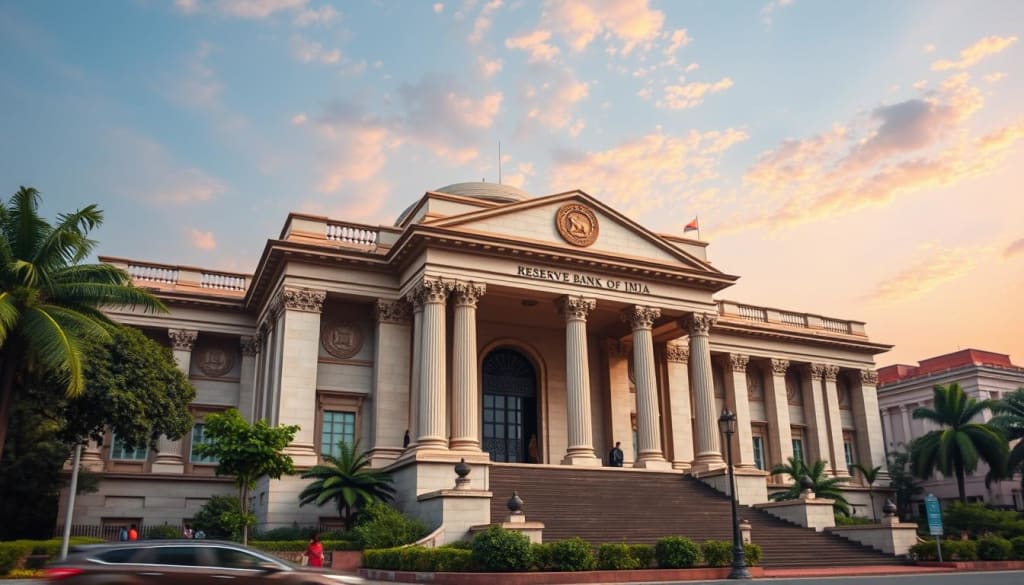
Reserve Bank of India - UPSC Economics Notes - Part II
In this part of the notes, we will dive deeper into the monetary tools used by the Reserve Bank of India, its pivotal role in promoting financial inclusion, and the challenges faced by the RBI. A thorough understanding of these topics is crucial for UPSC aspirants preparing for both Prelims and Mains.
Monetary Tools of the Reserve Bank of India
The RBI uses a range of monetary policy tools to regulate money supply and liquidity in the economy. These tools are broadly classified into Quantitative and Qualitative instruments.
1. Quantitative Tools
Quantitative tools are general measures that impact the overall money supply in the economy.
a. Repo Rate
The repo rate is the interest rate at which commercial banks borrow money from the RBI by pledging government securities.
Purpose: Reducing the repo rate makes borrowing cheaper, encouraging lending and investment, while increasing it reduces inflation by limiting money supply.
b. Reverse Repo Rate
The reverse repo rate is the interest rate at which the RBI borrows money from commercial banks.
Purpose: It is used to absorb excess liquidity from the banking system.
c. Cash Reserve Ratio (CRR)
The CRR is the percentage of a bank’s total deposits that must be kept with the RBI in the form of cash.
Impact: A higher CRR reduces the funds available for lending, while a lower CRR increases liquidity.
d. Statutory Liquidity Ratio (SLR)
The SLR is the percentage of a bank’s net demand and time liabilities (NDTL) that must be kept in the form of liquid assets such as gold or government-approved securities.
Objective: It ensures financial stability and limits excessive credit growth.
e. Open Market Operations (OMO)
The RBI conducts buying or selling of government securities in the open market to regulate liquidity.
When used: During liquidity crunches or excessive money supply.
f. Bank Rate
The bank rate is the interest rate at which the RBI lends to commercial banks without requiring collateral.
Use: It is primarily a long-term measure for controlling inflation and credit.
2. Qualitative Tools
Qualitative tools are selective measures aimed at specific sectors or purposes.
a. Margin Requirements
The RBI can set margin requirements for loans, which are the percentage of a loan amount that must be secured with collateral.
Purpose: To control speculative activities.
b. Moral Suasion
The RBI persuades banks to adopt certain policies in the public interest, such as limiting credit to speculative sectors.
c. Credit Rationing
The RBI may limit the credit available to certain sectors to maintain economic stability.
The Role of the RBI in Financial Inclusion
Financial inclusion is the process of ensuring that individuals and businesses, especially in rural and underprivileged areas, have access to affordable financial services.
Why Financial Inclusion Matters
- Economic Growth: It helps in mobilizing savings and channeling them into productive investments.
- Poverty Alleviation: Access to credit and financial services can uplift the economically weaker sections.
- Reduction in Informal Lending: It minimizes dependence on high-interest informal loans.
RBI’s Initiatives for Financial Inclusion
1. Priority Sector Lending (PSL)
The RBI mandates banks to lend a specific percentage of their total credit to priority sectors like agriculture, small businesses, and education.
Current PSL Norm: 40% of Adjusted Net Bank Credit (ANBC) for domestic commercial banks.
2. Banking Correspondents (BCs)
The RBI introduced the Banking Correspondent model to provide banking services in remote areas where branches are not feasible.
3. Pradhan Mantri Jan Dhan Yojana (PMJDY)
Although launched by the government, the RBI supports this scheme by ensuring bank participation. It aims to open zero-balance accounts and provide access to banking services for all.
4. Small Finance Banks and Payments Banks
The RBI has introduced these specialized banks to target niche areas of financial inclusion, such as small savings and digital transactions.
5. Kisan Credit Cards (KCC)
The RBI promotes the KCC scheme to provide affordable credit to farmers for their agricultural needs.
6. Digital Banking and UPI
The RBI has played a pivotal role in promoting digital payments and platforms like Unified Payments Interface (UPI).
Impact: This has revolutionized financial transactions, especially in semi-urban and rural areas.
Challenges Faced by the RBI
Despite its critical role, the Reserve Bank of India encounters several challenges while balancing growth, inflation, and financial stability.
1. Inflation vs. Growth Trade-off
Controlling inflation often requires tightening monetary policy, which can slow down economic growth. Striking a balance between these two objectives is one of the RBI’s toughest tasks.
2. Rising Non-Performing Assets (NPAs)
The Indian banking sector has seen a surge in NPAs, leading to financial instability. The RBI faces challenges in ensuring effective resolution through tools like the Insolvency and Bankruptcy Code (IBC).
3. Managing Exchange Rate Volatility
Fluctuations in the global economy, such as changes in crude oil prices or geopolitical tensions, impact the rupee’s value. The RBI intervenes in the forex market, but frequent intervention can deplete foreign exchange reserves.
4. Financial Inclusion Gaps
While initiatives like Jan Dhan Yojana have made progress, large sections of the population still lack access to formal credit and insurance. The lack of digital literacy in rural areas further hampers financial inclusion efforts.
5. Shadow Banking Issues
Non-Banking Financial Companies (NBFCs) have grown significantly, but poor regulation and defaults, as seen in the IL&FS crisis, create risks for the financial system.
6. Impact of Globalization
The RBI must address external shocks, such as changes in US Federal Reserve policies, which can lead to capital outflows and currency depreciation.
7. Technological Disruptions
With the rise of cryptocurrencies, fintech companies, and digital lending platforms, the RBI must constantly upgrade its regulatory framework. Balancing innovation and regulation is an ongoing challenge.
Way Forward for the RBI
To overcome these challenges, the RBI needs to adopt innovative strategies and collaborate with the government and other stakeholders.
1. Strengthening Regulation
Tightening norms for NBFCs and shadow banks to ensure stability. Enhanced monitoring of large corporate borrowers to reduce NPAs.
2. Promoting Financial Literacy
Conducting awareness campaigns in rural areas about digital payments, credit facilities, and financial products.
3. Encouraging Innovation
Supporting fintech innovations while creating a robust cybersecurity framework.
4. Focused Financial Inclusion Efforts
Expanding the reach of microfinance institutions and supporting local entrepreneurs.
This concludes Part 2 of the RBI UPSC notes. In the final part, we will discuss the RBI’s regulatory role in detail, its contribution to India’s economic reforms, and the critical schemes and policies it has launched over the years.
Click here to read "Reserve Bank of India - UPSC Economics Notes - Part III"
About the Creator
Deep Knowledge Hub
Deep Knowledge Hub: Providing a wealth of deep and in-depth knowledge through curated, insightful, and engaging content!
Keep reading
More stories from Deep Knowledge Hub and writers in Education and other communities.
Reserve Bank of India - UPSC Economics Notes - Part III
Reserve Bank of India - UPSC Economics Notes - Part III In this final part of the notes, we will discuss the regulatory role of the Reserve Bank of India, its contribution to India’s economic reforms, and an overview of key RBI-launched schemes and policies.
By Deep Knowledge Hub12 months ago in Education
Greenland, the United States, and the New Arctic Power Game
For much of modern history, Greenland was viewed as a remote stretch of ice, distant from global decision-making and international power struggles. But that has changed. As the Arctic warms and world powers turn their attention northward, Greenland has become a central figure in a rapidly shifting geopolitical landscape.
By Muhammad Islam khan swati6 days ago in Education


Comments
There are no comments for this story
Be the first to respond and start the conversation.