
Reserve Bank of India - UPSC Economics Notes - Part I
Explore the pivotal role and functions of the Reserve Bank of India in managing the country's economy, tailored for UPSC Economics studies (Part I).

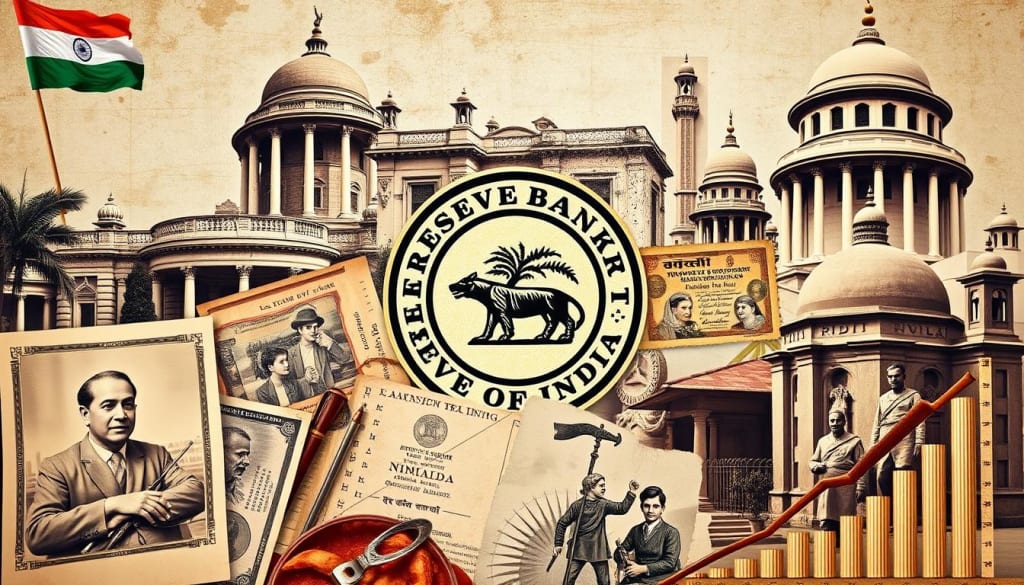
Reserve Bank of India - UPSC Economics Notes - Part I
The Reserve Bank of India (RBI) is India’s central bank, responsible for regulating and supervising the country’s monetary and banking systems. It plays a critical role in maintaining the stability of the Indian economy.
Understanding the RBI's functions, structure, and significance is vital for UPSC aspirants, especially for those preparing for the Economics section of the exam.
This part of the notes focuses on the RBI’s origin, structure, and primary functions, setting the foundation for deeper insights in the upcoming parts.
The Origin of the Reserve Bank of India
Establishment and Historical Context
The Reserve Bank of India was established on April 1, 1935, under the Reserve Bank of India Act, 1934. Its creation was based on the recommendations of the Hilton Young Commission (1926), which emphasized the need for a central bank to control India’s financial system and support economic development.
Initially, the RBI was a privately-owned institution, but it was nationalized on January 1, 1949, after India gained independence. This transformation allowed the government to have greater control over monetary policy and financial regulation.
Key Objectives Behind Establishing the RBI
The primary goals of setting up the Reserve Bank were:
- Issuing Currency: To establish a uniform system of issuing currency and replacing the chaotic practice of individual banks issuing notes.
- Credit Control: To regulate credit supply and manage inflation and deflation.
- Banking Regulation: To supervise and regulate commercial banks to ensure financial stability.
- Developmental Role: To promote growth in agriculture, industry, and other key sectors of the economy.
Structure and Organization of the RBI
The structure of the RBI is designed to ensure efficiency in fulfilling its diverse responsibilities.
Central Board of Directors
The Central Board of Directors is the highest decision-making body of the RBI. It is constituted under the RBI Act, 1934, and comprises:
- Governor: The Governor is the chief executive of the RBI and oversees all its operations. The Governor is appointed by the Government of India and serves as the public face of the central bank.
- Deputy Governors: The RBI can have up to four Deputy Governors, each responsible for specific functions like monetary policy, banking supervision, or financial market operations.
- Directors: The Central Board also includes non-official directors representing various sectors like finance, industry, and agriculture. These directors are appointed by the Government of India to provide expert advice.
Regional Offices and Subsidiaries
The RBI has regional offices in major cities like Mumbai, Delhi, Kolkata, and Chennai, along with several other branches across the country. These offices ensure smooth functioning at the state and regional levels.
Additionally, the RBI has set up subsidiaries such as the National Housing Bank (NHB) and the Deposit Insurance and Credit Guarantee Corporation (DICGC) to focus on specific areas of financial regulation and development.
Primary Functions of the Reserve Bank of India
The RBI performs multiple functions that contribute to the stability and growth of the Indian economy.
1. Issuer of Currency
The RBI has the sole authority to issue currency notes in India, except for one-rupee notes and coins, which are issued by the Ministry of Finance. This function ensures uniformity and stability in the country’s monetary system.
- The notes issued by the RBI are backed by adequate assets, as per the Minimum Reserve System, which requires the RBI to maintain reserves of ₹200 crore (including ₹115 crore in gold).
- The signature of the RBI Governor appears on all currency notes, emphasizing its authority.
2. Banker to the Government
The RBI acts as a banker, agent, and advisor to both the central and state governments.
- Banker: It maintains government accounts and manages public debt.
- Agent: It handles the issuance of government securities and treasury bills.
- Advisor: The RBI provides economic advice to the government on matters like inflation, foreign trade, and fiscal policies.
3. Monetary Policy Implementation
The RBI is responsible for formulating and implementing monetary policy to achieve key economic objectives, such as:
- Controlling inflation and deflation.
- Ensuring price stability.
- Promoting economic growth.
The RBI uses tools like the repo rate, reverse repo rate, cash reserve ratio (CRR), and statutory liquidity ratio (SLR) to regulate money supply and liquidity in the economy.
4. Regulator of the Banking System
The RBI ensures that banks operate efficiently and follow regulations to protect depositors' interests.
- It grants licenses to banks.
- It monitors their financial health through inspections and audits.
- It sets guidelines for lending, capital adequacy, and risk management.
5. Custodian of Foreign Exchange
The RBI manages India’s foreign exchange reserves and oversees the foreign exchange market through the Foreign Exchange Management Act (FEMA), 1999.
- It maintains stability in the rupee’s value.
- It intervenes in the forex market to control volatility.
6. Developmental Role
Apart from regulatory functions, the RBI plays a developmental role by:
- Promoting financial inclusion.
- Supporting rural and agricultural credit through institutions like NABARD.
- Facilitating innovation in digital payments and banking technology.
Significance of the RBI for the Indian Economy
The Reserve Bank of India is not just a regulatory authority; it is the backbone of India’s financial and economic systems. Its decisions impact every aspect of the economy, from inflation control to credit availability.
Importance for UPSC Aspirants
For UPSC students, understanding the RBI is crucial, as it forms the core of topics like monetary policy, banking reforms, and economic stability. Questions related to its functions, policies, and structure often appear in the Prelims, Mains, and Interview stages.
This concludes Part 1 of the RBI UPSC notes. The next part will cover topics such as the RBI’s monetary tools in detail, its role in financial inclusion, and challenges faced by the central bank.
Click here to read "Reserve Bank of India - UPSC Economics Notes - Part II"
About the Creator
Deep Knowledge Hub
Deep Knowledge Hub: Providing a wealth of deep and in-depth knowledge through curated, insightful, and engaging content!
Keep reading
More stories from Deep Knowledge Hub and writers in Education and other communities.
Reserve Bank of India - UPSC Economics Notes - Part II
Reserve Bank of India - UPSC Economics Notes - Part II In this part of the notes, we will dive deeper into the monetary tools used by the Reserve Bank of India, its pivotal role in promoting financial inclusion, and the challenges faced by the RBI. A thorough understanding of these topics is crucial for UPSC aspirants preparing for both Prelims and Mains.
By Deep Knowledge Hub12 months ago in Education
Avoiding Common Counterfeit U.S. Coins: Expert Tips from Laura Bennett
Expert Guide to Spotting Fake U.S. Coins I’ve handled tens of thousands of coins in my career, and that moment of doubt—the gut feeling something isn’t right—is something every collector experiences. That feeling isn't a weakness; it's your best line of defense. This guide is your toolkit to turn that doubt into decisive action. I’ll share the same systematic approach I use to separate the real treasures from the clever fakes, so you can build your collection with confidence.
By Laura Bennett7 days ago in Education
My New Book is Finally Here
My poetry collection Beautiful and Brutal Things is done. It's actually done and finally published over 270 pages. Over a year of my life went into this book. More than a year, really. Long days at my computer, sometimes seven days a week because I couldn't stop even when I probably should have. Then two months of editing that felt harder than the writing itself. But it's finished, and I'm still standing, and the book is real.
By Tim Carmichael2 days ago in BookClub



Comments
There are no comments for this story
Be the first to respond and start the conversation.