
Reserve Bank of India - UPSC Economics Notes - Part III
Explore the pivotal role and functions of the Reserve Bank of India in managing the country's economy, tailored for UPSC Economics studies (Part III).

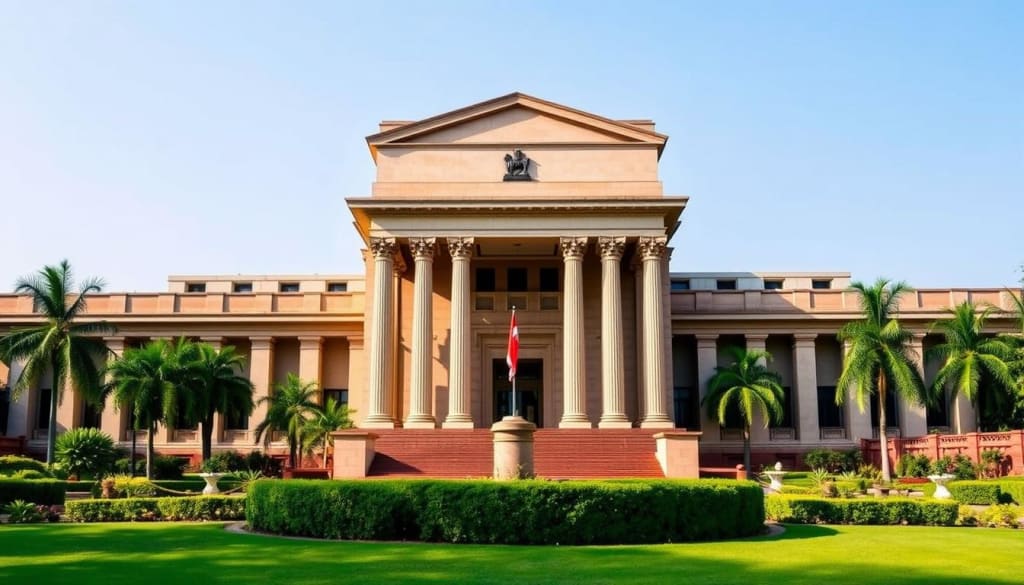
Reserve Bank of India - UPSC Economics Notes - Part III
In this final part of the notes, we will discuss the regulatory role of the Reserve Bank of India, its contribution to India’s economic reforms, and an overview of key RBI-launched schemes and policies.
This section aims to provide a comprehensive understanding of the RBI’s pivotal position in India’s economic framework, which is highly relevant for both UPSC Prelims and Mains.
The RBI’s Regulatory Role
The Reserve Bank of India acts as the regulator of the Indian financial system. Its regulatory functions ensure stability, transparency, and trust in the economy.
1. Regulating Commercial Banks
The RBI regulates commercial banks under the Banking Regulation Act, 1949.
a. Licensing of Banks
The RBI issues licenses for the establishment of new banks and branches. It also approves mergers, acquisitions, and closures of banks.
b. Prudential Norms
The RBI sets capital adequacy requirements and risk management guidelines to ensure the stability of banks. For instance, the Basel III norms are implemented to strengthen the banking system.
c. Regulation of Interest Rates
While banks have freedom to set lending rates, the RBI ensures fair practices through guidelines such as the Marginal Cost of Funds-based Lending Rate (MCLR).
d. Supervision of NBFCs
Non-Banking Financial Companies (NBFCs) are also regulated to ensure they do not pose systemic risks.
2. Regulation of Monetary Policy
The RBI formulates and implements monetary policy to maintain price stability and support economic growth.
a. Monetary Policy Committee (MPC)
Established under the RBI Act, 1934, the MPC is responsible for setting the repo rate to control inflation. The MPC comprises six members: three from the RBI and three appointed by the government.
b. Inflation Targeting
Since 2016, the RBI follows an inflation targeting framework, with a target of 4% (±2%).
3. Foreign Exchange Management
The RBI plays a critical role in managing India’s foreign exchange under the Foreign Exchange Management Act (FEMA), 1999.
a. Managing Forex Reserves
The RBI ensures stability by maintaining adequate foreign exchange reserves. These reserves are used to stabilize the rupee in case of excessive fluctuations.
b. Exchange Rate Policy
India follows a managed float system, where the RBI intervenes in the forex market when necessary.
4. Debt Management
The RBI acts as the debt manager for the Government of India, helping it borrow funds through the issuance of government securities.
5. Regulation of Digital Payments
With the rise of digital transactions, the RBI ensures the security and efficiency of payment systems.
a. NPCI and UPI
The RBI promoted the establishment of the National Payments Corporation of India (NPCI), which operates platforms like UPI.
b. Digital Lending Guidelines
To curb malpractices in digital lending, the RBI has issued strict norms to protect borrowers.
RBI’s Contribution to India’s Economic Reforms
The Reserve Bank of India has been a key driver of major economic reforms in India.
1. Liberalization of the Economy (1991)
During the balance of payments crisis in 1991, the RBI played a crucial role in stabilizing the economy. It supported reforms like deregulation of interest rates and opening up of the economy to foreign investments.
2. Financial Sector Reforms
Introduction of prudential norms, including capital adequacy ratios and NPA management. Establishment of institutions like SEBI for regulating the securities market.
3. Demonetization (2016)
The RBI facilitated the demonetization drive by withdrawing high-denomination currency to curb black money and counterfeit notes.
4. GST Implementation
The RBI worked alongside the government to ensure a smooth transition to the Goods and Services Tax (GST) regime.
5. Insolvency and Bankruptcy Code (IBC)
The RBI played a key role in implementing the IBC to address the issue of bad loans and NPAs in the banking system.
Key Schemes and Policies of the RBI
The RBI has launched several schemes and policies aimed at strengthening the financial system and promoting economic development.
1. Financial Literacy Initiatives
a. Project Financial Literacy
The RBI conducts workshops and awareness campaigns to educate people about financial products and services.
b. National Centre for Financial Education (NCFE)
The NCFE promotes financial education in collaboration with the RBI.
2. Priority Sector Lending Certificates (PSLCs)
To meet priority sector lending targets, banks can purchase these certificates from other banks that have excess credit in priority sectors.
3. Resolution Framework for Stressed Assets
The RBI introduced the Prudential Framework for Resolution of Stressed Assets (2019) to address bad loans.
4. Payment System Innovations
The RBI has promoted the following:
- Bharat Bill Payment System (BBPS): A one-stop platform for recurring bill payments.
- Digital Payments Index (DPI): To track the growth of digital transactions in India.
5. Green Finance Initiatives
The RBI supports the development of green bonds and renewable energy projects to promote sustainable growth.
6. Schemes for MSMEs
a. Restructuring Guidelines
Special restructuring windows for Micro, Small, and Medium Enterprises (MSMEs).
b. SIDBI Partnership
Collaboration with the Small Industries Development Bank of India (SIDBI) to promote credit flow to MSMEs.
RBI and Emerging Trends
As the global economy evolves, the RBI must address new challenges and opportunities.
1. Cryptocurrency Regulation
The RBI has expressed concerns over cryptocurrencies due to their volatility and potential risks to the financial system. It has proposed the introduction of a Central Bank Digital Currency (CBDC).
2. Climate Risk Management
The RBI is increasingly focusing on addressing climate risks by promoting green financing and sustainable investments.
3. Artificial Intelligence and Big Data
To enhance its decision-making, the RBI is adopting AI and big data analytics for real-time monitoring of financial systems.
Conclusion
The Reserve Bank of India stands as the cornerstone of India’s financial and economic stability. Its multifaceted roles, from monetary policy formulation to financial inclusion, make it an indispensable institution.
As UPSC aspirants, understanding the RBI’s operations, challenges, and contributions provides a strong foundation for answering questions in Prelims, Mains, and Interviews. This concludes the detailed three-part series on the Reserve Bank of India.
About the Creator
Deep Knowledge Hub
Deep Knowledge Hub: Providing a wealth of deep and in-depth knowledge through curated, insightful, and engaging content!
Keep reading
More stories from Deep Knowledge Hub and writers in Education and other communities.
The Himalayas - UPSC Geography Notes Part I
The Himalayas - UPSC Geography Notes Part I Did you know the Himalayas, the world's highest mountain range, stretch 2,400 kilometers across 13 Indian states? This vast range not only changes the earth's shape but also affects the climate and biodiversity. The average height of the Himalayas is about 6,100 meters, with Mount Everest reaching 8,849 meters.
By Deep Knowledge Hub12 months ago in Education
How Social Media Helps Small Businesses Grow Faster
Small businesses need smart ways to grow without large budgets. Social media offers one of the fastest and most affordable paths. When used well, it helps small brands reach new customers, build trust, and drive steady sales. Growth that once took years can now happen in months.
By Michael Kazma2 days ago in Education
The Education Situation: A Small Rant
A note: This is meant to be only a description of my thoughts and feelings towards education and my reflections on leaving the teaching profession. I understand every school/district/state/etc. is different, I am simply sharing my experiences having been a young teacher for 4 years here in Florida. For any other struggling teacher who reads this, you are not alone. I only set out to share my perspective with others who can relate and understand and to vent my frustration about a system that chewed me up and spit me out.
By Elise Spillerabout 19 hours ago in Education



Comments
There are no comments for this story
Be the first to respond and start the conversation.