
The Himalayas - UPSC Geography Notes Part II
Explore the majestic Himalayas with our comprehensive UPSC Geography Part II Notes - your essential guide to mastering this towering topic.


The Himalayas - UPSC Geography Notes Part II
Greater Himalayas Overview
The Greater Himalayas stretch for about 2,400 km, home to some of the world's highest peaks. This mountain range, averaging 6,100 m in height, greatly influences the area's climate and ecology. Peaks like Mount Everest and Kanchenjunga draw adventurers and researchers.
Prominent Peaks
The Greater Himalayas boast eight-thousanders, with Mount Everest being the most famous. It stands at 8,848 meters, known for its steepness and harsh weather. Climbing Mount Everest is a major challenge. Other peaks, like Lhotse and Makalu, also pose extreme altitudes.
Geological Composition
The Greater Himalayas are mainly made of granite rocks, formed over millions of years. This geological activity continuously changes the landscape. The area is also rich in minerals, important for local and national economies. Glaciers like Gangotri and Khumbu show the range's dynamic nature.
Lesser Himalayas Characteristics
The Lesser Himalayas are a special part of the world. They are known for their green landscapes and peaceful valleys. These valleys are full of beauty and life, with elevations from 3,500 to 4,500 meters.
Major Valleys and Hill Stations
The Kullu Valley and Kangra Valley are two of the most famous valleys. They are known for their calm and fertile lands. The Kullu Valley is famous for its apples and lively culture.
This area is also home to famous hill stations in the Himalayas. These places draw visitors from all over. Some of the most popular include:
- Shimla
- Nainital
- Mussoorie
- Dharamshala
- Dalhousie
These stations offer beautiful views, nice weather, and colorful plants. They are perfect for those who love to relax or seek adventure.
Outer Himalayas: Shivalik Range
The Outer Himalayas, including the Shivalik Range, have distinctive geographical features. They stretch about 2,400 km from the Indus River to the Brahmaputra River. This range offers a mix of rolling hills and shallow valleys.
The features of Shivalik Range show an average height of 1,500 m to 2,000 m. They are about 10 to 50 km wide. Over millions of years, rivers have shaped this terrain.
The hills are made of sedimentary rocks, 16 to 5.2 million years old. This gives us a glimpse into the region's geological past. The Shivalik Range is also known for its rich biodiversity and unique geological formations, like duns.
It's home to fossils like Megalochelys atlas and Megantereon falconeri. These fossils help us understand ancient ecosystems. The area also holds cultural artifacts, showing human presence for thousands of years.
The Shivalik hills show how geological processes and ecological diversity interact. They are key to understanding the Outer Himalayas.
Trans-Himalayas: Overview and Importance
The Trans-Himalayas stretch about 1,600 km. They include the Zaskar, Ladakh, and Karakoram mountain ranges. These peaks reach up to 7,162 m at Mount Nyenchen Tanglha. This area is a key high-altitude watershed, affecting the water flow of nearby lands.
The Trans-Himalayas are also known for their biodiversity. For example, Spiti gets only 170 mm of rain a year. Yet, it has over 800 plant species, including 23 medicinal ones. Places like Pin Valley National Park and Kibber Wildlife Sanctuary show the area's rich ecosystem.
The climate in the Indian subcontinent is also shaped by the Trans-Himalayas. As temperatures rise, this region warms at about 0.13 degrees Celsius each year. People living here, with elevations from 2,500 m to 6,000 m, show great resilience to these conditions.
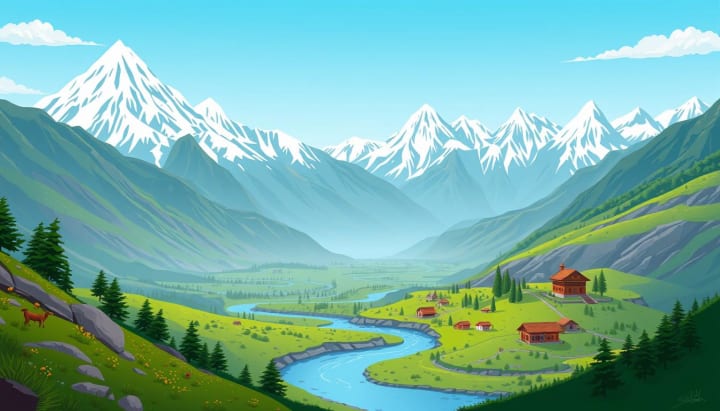
Cultural and Geopolitical Significance of the Himalayas
The Himalayas shape the geography and play a big role in South Asia's culture and politics. They are home to many ethnic groups and traditions. This makes the Himalayas' culture rich and diverse.
These mountains are also natural borders for countries like India, China, and Nepal. They affect trade, military plans, and talks between nations. The old Kalimpang-to-Lhasa trade route shows the long history of trade and cultural sharing.
Today, the Karakoram Highway connects Pakistan and China, showing the Himalayas' strategic importance. This area is key in international relations, with countries trying to gain influence here.
The Himalayas are also a source of water for millions, affecting farming and jobs in Nepal and India. But, growing populations and climate change pose big challenges to these resources.
Environmental Challenges Facing the Himalayas
The environmental challenges Himalayas are growing, mainly due to climate change, deforestation, and melting glaciers. Agriculture reaches up to 2,100 meters, affecting places like Jumla, Kashmir, and Ladakh. These areas show how people are adjusting to these changes.
But, turning forests and grasslands into farmland has led to a lot of deforestation. This is true in Nepal and states like Sikkim and Darjeeling in India. It has caused a big loss of habitats.
Climate change makes flooding and other disasters more likely in the Himalayas. Overgrazing by animals like cattle and yaks, and bad practices, have damaged many habitats. Also, poaching of endangered animals like the tiger and the snow leopard makes things worse.
Unplanned tourism and pollution from chemicals used in farming also harm the environment. While exact numbers are hard to find, it's clear these issues hurt biodiversity and the ecosystem's health. To protect the Himalayas for the future, we must use sustainable methods.
FAQ
What is the geographical extent of the Himalayas?
The Himalayas stretch about 2,400 kilometers across 13 Indian states. They go from the Indus River in the west to the Brahmaputra River in the east. Their width changes, from 400 kilometers in Kashmir to 150 kilometers in Arunachal Pradesh.
How were the Himalayas formed?
The Himalayas formed when the Indian Plate collided with the Eurasian Plate about 50 million years ago. This collision uplifted sedimentary and metamorphic rocks, shaping the range we see today.
What are the different sections of the Himalayas?
The Himalayas are divided into three main sections: the Trans-Himalayas, the Greater Himalayas, and the Lesser Himalayas. Each section has its own unique geological and climatic features.
What is the significance of the Himalayas in terms of climate?
The Himalayas are key in regulating the climate of the Indian subcontinent. They block southwest monsoon winds, causing heavy rainfall in northern India. This affects local weather patterns.
What types of biodiversity can be found in the Himalayas?
The Himalayas are home to rich biodiversity. They have many endemic species of flora and fauna across different ecosystems. These range from alpine meadows to subtropical forests, vital for the region's health.
Why are the Greater Himalayas important?
The Greater Himalayas are home to the world's highest peaks, like Mount Everest and Kanchenjunga. These peaks are not just tall. They also have unique geological features and impact local climates.
What are the environmental challenges faced by the Himalayas?
The Himalayas face challenges like climate change, deforestation, and glacial retreat. These threats harm biodiversity and the ecosystem's stability. They can lead to natural disasters like flooding.
How do the Himalayan ranges impact culture?
The Himalayan ranges are cultural hubs. They house diverse ethnic groups and facilitate historical trade routes. Their geopolitical implications affect relationships between countries like India, China, and Nepal.
About the Creator
Deep Knowledge Hub
Deep Knowledge Hub: Providing a wealth of deep and in-depth knowledge through curated, insightful, and engaging content!
Keep reading
More stories from Deep Knowledge Hub and writers in Education and other communities.
Buddhism - UPSC Important Notes - Part I
Buddhism - UPSC Important Notes - Part I Buddhism is a major religious and philosophical tradition that started in the sixth century BCE. As UPSC aspirants study this subject, it's key to find good Buddhism study material. This should cover its history, teachings, and how it affects society.
By Deep Knowledge Hubabout a year ago in Education
Graduated… But Still Broke. Why
Graduation day feels like victory. The hall is full. Names are called one by one. Parents sit proudly in the audience, holding their phones high to record the moment. Friends clap loudly. Teachers smile with approval. For years, this was the goal. Study hard. Get good grades. Earn the degree. And when that certificate finally rests in your hands, it feels like a passport to success. But sometimes, the applause is louder than the opportunity that follows.
By Shahid Zaman2 days ago in Education
The Dark Side of AI: What Could Artificial Intelligence Become in 100 Years?
But while AI promises innovation and efficiency, an important question remains: What could AI become 100 years from now?Looking ahead to the next century, the darker possibilities of artificial intelligence deserve serious attention.
By Spondan Chowdhury3 days ago in Education
Pearl
1980 something. we all hung out at Pearl and you and i were nothing special, or so i thought. i mean we all danced, drenched in our own sweat, our own saline solution of fear, too many beers, shots, laughter, tears, fucks in the bathroom and i don't know when we began to be afraid. do you?
By ROCK aka Andrea Polla (Simmons)5 days ago in Fiction


Comments
There are no comments for this story
Be the first to respond and start the conversation.