
Tearful Goodbyes as Japan Returns Pandas to China Amid Worsening Ties
Emotional farewells mark the end of an era in panda diplomacy as Tokyo and Beijing relations cool

On a chilly January morning at Ueno Zoological Gardens in Tokyo, crowds gathered for a bittersweet occasion. Xiao Xiao and Lei Lei, the beloved giant pandas who had captured the hearts of Japanese citizens since their birth in 2021, were about to leave Japan and return to their native China. The air was heavy with emotion as visitors, many of whom had grown up visiting these iconic black-and-white bears, lined up for hours just to say their final goodbyes.
For many, the pandas were more than zoo animals—they were symbols of joy, friendship, and a connection between nations. Their departure marks not only the end of their stay in Japan but also a poignant reflection of the fragile state of Japan–China relations today.
A Legacy of Friendship Through Panda Diplomacy
Pandas have long been at the center of what is affectionately called “panda diplomacy.” In 1972, China gifted its first pair of giant pandas to Japan to commemorate the normalization of diplomatic relations between Tokyo and Beijing. Since then, these gentle giants have been a bridge of goodwill, drawing millions to Japanese zoos, inspiring merchandise, and even shaping cultural events.
But there’s a catch. Despite their residence abroad, pandas remain Chinese property. Every loan comes with strict agreements: at the end of their term—or earlier, if circumstances demand—they must return to China. Xiao Xiao and Lei Lei’s departure, originally scheduled for February 2026, was moved forward to January 27, making the farewell even more emotional.
Tears, Memories, and Public Outpouring
The atmosphere at Ueno Zoo during the final week was electric. Social media flooded with hashtags, photos, and heartfelt messages from fans reminiscing about their visits to the pandas. Children waved goodbye, while adults shared memories of watching Xiao Xiao and Lei Lei grow, play, and interact with each other. Many visitors admitted to shedding tears as they witnessed the pandas’ final moments in Japan.
Zookeepers, too, felt the weight of the farewell. Years of daily care had created deep bonds. Their dedication—from preparing bamboo diets to ensuring the pandas’ well-being—was evident in the care and attention given to every small gesture. The pandas’ departure, while a formal procedure, felt like losing a family member for many.
A Reflection of Diplomatic Tensions
While the farewell was deeply emotional, it also came at a politically sensitive time. Japan and China have faced growing tensions over territorial disputes in the East China Sea, economic friction, and differing positions on Taiwan. Even a routine panda return has taken on symbolic significance in this context.
Historically, pandas have acted as soft-power tools—emblems of friendship and cultural exchange. Their absence now underscores the fragility of these ties. Beijing’s decision not to extend new panda loans, amid cooling relations, hints at how even beloved animals are influenced by broader geopolitical dynamics.
Cultural and Economic Impact
Beyond diplomacy, Xiao Xiao and Lei Lei had a tangible impact on Japanese society. Ueno Zoo saw record attendance during their stay, boosting tourism and benefiting nearby businesses. Panda-themed merchandise—from plush toys to stationery—became highly popular, illustrating the cultural resonance these animals achieved.
Their influence extended into education and art as well. Schools used the pandas as case studies for conservation programs, and artists incorporated them into illustrations, manga, and digital media. In many ways, they became cultural icons that transcended their roles as zoo animals.
Conservation Matters
Even amidst political undertones, the return of the pandas serves a crucial purpose: conservation. China will welcome Xiao Xiao and Lei Lei into breeding and research programs aimed at sustaining the endangered species. Japanese scientists and zookeepers, having worked closely with them, contributed valuable insights into panda behavior and care—knowledge that will benefit global conservation efforts.
The collaboration between Japanese caretakers and Chinese conservationists highlights that, while diplomacy may falter, scientific cooperation can endure. It’s a reminder that protecting endangered species transcends borders and politics.
Looking Ahead
Japan now enters a panda-less era for the first time since the 1970s. While the public mourns the departure, the story of Xiao Xiao and Lei Lei leaves a lasting legacy—one of cultural connection, shared joy, and emotional bonds that spanned a generation.
For policymakers, the event is a subtle reminder of how soft power works in international relations. Pandas are not just adorable animals; they are symbols of goodwill, diplomacy, and cultural influence. For citizens, they are beloved companions whose absence will be deeply felt, yet fondly remembered.
As Xiao Xiao and Lei Lei journey back to China, Japan reflects on the joy they brought and the complex ties they symbolize. Their story reminds us that sometimes, the simplest connections—like the gaze of a panda or the laughter of a child in a zoo—carry profound significance in a world often dominated by politics and conflict.
About the Creator
Keep reading
More stories from Aqib Hussain and writers in The Swamp and other communities.
Iran Is Selling More Oil but Making Less Money
When it comes to oil, Iran should be in the money. After all, the country is selling more barrels than it has in years. But here’s the twist: despite higher sales, Iran is earning less. Yes, you read that right. More oil, but less cash in the bank.
By Aqib Hussaina day ago in The Swamp
OpenAI CFO Announces Annualized Revenue Surpasses $20 Billion in 2025
OpenAI has officially entered a new financial era. In a recent announcement, the company’s Chief Financial Officer revealed that OpenAI’s annualized revenue has surpassed $20 billion in 2025, marking a historic milestone for the artificial intelligence giant. This achievement reflects not only rapid business growth but also the growing global demand for AI-powered solutions across industries.
By Aarif Lashari7 days ago in The Swamp
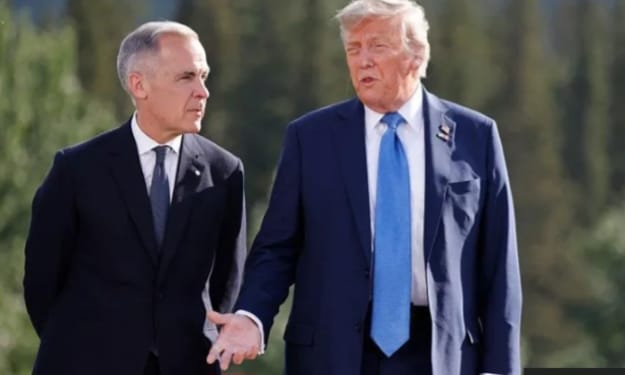
Trump’s Bold Threat: 100% Tariffs on Canada Over Possible Deal with China
Introduction: In a new and alarming development on the international trade front, former U.S. President Donald Trump has threatened to impose 100% tariffs on all imports from Canada if the country proceeds with making a trade deal with China. The statement, which came as a part of Trump’s ongoing commentary on U.S.-Canada relations, has raised eyebrows across North America and the global economic landscape. Trump's harsh warning could have significant consequences not only for the U.S. and Canada but also for the broader geopolitical balance involving China.
By Ayesha Lashari2 days ago in The Swamp



Comments
There are no comments for this story
Be the first to respond and start the conversation.