
"Doesn't he know that God is watching him?"
"সে কি জানে না, আল্লাহ্ তাকে দেখছেন?"

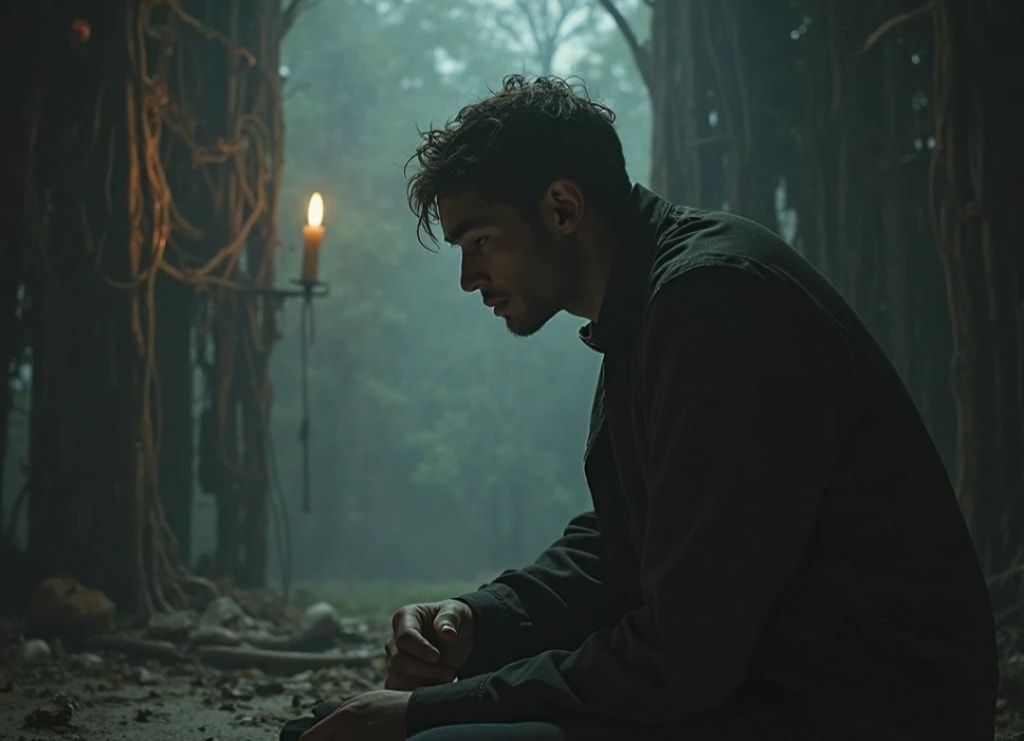
The verse we are starting our discussion with today takes us to a deep sense of existence. This verse raises a question that resonates within the heart of every human being in his loneliness, solitude, and the deepest level of his being.
"Does he not know that Allah sees him?"
— (Surah Al-Alaq, verse 14)
The number of words in this verse is very few, but its depth of meaning is such that it is higher than the peak of a mountain, deeper than the ocean. It is a sharp question, a silent voice that knocks on the door of a person's heart and asks the question - have you forgotten that someone is always watching you?
Man is a being who feels safe behind the external eyes. He loves to think that no one is watching, so he can do whatever he wants. He steps into the darkness, commits injustice in secret, cheats someone, oppresses someone, or harbors evil thoughts in his heart—and thinks that no one knows these things, no one sees them. Yet this one verse stands before him like a mirror, as if to say, “Don’t you know that Allah sees?” This seeing is not an ordinary seeing, it is the manifestation of an omniscient vision, which reaches not only the external but also the hidden parts of the heart.
When one deeply understands the meaning of this verse, one trembles and stands still. Because in front of this vision, no pretense can work, no disguise can survive. The words on a person’s lips and the thoughts in their hearts—no matter how much the difference between the two, are equally clear in the sight of Allah. He knows who thinks what and who does not. This vision is a watchman who is sleepless, who does not care about weakness and excuses. This vision observes every action, every thought, and even every heartbeat indiscriminately and invincibly.
This verse was revealed at the beginning of prophethood, when the door of truth was first being opened to mankind. It was a guideline, a fundamental teaching, so that people would understand that religion is not just external behavior, but a journey of deep self-reformation, the center of which is the realization of the ever-seeing nature of Allah. It is not just a prohibition, it is an invitation, as if saying: ‘If you understand that someone is watching you, then you yourself should correct your actions.’
This perspective teaches people self-control, prevents them from wrongdoing, and instills in their hearts a kind of shame, which turns into piety. This piety fills people with the fear of Allah. People then refrain not from theft, but from fear in their consciousness; then they do not lie not only out of fear of public shame, but they know that someone is watching them, who knows all their secrets.
This verse removes people from the eyes of society and brings them to the eyes of Allah. Society accepts many things, becomes blind, misjudges, or remains silent. But God's sight never fails, never remains silent. He sees everything—under the sky, deep in the earth, deep in the heart of man. This realization prepares a believer for a life that is filled with inner purity as well as external purity. He then filters his inner thoughts, makes his thoughts honest, because he knows that what the eyes cannot see, God sees.
The appeal of this verse is equally applicable throughout the ages. In today's world, where personal life has become full of secret habits and activities that go on behind the scenes—there this verse comes and says, no screen, no secret can hide you. Your online history, your solitary thoughts, your solitary utterances—all are under that gaze.
Man then becomes an ever-conscious soul, who dresses himself in such a way that he stands before the Creator every day. Humility is born in his clothes, his words, his attitude. This humility protects him from pride, brings him back from unnecessary ambition, and he feels that this sight is not a threat to him, but rather his greatest security.
The sight of Allah is not only an eye of reproach; it is also an eye of mercy, compassion, and consolation. For the person who falls into sorrow, cries alone, whose words no one understands, whose tears no one sees—for him this verse is a lamp of hope. He knows that there is someone who sees, understands, and assures him of an answer. This sight protects him from being broken, calls him to the light.
This verse sets man on a path of self-reflection, where he learns to understand—no deed is small, no thought is irrelevant, because everyone is watching. Then every moment of life becomes a sacred trust, a conscious journey. He builds the soul in such a way that every action is a testimony, every step a declaration—I know that my Lord sees me.
In this knowledge lies the great principle of self-purification. Here fear comes with love, respect comes with understanding, responsibility comes with respect. This short verse of the Quran therefore does not only frighten, but rather establishes a luminous consciousness deep in the soul—I am not alone, even if I forget, He does not forget.
About the Creator
Keep reading
More stories from Abdul Barik and writers in Writers and other communities.
“Islam and Democracy: Conflict, Coexistence, or Alternative?”
“Islam and Democracy: Conflict, Coexistence or Alternative?” A profound question returns again and again in the court of history today—Can Islam coexist with democracy? Or is Islam itself a complete system of government that is an alternative to democracy? The Western world uses this question to establish a ‘political exception’ against Islam. But even in the Muslim world, many thinkers and intellectuals are divided on this question—for some, democracy and Islam are complementary, while for others, they are opposed to each other. In today’s discussion, we will go to the root of this debate—in the context of history, ideology, structure, and reality.
By Abdul Barik9 months ago in Writers
Published in Portrait of New England
My quest to find many publications with prestige to submit to has worked out even better than I thought. I was searching for more publications with more prestige in order to bolster my resume. I truly thought I'd try this for a year and not get published anywhere... maybe if I was lucky... in one of them. And I was OK with that... I was just going to try again the following year, and the year after that, and so on.
By Stephen Kramer Avitabile27 days ago in Writers
How Students Can Check Scholarship Status Without Missing Updates
For millions of students worldwide, scholarships play a critical role in continuing education without financial strain. However, receiving a scholarship is only the first step. One of the most common challenges students face afterward is tracking their scholarship status accurately and on time. Missed updates, incomplete information, or misunderstanding the process can result in delayed payments or even disqualification.
By Abbasi Publisher5 days ago in Writers



Comments
There are no comments for this story
Be the first to respond and start the conversation.