
The role and conspiracy of the state behind the anti-Muslim riots in India
ভারতে মুসলিমবিরোধী দাঙ্গাগুলোর পেছনে রাষ্ট্রের ভূমিকা ও ষড়যন্ত্র

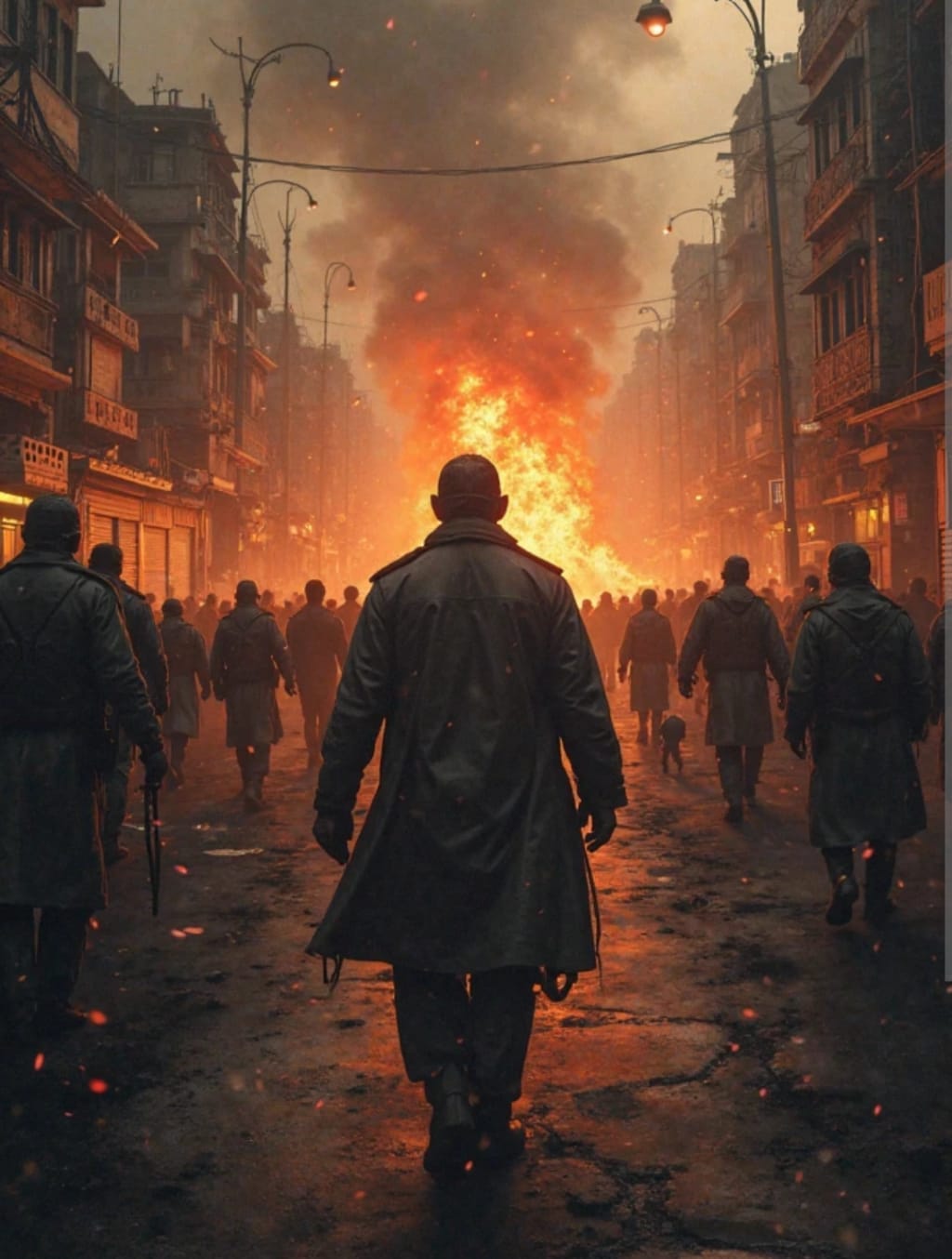
The role and conspiracy of the state behind anti-Muslim riots in India
In the history of India, riots have become an inevitable social disease, which always falls on a specific group of society - Muslims. But these are not simply the result of sudden excitement of the public, but rather the result of the active role, planned neglect and sometimes direct provocation of the state. Anti-Muslim riots in India have never been neutral social conflicts; rather, it has been seen that the administration, police and political leadership have somehow tolerated it, remained indifferent or directly led it. To understand this trend, we need to look at some of the most discussed riots in Indian history, the real context behind them, and how the state played a role in causing, continuing and later covering up this violence.
The Ahmedabad riots of 1969 were the first major anti-Muslim riots in the history of independent India. Although the Congress was in power in Gujarat at that time, Hindu dominance was strong at the administrative level of the state. About 500 Muslims were killed in these riots, thousands of houses were burnt down. Investigations revealed that a large section of the police force did not protect the Muslims but rather sympathized with the attackers. Since then, the state's indifference and biased behavior have been evident.
Then, the 1983 Nelli massacre, where about 2000 Muslims were killed in just six hours in Assam, was another horrific example. The official investigation report has not been released to this day, so that it can be erased from history. Who was responsible, who planned it—everything has been hidden by the state. This silence was actually a reward for the criminals.
One of the most talked about and frightening riots was the demolition of the Babri Masjid in 1992 and the subsequent riots. On December 6, BJP, Vishwa Hindu Parishad, and Shiv Sena leaders destroyed the Babri Masjid with lakhs of Kar Sevaks. As a result, terrible riots spread throughout India, including Mumbai, Delhi, Kanpur, Bhopal. Especially in the Mumbai riots of 1992-93, about a thousand people were killed, 70% of whom were Muslims. The Justice Srikrishna Commission report clearly states that the Mumbai Police was completely pro-Hindu, they arrested Muslims, let their houses burn, and actively collaborated with the Shiv Sena in many places. However, despite such a big investigation report being published, the government did not take any legal action. Only Bal Thackeray was directly accused in the report, but he died naturally, without trial.
And then came the Gujarat riots of 2002, which is a shocking chapter in the history of Indian Muslims. Immediately after the Godhra train fire, a planned massacre of Muslims began across Gujarat. About 2000 Muslims were killed, women and children were brutally tortured. Many women were gang-raped and burned alive. The role of the then Chief Minister Narendra Modi himself was questioned in the international community. This is the first time in the history of Indian riots that the state government has given a verbal order to the police not to intervene for 'three days'. Later, through the efforts of Sitaram Yechury, Teesta Setalvad, and many other human rights activists, the issues came to light, and some low-ranking culprits were punished. But none of the state's Chief Minister, Police Chief, and Cabinet members who were in charge during the massacre were harmed.
The Gujarat riots were also a turning point. For the first time, it was clearly understood in Indian politics that if a provincial government is actively involved in the killing of Muslims, President's rule is not imposed due to any international pressure, but that leader can be made the Prime Minister. This sends a terrible message—Muslim blood can be converted into votes in Indian politics today.
Then came the 2013 Muzaffarnagar riots. That riot was also a political strategy to strengthen Hindu votes by inciting Muslim-Jat conflict before the elections. Investigations showed that local BJP leaders incited the riots by spreading fake videos and fabricating false rape stories. The police once again showed harshness on Muslims, while the Hindu attackers were not caught.
It is noteworthy that the state does not just remain silent after violence occurs—it often incites it. In the speeches of Hindutva leaders, anti-Muslim sentiment is openly promoted, as if it were normal. In parliament, in the media, and even in school textbooks, Muslims are presented as “invaders,” “outsiders,” and “converts.” This overall picture makes the state a kind of accomplice.
Moreover, the judiciary can never deliver justice. In the case of riots in Muzaffarnagar, Gujarat, Delhi, or other cities, the high-ranking culprits are saved despite multiple investigations, video evidence, testimonies, and journalistic reports. When the state apparatus—the police, the administration, the judiciary, and the media—fail simultaneously to protect the rights and security of Muslims, it is clear that the state itself is the mastermind behind these violences.
The character of riots in today’s India has changed a bit. Thousands of people may not be killed directly, but Muslims are being selectively beaten to death in the name of “cow protection”, “love jihad”, or on false charges. Muslim slums are set on fire, businesses are shut down, houses are demolished. These are new types of riots, where the state is killing Muslims under the guise of law.
All in all, anti-Muslim riots in India are not just a public emotion—they are a well-planned political project, in which the state plays an active role rather than a silent one. This violence strengthens Hindu nationalism, weakens Muslims politically by intimidating them, and pushes society towards a kind of majoritarian fascism.
About the Creator
Keep reading
More stories from Abdul Barik and writers in Writers and other communities.
“Muslim hatred in India”
Muslims arrived in India more than a thousand years ago. They did not only come here as rulers or conquerors but also as soldiers, Sufis, poets, architects, farmers, traders and workers. For many centuries, including the Mughal period, Indian Muslims have contributed equally to the economy, culture, art, language, music and architecture of this land. But the colonial British made the Hindu-Muslim divide manifest through the policy of ‘Divide and Rule’. Using the historical fact that Muslims were rulers in some places, they tried to create a kind of hostility of the Hindu majority towards Muslims. This view was later systematically transformed into a part of state policy by Hindutva organizations—especially political forces like the RSS, the Vishwa Hindu Parishad and the BJP.
By Abdul Barik9 months ago in Writers
It's Winter
Anne Bernays and Pamela Painter — What If? Writing Exercise for Fiction Writers prompts The Exercise —Write a scene involving two characters. Have the point-of-view character presume something entirely different about the situation from what the other character's overt behavior seems to imply. For example, a landlord comes to visit, and the tenant suspects that it isn't a visit but an inspection. Make up several situations in which one character can fantasize or project or suspect or even fear what another character is thinking. The Objective - To show how your characters can use their imaginations to interpret the behavior and dialogue of other characters.
By Denise E Lindquist17 days ago in Writers
Point The Blame At Your Heart
I write some poems, but not as many as others on Vocal. Most of my poems are about love—wanting love, sad love, or feelings of love. I think I am a big softie inside! Here we go. We blame love stuff on our hearts. We say “loving you with all my heart” and “you break my heart.” All love and feelings are linked to our hearts. We blame everything good or bad on hearts.
By Rosalina Jane3 days ago in Writers
Miss Persephone's Manual to a Seemingly Ordinary Life
Miss Persephone was found at the dining table, her blue eyes swollen, her tears arriving and retreating like the tides of the ocean. Earlier that day, her family had visited her in the retirement home where she had lived for eight years. It was her eightieth birthday.
By Imola Tóth4 days ago in Fiction


Comments
There are no comments for this story
Be the first to respond and start the conversation.