
“Hijrah and Islamic Revolution: The Prophet’s Strategy for State Building in Medina”
“হিজরত ও ইসলামী বিপ্লব: নবীজির মদীনায় রাষ্ট্র নির্মাণ কৌশল”

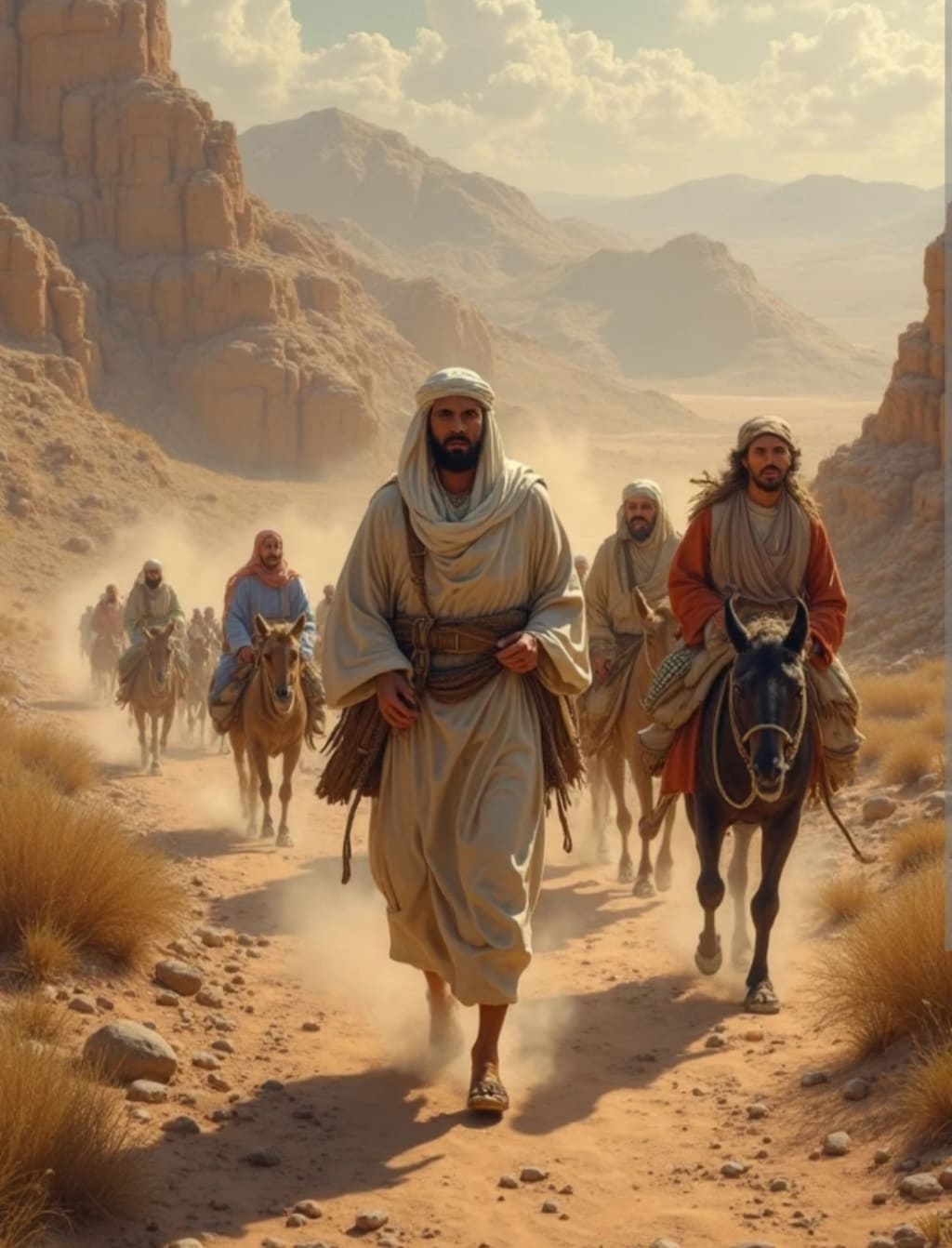
There are moments in history that change not just the life of an individual, but the course of an entire civilization. The Hijrah—the migration of the Prophet Muhammad (peace and blessings of Allah be upon him) from Mecca to Medina—is a turning point. On the one hand, it was an attempt to protect himself, and on the other, it was the beginning of the building of a visionary state for the future. Today, when we talk about political, cultural, and social Islamic ideals, we think of the state of Medina, because the state established by the Prophet (peace and blessings of Allah be upon him) was the first practical example of a society based on faith and justice.
Mecca was the birthplace of the Prophet (peace and blessings of Allah be upon him), but it was also a city full of hostility. The Quraysh leaders saw Islam not just as a religion, but as a revolution against their social and economic structure. Therefore, the persecution of the Prophet (peace and blessings of Allah be upon him) and his companions during their stay in Mecca was terrible and constant. Islam was then an ‘underground revolutionary call’—where personal faith, hidden invitations, and patience were the main weapons. But Medina was the new stage of liberation.
Migration was a strategic move. It was not a retreat, but a preparation to move forward. It was a great strategy to bring the movement of faith into the state structure by going to a safe place. Migration meant the courage to establish Islam in a place other than one’s homeland. This decision of the Prophet (peace be upon him) showed the future world that Islam was not a small call; rather, it was a complete package of state, society, justice, law, and leadership.
The first thing the Prophet (peace be upon him) did when he went to Medina was to establish brotherhood. A humane society was formed between the Ansar and the Muhajirin on the basis of mutual love, sharing of wealth, and even justice in inheritance. This was the first pillar of an ideal society. Then the Prophet (peace be upon him) wrote the ‘Constitution of Medina’ with the diverse people of Medina—which was the world’s first multinational agreement. There, Muslims, Jews, and other groups were given individual religious freedom and brought under the umbrella of collective security. This was not just a treaty, but a real roadmap for coexistence.
The Prophet (PBUH) established the three pillars of the Islamic state in Medina—the foundation of faith, the legal framework of justice, and the integrity of the leadership. Impartiality in the judiciary was a unique feature of Islam. Even when a woman from a noble family stole, the Prophet (PBUH) said, “Even if it were my daughter Fatima, I would have judged her the same.” This example can stand in the eyes of today’s so-called democracy.
Politically, the Prophet (PBUH) did not present Islam as just a religion of worship; rather, he presented Islam as a solution for every aspect of life. He established a Quranic ideological framework for everything: war policy, economics, statecraft, foreign policy. When Medina was attacked, the Prophet (PBUH) waged defensive wars—such as Badr, Uhud, and Khandaq. Each time, the tactics of war were different, but the main goal was to maintain a safe and just state. He was never an aggressor, but rather responded to aggression with dignity.
Medina was a place where Islam controlled people's lives not only through laws, but also through an idealistic spirit. Just as people drew closer to Allah through prayer, they followed the instructions of the Prophet (PBUH) to prevent fraud in the marketplace, showed kindness to their neighbors, and treated their enemies justly even on the battlefield. This perfection was the hallmark of the Medinan state system.
In today's world, the state means power, army, taxes, technology, and administration. But the Islamic state means a community formed on the basis of ideals, who believe in responsibility rather than rule, who are interested in justice rather than freedom, and who want to redefine humanity beyond the boundaries of race, religion, and tribe. The Prophet's (PBUH) Medina is the practical application of that vision.
So migration is not just a change of place, it is a transformation of consciousness. And Medina is not just a city, but it is the cradle of a revolution—from which an alternative vision of global humanity spreads.
About the Creator
Keep reading
More stories from Abdul Barik and writers in Writers and other communities.
The role and conspiracy of the state behind the anti-Muslim riots in India
The role and conspiracy of the state behind anti-Muslim riots in India In the history of India, riots have become an inevitable social disease, which always falls on a specific group of society - Muslims. But these are not simply the result of sudden excitement of the public, but rather the result of the active role, planned neglect and sometimes direct provocation of the state. Anti-Muslim riots in India have never been neutral social conflicts; rather, it has been seen that the administration, police and political leadership have somehow tolerated it, remained indifferent or directly led it. To understand this trend, we need to look at some of the most discussed riots in Indian history, the real context behind them, and how the state played a role in causing, continuing and later covering up this violence.
By Abdul Barik9 months ago in Writers




Comments
There are no comments for this story
Be the first to respond and start the conversation.