
If Islam is truly a humane religion, then why did it allow slavery?
যদি ইসলাম সত্যিই একটি মানবিক ধর্ম হয়, তাহলে কেন সে দাসপ্রথা অনুমোদন করেছে?

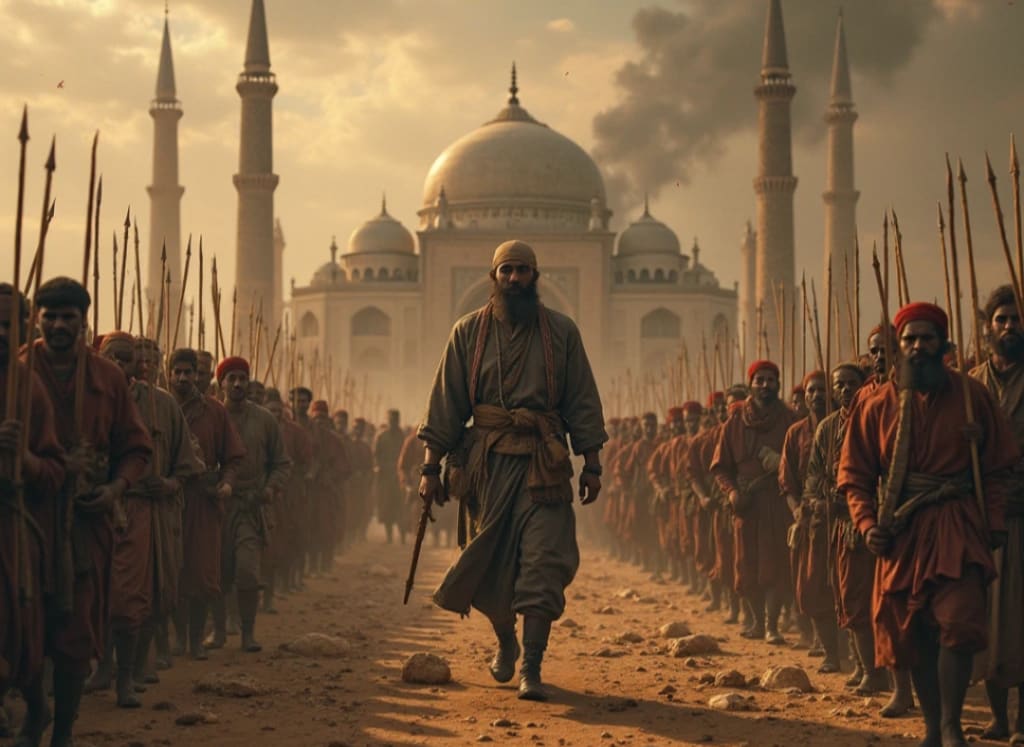
One of the biggest complaints of atheists and non-Muslims about the permission of slavery in Islam is—“If Islam is truly a humane religion, then why did it allow slavery? How can one person own another?” This question is often raised without understanding it simply, but rather with the intention of belittling Islam. But those who study slavery in detail in the context of history and Islam know that Islam not only did not allow slavery, but it was Islam that took the first effective and planned step to abolish it in human history. Therefore, in today's discussion, we will find the answer to this complaint in the light of the Quran and authentic Hadith, keeping in mind the reality of history.
First of all, it must be said that Islam did not give rise to slavery. Slavery was practiced in human society before Islam for thousands of years. In Babylon, Egypt, China, India, Greece and Roman civilizations, slaves were one of the foundations of the economy, military power and social establishment. People were forcibly captured, taken prisoner of war, and sometimes family members were sold to become slaves. In these civilizations, far from giving human dignity to slaves, they were used as living property. They were mere goods, objects of use—who would not be punished even if they were killed, and who would not be questioned even if they were tortured.
When Islam came into being against this background, it did not abolish slavery all of a sudden. Rather, it gradually created a humane system through which the existence of this system was gradually erased. Islam first recognized slaves as human beings. It made it obligatory to treat them well. The Holy Prophet (peace and blessings of Allah be upon him) said, “Feed those under your control (slaves) with the food that you eat yourself, clothe them with the clothes that you wear yourself, and do not burden them with a burden that they cannot bear.” (Sahih Muslim) This hadith has established the human rights of slaves one by one.
In addition, the Quran and Hadith present the liberation of slaves as part of worship. In several verses, the expiation for breaking an oath or committing any other wrong is to free a slave. In Surah Al-Balad of the Quran, Allah says: “Has he entered upon a difficult path? And what is that difficult path? To free a slave…” (90:11-13). This verse identifies the freeing of slaves in Islam as a morally superior act. Elsewhere, Islam provides two options for women captured in jihad—freeing them for ransom or willingly taking them as slaves, but if they have children, they will never be slaves again. The child will be free, the mother will be ‘Umm Walad’, and she cannot be sold until death. This system provides security and social recognition to women prisoners of war from their precarious position.
More importantly, Islam strictly controls the sources of slavery. Islam strictly prohibits the enslavement of anyone other than legitimate prisoners of war. For example: stealing people, forcibly capturing women, kidnapping and enslaving them—all these are considered major sins or major crimes in Islam. This means that Islam does not seek to expand slavery, but rather to reduce it.
On the other hand, anyone could free his slaves if he wanted to, and even through a written contract (mukataba) with them, the way to free them has been provided. The Quran says: “And make a written contract with those under your control who wish to free them, if you see any good in them…” (24:33). This is a system through which the slave can work out his own way for his freedom—a unique example of equality and dignity.
The Messenger of Allah (peace and blessings of Allah be upon him) himself freed many slaves. His companions also followed this teaching. The famous companion Abu Bakr (may Allah be pleased with him) spent a large part of his wealth on freeing slaves. The story of Bilal (RA) is written in golden letters in the history of Islam, who became the first muezzin of the mosque from a black slave.
Here a question arises - if Islam wants slavery to be abolished, why did it not directly ban it? The answer to this is also based on reality. If the economy, politics, and military structure of a social system depend on slavery, then if it is suddenly banned, chaos and injustice increase in that society. As has been seen, after Lincoln's announcement of the abolition of slavery in America, Afro-Americans were oppressed and plagued by civil war for many years. Therefore, Islam did not rush, but rather paved the way for a long-term human transformation.
Finally, it can be said that Islam has never presented slavery as an ideal, but rather has limited and humanized it in the light of reality and has encouraged its followers from time to time to move forward on the path of abolishing this system. Islam calls people not only towards social freedom, but also towards spiritual liberation. And so the liberation of the slave is not only a freedom of the body, but also a kind of spiritual rebirth.
About the Creator
Keep reading
More stories from Abdul Barik and writers in Writers and other communities.
Copywriter Meaning, Responsibilities, Skills & How to Become One in 2026
In 2026, the word copywriter carries more weight than ever before. What once referred mainly to someone who wrote advertisements has evolved into a profession that sits at the center of business growth, digital influence, and brand trust. In a world saturated with content, copywriters are no longer just writers; they are strategic communicators who shape how people think, feel, and act.
By Sathish Kumar about an hour ago in Writers


Comments
There are no comments for this story
Be the first to respond and start the conversation.