politics
Politics does not dictate our collective cultural mindset as much as it simply reflects it; We've got to look in the mirror sometimes, and we've got one.
Four Decades of Progress: Spain and Portugal’s Transformative Journey in the European Union. AI-Generated.
In 1986, two Iberian nations, Spain and Portugal, took a momentous step in their political and economic evolution by joining the European Union (EU). For both countries, membership signified the culmination of years of effort to modernize their economies, democratize their political systems, and integrate with Europe’s growing political and economic bloc. Over the past four decades, Spain and Portugal have undergone profound transformations, and their journey within the EU has not only reshaped their domestic landscapes but also their roles on the world stage. The Road to EU Membership: A Historical Context The path to EU membership for Spain and Portugal was shaped by pivotal historical moments. Both nations had been under authoritarian regimes: Spain under the rule of Francisco Franco (1939-1975) and Portugal under António de Oliveira Salazar (1932-1968), followed by his successor Marcelo Caetano until the 1974 Carnation Revolution. The 1970s marked a period of political awakening for both countries, as they transitioned from authoritarian rule to democratic systems. The fall of these regimes laid the foundation for both nations to seek integration into Europe’s growing post-World War II order. EU membership was seen as essential for political stability, economic growth, and modernization. In 1986, after years of democratic reforms and economic adjustments, Spain and Portugal officially became members of the European Economic Community (EEC), the precursor to the EU. This moment marked a pivotal turning point in their modern history. Economic Growth and Transformation: From Agricultural to Industrial Powerhouses One of the most significant impacts of EU membership was the economic transformation Spain and Portugal underwent in the 1990s and 2000s. Before joining the EU, both countries had relatively underdeveloped economies, heavily reliant on agriculture, and lacking significant industrialization. EU membership brought substantial economic assistance through structural and cohesion funds designed to reduce regional disparities and promote modernization. Spain and Portugal received billions of euros in aid, which were used to build critical infrastructure, improve education and healthcare systems, and support small and medium-sized enterprises. For Spain, this period also saw the expansion of its industrial base, allowing it to become one of the leading economies in the Mediterranean region. Portugal, traditionally heavily dependent on agriculture, saw significant modernization. Productivity increased, and foreign investment surged. Over time, Portugal shifted toward more service-oriented sectors like tourism, technology, and telecommunications. By the 2000s, both nations experienced rapid GDP growth, reduced unemployment, and improved living standards for their citizens. Political Stabilization: Strengthening Democracy and Rule of Law Politically, Spain and Portugal’s membership in the EU provided a strong anchor for their newly established democratic systems. Before 1986, both countries faced the challenge of transitioning from authoritarian regimes to democratic governance. Membership in the European Union served as a powerful incentive for both countries to consolidate democratic practices, respect for human rights, and uphold the rule of law—values that are foundational to the EU. For Spain, the EU helped solidify its democratic transition, which had been achieved with the 1978 Constitution following Franco’s death. European integration acted as an external guarantee that Spain would not revert to authoritarianism, and its democratic institutions grew stronger as a result. Portugal’s democratic transition, which began with the Carnation Revolution in 1974, was similarly bolstered by EU membership. The country’s commitment to democratic governance and human rights aligned with EU principles, and EU membership provided Portugal with the resources and motivation to improve governance, reduce corruption, and stabilize its political system. Challenges Along the Way: Economic Crises and Austerity Measures Despite the successes, the journey of Spain and Portugal within the EU has not been without challenges. Both countries faced significant economic crises after the global financial meltdown of 2008. Spain’s economy, which had been growing steadily, was severely impacted by the collapse of the housing market, rising unemployment, and a banking crisis. Similarly, Portugal, already struggling with high public debt and low growth, sought financial assistance from the EU and the International Monetary Fund (IMF) in 2011. In exchange for this assistance, both nations were required to implement strict austerity measures, including cuts in public spending, pension reforms, tax hikes, and labor market changes. These policies led to widespread protests, social unrest, and an increase in poverty and inequality. While austerity measures helped reduce deficits and stabilize economies, they also fueled political discontent. In Spain, the rise of political parties like Podemos challenged the establishment, while in Portugal, the Socialist Party, led by António Costa, gained support by promising to roll back austerity policies and focus on social growth. Despite these challenges, both Spain and Portugal gradually recovered, benefiting from EU-backed recovery programs, including the long-term recovery plans and NextGenerationEU funds, aimed at stimulating growth through digital and green investments in the wake of the COVID-19 pandemic. Cultural and Social Integration: Embracing European Identity Culturally, Spain and Portugal’s membership in the EU has fostered a greater sense of European identity. Over the past four decades, travel between EU countries has become easier, particularly with the establishment of the Schengen Area, which removed internal borders between most EU nations. This has allowed Spanish and Portuguese citizens to explore other European countries, experiencing new cultures and enhancing tourism in their own nations. Moreover, both countries have benefited from the EU’s focus on social cohesion, equality, and human rights. EU policies promoting gender equality, labor rights, and environmental protections have influenced domestic policy in both Spain and Portugal, helping them improve standards of living, reduce poverty, and promote social justice. Looking Forward: Spain and Portugal’s Role in the EU As Spain and Portugal celebrate four decades of EU membership, both countries look to the future with optimism but caution. They continue to face challenges such as economic inequality, unemployment, and political polarization. However, their integration into the EU has undoubtedly transformed them into modern, prosperous democracies. In the broader EU context, Spain and Portugal’s membership remains a symbol of the power of European integration. Both countries have been ardent supporters of the EU’s enlargement, advocating for the inclusion of new member states from Eastern Europe and the Balkans. As members of the EU, Spain and Portugal will continue to play a critical role in shaping the union’s future, particularly in areas such as climate change, digital transformation, and foreign policy. Conclusion: A Journey of Transformation The journey of Spain and Portugal within the European Union over the last 40 years has been one of remarkable change and progress. From the economic growth of the 1990s to the challenges of the 2008 financial crisis, both countries have shown resilience in overcoming obstacles and building prosperous futures. As they continue to adapt to new challenges and opportunities, their journey within the EU remains an essential chapter in the story of European unity and cooperation.
By Muhammad Hassan26 days ago in The Swamp
Swiss Ski Bar Fire: Former Hertfordshire School Pupil Among Those Missing
A devastating fire at a popular ski bar in Switzerland has left authorities scrambling to account for all those present, and among the missing is a former pupil of a school in Hertfordshire, UK. The incident, which occurred late in the evening at a resort frequented by international visitors, has shocked local communities and travelers alike.
By Aarif Lashari26 days ago in The Swamp
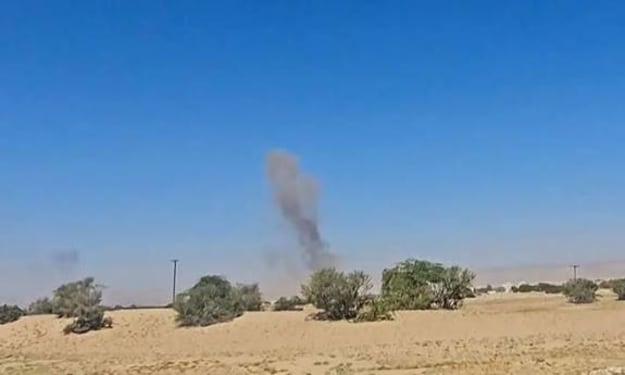
Yemen’s Government Launches Operation Against Southern Separatists: A New Phase in the Ongoing Conflict. AI-Generated.
Yemen, long embroiled in a complex civil war, is witnessing a significant shift in its ongoing conflict as the Yemeni government launches a new operation aimed at countering southern separatist forces. The operation, which has drawn the attention of both local and international observers, marks a critical development in the broader struggle for control in Yemen. As tensions between various factions continue to rise, the conflict between the internationally recognized government of Yemen and the southern separatist groups threatens to further destabilize the region. The Escalating Crisis in Yemen Yemen's civil war began in 2014, when Houthi rebels, backed by Iran, seized control of the capital, Sanaa, and later declared themselves the legitimate government. This triggered a military intervention by a Saudi-led coalition in support of Yemen's internationally recognized government. Despite years of negotiations, countless ceasefire agreements, and peace talks, the conflict has remained unresolved, leading to one of the world’s most severe humanitarian crises. However, within this broader conflict, new tensions have emerged. While the government of President Abdrabbuh Mansur Hadi is backed by Saudi Arabia and the United Arab Emirates (UAE), the rise of separatist movements in the south has created a fractured political landscape. The Southern Transitional Council (STC), which advocates for an independent southern Yemen, has been a significant force in the southern regions, including the port city of Aden. While the STC initially aligned itself with the internationally recognized government, it has gradually shifted towards a more independent stance, further complicating Yemen’s political and military situation. The New Government Operation The Yemeni government’s new operation is intended to reclaim territories in southern Yemen that have been taken over by separatist forces. The government has accused the STC of attempting to seize control of strategic areas, including military bases, airports, and ports. The operation is being led by the Yemeni military, with the support of coalition forces, including Saudi and Emirati troops. The situation has been particularly tense in areas such as Abyan and Shabwa, where the government and separatists have clashed in recent months. The government has accused the separatists of trying to create a de facto independent state in the south, potentially undermining efforts to unify Yemen under a single government. The operation marks a decisive moment in Yemen’s ongoing conflict. The military action is aimed at neutralizing the separatist forces and restoring government control over key regions. However, the Yemeni government faces significant challenges, both in terms of military capabilities and political dynamics. The Southern Transitional Council’s Reaction The Southern Transitional Council, which has controlled large parts of southern Yemen, has condemned the government’s military operation, calling it an attempt to thwart the aspirations of the southern people. The STC has demanded the establishment of a separate southern state, arguing that the south was historically independent before unification with the north in 1990. The STC’s position has been supported by some southern Yemeni factions, further complicating efforts to reach a peaceful resolution. While the STC initially supported the internationally recognized government in its fight against the Houthi rebels, it has grown increasingly frustrated with the lack of political and military gains in the south. The separatists’ military capabilities have grown stronger over time, thanks in part to the support from the UAE, which has supported the STC’s push for greater autonomy. The escalation of violence in the south risks drawing in other regional actors, particularly the UAE, which has heavily invested in the southern cause. The UAE has supported the STC with military and logistical support, and its interests in the region are tied to controlling key ports and shipping lanes in the Gulf of Aden. The involvement of the UAE and Saudi Arabia in the conflict further complicates any attempts at peaceful negotiation, as both countries have competing interests in Yemen. The Humanitarian Impact The conflict between the Yemeni government and the southern separatists is not only a military struggle but also a deeply humanitarian crisis. Yemen remains one of the world’s poorest and most war-torn countries, with millions of people displaced, malnourished, and in dire need of aid. The war has caused widespread destruction, and the situation is further exacerbated by a collapsing economy, a failing healthcare system, and a broken infrastructure. The new operation in the south is likely to worsen the humanitarian situation, as fighting between government forces and separatists could lead to further displacement, injuries, and loss of life. Civilians in areas like Abyan and Shabwa have already borne the brunt of the violence, and many are caught in the crossfire between warring factions. The Path Forward As Yemen enters this new phase of conflict, the prospects for peace seem increasingly distant. The Yemeni government’s operation against the separatists is a high-risk move that could lead to further escalation and division. The situation on the ground remains fluid, and it is unclear how the international community will respond to the worsening violence. The role of the Saudi-led coalition, which has supported the Yemeni government since the beginning of the war, will be critical in determining the outcome of the operation. If the coalition escalates its military involvement, it could widen the conflict and draw in more regional powers, further complicating efforts for peace. For Yemen, the future remains uncertain. The aspirations of southern separatists, the continued threat of Houthi expansion, and the geopolitical interests of regional powers all contribute to a highly volatile situation. The Yemeni people, who have endured years of conflict, poverty, and instability, are left to hope for a resolution that will bring peace and stability to their war-torn nation. Until then, the battle for the future of Yemen will continue to unfold, with no end in sight.
By Fiaz Ahmed Brohi26 days ago in The Swamp
Why Are So Many Young Chinese Depressed?. AI-Generated.
Mental health concerns among young people in China have surged in recent years, prompting alarm from families, educators, and policymakers alike. Studies indicate that depression, anxiety, and burnout are affecting a significant portion of Chinese youth, from high school students to young professionals in urban centers. But why is this happening, and what does it reveal about modern life in China?
By Aarif Lashari26 days ago in The Swamp
Four Decades in the European Union: Spain and Portugal’s Journey Since 1986. AI-Generated.
In 1986, two Iberian nations, Spain and Portugal, took a momentous step in their political and economic evolution by joining the European Union (EU). For both countries, membership signified the culmination of years of effort to modernize their economies, democratize their political systems, and integrate with Europe’s growing political and economic bloc. Over the past four decades, Spain and Portugal have undergone profound transformations, and their journey within the EU has not only reshaped their domestic landscapes but also their roles on the world stage.
By Muhammad Hassan26 days ago in The Swamp
Two Navy Service Members Accused of Entering Sham Marriages With Chinese Nationals: A Scandal Unfolds. AI-Generated.
In a shocking revelation that has raised concerns within military and national security circles, two U.S. Navy service members are facing serious accusations of entering into fraudulent marriages with Chinese nationals. These marriages, allegedly arranged with the sole purpose of circumventing military regulations and allowing access to sensitive information, have stirred up a mix of intrigue, betrayal, and political ramifications. The case, which is still unfolding, has raised critical questions about security risks, the integrity of military personnel, and the ongoing tension between the U.S. and China. The Allegations: Fraudulent Marriages for Access The accused Navy service members are reportedly involved in sham marriages with Chinese nationals, marriages that have been arranged with the intention of exploiting U.S. military privileges. The individuals in question, both active-duty Navy personnel, allegedly entered into these marriages not out of love or mutual respect but as part of a scheme to facilitate espionage, foreign influence, and other illicit activities. The U.S. military operates under strict guidelines regarding relationships, including those involving foreign nationals. While the military recognizes legal marriages as legitimate, concerns arise when there is the potential for these marriages to be used as a means of exploiting access to sensitive information, military assets, or compromising national security. According to reports, the marriages were arranged with the help of Chinese nationals who may have been operating with the support or knowledge of intelligence agencies from China. Authorities have not yet confirmed the exact nature of the marriages or whether they involved direct espionage activities, but the U.S. Department of Justice has launched a full-scale investigation into the matter. The Role of the U.S. Navy: Ensuring Integrity The U.S. Navy, known for its commitment to national defense, security, and ethical conduct, has long been regarded as one of the most prestigious and disciplined branches of the U.S. military. The accusations against two service members have thus raised alarms about the potential for foreign influence within military ranks. For many, the very idea that military personnel could be compromised through deceptive relationships casts a dark shadow on the integrity of the armed forces. The Navy is now conducting an internal investigation, with the goal of determining how and why the alleged fraudulent marriages took place and whether there were any security breaches as a result. The investigation will likely scrutinize the service members’ actions, the circumstances surrounding their marriages, and whether they violated military protocols or engaged in any behavior that put national security at risk. At the heart of the investigation is the broader question of how foreign adversaries may exploit the vulnerabilities of military personnel for espionage purposes. A breach of this nature is not only a violation of trust but also a serious security threat that could have long-lasting repercussions. Implications for National Security The national security implications of this case cannot be understated. As tensions between the United States and China continue to rise, issues of espionage, foreign influence, and cyber threats have become key points of concern. The relationship between China and the U.S. has long been fraught with suspicion and rivalry, particularly in areas such as technology, military advancements, and economic power. The idea that foreign nationals could gain access to military personnel through fraudulent marriages only intensifies these concerns. If the accusations are proven true, the marriages could represent an attempt to bypass military regulations and gain access to sensitive military information. This could jeopardize not only the safety of military personnel but also national security at large. The use of personal relationships as a gateway to espionage has been a tactic utilized by various state actors throughout history. By exploiting the personal vulnerabilities of military personnel—whether through romantic relationships, financial incentives, or, in this case, marriages—foreign agents can gain access to confidential information, military technologies, and other sensitive assets. A Broader Pattern? While this specific case has drawn attention, it’s part of a broader trend of concerns surrounding the infiltration of foreign influence within U.S. military ranks. This is not the first time that a member of the armed forces has been accused of compromising national security through illicit relationships or engagements with foreign nationals. Previous cases have involved individuals attempting to gain access to military secrets through means such as cyber espionage, recruitment by foreign agents, and even direct physical infiltration. As global tensions increase, especially with countries like China, Russia, and Iran, the U.S. military and intelligence agencies are under greater pressure to safeguard sensitive information from foreign adversaries. This case, however, highlights the challenges that exist in detecting, preventing, and responding to insider threats. Foreign governments seeking to undermine the U.S. can be particularly adept at exploiting weaknesses in personnel, making it critical for the U.S. to remain vigilant in defending against all forms of foreign influence. Conclusion: A Call for Increased Scrutiny As the investigation into the fraudulent marriages continues, the U.S. military will likely need to reevaluate its procedures regarding personnel relationships with foreign nationals. This case could be a warning that more stringent protocols are needed to identify and prevent potential threats. It also serves as a reminder of the vulnerabilities that military personnel face, both personally and professionally. For now, the military and law enforcement agencies must focus on uncovering the full extent of the alleged scheme and ensuring that those responsible are held accountable. At the same time, the broader implications of this case should prompt a reevaluation of how to address insider threats and foreign influence within the armed forces. As the world continues to navigate complex geopolitical challenges, securing the integrity of military institutions will remain paramount in ensuring the safety and security of the nation.
By Fiaz Ahmed Brohi26 days ago in The Swamp
Elon Musk’s Grok Under Fire for Generating Explicit AI Images of Minors. AI-Generated.
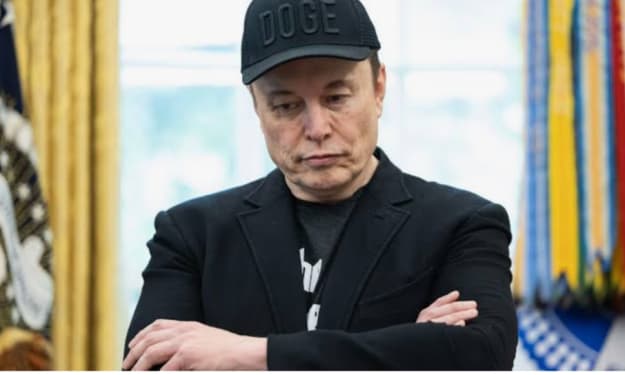
Elon Musk’s artificial intelligence chatbot, Grok, has come under intense scrutiny after reports emerged that it was capable of generating explicit images involving minors. The allegations have sparked widespread outrage, renewed calls for stricter AI regulation, and raised serious concerns about how generative AI tools are being developed, tested, and deployed.
By Ayesha Lashari26 days ago in The Swamp
US Captures President Maduro in 'Large-Scale' Venezuela Strike: A New Chapter in the Venezuela-U.S. Conflict. AI-Generated.
In a dramatic escalation of the ongoing geopolitical conflict between Venezuela and the United States, the U.S. government announced the capture of Venezuela's President Nicolás Maduro in what it described as a "large-scale" military strike. This unprecedented move has sent shockwaves throughout the political landscape, not only in Venezuela but across the global stage, raising serious questions about the future of U.S.-Venezuela relations and the implications of this capture on international diplomacy. A Long-Standing Tension: The U.S. and Venezuela The relationship between the U.S. and Venezuela has been fraught with tension for over two decades. Ever since Hugo Chávez took office in 1999, Venezuela has distanced itself from U.S. influence, aligning itself with countries such as Russia, China, and Iran. Maduro, who succeeded Chávez after his death in 2013, furthered this opposition, turning Venezuela into a central player in the regional politics of Latin America. The U.S. government, under both the Obama and Trump administrations, imposed severe sanctions on Venezuela, targeting its oil industry, government officials, and military leaders. The Trump administration’s “maximum pressure” campaign sought to oust Maduro from power, supporting opposition leader Juan Guaidó as the legitimate president. Despite years of sanctions, political unrest, and economic collapse in Venezuela, Maduro has managed to hold on to power, aided by support from Russia, China, and other allies. The latest escalation in this long-standing rivalry centers around accusations from the U.S. government, which charges Maduro with drug trafficking and weapons offenses. These charges are part of a broader effort by U.S. law enforcement agencies to dismantle what they describe as a "narcoterrorist" regime operating within the Venezuelan government. The Arrest and Its Significance On January 1, 2026, U.S. Special Forces, in coordination with intelligence agencies, launched a covert operation that led to the capture of Nicolás Maduro. The operation was reportedly "large-scale," involving airstrikes and ground troops, and was designed to incapacitate key military installations in Venezuela's capital, Caracas. According to U.S. officials, the operation also targeted military infrastructure used by the Venezuelan government to facilitate illicit activities such as drug trafficking and weapons smuggling. While the specifics of the operation remain classified, sources claim that Maduro was arrested at a secret location in Caracas, where he had reportedly been hiding in the wake of growing unrest and pressure from international actors. The capture is said to have been carried out with little resistance, a stark contrast to the violent resistance anticipated by many observers. U.S. Attorney General Merrick Garland stated, "This is a historic day for justice. Nicolás Maduro has been a primary figure in one of the largest drug trafficking and weapons smuggling operations in the Western Hemisphere. Today, we take a crucial step toward holding him accountable for his crimes." The charges against Maduro include trafficking in illicit narcotics and arms dealing. According to U.S. prosecutors, the Venezuelan president’s regime has been directly involved in the distribution of cocaine and weapons to various criminal organizations throughout the Americas. The indictment also accuses him of using state resources to fund paramilitary groups that operate across the continent, further destabilizing the region. Venezuela's Response: Denials and Outrage As expected, Venezuela has vehemently denied the allegations and rejected the legitimacy of the U.S. operation. In a televised address, Vice President Delcy Rodríguez condemned the U.S. actions as "an illegal act of aggression" and a violation of Venezuela's sovereignty. She also called for immediate international condemnation of the U.S. government's actions, claiming that the operation was part of a broader plan to destabilize the Venezuelan government and install a puppet regime aligned with U.S. interests. "We will not allow foreign intervention in our internal affairs. This is a shameless attempt to overthrow the will of the Venezuelan people," Rodríguez said. In an ironic twist, Venezuela's government has invoked the memory of its late leader, Hugo Chávez, who famously resisted U.S. attempts to influence Venezuela's political trajectory. Chávez's legacy remains a central pillar of Maduro's leadership, and his supporters see Maduro’s capture as an affront to their cause. International reactions to Maduro's arrest have been mixed. While some Western countries, particularly those in Europe, have voiced support for the U.S. operation, other nations, including Russia and China, have denounced the move as an act of imperialism. The United Nations has called for an independent investigation into the circumstances surrounding Maduro's capture, warning against further escalation of the situation in Venezuela. The Legal and Diplomatic Fallout The legal ramifications of Maduro’s arrest are likely to unfold over the coming months. Maduro, along with several of his top aides, faces multiple charges in U.S. courts related to his alleged involvement in narcoterrorism. The U.S. has requested his extradition to stand trial for these offenses, though this will likely face significant obstacles. Venezuela is not a signatory to the U.S.-led extradition treaties, and it is uncertain whether Maduro will be transferred to the U.S. for prosecution. Many experts believe that this may lead to a prolonged diplomatic standoff, with Venezuela demanding his immediate return and the U.S. seeking to bring him to trial. Maduro’s capture also raises the question of who will succeed him as leader of Venezuela. In the wake of his arrest, several factions within Venezuela’s opposition have begun jockeying for position, hoping to assume leadership of the country. However, the political landscape remains deeply divided, and it is unclear whether a smooth transition of power is possible. Some analysts predict that the absence of Maduro may lead to a power vacuum that could further destabilize the country. A Turning Point for Venezuela The capture of Nicolás Maduro marks a significant turning point in the Venezuela-U.S. conflict. For the U.S. government, this represents a hard-won victory in its decades-long efforts to undermine Maduro’s rule. However, the broader implications of this event are still unfolding. The international community will be watching closely to see how the Venezuelan government responds, and whether this capture will lead to meaningful change in the country’s political trajectory or result in further violence and instability. What is clear is that the power dynamics in Venezuela have shifted dramatically, and the fallout from this operation will reverberate across the region for years to come. In the end, the future of Venezuela may depend on how the country navigates its political and diplomatic challenges in the wake of Maduro's arrest. One thing is certain: this is far from the end of the story
By Muhammad Hassan26 days ago in The Swamp
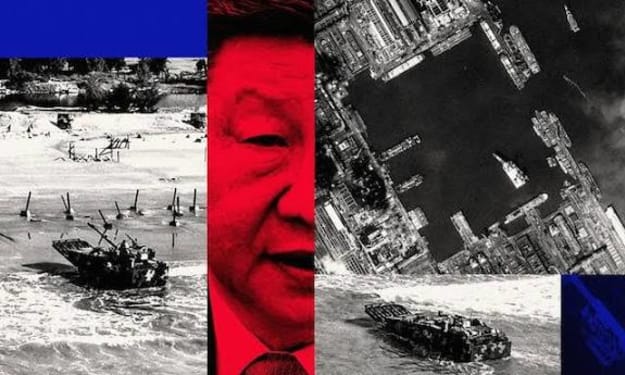
How China Plans to Land the World’s Largest Army on Taiwan: An Escalating Tension in the Taiwan Strait. AI-Generated.
The geopolitical tension surrounding Taiwan has escalated in recent years, particularly with China’s increasingly assertive stance towards the self-governing island. Taiwan, a critical point of economic and political contention in the Asia-Pacific region, stands at the crossroads of international diplomacy, defense, and global trade. China, with its growing military and economic might, has frequently voiced its desire to reunite Taiwan with the mainland, even if it means using force. The concept of China landing the world's largest army on Taiwan, while still a hypothetical scenario, has become a focal point of international discussions about military strategy, security, and the future of the Indo-Pacific region.
By Fiaz Ahmed Brohi26 days ago in The Swamp
Captive Power Gas: Government Extends Monthly Levy to Third-Party Suppliers. AI-Generated.
The energy sector in India has been undergoing significant reforms and adjustments in recent years to address the nation’s growing energy demands. One of the latest developments in this sector is the government's decision to extend the monthly levy on captive power gas to third-party suppliers. This decision has sparked discussions and raised questions regarding its impact on industries, consumers, and the overall energy market.
By Fiaz Ahmed Brohi26 days ago in The Swamp
What to Know About China and Japan’s Escalating Spat Over Taiwan. AI-Generated.
Tensions between China and Japan have intensified in recent months, with Taiwan once again at the center of a growing geopolitical dispute. While Taiwan has long been a sensitive issue in East Asia, recent statements, military activities, and diplomatic exchanges have sharpened rhetoric and raised concerns about regional stability.
By Aarif Lashari26 days ago in The Swamp
It Does Not Pay to Work in Britain: Analyzing the Rising Struggles of the British Workforce. AI-Generated.
The United Kingdom has long been considered a prosperous nation, with its high standard of living and strong economy. However, the once idealized notion of working in Britain has become increasingly complicated, and in many cases, working is no longer seen as a reliable pathway to financial security. A closer examination of the current socio-economic environment reveals that for many in the UK, it "does not pay to work" as wages fail to keep pace with the rising cost of living, exacerbating financial strain on workers. The Declining Purchasing Power of Wages One of the primary reasons why working in Britain is losing its appeal is the stagnation of wages. Over the past decade, wages in many sectors have failed to increase in proportion to inflation and the rising cost of living. According to recent data, real wages—adjusted for inflation—have remained stagnant, meaning that workers are earning the same or less compared to previous years in terms of purchasing power. A key factor in this stagnant wage growth is the increased cost of basic necessities such as housing, food, and utilities. The housing crisis, in particular, has made it harder for people to afford rent or purchase property. In many parts of the UK, housing prices have soared far beyond the reach of average workers, forcing them into more precarious living arrangements or even pushing them out of urban centers where job opportunities are concentrated. The Rising Cost of Living: A Barrier to Financial Security The cost of living in Britain has increased significantly, and for many, the wages they earn simply do not cover the rising expenses. Energy bills have skyrocketed in recent years, especially following global market fluctuations and the ongoing energy crisis. Utility costs—electricity, gas, and water—have become a major financial burden for households across the country. As a result, working full-time jobs in the UK is no longer guaranteed to provide workers with the financial security they once enjoyed. Additionally, the prices of everyday items such as groceries, transportation, and childcare have soared. In many cases, these costs are rising much faster than salaries, leaving people with less disposable income. While wages have remained largely stagnant, the price of food and essentials has jumped, making it difficult for workers to save money, invest in their futures, or even cover basic living expenses. For those living in cities such as London, the gap between earnings and the cost of living is particularly pronounced. Rent alone can take up a large portion of a worker’s salary, leaving little room for savings or a comfortable lifestyle. The Impact of Taxation on Workers Taxation is another contributing factor to why it may no longer pay to work in Britain. Many workers find that a significant portion of their income is taken away by taxes and national insurance contributions. Although the UK has a progressive tax system, high tax rates, especially for middle-income earners, are often cited as another barrier to financial success. While taxes are essential to funding public services, the burden they place on workers has led to growing discontent. For those already struggling to make ends meet due to high living costs, the additional pressure from taxes can make it feel as though their hard work is not being adequately rewarded. The Precarity of Zero-Hour Contracts and Gig Work In addition to stagnant wages, another factor that has contributed to the notion that working in Britain does not pay is the rise of zero-hour contracts and gig economy jobs. These contracts, which offer workers no guaranteed hours or job security, have become more common in the UK’s labor market. Workers on zero-hour contracts face the uncertainty of inconsistent hours, meaning that their income can fluctuate significantly from week to week. For many, this creates a precarious financial situation where they cannot predict their earnings and have limited access to benefits such as paid sick leave or holiday pay. Meanwhile, gig economy jobs, such as those in ride-sharing or food delivery, also offer flexibility but lack the security and benefits of traditional employment. Gig workers are often treated as independent contractors, which means they do not receive the same protections as full-time employees. This has made it difficult for many workers to rely on gig work as their sole source of income, as their earnings can be unpredictable, and the jobs do not always provide adequate financial stability. Government Assistance and the Need for Reform As the financial struggles of the workforce continue to grow, many are turning to government assistance programs. However, the reliance on benefits has led to increased criticism, with some arguing that the current welfare system does not do enough to support low-income workers. Critics suggest that the government’s focus should be on increasing wages, reducing the cost of living, and ensuring that workers have access to more secure and stable job opportunities. There are also calls for reforms to taxation and labor laws to address the challenges faced by workers in the UK. Some suggest raising the minimum wage to better reflect the rising cost of living, while others advocate for a shift away from zero-hour contracts in favor of more secure, full-time employment opportunities. Conclusion: A Changing Economic Landscape The idea that "it does not pay to work" in Britain reflects a fundamental shift in the country’s economic landscape. With stagnant wages, rising living costs, and an increasing reliance on insecure forms of employment, many workers find it harder to achieve financial stability and upward mobility. The current state of the UK economy has led to a growing sense of frustration among workers, who feel that their hard work is not adequately rewarded. As the UK grapples with these economic challenges, it is clear that reforms are needed to ensure that work pays a fair and livable wage for all. In the meantime, workers across the country will continue to feel the pressure of rising costs and stagnating incomes, forcing many to question whether the promise of financial security through hard work is still attainable in today’s Britain.
By Fiaz Ahmed Brohi26 days ago in The Swamp