
How China Plans to Land the World’s Largest Army on Taiwan: An Escalating Tension in the Taiwan Strait
Navigating New Energy Regulations: The Government's Push for Fairness in Gas Supply"

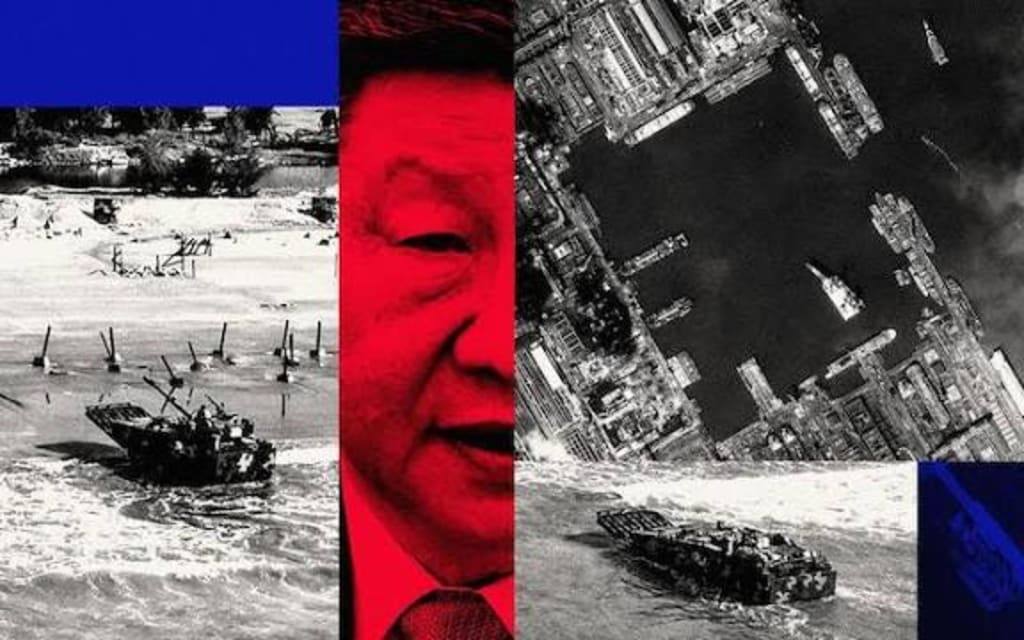
The geopolitical tension surrounding Taiwan has escalated in recent years, particularly with China’s increasingly assertive stance towards the self-governing island. Taiwan, a critical point of economic and political contention in the Asia-Pacific region, stands at the crossroads of international diplomacy, defense, and global trade. China, with its growing military and economic might, has frequently voiced its desire to reunite Taiwan with the mainland, even if it means using force. The concept of China landing the world's largest army on Taiwan, while still a hypothetical scenario, has become a focal point of international discussions about military strategy, security, and the future of the Indo-Pacific region.
The Stakes: Taiwan's Strategic Importance
Taiwan holds immense strategic value, both geopolitically and economically. The island is located in the heart of East Asia, with a proximity to major maritime trade routes. Taiwan is also home to cutting-edge semiconductor technology, which powers global industries ranging from electronics to automotive. As such, its importance extends far beyond its small landmass. To Beijing, the reunification of Taiwan with the mainland is not only a matter of national pride but also a crucial part of its vision for asserting dominance in the region and globally.
China’s Military Ambitions: The World’s Largest Army
China boasts the world’s largest military in terms of personnel, with the People’s Liberation Army (PLA) comprising around 2 million active-duty soldiers. This vast army, combined with China’s rapid modernization of its defense forces, puts the PLA in a strong position to execute large-scale military operations. While the focus of China’s military expansion has primarily been on air and naval power, the prospect of a land invasion of Taiwan would require an enormous amount of military coordination, logistics, and firepower.
Beijing’s long-term strategy includes integrating advanced technologies into its military, such as artificial intelligence, autonomous weapon systems, and cutting-edge cyber capabilities. These advancements would likely play a central role in any operation targeting Taiwan. The goal would be to neutralize Taiwan's defenses while also preventing international intervention, especially from the United States, which has made clear its commitment to Taiwan's security.
A Hypothetical Landing on Taiwan: The Logistics and Challenges
For China to successfully land its massive army on Taiwan, several obstacles would need to be overcome. Taiwan, though smaller than mainland China, is a well-defended island with an array of military capabilities. The Taiwanese military, backed by modern defense technologies, would put up a fierce resistance against any such invasion. The first challenge for China would be securing control of Taiwan’s airspace and waters, which are integral to any large-scale amphibious operation.
One of the first steps would likely involve airstrikes and naval blockades to weaken Taiwan’s defense infrastructure. The Chinese air force would aim to neutralize Taiwan’s air defense systems and reduce its military command and control capabilities. Concurrently, China would deploy its naval forces to block maritime traffic and prevent the arrival of foreign reinforcements. This would require extensive coordination between the PLA Navy, Air Force, and Rocket Force.
After achieving air and sea dominance, China would likely employ its vast amphibious assault capabilities. The PLA Navy and Marine Corps have been expanding their amphibious landing forces, with new landing ships, assault vehicles, and helicopters designed for operations against an island target. These assets would be used to land soldiers on Taiwan’s shores, though this would be a highly risky operation, as Taiwanese forces are well-prepared for coastal defense.
Taiwan’s Defense Strategy: Preparations and Countermeasures
Taiwan has been preparing for a potential invasion from China for decades. The island has a highly capable military, with advanced air defense systems, anti-ship missiles, and modern fighter jets. Taiwan has also focused on asymmetric warfare strategies, emphasizing mobility and small-unit tactics that would make a direct invasion by a large force like China’s a daunting prospect.
In the event of an invasion, Taiwan’s military would likely engage in a mix of guerrilla tactics and conventional defense, using its mountainous terrain to its advantage. The island’s defensive strategy includes well-positioned missile systems that could target Chinese naval assets attempting to approach Taiwan's shores.
Additionally, Taiwan’s alliance with the United States has been a critical component of its defense strategy. The U.S. has promised to aid Taiwan in its defense, although the exact nature of American support remains ambiguous. U.S. military assets, including advanced fighter jets and naval forces, would likely play a crucial role in deterring or repelling a Chinese invasion.
The Global Consequences: Economic, Political, and Military Implications
An attempted Chinese invasion of Taiwan would have far-reaching consequences, not just for the island itself but for the entire global community. Economically, Taiwan is a hub for semiconductor production, and any disruption to its operations would send shockwaves through global supply chains. The U.S. and other Western nations rely heavily on Taiwanese semiconductors for everything from consumer electronics to military technology. A Chinese invasion would almost certainly trigger widespread economic sanctions against China, as well as disruptions to global markets.
Politically, such an event would likely draw in regional powers like Japan, South Korea, and Australia, who have strong interests in maintaining peace and stability in the Indo-Pacific. The United States would also be heavily involved, as its commitment to Taiwan’s security has been a cornerstone of its broader Asia-Pacific strategy. Any conflict in the region would have the potential to escalate into a wider military confrontation, possibly even a world war.
Conclusion: The Future of Taiwan and the Taiwan Strait
While China’s military ambitions regarding Taiwan remain speculative, the threat of conflict is undeniably real. Taiwan’s future remains uncertain, and its status as a self-governing entity is at the heart of ongoing geopolitical tensions between China and the West. As China continues to expand its military capabilities and assert its influence in the
About the Creator
Fiaz Ahmed Brohi
I am a passionate writer with a love for exploring and creating content on trending topics. Always curious, always sharing stories that engage and inspire.
Keep reading
More stories from Fiaz Ahmed Brohi and writers in The Swamp and other communities.
Captive Power Gas: Government Extends Monthly Levy to Third-Party Suppliers
The energy sector in India has been undergoing significant reforms and adjustments in recent years to address the nation’s growing energy demands. One of the latest developments in this sector is the government's decision to extend the monthly levy on captive power gas to third-party suppliers. This decision has sparked discussions and raised questions regarding its impact on industries, consumers, and the overall energy market.
By Fiaz Ahmed Brohi17 days ago in The Swamp
Daniel Ives: Trump’s Electricity Policy Could Be a ‘Bottleneck’ for Data Centers
If you’ve been following the AI boom lately, you know that it’s not just about clever algorithms or smart apps—it’s also about massive amounts of electricity. And according to Wall Street analyst Daniel Ives, the electricity policies being pushed by the Trump administration could become a serious bottleneck for U.S. data centers, the massive facilities that power everything from cloud storage to AI models like ChatGPT. Ives warns that while the administration wants to protect consumers from higher electricity bills—which is understandable—the way these policies are being implemented may slow down the very infrastructure needed for America to stay competitive in AI and tech innovation. Data Centers: More Than Just Big Computers Think of a data center as a giant brain for the internet. These facilities run thousands of servers 24/7, processing the data behind social media, streaming video, cloud apps, and artificial intelligence. Unlike your laptop or phone, data centers never power down, which means they use an incredible amount of electricity. In 2023, U.S. data centers used about 4.4% of all electricity in the country—roughly the same as major cities like New York or Chicago. And with AI becoming a bigger part of business and daily life, demand for power is expected to double or triple by 2030. So when policies affect electricity pricing or availability, it hits data centers directly—and fast. Trump’s Electricity Policy Explained President Trump’s administration has been clear: Americans shouldn’t pay higher utility bills because of data centers. The plan encourages Big Tech to cover their own energy costs instead of relying on electricity rates that might indirectly affect households and small businesses. In response, companies like Microsoft have pledged to pay more for electricity and make their operations more efficient. While this helps protect consumers, Daniel Ives says it could also slow down the growth of new data centers if companies decide the costs are too high or too uncertain. Why Daniel Ives Calls It a Bottleneck Ives calls this situation a “bottleneck” for several reasons: Rising Costs for Tech Firms: If companies have to pay more for electricity, building new data centers becomes more expensive. That can slow expansion. Infrastructure Limits: Many regions of the U.S. grid weren’t designed for the current surge in AI-powered data centers. Limited power availability can delay or block projects. Global Competition: Ives warns that if U.S. policies make data center growth harder, other countries—like China—might pull ahead in AI infrastructure. In short, protecting consumers is important, but it needs to be balanced with ensuring America can scale its AI and cloud capabilities quickly. The Reality of Power Demands This isn’t just about politics—it’s about practical energy challenges. The U.S. grid is already under pressure from data centers, electric vehicles, and growing industrial demand. In some hotspots, developers wait years just to get a power hookup. Without careful planning, the electricity needed for AI innovation could hit a hard limit, delaying projects or pushing companies to relocate where energy is cheaper or more abundant. Balancing Innovation and Consumer Protection The Trump administration’s approach tries to strike a balance: protect household electricity bills while allowing tech growth. But Daniel Ives argues that if the balance isn’t right, it could unintentionally discourage investment and slow AI infrastructure development. Companies are trying to adapt. Microsoft, for instance, has promised to cover energy costs and invest in efficiency. Utilities and lawmakers are also revisiting subsidies and incentives for energy-intensive projects, trying to find a way that keeps everyone happy. Why This Matters for AI The bottleneck isn’t just about data centers or corporate profits—it’s about the speed of AI development in the U.S. AI doesn’t just need processing power; it needs continuous, reliable electricity. If supply is limited or policies make energy too expensive, AI projects could slow down, affecting everything from business innovation to national competitiveness. Ives’ warning is clear: electricity policy isn’t a small detail. It’s a strategic factor that could shape the future of AI in America. Conclusion: Watching the Power Flow Daniel Ives’ perspective highlights a key lesson: tech innovation depends on energy policy just as much as it does on talent or investment. The U.S. needs policies that protect consumers but also allow data centers—and the AI revolution—to grow. Otherwise, we could see delays in AI infrastructure just as the world is racing to adopt new technologies. For policymakers, companies, and consumers, the takeaway is clear: energy policy isn’t just about rates; it’s about the future of American technology. The next few years will show whether Washington can balance consumer protection with the energy needs of AI—or if Daniel Ives’ bottleneck warning becomes reality.
By Muhammad Hassan5 days ago in The Swamp


Comments
There are no comments for this story
Be the first to respond and start the conversation.