
Captive Power Gas: Government Extends Monthly Levy to Third-Party Suppliers
Government Expands Monthly Levy on Captive Power Gas to Third-Party Suppliers: Implications for the Energy Market


The energy sector in India has been undergoing significant reforms and adjustments in recent years to address the nation’s growing energy demands. One of the latest developments in this sector is the government's decision to extend the monthly levy on captive power gas to third-party suppliers. This decision has sparked discussions and raised questions regarding its impact on industries, consumers, and the overall energy market.
Understanding Captive Power and Its Role in India’s Energy Landscape
Captive power plants play a crucial role in India’s industrial energy consumption. These plants are set up by companies to generate their own electricity, usually using natural gas, coal, or renewable sources. Captive power generation has been a vital solution to power shortages, especially for industries that require a continuous supply of energy for manufacturing processes. By setting up their own power plants, companies are able to secure a reliable power source and minimize disruptions due to grid failures or power rationing.
However, captive power generation has not been without its challenges. The cost of generating power through captive plants, particularly with natural gas, has fluctuated over the years, often making it more expensive compared to purchasing power from the national grid. The government’s latest move to impose a monthly levy on gas used by third-party suppliers for captive power plants is intended to regulate and standardize energy costs while managing the supply chain more efficiently.
The Levy Extension: What It Means for Third-Party Suppliers
Third-party suppliers are companies that sell gas to industries for use in captive power plants, and this extension of the levy will now apply to them as well. The government’s decision to extend the levy to third-party suppliers aims to create a more equitable and transparent pricing structure. Under this new regulation, third-party suppliers will be required to pay the levy on the gas they provide to captive power plants, which previously was a cost borne by the companies themselves. This move is seen as an effort to control the volatile pricing of natural gas and ensure that industries are not disproportionately affected by rising fuel prices.
For third-party suppliers, this new policy comes with both opportunities and challenges. On one hand, it ensures that they remain aligned with national energy policies and have a clearer understanding of pricing dynamics. On the other hand, it raises concerns about their profit margins, especially if the government places high levies on the gas sold to industries. Suppliers could face a decrease in competitiveness if they are unable to absorb these additional costs, potentially leading to increased prices for end-users, or causing them to pass on the burden to industrial consumers.
Implications for Industrial Consumers and Power Costs
The most significant impact of this levy extension will be on industrial consumers who depend on captive power plants for a stable energy supply. The new policy could lead to an increase in the cost of energy for manufacturing companies, particularly those that rely on third-party suppliers for their gas. As the price of natural gas rises with the implementation of the levy, industries may have to bear the additional costs, which could affect their bottom lines.
While the government’s intention is to regulate the energy market and reduce the dependence on grid power, the move could raise concerns about the long-term viability of captive power generation. In the face of higher energy costs, some industries might be forced to reconsider the economics of running their own power plants, especially when grid electricity becomes more cost-competitive.
Government's Rationale: Balancing Energy Costs and Market Efficiency
The government’s decision to extend the levy stems from a broader objective of managing energy resources more effectively. By implementing a levy, the government hopes to achieve greater stability in the natural gas market. It also aims to prevent third-party suppliers from bypassing regulations, thereby ensuring that all stakeholders contribute fairly to the energy ecosystem. In addition, the move is seen as an effort to boost the national energy infrastructure and avoid monopolies or price manipulation by private suppliers.
While the policy is designed to balance the needs of both producers and consumers, there are questions about whether the levies will be sufficient to cover the increasing costs of domestic and international gas supplies. The price of liquefied natural gas (LNG) has been on the rise globally, and it remains to be seen how domestic suppliers will cope with these changes. Moreover, the extent to which industries will absorb the higher costs is another concern, particularly for sectors that are already facing rising raw material prices and labor costs.
The Bigger Picture: Diversification of Energy Sources
One of the key factors driving these changes in the energy policy is the global shift towards renewable energy sources. India, like many other nations, is under pressure to reduce its carbon footprint and transition to more sustainable energy practices. In line with the government's ambitious renewable energy targets, the extension of the levy is part of a broader push to create a more diversified and resilient energy mix.
While the levy on captive power plants is a short-term regulatory tool, the long-term goal remains to reduce the country’s reliance on fossil fuels like natural gas and coal. By incentivizing the use of renewable energy sources such as solar, wind, and biomass, the government hopes to drive a more sustainable and economically viable energy future. This could also alleviate some of the pressure on industries that are currently reliant on costly fossil fuels.
Conclusion: Navigating Challenges and Opportunities
The extension of the levy to third-party suppliers for captive power generation is a significant development in India’s energy landscape. While the policy aims to create a more standardized energy market, it presents both challenges and opportunities for suppliers and industrial consumers alike. It is clear that the government is seeking to balance the demand for stable energy prices with the long-term goals of sustainability and energy security. How industries adapt to these changes will be critical in shaping the future of energy in India, and the broader implications of these policies will likely unfold in the coming years.
As the country continues to grapple with the complexities of energy supply, market regulation, and environmental goals, stakeholders must work together to ensure that the transition is smooth and that both the economy and the environment can thrive in harmony.
About the Creator
Fiaz Ahmed Brohi
I am a passionate writer with a love for exploring and creating content on trending topics. Always curious, always sharing stories that engage and inspire.
Keep reading
More stories from Fiaz Ahmed Brohi and writers in The Swamp and other communities.
It Does Not Pay to Work in Britain: Analyzing the Rising Struggles of the British Workforce
The United Kingdom has long been considered a prosperous nation, with its high standard of living and strong economy. However, the once idealized notion of working in Britain has become increasingly complicated, and in many cases, working is no longer seen as a reliable pathway to financial security. A closer examination of the current socio-economic environment reveals that for many in the UK, it "does not pay to work" as wages fail to keep pace with the rising cost of living, exacerbating financial strain on workers. The Declining Purchasing Power of Wages One of the primary reasons why working in Britain is losing its appeal is the stagnation of wages. Over the past decade, wages in many sectors have failed to increase in proportion to inflation and the rising cost of living. According to recent data, real wages—adjusted for inflation—have remained stagnant, meaning that workers are earning the same or less compared to previous years in terms of purchasing power. A key factor in this stagnant wage growth is the increased cost of basic necessities such as housing, food, and utilities. The housing crisis, in particular, has made it harder for people to afford rent or purchase property. In many parts of the UK, housing prices have soared far beyond the reach of average workers, forcing them into more precarious living arrangements or even pushing them out of urban centers where job opportunities are concentrated. The Rising Cost of Living: A Barrier to Financial Security The cost of living in Britain has increased significantly, and for many, the wages they earn simply do not cover the rising expenses. Energy bills have skyrocketed in recent years, especially following global market fluctuations and the ongoing energy crisis. Utility costs—electricity, gas, and water—have become a major financial burden for households across the country. As a result, working full-time jobs in the UK is no longer guaranteed to provide workers with the financial security they once enjoyed. Additionally, the prices of everyday items such as groceries, transportation, and childcare have soared. In many cases, these costs are rising much faster than salaries, leaving people with less disposable income. While wages have remained largely stagnant, the price of food and essentials has jumped, making it difficult for workers to save money, invest in their futures, or even cover basic living expenses. For those living in cities such as London, the gap between earnings and the cost of living is particularly pronounced. Rent alone can take up a large portion of a worker’s salary, leaving little room for savings or a comfortable lifestyle. The Impact of Taxation on Workers Taxation is another contributing factor to why it may no longer pay to work in Britain. Many workers find that a significant portion of their income is taken away by taxes and national insurance contributions. Although the UK has a progressive tax system, high tax rates, especially for middle-income earners, are often cited as another barrier to financial success. While taxes are essential to funding public services, the burden they place on workers has led to growing discontent. For those already struggling to make ends meet due to high living costs, the additional pressure from taxes can make it feel as though their hard work is not being adequately rewarded. The Precarity of Zero-Hour Contracts and Gig Work In addition to stagnant wages, another factor that has contributed to the notion that working in Britain does not pay is the rise of zero-hour contracts and gig economy jobs. These contracts, which offer workers no guaranteed hours or job security, have become more common in the UK’s labor market. Workers on zero-hour contracts face the uncertainty of inconsistent hours, meaning that their income can fluctuate significantly from week to week. For many, this creates a precarious financial situation where they cannot predict their earnings and have limited access to benefits such as paid sick leave or holiday pay. Meanwhile, gig economy jobs, such as those in ride-sharing or food delivery, also offer flexibility but lack the security and benefits of traditional employment. Gig workers are often treated as independent contractors, which means they do not receive the same protections as full-time employees. This has made it difficult for many workers to rely on gig work as their sole source of income, as their earnings can be unpredictable, and the jobs do not always provide adequate financial stability. Government Assistance and the Need for Reform As the financial struggles of the workforce continue to grow, many are turning to government assistance programs. However, the reliance on benefits has led to increased criticism, with some arguing that the current welfare system does not do enough to support low-income workers. Critics suggest that the government’s focus should be on increasing wages, reducing the cost of living, and ensuring that workers have access to more secure and stable job opportunities. There are also calls for reforms to taxation and labor laws to address the challenges faced by workers in the UK. Some suggest raising the minimum wage to better reflect the rising cost of living, while others advocate for a shift away from zero-hour contracts in favor of more secure, full-time employment opportunities. Conclusion: A Changing Economic Landscape The idea that "it does not pay to work" in Britain reflects a fundamental shift in the country’s economic landscape. With stagnant wages, rising living costs, and an increasing reliance on insecure forms of employment, many workers find it harder to achieve financial stability and upward mobility. The current state of the UK economy has led to a growing sense of frustration among workers, who feel that their hard work is not adequately rewarded. As the UK grapples with these economic challenges, it is clear that reforms are needed to ensure that work pays a fair and livable wage for all. In the meantime, workers across the country will continue to feel the pressure of rising costs and stagnating incomes, forcing many to question whether the promise of financial security through hard work is still attainable in today’s Britain.
By Fiaz Ahmed Brohi17 days ago in The Swamp
Japan Household Refrigerators and Freezers Market Size & Forecast 2025–2033
Japan Household Refrigerators and Freezers Market Overview Japan’s household refrigerators and freezers market is on a steady growth path as evolving lifestyles, technological sophistication, and sustainability priorities reshape consumer preferences. According to Renub Research, the Japan Household Refrigerators and Freezers Market is expected to grow from US$ 5.06 billion in 2024 to US$ 6.66 billion by 2033, registering a CAGR of 3.09% during the forecast period 2025–2033.
By Renub Research4 days ago in The Swamp
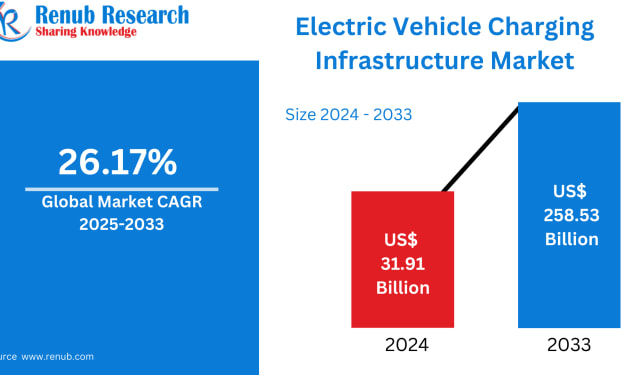
EV Charging Infrastructure Market Size and Forecast 2025–2033
Introduction: The Backbone of the Electric Mobility Revolution The electric vehicle (EV) transition is no longer a future promise—it is an unfolding reality reshaping transportation systems worldwide. At the heart of this transformation lies one indispensable element: charging infrastructure. Without a dense, reliable, and intelligent network of charging points, even the most advanced electric vehicles would remain limited in reach and appeal.
By Aaina Oberoi6 days ago in The Swamp



Comments
There are no comments for this story
Be the first to respond and start the conversation.