
US Captures President Maduro in 'Large-Scale' Venezuela Strike: A New Chapter in the Venezuela-U.S. Conflict
The U.S. Government Accuses Venezuela's President of Drug Trafficking and Weapons Offenses Amidst Rising Tensions in the Region

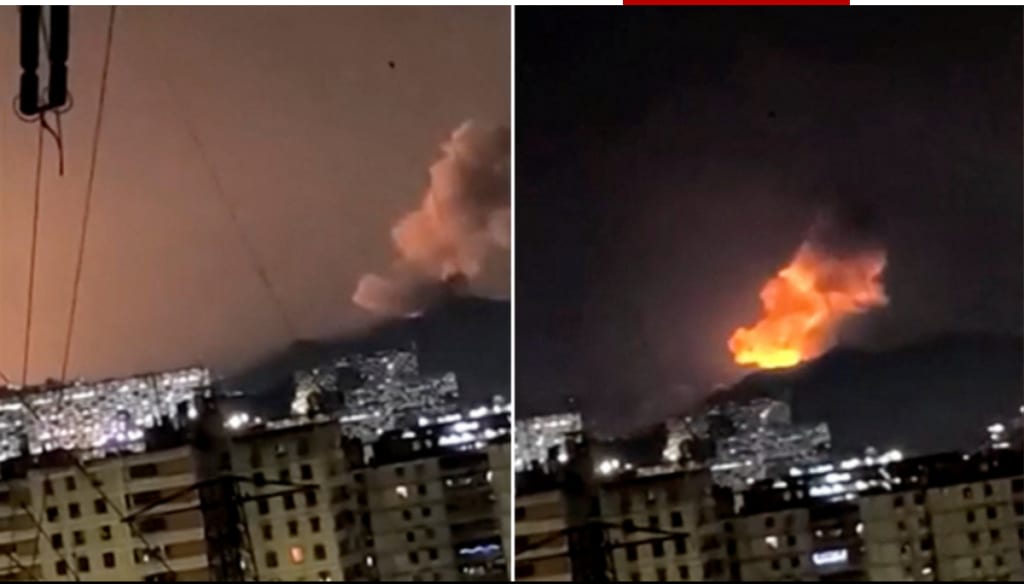
In a dramatic escalation of the ongoing geopolitical conflict between Venezuela and the United States, the U.S. government announced the capture of Venezuela's President Nicolás Maduro in what it described as a "large-scale" military strike. This unprecedented move has sent shockwaves throughout the political landscape, not only in Venezuela but across the global stage, raising serious questions about the future of U.S.-Venezuela relations and the implications of this capture on international diplomacy.
A Long-Standing Tension: The U.S. and Venezuela
The relationship between the U.S. and Venezuela has been fraught with tension for over two decades. Ever since Hugo Chávez took office in 1999, Venezuela has distanced itself from U.S. influence, aligning itself with countries such as Russia, China, and Iran. Maduro, who succeeded Chávez after his death in 2013, furthered this opposition, turning Venezuela into a central player in the regional politics of Latin America.
The U.S. government, under both the Obama and Trump administrations, imposed severe sanctions on Venezuela, targeting its oil industry, government officials, and military leaders. The Trump administration’s “maximum pressure” campaign sought to oust Maduro from power, supporting opposition leader Juan Guaidó as the legitimate president. Despite years of sanctions, political unrest, and economic collapse in Venezuela, Maduro has managed to hold on to power, aided by support from Russia, China, and other allies.
The latest escalation in this long-standing rivalry centers around accusations from the U.S. government, which charges Maduro with drug trafficking and weapons offenses. These charges are part of a broader effort by U.S. law enforcement agencies to dismantle what they describe as a "narcoterrorist" regime operating within the Venezuelan government.
The Arrest and Its Significance
On January 1, 2026, U.S. Special Forces, in coordination with intelligence agencies, launched a covert operation that led to the capture of Nicolás Maduro. The operation was reportedly "large-scale," involving airstrikes and ground troops, and was designed to incapacitate key military installations in Venezuela's capital, Caracas. According to U.S. officials, the operation also targeted military infrastructure used by the Venezuelan government to facilitate illicit activities such as drug trafficking and weapons smuggling.
While the specifics of the operation remain classified, sources claim that Maduro was arrested at a secret location in Caracas, where he had reportedly been hiding in the wake of growing unrest and pressure from international actors. The capture is said to have been carried out with little resistance, a stark contrast to the violent resistance anticipated by many observers.
U.S. Attorney General Merrick Garland stated, "This is a historic day for justice. Nicolás Maduro has been a primary figure in one of the largest drug trafficking and weapons smuggling operations in the Western Hemisphere. Today, we take a crucial step toward holding him accountable for his crimes."
The charges against Maduro include trafficking in illicit narcotics and arms dealing. According to U.S. prosecutors, the Venezuelan president’s regime has been directly involved in the distribution of cocaine and weapons to various criminal organizations throughout the Americas. The indictment also accuses him of using state resources to fund paramilitary groups that operate across the continent, further destabilizing the region.
Venezuela's Response: Denials and Outrage
As expected, Venezuela has vehemently denied the allegations and rejected the legitimacy of the U.S. operation. In a televised address, Vice President Delcy Rodríguez condemned the U.S. actions as "an illegal act of aggression" and a violation of Venezuela's sovereignty. She also called for immediate international condemnation of the U.S. government's actions, claiming that the operation was part of a broader plan to destabilize the Venezuelan government and install a puppet regime aligned with U.S. interests.
"We will not allow foreign intervention in our internal affairs. This is a shameless attempt to overthrow the will of the Venezuelan people," Rodríguez said.
In an ironic twist, Venezuela's government has invoked the memory of its late leader, Hugo Chávez, who famously resisted U.S. attempts to influence Venezuela's political trajectory. Chávez's legacy remains a central pillar of Maduro's leadership, and his supporters see Maduro’s capture as an affront to their cause.
International reactions to Maduro's arrest have been mixed. While some Western countries, particularly those in Europe, have voiced support for the U.S. operation, other nations, including Russia and China, have denounced the move as an act of imperialism. The United Nations has called for an independent investigation into the circumstances surrounding Maduro's capture, warning against further escalation of the situation in Venezuela.
The Legal and Diplomatic Fallout
The legal ramifications of Maduro’s arrest are likely to unfold over the coming months. Maduro, along with several of his top aides, faces multiple charges in U.S. courts related to his alleged involvement in narcoterrorism. The U.S. has requested his extradition to stand trial for these offenses, though this will likely face significant obstacles.
Venezuela is not a signatory to the U.S.-led extradition treaties, and it is uncertain whether Maduro will be transferred to the U.S. for prosecution. Many experts believe that this may lead to a prolonged diplomatic standoff, with Venezuela demanding his immediate return and the U.S. seeking to bring him to trial.
Maduro’s capture also raises the question of who will succeed him as leader of Venezuela. In the wake of his arrest, several factions within Venezuela’s opposition have begun jockeying for position, hoping to assume leadership of the country. However, the political landscape remains deeply divided, and it is unclear whether a smooth transition of power is possible. Some analysts predict that the absence of Maduro may lead to a power vacuum that could further destabilize the country.
A Turning Point for Venezuela
The capture of Nicolás Maduro marks a significant turning point in the Venezuela-U.S. conflict. For the U.S. government, this represents a hard-won victory in its decades-long efforts to undermine Maduro’s rule. However, the broader implications of this event are still unfolding.
The international community will be watching closely to see how the Venezuelan government responds, and whether this capture will lead to meaningful change in the country’s political trajectory or result in further violence and instability. What is clear is that the power dynamics in Venezuela have shifted dramatically, and the fallout from this operation will reverberate across the region for years to come.
In the end, the future of Venezuela may depend on how the country navigates its political and diplomatic challenges in the wake of Maduro's arrest. One thing is certain: this is far from the end of the story
About the Creator
Muhammad Hassan
Muhammad Hassan | Content writer with 2 years of experience crafting engaging articles on world news, current affairs, and trending topics. I simplify complex stories to keep readers informed and connected.
Keep reading
More stories from Muhammad Hassan and writers in The Swamp and other communities.
Abu Ubaidah ibn al-Jarrah: The Trustworthy Guardian of Early Islam
Abu Ubaidah ibn al-Jarrah stands out as one of the most distinguished companions of the Prophet Muhammad (PBUH) and a figure whose life left a lasting impact on the early history of Islam. Known for his loyalty, bravery, and profound wisdom, Abu Ubaidah’s contributions during the formative years of Islam remain significant. His legacy as a military leader, his selfless service, and his unwavering faith made him a vital figure in the establishment of the Islamic state. As the "Trustworthy Guardian" of early Islam, his life story is an inspiration, serving as a model of sacrifice, loyalty, and courage for generations to come.
By Muhammad Hassan16 days ago in The Swamp
European Airlines Continue to Avoid Iran and Iraq Despite Airspace Reopening
Despite the formal reopening of Iranian and Iraqi airspace after a brief closure triggered by heightened geopolitical tensions, many European and international airlines are choosing to keep their aircraft far from the skies above these countries. Instead of flying over Iran and Iraq — historic air routes connecting Europe with Asia — carriers are opting for longer paths over Afghanistan and Central Asia to protect passengers and crews. �
By Fiaz Ahmed Brohi3 days ago in The Swamp
Center Stage with Paul Stewart
*** I'm keen to republish the interviews I did for my series with Vocal creators. It's been a few years and I thought it might be nice to revisit these wonderful conversations. I'll be releasing them one at a time for a few weeks/months.
By Heather Hubler4 days ago in Interview


Comments
There are no comments for this story
Be the first to respond and start the conversation.