politics
Politics does not dictate our collective cultural mindset as much as it simply reflects it; We've got to look in the mirror sometimes, and we've got one.
South Korea’s Lee Jae‑myung Meets China’s Xi Jinping: A Fresh Start for Seoul-Beijing Relations. AI-Generated.
South Korean President Lee Jae‑myung just wrapped up a high-profile visit to Beijing, meeting Chinese President Xi Jinping in what many are calling a pivotal moment for Korea-China relations. This wasn’t just a routine handshake photo-op. For Lee, it was about resetting ties with China—South Korea’s largest trading partner—at a time when regional tensions are high, and economic uncertainties loom. A Timely Meeting in a Complicated Region Lee arrived in Beijing on January 4, 2026, accompanied by a large delegation of South Korean business leaders, including executives from Samsung and Hyundai. The visit comes at a tricky moment: North Korea fired missiles just hours before Lee left Seoul, reminding everyone that the Korean Peninsula remains volatile. China and Japan are increasingly at odds over Taiwan, forcing Seoul to carefully balance its diplomacy. In this environment, Lee’s visit is more than ceremonial—it’s strategic. His goal: keep South Korea’s options open while strengthening ties with a key neighbor. Focus on Economics: Deals and Opportunities One of the main outcomes of the summit? Economic cooperation. South Korean and Chinese companies signed nine new agreements across technology, digital services, and consumer goods. Both sides expressed interest in AI, supply chains, tourism, and cultural exchange. Lee is also pushing to ease China’s unofficial restrictions on Korean pop culture, which have limited the global spread of K-pop and K-dramas. It’s clear: Seoul wants a partnership that’s mutually beneficial, while Beijing sees opportunities to strengthen economic influence in East Asia. Politics and Security: Walking a Diplomatic Tightrope This visit wasn’t just about money. Lee and Xi also discussed security and regional stability: Korean Peninsula Peace: Lee stressed China’s role in encouraging dialogue with North Korea—a priority for Seoul. One-China Principle: Lee reassured Beijing that South Korea respects this sensitive policy, keeping cross-strait tensions in mind. Strategic Autonomy: Lee is walking a fine line—keeping strong ties with the U.S. while deepening relations with China. Essentially, Lee’s approach is pragmatic: advance South Korea’s interests while avoiding major conflicts with global powers. Making 2026 a Turning Point Both leaders see 2026 as a potential game-changer for Korea-China relations: Lee emphasized political dialogue, stronger economic ties, and more cultural exchanges. Xi called for mutual trust and collaboration on regional challenges. The timing couldn’t be more critical. With economic pressures, North Korean provocations, and rising tensions in East Asia, Seoul and Beijing have an incentive to cooperate—but maintaining balance won’t be easy. What This Means Going Forward So, what can we expect from this reset? Economic Growth: South Korea hopes deeper trade links will help stabilize its economy and diversify partnerships. North Korea Diplomacy: China’s influence over Pyongyang could help restart talks and reduce tensions. Cultural Exchange: Relaxing restrictions on Korean media could rebuild goodwill and strengthen people-to-people ties. Balanced Foreign Policy: Seoul aims to work with both Washington and Beijing without getting caught in the middle. If all goes well, this summit could mark the start of a more constructive and cooperative phase in Korea-China relations. But it will take careful diplomacy, patience, and mutual trust to make it last. Bottom Line President Lee Jae‑myung’s meeting with Xi Jinping is more than a formal visit—it’s a strategic effort to reset a key regional relationship. From economic deals to diplomatic maneuvering, the summit shows Seoul’s desire to engage China thoughtfully, without compromising ties with the United States. Whether 2026 becomes the year of a true Korea-China reset remains to be seen, but one thing is clear: the stage is set for a new chapter in East Asian diplomacy. If you want, I can also add a catchy intro and meta description specifically tailored for Vocal Media to help it perform better online and attract readers. That would make it fully ready for publication.
By Muhammad Hassan22 days ago in The Swamp
Ukraine Targets Moscow Daily With Drones This Year, Russia Says, in Apparent Escalation. AI-Generated.
Tensions between Ukraine and Russia have entered a new phase, with Moscow reporting that it is now under daily drone attacks from Ukrainian forces. According to Russian officials, the drone strikes, described as persistent and precise, represent a significant escalation in the ongoing conflict, highlighting the evolving strategies and technologies employed on both sides of the war. The Drone Escalation Russia’s Ministry of Defense confirmed that its capital has experienced repeated aerial incursions, primarily from small unmanned aerial vehicles (UAVs) launched from Ukraine. These drones, though limited in payload compared to traditional aircraft, are designed to conduct surveillance, disrupt infrastructure, and, in some cases, deliver explosives. Russian authorities claim that these attacks have caused damage to industrial facilities and temporarily disrupted transportation networks, though detailed casualty figures have not been disclosed. The frequency of these attacks—described as occurring on a daily basis—signals a shift in Ukraine’s military strategy. Rather than focusing solely on frontline engagements in eastern Ukraine, Kyiv appears to be extending its reach deep into Russian territory, targeting symbolic and strategic locations in the heart of the country. Analysts suggest that this move is aimed not only at degrading Russia’s operational capabilities but also at sending a strong political message. Ukraine’s Growing Drone Capabilities The drone strikes reflect Ukraine’s increasing proficiency with unmanned technologies, which have become a hallmark of modern conflicts worldwide. Over the past year, Kyiv has reportedly received drone platforms and training from Western allies, enabling it to carry out long-range reconnaissance and precision strikes. These systems provide a significant advantage, as they allow forces to conduct operations without risking human pilots and with lower logistical footprints than traditional aircraft. Experts note that the use of drones in urban and high-value areas is inherently challenging, requiring careful navigation of air defense systems and the ability to adapt to countermeasures. Ukraine’s apparent success in consistently reaching Moscow suggests a high degree of operational planning and technical skill, as well as possible gaps in Russian air defense coverage. Moscow’s Response Russian authorities have condemned the attacks, vowing to strengthen airspace defenses and to retaliate against what they describe as “terrorist-like incursions.” Russian media has reported increased deployment of surface-to-air missile systems and tighter security around critical infrastructure in the capital region. Analysts warn, however, that defending against small, low-flying drones is inherently difficult, as these craft can exploit radar blind spots and urban environments to evade detection. Moscow’s reaction also carries a political dimension. Russian leadership is using the drone attacks to rally domestic support, portraying Ukraine as escalating hostilities beyond conventional battlefields. In a statement to the press, a Russian official declared that the drone strikes would not go unanswered, signaling the possibility of further escalation or reprisal attacks along the frontlines or beyond. Implications for the Conflict The daily drone incursions underscore a broader trend in modern warfare: the use of unmanned systems to level the playing field against numerically or technologically superior adversaries. For Ukraine, drones offer a cost-effective means to challenge Russia’s vast territory and keep its military off balance. For Russia, these attacks expose vulnerabilities in homeland security and may force significant investment in drone detection and interception capabilities. International observers are also concerned about the risks of escalation. Targeting the capital of a nuclear-armed nation carries high stakes, and even minor miscalculations could provoke wider conflict. Some analysts argue that Ukraine is deliberately applying pressure to influence ongoing peace negotiations and Western support, while others warn that Moscow may interpret these attacks as justification for increased military operations. Strategic Messaging and Psychological Impact Beyond tactical effects, the drone attacks carry a significant psychological component. For Russian civilians and officials, the reality of drones flying over the capital every day serves as a constant reminder of vulnerability and the persistence of conflict. Similarly, for Ukraine, showcasing the ability to reach deep into Russian territory can boost domestic morale and signal to allies that Kyiv is capable of defending itself and projecting power. Cybersecurity experts also note the dual-use nature of drone technology. Beyond physical attacks, drones can carry sensors and communication devices capable of intercepting signals, mapping terrain, and gathering intelligence, further enhancing their value in modern asymmetric warfare. Looking Ahead As the conflict continues, the drone strikes on Moscow may represent only the beginning of a more sophisticated and remote warfare strategy. Analysts predict that both sides will continue to innovate, potentially deploying larger or more autonomous systems, creating a new battlefield that blurs the lines between traditional frontlines and strategic depth. For international observers, these developments highlight the rapidly evolving nature of military technology and the pressing need for dialogue and conflict management. While drones provide tactical advantages, they also raise questions about escalation, civilian risk, and the long-term stability of the region. In conclusion, the reported daily drone attacks on Moscow mark a notable shift in the Russia-Ukraine conflict. Beyond their immediate tactical impact, they underscore the transformative role of unmanned systems in modern warfare, challenge traditional notions of territorial security, and raise critical questions about escalation and regional stability. As Ukraine continues to expand its drone operations, the world watches closely, aware that the dynamics of this war are evolving in unpredictable and potentially far-reaching ways.
By Fiaz Ahmed Brohi22 days ago in The Swamp
Greenland Prime Minister Says ‘Enough’ After Latest Trump Threat. AI-Generated.
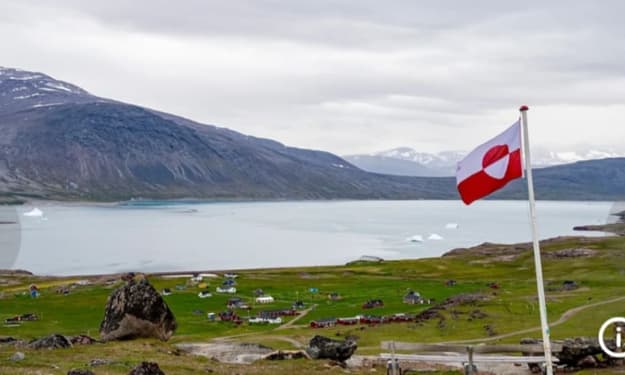
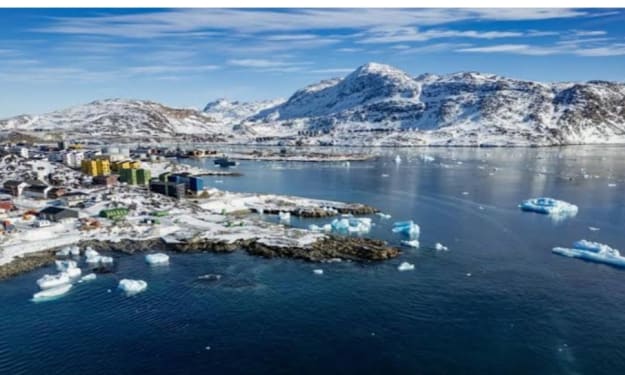
Greenland’s Prime Minister, Múte Bourup Egede, has issued a firm response to the latest controversial remarks made by former US President Donald Trump, declaring that “enough is enough.” The comments, which once again targeted Greenland’s strategic resources and geopolitical position, have sparked concern in Nuuk and among Denmark, Greenland’s sovereign nation, about the increasing pressure from foreign powers on the Arctic region. The incident highlights the delicate balance of Arctic geopolitics, where climate change, rare earth minerals, and military positioning converge, and underscores Greenland’s growing insistence on defending its autonomy and strategic interests in the face of external interference. The Latest Threat from Trump The latest round of tensions began after Donald Trump suggested in a public statement that the United States should pursue greater influence in Greenland, including potential acquisitions of land or access to its natural resources. While Trump’s team framed the remarks as economic strategy, Greenland’s government interpreted them as a threat to sovereignty. Prime Minister Egede condemned the remarks, saying that Greenlanders “will not be treated as commodities” and emphasizing that the island has full control over its resources and internal affairs. He added that repeated external pressure, especially from a global superpower, was no longer acceptable. “Greenland is strategically important, yes,” Egede said. “But our people make our decisions. We will not bow to threats or aggressive suggestions.” Historical Context This is not the first time Trump has made headlines regarding Greenland. In 2019, he infamously suggested that the US might consider purchasing Greenland, prompting ridicule internationally and a firm rejection from the Danish government and Greenland’s authorities. At the time, Denmark’s Prime Minister, Mette Frederiksen, labeled the proposal “absurd,” while Greenland’s leaders affirmed that the island is not for sale. The latest incident, though less dramatic in tone, has revived concerns about US intentions in the Arctic, particularly as global powers increasingly view the region as critical for trade, military strategy, and climate research. Why Greenland Matters Geopolitically Greenland occupies a strategic location in the Arctic, controlling key maritime routes between the Atlantic and Arctic Oceans. The island also possesses abundant natural resources, including rare earth minerals, oil, and gas, which have drawn interest from multiple countries. Climate change has accelerated the melting of Greenland’s ice sheet, making previously inaccessible resources easier to reach and increasing the island’s geopolitical significance. For global powers like the United States, Greenland is not just a remote territory — it is a critical outpost for defense, scientific research, and energy strategy. For Greenlandic authorities, these factors make external pressure a sensitive issue. While international cooperation is welcomed, any suggestion of coercion or domination triggers strong political backlash. Bourup Egede’s Firm Stance Prime Minister Egede’s comments mark a notable shift toward a more assertive Greenlandic foreign policy. Unlike in past incidents, where responses were primarily diplomatic, the current statement explicitly warns that repeated interference will not be tolerated. “We respect dialogue and cooperation,” Egede said. “But we will not accept threats or suggestions that undermine our autonomy. Our resources, our land, and our people are under Greenlandic authority.” This approach aligns with a broader trend in the Arctic, where indigenous and local governments are increasingly asserting sovereignty while navigating international interest in their territories. Denmark’s Role Greenland is an autonomous territory within the Kingdom of Denmark, responsible for internal governance while Denmark handles foreign policy and defense. The Danish government has expressed support for Greenland’s position, emphasizing that the island’s sovereignty and strategic interests must be respected. Danish Foreign Minister Lars Løkke Rasmussen reiterated that Greenland’s status as part of the kingdom does not make it an object of purchase or coercion. “Greenlanders are fully capable of deciding their own future,” Rasmussen said. “Any attempt to undermine that is unacceptable.” The coordinated response from Greenland and Denmark signals a unified front, reinforcing the message that external pressures will not influence the island’s strategic decisions. International Reactions The international community has taken note of the dispute. European leaders have largely praised Greenland’s firm stance, framing it as an example of a small, autonomous territory asserting control over its resources. Analysts in Washington, however, suggest that the rhetoric could complicate US-Arctic diplomacy, particularly as the region becomes increasingly contested among global powers like China, Russia, and the US. Policy experts say the episode highlights the challenges of Arctic governance, where climate change, resource extraction, and strategic positioning intersect, creating a highly sensitive geopolitical environment. The Arctic in Focus The broader Arctic region is undergoing rapid transformation. Melting ice has opened new shipping lanes, while technological advances and foreign investment increase the stakes for strategic control. Greenland, as the world’s largest island, sits at the center of these developments. Experts warn that incidents like the latest dispute with Trump are not isolated. “The Arctic is a hotbed of interest for multiple global powers,” said Dr. Helena Jørgensen, an Arctic policy analyst. “Greenland has every right to assert its autonomy, and these kinds of threats only strengthen local resolve.” Looking Ahead As Greenland navigates its complex position between local autonomy, Danish governance, and global interest, Prime Minister Bourup Egede’s message is clear: external pressure will not dictate Greenland’s choices. The government is expected to continue emphasizing sovereignty, while engaging selectively with foreign partners willing to respect Greenlandic authority. For global powers, the lesson is equally clear: Greenland is not a bargaining chip — it is a strategic partner with its own voice. This incident serves as a reminder of the growing importance of the Arctic, the resilience of Greenlandic leadership, and the need for careful diplomacy in a rapidly changing geopolitical landscape.
By Muhammad Hassan22 days ago in The Swamp
The Royal Navy’s Future Large Uncrewed Surface Vessels and the Cultural Obstacles to Autonomy. AI-Generated.
The Royal Navy is entering a transformative era, exploring the potential of Large Uncrewed Surface Vessels (LUSVs) as a key component of its future fleet. These autonomous or semi-autonomous ships are expected to revolutionize naval operations, providing new capabilities for surveillance, logistics, and combat support without putting sailors at direct risk. However, as much as technology is advancing, the real challenges lie not in the machinery itself, but in the cultural and organizational hurdles surrounding autonomy in a traditionally human-driven naval force. The Promise of Large Uncrewed Surface Vessels Large Uncrewed Surface Vessels are designed to operate alongside conventional ships, performing a range of tasks from mine countermeasures to intelligence gathering and supply missions. Unlike smaller drones or remotely operated vessels, LUSVs are capable of long-endurance missions, navigating open seas for weeks without requiring crew accommodations. The Royal Navy envisions these vessels enhancing operational efficiency and risk management. In hostile environments, LUSVs could undertake dangerous reconnaissance or deliver supplies without exposing sailors to combat threats. Additionally, integrating AI systems could allow the vessels to make real-time navigational and tactical decisions, providing commanders with faster, more precise situational awareness. Beyond combat, LUSVs are expected to reduce operational costs, as the expense of training, housing, and supporting crew for long-term missions is significantly lowered. For a navy facing budget constraints alongside growing strategic demands, autonomous vessels appear to offer both financial and tactical advantages. The Cultural Hurdle: Human Resistance to Autonomy Despite these technological promises, there are significant cultural barriers within the Royal Navy that could slow the adoption of autonomous vessels. Navies worldwide, including the Royal Navy, have a deeply ingrained tradition of human-centered command and control. Ships are not just platforms—they are communities, where decision-making, hierarchy, and personal accountability play vital roles in operations. Skepticism about AI decision-making is common. Many officers worry about entrusting critical tasks, especially in combat scenarios, to machines that may lack human intuition and ethical judgment. Concerns include: Reliability: How will LUSVs perform in unpredictable weather, or under electronic warfare interference? Accountability: Who is responsible if an autonomous vessel makes a mistake that leads to loss of life or international incident? Trust: Can sailors and commanders trust AI systems to act in alignment with naval doctrine and human judgment? This reluctance is not unique to the Royal Navy; militaries worldwide are grappling with similar cultural challenges as autonomy becomes a reality in modern warfare. The successful integration of LUSVs will require training programs, simulations, and policy frameworks that build trust between humans and machines. Organizational and Strategic Considerations Beyond individual skepticism, the Royal Navy faces organizational challenges. Fleet operations, maintenance, and strategic planning have historically been designed around crewed vessels. Introducing LUSVs necessitates new doctrines, logistics support systems, and cybersecurity measures. Autonomous vessels must be networked securely to prevent hacking, and crews must be trained to operate and repair hybrid human-machine systems. Additionally, LUSVs may change the command structure at sea. Decision-making will become a shared responsibility between humans and AI, requiring a redefinition of leadership roles and operational protocols. The navy will need to balance autonomy with human oversight, creating systems that maximize efficiency without eroding accountability. Global Context and Lessons Learned The Royal Navy is not alone in pursuing uncrewed surface vessels. The U.S. Navy has tested its own LUSV prototypes, while other nations explore autonomous systems for patrol and defense missions. Observing these developments, the Royal Navy can learn from early successes and failures, particularly in managing cultural resistance and ensuring ethical use of autonomous platforms. International collaboration could also play a role. Joint exercises with allies could demonstrate the operational benefits of LUSVs while fostering shared standards and trust in autonomous technology. The Path Forward Integrating Large Uncrewed Surface Vessels into the Royal Navy represents more than a technological upgrade; it is a cultural transformation. The future success of these systems will depend not only on engineering but on leadership, training, and policy innovation. By addressing skepticism, creating clear accountability frameworks, and fostering human-machine trust, the Royal Navy can ensure that LUSVs become a force multiplier, enhancing maritime security while preserving the values and cohesion of the naval community. Autonomy at sea is no longer science fiction—it is on the horizon. How the Royal Navy navigates the human and cultural obstacles will determine whether these ships remain experimental tools or become central pillars of Britain’s naval power in the decades to come.
By Fiaz Ahmed Brohi22 days ago in The Swamp
Denmark in ‘Crisis Mode’ as Trump Sets Sights on Greenland After Venezuela Attack. AI-Generated.
Denmark has reportedly entered what officials describe as a “crisis mode” after former U.S. President Donald Trump once again turned his attention toward Greenland, this time in the aftermath of a dramatic attack in Venezuela that has shaken global geopolitics. The convergence of these events has placed Copenhagen under intense diplomatic pressure, highlighting how quickly distant crises can intersect and reshape international priorities.
By Ayesha Lashari22 days ago in The Swamp
Rubio: US to Enforce Oil Blockade but Not Govern Venezuela Post-Maduro. AI-Generated.
The world watched in shock on Saturday, January 3, 2026, as former U.S. President Donald Trump announced that U.S. forces had captured Venezuelan President Nicolás Maduro and his wife in Caracas. The announcement triggered immediate international reactions, including dramatic scenes in Venezuela, where government supporters set fire to a U.S. flag in protest. Amid the chaos, U.S. Senator Marco Rubio clarified that the United States intends to enforce an oil blockade against Venezuela but will not take on governing responsibilities in the country following Maduro’s capture.
By Aarif Lashari22 days ago in The Swamp
Stocks, Bonds and Oil Steady as Investors Downplay Venezuela Upheaval. AI-Generated.
Global financial markets showed little reaction as political upheaval in Venezuela unfolded, with stocks, bonds, and oil prices largely steady. Investors appeared to downplay the immediate risks posed by developments in the South American nation, choosing instead to focus on broader macroeconomic indicators, central bank policy expectations, and global growth prospects. The muted response highlights how markets often prioritize systemic risks over localized political crises, even in countries with significant energy resources.
By Ayesha Lashari22 days ago in The Swamp
‘I Applaud Him’: Venezuelan Diaspora Hails Donald Trump After Nicolás Maduro’s Capture. AI-Generated.
The reported capture of Venezuelan President Nicolás Maduro has sent shockwaves through Latin America and beyond, sparking celebrations, debates, and renewed political conversations—especially among the Venezuelan diaspora. For millions who fled economic collapse, political repression, and humanitarian crisis, the news represents more than a headline. It is a moment loaded with emotion, symbolism, and unresolved questions about Venezuela’s future.
By Aqib Hussain22 days ago in The Swamp
Guinea’s Junta Leader Confirmed President-Elect After First Vote Since 2021 Coup. AI-Generated.
Guinea’s military leader has been confirmed as president-elect following the country’s first nationwide vote since the 2021 coup that toppled the former civilian government. The announcement, made by the electoral authorities amid tight security, signals a critical moment for the West African nation as it attempts to transition from military rule toward a more stable political order. While supporters hail the vote as a step forward, critics question its credibility and warn that Guinea’s democratic future remains uncertain.
By Ayesha Lashari22 days ago in The Swamp
Switzerland: All Victims of Bar Fire Disaster Identified. AI-Generated.
Switzerland has confirmed that all victims of a devastating bar fire disaster have now been formally identified, bringing a measure of closure to grieving families and a shocked nation. The tragic incident, which occurred late at night in a popular local bar, claimed multiple lives and injured several others, marking one of the most serious fire-related disasters in recent Swiss history. While the confirmation of identities answers one painful question, it also underscores the profound human cost of the tragedy and the urgent need for answers about how it happened.
By Ayesha Lashari22 days ago in The Swamp
Berlin Suspects ‘Leftwing Extremists’ of Causing Huge Power Outage. AI-Generated.
Berlin authorities are investigating whether leftwing extremist groups were responsible for a major power outage that plunged large parts of the German capital into darkness, disrupting transport networks, businesses, and essential services. The incident has raised serious concerns about the vulnerability of critical infrastructure and has sparked renewed debate over political extremism and domestic security in Germany. The outage, which occurred suddenly and without warning, affected thousands of households and commercial districts, temporarily halting public transport and forcing emergency services to activate contingency plans. While electricity was gradually restored, officials say the scale and nature of the disruption point to possible deliberate sabotage rather than a technical fault. What Happened During the Blackout The power outage struck parts of Berlin during peak hours, cutting electricity to residential areas, offices, traffic systems, and sections of the city’s rail network. Subway lines were suspended, traffic lights went dark at busy intersections, and shops and offices were forced to close early. Hospitals and critical facilities switched to backup generators, preventing major medical emergencies, but authorities acknowledged that the situation could have been far worse if the outage had lasted longer. Residents described scenes of confusion as commuters were stranded and mobile phone networks became overloaded. While power was restored within hours, the disruption left the city shaken and searching for answers. Suspicion of Deliberate Sabotage Berlin police and security agencies quickly ruled out routine equipment failure after initial assessments. Investigators discovered signs suggesting intentional damage to power infrastructure, prompting officials to consider sabotage as a leading possibility. City authorities later confirmed that they suspect leftwing extremist groups may be behind the incident. Germany has a history of radical activist movements targeting infrastructure to protest capitalism, energy policy, housing shortages, and state authority. “These acts go far beyond protest,” a senior security official said. “If confirmed, this would represent a serious criminal attack on public infrastructure with potentially dangerous consequences.” No group has yet claimed responsibility, and the investigation remains ongoing. Why Leftwing Extremists Are Under Scrutiny Germany’s domestic intelligence agency has long monitored leftwing extremist networks, particularly in cities like Berlin, Hamburg, and Leipzig. These groups often oppose private energy companies, large corporations, and government policies, sometimes advocating direct action rather than peaceful protest. In the past, such groups have been linked to: Sabotage of construction projects Attacks on corporate property Disruption of transport and logistics While most leftwing activism in Germany is non-violent, authorities warn that small radical factions are increasingly willing to engage in criminal acts to attract attention to their causes. Officials stress that the investigation does not target lawful protest movements but focuses on individuals or groups suspected of engaging in illegal and dangerous actions. Impact on the City The blackout caused significant economic and social disruption. Businesses reported financial losses due to forced closures, while transport delays rippled across the city for hours. Tourists and residents alike were affected, particularly in central districts. Public trust was also shaken. Berliners are accustomed to protests and political demonstrations, but a citywide power outage triggered fears about security and preparedness. Urban planners and security experts say the incident highlights how modern cities are deeply dependent on fragile infrastructure, where even a single point of failure — intentional or accidental — can have widespread consequences. Political Reactions and Public Debate The suspected sabotage has triggered sharp reactions across Germany’s political spectrum. Government officials condemned any attack on public infrastructure, warning that such actions endanger lives and undermine democratic society. Conservative politicians called for stronger surveillance and tougher penalties for extremist crimes, while left-leaning parties cautioned against broad accusations that could stigmatize peaceful activists. Civil liberties groups emphasized the importance of distinguishing between legitimate protest and criminal extremism, warning that overreach could harm democratic freedoms. Despite differing views, there is broad consensus that sabotaging power systems crosses a clear line and cannot be justified as political expression. Security and Infrastructure Concerns The outage has renewed concerns about the security of Germany’s energy networks. Experts note that while cyberattacks often dominate headlines, physical sabotage remains a serious and sometimes underestimated threat. Energy providers and city authorities are now reviewing security protocols, including: Physical protection of substations Surveillance and monitoring systems Rapid response coordination between police and utility companies Germany, like many European countries, is under pressure to modernize infrastructure while also defending it against both physical and digital threats. A Broader European Context The Berlin incident comes amid growing anxiety across Europe about attacks on critical infrastructure. In recent years, authorities have reported attempted sabotage of rail lines, communication cables, and energy facilities in several countries. Security analysts say rising political polarization, climate activism, and economic pressures have contributed to a more volatile protest landscape. While most activists reject violence, authorities warn that extremist fringes on both the left and right are becoming more confrontational. Berlin’s case is now being closely watched by other European capitals as a test of preparedness and response. Investigation Ongoing Police have launched a wide-ranging investigation involving forensic analysis, surveillance footage, and intelligence cooperation. Officials say arrests are possible but caution that identifying suspects in infrastructure sabotage cases can take time. Authorities have urged the public not to speculate or spread misinformation while the investigation continues. They also reassured residents that there is no immediate threat of further outages, though security remains heightened. Conclusion The massive power outage in Berlin has exposed the vulnerability of urban infrastructure and reignited debate over political extremism and public safety. While investigators have yet to confirm responsibility, the suspicion of leftwing extremist involvement has raised serious questions about how far radical activism may be willing to go. As Berlin returns to normal, the incident serves as a stark reminder: in an interconnected city, attacks on infrastructure are not symbolic acts — they have real consequences for millions of people. The outcome of the investigation will likely shape future security policy and how Germany balances civil protest with the protection of essential public services.
By Muhammad Hassan22 days ago in The Swamp
From Grudging Respect to Unease: Russia Weighs Up Fall of Maduro. AI-Generated.
Russia is reassessing its position in Latin America as uncertainty deepens over the future of Venezuelan President Nicolás Maduro. For years, Moscow maintained a relationship of grudging respect with Caracas—rooted less in ideology than in shared opposition to U.S. influence. Now, amid mounting pressure on Maduro’s rule and renewed speculation about his political survival, Russian policymakers are confronting a more uncomfortable reality: the possible collapse of a key strategic partner.
By Aarif Lashari22 days ago in The Swamp