
Stocks, Bonds and Oil Steady as Investors Downplay Venezuela Upheaval
Global markets remain calm as traders weigh political unrest against broader economic signals

Global financial markets showed little reaction as political upheaval in Venezuela unfolded, with stocks, bonds, and oil prices largely steady. Investors appeared to downplay the immediate risks posed by developments in the South American nation, choosing instead to focus on broader macroeconomic indicators, central bank policy expectations, and global growth prospects. The muted response highlights how markets often prioritize systemic risks over localized political crises, even in countries with significant energy resources.
Venezuela has long been a focal point of geopolitical and economic tension due to its vast oil reserves, political instability, and strained relations with Western nations. Any unrest in the country has the potential to disrupt oil supply chains, especially at a time when energy markets remain sensitive to production shifts and sanctions. However, recent market movements suggest that investors believe the current situation is unlikely to cause immediate or meaningful disruptions to global supply.
Major stock indices across the United States, Europe, and parts of Asia traded in narrow ranges, reflecting cautious but stable investor sentiment. Traders largely brushed off headlines from Venezuela, instead keeping their attention on inflation data, interest rate outlooks, and corporate earnings expectations. Market analysts noted that political developments in Venezuela have been ongoing for years, reducing their shock value and limiting their impact on short-term investment decisions.
Bond markets also remained steady, with government yields showing minimal movement. Investors did not rush toward safe-haven assets, a typical reaction during periods of heightened global uncertainty. This lack of movement suggests confidence that the unrest will remain contained and will not spill over into broader financial markets. In developed economies, bond traders continued to focus on signals from central banks, particularly regarding the timing and pace of potential interest rate adjustments.
Oil prices, often the most sensitive to events in Venezuela, showed little volatility. Brent crude and U.S. benchmark prices held steady as traders assessed supply fundamentals. While Venezuela’s oil industry has struggled for years due to underinvestment, mismanagement, and sanctions, its current output represents a relatively small share of global production. As a result, any short-term disruption is unlikely to significantly alter the global supply-demand balance.
Energy analysts pointed out that the global oil market is currently influenced more by decisions from major producers, shifts in demand from large economies, and broader geopolitical factors. Against that backdrop, developments in Venezuela—unless they directly affect exports or trigger international intervention—are viewed as a secondary concern. This perspective has contributed to the calm response seen in energy trading.
Currency markets reflected a similar sense of restraint. Major currencies traded within tight ranges, with no significant flight to traditional safe havens such as the U.S. dollar, Japanese yen, or Swiss franc. Emerging market currencies showed mixed performance, driven more by domestic economic data and global risk appetite than by events in Venezuela. This behavior reinforced the notion that investors see the situation as localized rather than systemic.
The restrained market reaction also reflects a broader trend in global finance: political instability in smaller or economically isolated countries often has limited impact unless it threatens global supply chains or financial systems. Venezuela’s economy, already weakened by years of crisis, is less integrated into global markets than it once was, reducing its ability to trigger widespread financial turbulence.
That said, some investors remain cautious. While immediate market reactions have been muted, prolonged instability or unexpected escalation could still pose risks. Any disruption to Venezuela’s oil exports, changes in sanctions policy, or regional spillover could quickly alter market sentiment. As a result, analysts advise investors to monitor developments closely, even if current pricing suggests confidence.
For now, the focus remains firmly on global economic fundamentals. Inflation trends, central bank guidance, and economic growth indicators continue to dominate investor decision-making. In this environment, Venezuela’s political turmoil is viewed as a background risk rather than a central driver of market behavior.
In the coming weeks, markets will likely continue to weigh localized geopolitical events against broader global forces. The calm response to Venezuela’s upheaval underscores a key reality of modern financial markets: not all political crises move markets equally. Until the situation presents a clear threat to global stability or energy supply, investors appear content to stay the course, keeping stocks, bonds, and oil on an even keel.
About the Creator
Keep reading
More stories from Ayesha Lashari and writers in The Swamp and other communities.
Guinea’s Junta Leader Confirmed President-Elect After First Vote Since 2021 Coup
Guinea’s military leader has been confirmed as president-elect following the country’s first nationwide vote since the 2021 coup that toppled the former civilian government. The announcement, made by the electoral authorities amid tight security, signals a critical moment for the West African nation as it attempts to transition from military rule toward a more stable political order. While supporters hail the vote as a step forward, critics question its credibility and warn that Guinea’s democratic future remains uncertain.
By Ayesha Lashari2 months ago in The Swamp
The Forsyth House Fire
Since 1851, Forsyth House has stood on the corner of Union Street and Gordon Street in the heart of Glasgow. Its iconic, or was... because on Sunday 8th of March, 2026, a fire broke out in a small, seemingly un-named shop in the building and tore all that history down. As I write, the rubble is still unsettled and the street is still blocked off. Central Station is quiet on the upper level, and around 30 small businesses have quite literally gone up in smoke.
By S. A. Crawford3 days ago in The Swamp
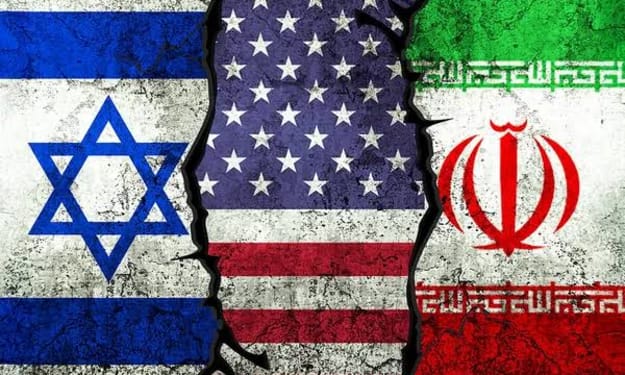
Key Factors Behind the U.S.–Iran Tensions: The Role of Oil and Geopolitics
The relationship between the United States and Iran has been tense for decades, shaped by political rivalry, economic sanctions, and regional power struggles. In recent years, these tensions have intensified, raising fears of military conflict and global instability. While oil is often seen as the main reason behind the rivalry, the reality is more complex. The conflict involves a combination of geopolitical competition, energy security, and strategic interests in the Middle East.
By shaoor afridi4 days ago in The Swamp



Comments
There are no comments for this story
Be the first to respond and start the conversation.