politics
Politics does not dictate our collective cultural mindset as much as it simply reflects it; We've got to look in the mirror sometimes, and we've got one.
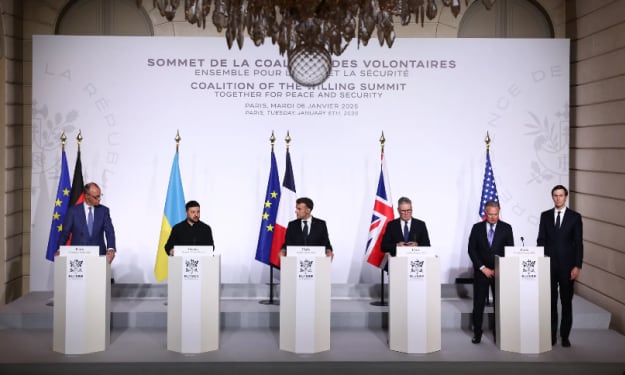
France and Allies Discuss Response to Possible U.S. Invasion of Greenland. AI-Generated.
When news broke that France and several of its allies were quietly discussing how to respond to a possible U.S. invasion of Greenland, many observers were stunned. For decades, transatlantic relations have been defined by cooperation, shared security interests, and mutual trust. The idea that a NATO member could consider using force against another ally’s territory feels like something out of a political thriller — yet it is now being treated seriously in European capitals.
By Aqib Hussain19 days ago in The Swamp
Swiss Bar Owners ‘Overwhelmed with Grief’ in First Public Comments Since 40 Killed in Fire. AI-Generated.
The Swiss town of Crans-Montana is still reeling from one of the deadliest fires in the country’s recent history. What began as a joyful New Year’s Eve celebration ended in unimaginable tragedy when a fire broke out at a popular basement bar, killing 40 people and injuring more than a hundred others. Days after the incident, the bar’s owners have spoken publicly for the first time, saying they are “overwhelmed with grief” as the investigation into the disaster continues.
By Aqib Hussain19 days ago in The Swamp
US Adds More Nations, Including Venezuela, to Costly Visa Bond Policy. AI-Generated.
Travel to the United States just got a lot more expensive—and complicated—for citizens of 25 additional countries, including Venezuela. The Trump administration recently expanded its visa bond requirement, meaning visitors from these nations may now have to pay thousands of dollars upfront just to apply for a U.S. visa. For many, this is more than a financial hurdle—it’s a clear message that the U.S. is tightening its borders in ways that affect travel, business, and family connections. What Is the Visa Bond Policy? Here’s the gist: the U.S. now requires some visa applicants to pay a refundable bond of $5,000–$15,000 at the time of their interview. The bond is meant to guarantee that travelers leave the U.S. on time, but paying it doesn’t automatically mean you’ll get the visa. The exact amount is decided by a consular officer based on individual circumstances. In short, it’s like a financial promise: if you behave and follow the visa rules, you can get your money back. But if not? Well, the bond is forfeited. Who’s Affected? Along with Venezuela, other countries added to the list include Bangladesh, Cuba, Nigeria, Nepal, and Zimbabwe. For citizens of these nations, posting a bond that can sometimes exceed $15,000 is a major challenge—especially in countries where the average monthly income is far less than the required amount. For example, in Venezuela, where the economy is struggling and inflation is high, a $15,000 bond is nearly impossible for most families. That means middle-class travelers, students, and small business owners may find visiting the U.S. financially out of reach. Supporters vs. Critics The U.S. government says the policy is meant to reduce visa overstays, ensuring that visitors leave on time and maintain the integrity of the immigration system. Supporters argue that this method is less punitive than deportation and encourages travelers to comply with U.S. law. Critics, however, call it unfair and discriminatory, saying it disproportionately affects people from lower-income countries. They argue that it creates a “two-tiered” system: those who can afford the bond get access, while those who cannot are essentially blocked from traveling. Diplomatic Concerns Adding countries like Venezuela and Cuba also has geopolitical implications. Both nations already have tense relations with the U.S., and requiring expensive bonds could be seen as another form of economic or political pressure. Some governments are worried this policy might limit academic, cultural, and business exchanges, hurting both sides in the long run. What About Families and Businesses? It’s not just tourists who are affected. Families trying to reunite, students seeking international opportunities, and small business owners looking to expand into the U.S. market may all face hurdles. Even if the bond is refundable, the upfront cost and uncertainty can make planning a trip nearly impossible. For businesses, it could mean fewer international meetings, delayed deals, and less collaboration. For families, it could mean postponed reunions and missed life events. Will It Work? The U.S. hopes the bond system will reduce visa overstays. But some analysts point out that money alone won’t solve the problem—especially when people overstay for reasons like escaping conflict, economic hardship, or joining family members already in the U.S. A bond may discourage some, but it won’t address the root causes. The Bigger Picture This policy is part of a broader trend of tightened immigration rules under the current administration, alongside stricter visa scrutiny and increased deportation measures. It’s another reminder that travel policies are influenced by politics, economics, and global relations, not just personal choice. At the same time, the policy raises questions about fairness and accessibility. Is travel only for those who can afford it? Are opportunities for education, business, and cultural exchange being restricted for no reason other than nationality? Final Thoughts The expansion of the visa bond requirement is more than just an immigration measure—it’s a statement about control, risk, and privilege. While the government frames it as a tool for compliance, for travelers from affected nations, it feels like a financial and emotional barrier to opportunities they worked hard to pursue. Whether the policy achieves its goal of reducing overstays or simply limits access for certain populations remains to be seen. One thing is clear: for many, visiting the United States in 2026 will be more complicated, costly, and challenging than ever before.
By Muhammad Hassan19 days ago in The Swamp
All 116 People Injured in Swiss Resort Fire Identified, Say Police. AI-Generated.
The joy of ringing in the New Year turned into unimaginable horror in the Swiss ski resort of Crans-Montana, where a deadly fire swept through a crowded bar in the early hours of January 1. Days after the incident, Swiss police have confirmed that all 116 people injured in the blaze have now been identified, bringing a measure of clarity to grieving families while deepening national and international concern over how such a tragedy could occur.
By Aqib Hussain19 days ago in The Swamp
US Military Is ‘Always an Option’ for Trump to Acquire Greenland, White House Official Says. AI-Generated.
When the White House recently stated that the U.S. military is “always an option” in President Donald Trump’s renewed interest in acquiring Greenland, it sent shockwaves across global political circles. What sounded like a bold — even alarming — declaration instantly reignited debates over U.S. foreign policy, NATO alliances, and Arctic security.
By Aqib Hussain19 days ago in The Swamp
What to Know About Trump’s Desire to Take Over Greenland. AI-Generated.
When Donald Trump first floated the idea of the United States taking over Greenland, many people laughed it off as a joke. Fast forward to now, and the conversation is no longer humorous. Trump’s renewed interest in Greenland has sparked international debate, diplomatic pushback, and serious questions about global power, sovereignty, and Arctic strategy.
By Aqib Hussain19 days ago in The Swamp
Swiss NYE Fire Tragedy Exposes Deadly Oversight Failures. AI-Generated.
New Year’s Eve is meant to symbolize fresh beginnings, celebration, and hope. In Switzerland, however, the arrival of the new year was marked by tragedy after a deadly fire tore through a crowded bar, killing and injuring multiple people. As investigators piece together the causes, one revelation has stunned the public and shaken confidence in safety oversight: the bar had not been inspected for five years. This single fact has transformed a tragic accident into a broader national debate about regulatory enforcement, accountability, and whether complacency within safety systems allowed a preventable disaster to unfold. A Night That Turned Fatal According to preliminary reports, the fire broke out shortly before midnight as revelers gathered to welcome the new year. Witnesses described panic, thick smoke, and confusion as people rushed toward exits. Emergency responders arrived quickly, but for several victims, help came too late. Authorities have been careful not to speculate on the precise cause while the investigation continues. However, early findings suggest that flammable interior materials, overcrowding, and inadequate safety infrastructure may have played critical roles in how rapidly the fire spread. What has fueled public anger is not just the fire itself, but what it revealed about long-standing failures behind the scenes. Five Years Without an Inspection Swiss regulations generally require hospitality venues to undergo regular fire and safety inspections. These checks are meant to ensure functional alarms, clearly marked exits, fire-resistant materials, and compliance with occupancy limits. In this case, investigators confirmed that the bar had not been formally inspected in half a decade. That lapse has raised serious questions. How did a popular nightlife venue operate for so long without oversight? Were inspections delayed due to administrative backlogs, staffing shortages, or simple neglect? And most importantly, could lives have been saved if authorities had intervened earlier? For many Swiss citizens, the idea that a bar packed with people on one of the busiest nights of the year escaped inspection for so long feels deeply unsettling. Systemic Gaps in Enforcement Switzerland is often viewed as a country with strong institutions and high safety standards. This tragedy, however, suggests that even well-regarded systems can fail when enforcement becomes inconsistent. Experts point out that safety laws are only as effective as their implementation. Regulations on paper do little if inspections are infrequent or poorly tracked. In some cantons, responsibility for inspections is divided among multiple agencies, creating gaps where accountability becomes blurred. In this case, authorities are now examining whether the bar slipped through bureaucratic cracks or whether warnings were issued but not followed up. Either scenario points to systemic weaknesses rather than a one-off mistake. Owners Under Scrutiny Attention has also turned to the bar’s management. Business owners are legally and morally responsible for ensuring their premises are safe, regardless of inspection schedules. Investigators are assessing whether safety equipment was missing, outdated, or deliberately ignored to cut costs or maximize capacity. If negligence is proven, criminal charges could follow. Legal experts note that Swiss law allows for serious penalties when safety violations result in death, including prison sentences for responsible parties. Yet critics argue that focusing solely on owners risks missing the bigger picture. When inspections fail to occur for years, responsibility extends beyond individual businesses to the institutions tasked with protecting the public. Public Anger and Political Pressure In the days following the fire, public reaction has been swift and emotional. Vigils have been held for the victims, while social media has filled with calls for resignations, audits, and sweeping reform. Many are asking how many other venues might be operating under similar conditions. Political leaders have promised answers. Several officials have called for immediate reviews of inspection records across the hospitality sector, particularly for nightclubs and bars hosting large crowds. Some lawmakers are pushing for mandatory digital tracking systems to ensure inspections cannot be delayed or overlooked. The tragedy has also reignited debate about whether local authorities are adequately funded and staffed to perform regular safety checks. Lessons From Past Disasters History offers painful reminders of what happens when safety oversight fails. From nightclub fires across Europe to deadly crowd disasters worldwide, the pattern is often the same: ignored regulations, delayed inspections, and warnings that came too late. In many cases, meaningful reforms only followed public outrage and loss of life. Switzerland now faces a similar crossroads. Will this tragedy lead to lasting change, or will attention fade once headlines move on? Safety advocates argue that true reform requires more than promises. It demands consistent inspections, transparent reporting, and consequences for both regulators and businesses when standards are not met. A Wake-Up Call for the Hospitality Industry Beyond government action, the fire serves as a stark warning to bar and club owners across the country. New Year’s Eve crowds, pyrotechnics, candles, and packed dance floors create heightened risks. Cutting corners on safety, whether intentionally or through complacency, can have irreversible consequences. Industry associations are now urging members to conduct voluntary safety audits and update emergency plans. Some venues have temporarily closed to reassess fire exits, alarms, and occupancy limits. While these steps are welcome, many argue they should not depend on tragedy to be taken seriously. Remembering the Victims Amid investigations, political debates, and public anger, it is crucial not to lose sight of the human cost. Families are mourning loved ones who went out to celebrate and never came home. Survivors are grappling with trauma that will last long after the fire scene is cleared. Their loss gives weight to the questions now being asked — and urgency to the demand for answers. Conclusion: Accountability Must Follow Tragedy The Swiss NYE fire is more than an isolated incident. It is a stark reminder that safety cannot be assumed, even in countries with strong reputations for regulation. A bar left uninspected for five years represents a failure not just of paperwork, but of responsibility. If there is to be any meaning drawn from this tragedy, it must be change — stricter enforcement, clearer accountability, and a renewed commitment to public safety. Otherwise, the lessons learned will come at a cost too high to justify.
By Muhammad Hassan19 days ago in The Swamp
Trump’s Greenland Threats Put the Transatlantic Alliance on Death Watch. AI-Generated.
The transatlantic alliance has survived wars, diplomatic crises, and ideological rifts for more than seven decades. Yet today, it finds itself under renewed strain from an unlikely source: former U.S. President Donald Trump’s revived threats and rhetoric surrounding Greenland. What once seemed like an eccentric geopolitical idea has returned as a serious fault line, forcing European leaders to question Washington’s long-term reliability and pushing the U.S.–Europe relationship into what some analysts describe as a “death watch” phase. At the heart of the issue is Greenland’s strategic value. The massive Arctic island, an autonomous territory within the Kingdom of Denmark, has gained increasing importance as climate change opens new shipping routes, exposes untapped mineral resources, and heightens military competition in the High North. For the United States, Greenland represents a critical piece of Arctic security, hosting the U.S. Pituffik Space Base (formerly Thule Air Base), which plays a vital role in missile warning and space surveillance. Trump’s interest in Greenland first made headlines in 2019 when he openly suggested buying the island, a proposal swiftly rejected by Denmark and Greenland’s government. While the idea was widely mocked at the time, the underlying message was unmistakable: the U.S. was willing to challenge long-standing diplomatic norms to secure strategic advantage. Now, with Trump once again dominating American political discourse and openly revisiting coercive foreign policy ideas, European capitals are bracing for a more confrontational transatlantic era. A Threat Beyond Diplomacy What alarms European leaders is not merely the suggestion of acquiring Greenland, but the implied willingness to apply pressure—even threats—against a NATO ally. Denmark is a founding member of NATO, and any overt U.S. intimidation undermines the alliance’s core principle of mutual trust. If Washington is prepared to strong-arm Copenhagen over Greenland, critics ask, what prevents similar tactics against other allies when U.S. interests are at stake? This concern cuts deeper than Denmark alone. Greenland’s status is closely tied to issues of sovereignty, self-determination, and international law. Trump’s rhetoric is widely perceived in Europe as dismissive of these principles, reinforcing fears that a transactional U.S. foreign policy could override shared democratic values. For smaller European states in particular, this signals a dangerous shift away from rules-based cooperation toward raw power politics. NATO Unity Under Pressure The timing of these threats could not be worse. NATO already faces internal divisions over defense spending, Ukraine, China, and the future scope of the alliance. Trump’s past criticism of NATO—labeling it “obsolete” and questioning the U.S. commitment to collective defense—still lingers in European memory. Greenland has become a symbol of those anxieties: a reminder that U.S. security guarantees may come with strings attached. European officials worry that such rhetoric emboldens rival powers. Russia, which has rapidly expanded its Arctic military presence, is closely watching the strain between Washington and European allies. China, meanwhile, has invested heavily in Arctic research and infrastructure, framing itself as a “near-Arctic state.” Any visible fracture within the transatlantic alliance risks weakening the West’s ability to coordinate a coherent Arctic strategy. Europe’s Growing Skepticism Trump’s Greenland threats have accelerated an already growing European debate about strategic autonomy. France has long advocated for a stronger, more independent European defense posture, and recent events have given that argument fresh momentum. Germany and other EU states, traditionally cautious about distancing themselves from the U.S., are increasingly open to discussions about reducing dependence on Washington for security guarantees. This does not mean Europe is ready to abandon NATO or the United States. Public opinion across much of Europe still favors close ties with Washington. However, trust—once taken for granted—is now conditional. European leaders are quietly planning for scenarios in which U.S. policy becomes unpredictable, or even openly hostile to allied interests. Greenland’s Own Voice Lost in much of the geopolitical debate is Greenland itself. The island’s leaders have repeatedly emphasized that Greenland is not for sale and that its future should be determined by its people. Many Greenlanders see Trump’s rhetoric as a reminder of colonial-era attitudes, fueling support for greater autonomy or eventual independence from Denmark. Ironically, U.S. pressure could push Greenland further away from Washington’s orbit rather than closer to it. Respectful engagement, economic cooperation, and acknowledgment of Greenlandic self-determination are far more likely to secure long-term U.S. interests than threats or transactional bargaining. A Death Watch or a Wake-Up Call? Describing the transatlantic alliance as being on “death watch” may sound dramatic, but it reflects genuine anxiety within diplomatic circles. Alliances are sustained not only by shared interests, but by shared expectations of behavior. Trump’s Greenland threats challenge those expectations at a fundamental level. Yet crises often serve as catalysts for change. Europe may emerge from this period more unified and strategically mature, while the U.S. may eventually rediscover the value of alliances built on trust rather than coercion. Whether the transatlantic relationship weakens or adapts will depend on choices made in Washington, Copenhagen, Nuuk, and beyond. For now, Greenland stands as a stark reminder that even long-standing alliances are fragile. When rhetoric turns into threats, and allies are treated as obstacles rather than partners, the very foundations of the Western order begin to crack. The question facing both sides of the Atlantic is whether this moment marks the beginning of the end—or a long-overdue reckoning that ultimately strengthens the alliance for a more uncertain world.
By Muhammad Hassan19 days ago in The Swamp
What’s Your Reaction to the U.S. Military Operation in Venezuela?. AI-Generated.
The world woke up to startling news when reports emerged of a U.S. military operation in Venezuela that resulted in the capture of President Nicolás Maduro. For some, the announcement felt like the dramatic climax of years of political tension. For others, it raised immediate alarm bells about sovereignty, international law, and the dangerous precedent such an action could set.
By Aqib Hussain19 days ago in The Swamp
Fleet of Heavily Armed US Military Planes Land in England: What It Means for Transatlantic Security. AI-Generated.
A fleet of heavily armed United States military planes has recently landed in England, sparking discussions across the Atlantic about security, preparedness, and the growing cooperation between the two NATO allies. The arrival of these aircraft, including bombers and tactical support planes, marks one of the most significant demonstrations of military readiness in recent years. Experts say that this deployment reflects not only operational capability but also geopolitical signaling amid a turbulent global security environment. The Aircraft in Focus Reports indicate that the fleet includes advanced bomber aircraft capable of carrying long-range precision weapons, along with refueling tankers and reconnaissance planes. These aircraft, designed for rapid deployment, are among the most sophisticated in the US Air Force’s arsenal. Their presence in England ensures that American forces can respond quickly to emerging threats in Europe, the Middle East, or Africa, depending on the mission parameters. Analysts note that this deployment is part of routine NATO exercises but also serves a strategic purpose. By positioning heavy firepower close to potential hotspots, the US and UK demonstrate both deterrence and solidarity, signaling to potential adversaries that allied forces can mobilize quickly and operate seamlessly across borders. Why England? Strategic Importance England has long been a key location for transatlantic military operations. Its geographic position allows for quick access to Europe, the North Atlantic, and parts of the Middle East and Africa. The airbases hosting these aircraft are equipped with modern facilities, including rapid refueling stations, maintenance hangars, and secure communication networks. Such infrastructure enables sustained operations for long-range missions. Moreover, England’s participation in NATO exercises ensures that American pilots and crews can train alongside British counterparts, improving coordination, interoperability, and readiness. Joint exercises are critical in modern warfare, where rapid communication and synchronized maneuvers can make a decisive difference in outcomes. Implications for European Security While routine in military terms, the landing of heavily armed US planes in England carries broader geopolitical implications. Europe is facing a complex security landscape, with rising tensions in regions like Eastern Europe and the Middle East. The presence of these aircraft is both a reassurance to allies and a warning to potential aggressors. Defense experts highlight that these deployments are often interpreted as a form of “strategic signaling,” designed to showcase strength without initiating conflict. It sends a message that NATO allies are committed to collective security and that they are prepared to respond to threats quickly and decisively. Public Perception and Political Reactions The deployment has drawn mixed reactions among the public and political observers. Supporters argue that maintaining a visible, ready military presence is essential for deterrence and the protection of democratic nations. They point out that modern threats, ranging from state-sponsored aggression to terrorist activities, require rapid-response capabilities and advanced weaponry. Critics, however, raise concerns about escalation and the optics of such displays. Some suggest that the conspicuous presence of heavily armed aircraft could increase tensions rather than promote stability. These debates underscore the fine balance military planners must strike between preparedness and provocation. Training and Operational Readiness In addition to signaling, the deployment allows for critical training opportunities. Crews can rehearse complex maneuvers, test equipment under realistic conditions, and enhance coordination with British forces. These exercises often include simulations of emergency scenarios, disaster response, and joint air defense operations, ensuring that both US and UK forces are prepared for a range of contingencies. Training alongside allies also enhances tactical innovation. Pilots, engineers, and support staff exchange knowledge, share best practices, and refine operational procedures, which can significantly improve overall mission effectiveness. Looking Ahead The presence of heavily armed US military planes in England reflects a commitment to collective security, operational readiness, and strategic cooperation. As global tensions continue to evolve, NATO allies are increasingly relying on joint exercises and deployments to maintain stability and deter potential threats. For citizens and policymakers alike, this development highlights the complexity of modern security challenges. It underscores the need for constant vigilance, coordination between allies, and the ability to project power rapidly in defense of international norms and agreements. In a world where conflicts can arise with little warning, the landing of these planes serves as both a reminder and a reassurance: preparedness matters, alliances matter, and the transatlantic bond between the United States and the United Kingdom remains a cornerstone of regional and global security.
By Fiaz Ahmed Brohi19 days ago in The Swamp
Pak fan asks Varun Dhawan about Border 2 release in his nation, actor says: 'Sunny sir ke Pakistan mein bhi fans hain'. AI-Generated.
Bollywood actor Varun Dhawan recently sparked excitement among his Pakistani fans during an interaction that touched upon the much-anticipated sequel Border 2. Known for his charismatic presence on and off screen, Dhawan’s comments not only acknowledged the popularity of his peers but also highlighted the enduring cross-border appeal of Bollywood films. The interaction occurred during a live session on social media, where fans from different countries had the opportunity to ask Varun Dhawan questions directly. Among the queries, one fan from Pakistan asked when Border 2 would release in their country. This simple question led to a warm and respectful acknowledgment from the actor, who said, “Sunny sir ke Pakistan mein bhi fans hain,” referring to Bollywood veteran Sunny Deol, the lead in the Border franchise. Dhawan’s response quickly became viral, showcasing the deep connection Bollywood stars have with audiences beyond India. Bollywood’s Cross-Border Reach Bollywood has a long history of captivating audiences across the globe, particularly in South Asia. Despite political tensions, Indian films have consistently found a devoted fan base in Pakistan, where viewers eagerly watch releases ranging from masala entertainers to action-packed dramas. The original Border, released in 1997, was a patriotic war film that became an iconic success, not just in India but also among Pakistani audiences who appreciated its storytelling and performances. The discussion around Border 2’s potential release in Pakistan highlights how fans remain hopeful that cross-border cinematic experiences will continue. Varun Dhawan’s acknowledgment of Sunny Deol’s popularity in Pakistan was more than a casual remark; it was a nod to the longstanding cultural exchange and shared love for storytelling that transcends political boundaries. Varun Dhawan: Balancing New Projects and Fan Engagement Varun Dhawan has been one of the busiest actors in Bollywood, juggling multiple projects that span genres from action to romance. Despite his hectic schedule, he makes it a point to engage with fans directly on social media platforms, answering questions and sharing insights into his work. His candid acknowledgment of Pakistani fans reflects a growing trend among Bollywood stars to connect personally with audiences, fostering goodwill and maintaining cross-border fan loyalty. Dhawan also hinted that while he is focused on promoting his upcoming films in India first, he is aware of the excitement surrounding international releases. Border 2, expected to be an action-packed and patriotic sequel, is particularly anticipated due to the legacy of the original film. By mentioning Sunny Deol’s fan base in Pakistan, Dhawan acknowledged the broader appeal of the film, signaling that Bollywood stars are increasingly conscious of their international audiences. The Cultural Impact of Bollywood Across Borders The enduring popularity of Bollywood in Pakistan has often served as a bridge between cultures. Films like Border and actors like Sunny Deol, Shah Rukh Khan, and Salman Khan have created a shared cinematic language that transcends politics. Fans in Pakistan not only enjoy the entertainment value but also develop an appreciation for the craft, music, and narratives unique to Indian cinema. Varun Dhawan’s friendly acknowledgment highlights the role of cinema in promoting cultural dialogue. In times where political relations can be tense, the love for films remains a neutral ground where audiences connect over shared stories and characters. Such interactions between actors and fans help humanize celebrities and remind audiences of the universal appeal of art and storytelling. Fan Excitement and Expectations The response to Dhawan’s comment was overwhelmingly positive. Social media platforms were flooded with reactions from fans in Pakistan, expressing excitement and anticipation for Border 2. Many appreciated the actor’s acknowledgment, calling it a respectful and thoughtful nod to his cross-border supporters. Some fans even started online petitions and discussions advocating for an official release of Border 2 in Pakistan, underscoring the power of fan engagement in shaping distribution decisions. Bollywood’s influence continues to be strong in South Asia, and the anticipation for Border 2 in Pakistan is a testament to the enduring appeal of films that combine action, patriotism, and human stories. Varun Dhawan’s interaction serves as a reminder that while cinema entertains, it also connects people across borders, fostering mutual appreciation and cultural exchange. Conclusion Varun Dhawan’s acknowledgment of Sunny Deol’s fans in Pakistan is more than a passing comment; it reflects the wider influence of Bollywood and the shared love for cinema that transcends political divides. As Border 2 prepares for its release, fans in both India and Pakistan eagerly await the film, hoping to experience the action, drama, and patriotism that made the original a classic. Actors like Dhawan, who take time to engage with international audiences, play a key role in keeping the magic of Bollywood alive across borders.
By Fiaz Ahmed Brohi19 days ago in The Swamp
Doug LaMalfa and the Quiet Power of Rural California Politics
Politics often feels loud, crowded, and distant from everyday life. Yet far from major cities and cable news studios, a different kind of political story unfolds. It happens in farming towns, water districts, and county meetings where decisions shape daily survival. Doug LaMalfa has spent years operating in that quieter space. His name rarely trends, but his influence reaches deep into rural California. To understand his role is to understand a part of America that often feels unseen. This article looks beyond headlines to explore how Doug LaMalfa built his political identity, what he represents to his supporters, and why his work continues to stir strong feelings across California’s agricultural heartland.
By Muqadas khan19 days ago in The Swamp