
Trump’s Greenland Threats Put the Transatlantic Alliance on Death Watch
How revived U.S. pressure over Greenland is shaking NATO unity, European trust, and the future of Western cooperation

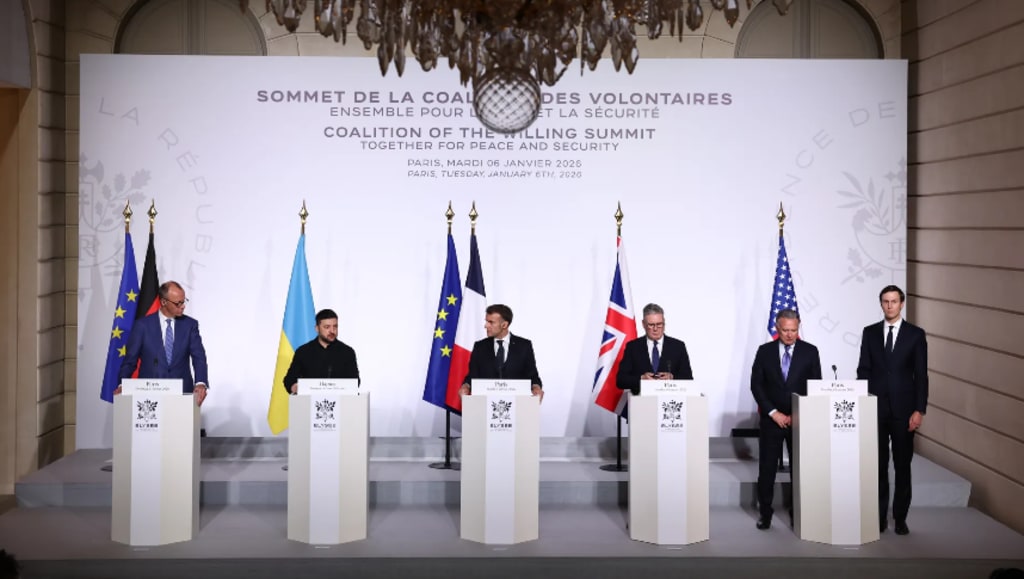
The transatlantic alliance has survived wars, diplomatic crises, and ideological rifts for more than seven decades. Yet today, it finds itself under renewed strain from an unlikely source: former U.S. President Donald Trump’s revived threats and rhetoric surrounding Greenland. What once seemed like an eccentric geopolitical idea has returned as a serious fault line, forcing European leaders to question Washington’s long-term reliability and pushing the U.S.–Europe relationship into what some analysts describe as a “death watch” phase.
At the heart of the issue is Greenland’s strategic value. The massive Arctic island, an autonomous territory within the Kingdom of Denmark, has gained increasing importance as climate change opens new shipping routes, exposes untapped mineral resources, and heightens military competition in the High North. For the United States, Greenland represents a critical piece of Arctic security, hosting the U.S. Pituffik Space Base (formerly Thule Air Base), which plays a vital role in missile warning and space surveillance.
Trump’s interest in Greenland first made headlines in 2019 when he openly suggested buying the island, a proposal swiftly rejected by Denmark and Greenland’s government. While the idea was widely mocked at the time, the underlying message was unmistakable: the U.S. was willing to challenge long-standing diplomatic norms to secure strategic advantage. Now, with Trump once again dominating American political discourse and openly revisiting coercive foreign policy ideas, European capitals are bracing for a more confrontational transatlantic era.
A Threat Beyond Diplomacy
What alarms European leaders is not merely the suggestion of acquiring Greenland, but the implied willingness to apply pressure—even threats—against a NATO ally. Denmark is a founding member of NATO, and any overt U.S. intimidation undermines the alliance’s core principle of mutual trust. If Washington is prepared to strong-arm Copenhagen over Greenland, critics ask, what prevents similar tactics against other allies when U.S. interests are at stake?
This concern cuts deeper than Denmark alone. Greenland’s status is closely tied to issues of sovereignty, self-determination, and international law. Trump’s rhetoric is widely perceived in Europe as dismissive of these principles, reinforcing fears that a transactional U.S. foreign policy could override shared democratic values. For smaller European states in particular, this signals a dangerous shift away from rules-based cooperation toward raw power politics.
NATO Unity Under Pressure
The timing of these threats could not be worse. NATO already faces internal divisions over defense spending, Ukraine, China, and the future scope of the alliance. Trump’s past criticism of NATO—labeling it “obsolete” and questioning the U.S. commitment to collective defense—still lingers in European memory. Greenland has become a symbol of those anxieties: a reminder that U.S. security guarantees may come with strings attached.
European officials worry that such rhetoric emboldens rival powers. Russia, which has rapidly expanded its Arctic military presence, is closely watching the strain between Washington and European allies. China, meanwhile, has invested heavily in Arctic research and infrastructure, framing itself as a “near-Arctic state.” Any visible fracture within the transatlantic alliance risks weakening the West’s ability to coordinate a coherent Arctic strategy.
Europe’s Growing Skepticism
Trump’s Greenland threats have accelerated an already growing European debate about strategic autonomy. France has long advocated for a stronger, more independent European defense posture, and recent events have given that argument fresh momentum. Germany and other EU states, traditionally cautious about distancing themselves from the U.S., are increasingly open to discussions about reducing dependence on Washington for security guarantees.
This does not mean Europe is ready to abandon NATO or the United States. Public opinion across much of Europe still favors close ties with Washington. However, trust—once taken for granted—is now conditional. European leaders are quietly planning for scenarios in which U.S. policy becomes unpredictable, or even openly hostile to allied interests.
Greenland’s Own Voice
Lost in much of the geopolitical debate is Greenland itself. The island’s leaders have repeatedly emphasized that Greenland is not for sale and that its future should be determined by its people. Many Greenlanders see Trump’s rhetoric as a reminder of colonial-era attitudes, fueling support for greater autonomy or eventual independence from Denmark.
Ironically, U.S. pressure could push Greenland further away from Washington’s orbit rather than closer to it. Respectful engagement, economic cooperation, and acknowledgment of Greenlandic self-determination are far more likely to secure long-term U.S. interests than threats or transactional bargaining.
A Death Watch or a Wake-Up Call?
Describing the transatlantic alliance as being on “death watch” may sound dramatic, but it reflects genuine anxiety within diplomatic circles. Alliances are sustained not only by shared interests, but by shared expectations of behavior. Trump’s Greenland threats challenge those expectations at a fundamental level.
Yet crises often serve as catalysts for change. Europe may emerge from this period more unified and strategically mature, while the U.S. may eventually rediscover the value of alliances built on trust rather than coercion. Whether the transatlantic relationship weakens or adapts will depend on choices made in Washington, Copenhagen, Nuuk, and beyond.
For now, Greenland stands as a stark reminder that even long-standing alliances are fragile. When rhetoric turns into threats, and allies are treated as obstacles rather than partners, the very foundations of the Western order begin to crack. The question facing both sides of the Atlantic is whether this moment marks the beginning of the end—or a long-overdue reckoning that ultimately strengthens the alliance for a more uncertain world.
About the Creator
Muhammad Hassan
Muhammad Hassan | Content writer with 2 years of experience crafting engaging articles on world news, current affairs, and trending topics. I simplify complex stories to keep readers informed and connected.
Keep reading
More stories from Muhammad Hassan and writers in The Swamp and other communities.
European Leaders Rally Behind Greenland as Miller Ramps Up Trump Threats
European leaders are increasingly voicing their support for Greenland as tensions escalate between the autonomous Danish territory and the United States. The latest flare-up comes as U.S. political figure Miller has intensified rhetoric about potential American moves in the Arctic, including repeated threats concerning Greenland’s strategic assets and resources. While analysts caution that this is largely political posturing, the situation has prompted a rare display of transatlantic solidarity, highlighting the continent’s commitment to Arctic stability and the sovereignty of Greenland. Rising Tensions in the Arctic The Arctic has become a focal point of global geopolitical interest, primarily due to its untapped natural resources, strategic shipping routes, and growing military significance. Greenland, the world’s largest island, sits at the heart of this dynamic. While Denmark oversees foreign affairs and defense, Greenland enjoys autonomous governance over local issues, including resource management. Recently, U.S. political operative Miller has intensified a series of statements suggesting that the United States could consider more direct influence or even acquisition attempts concerning Greenland. While the remarks have not been backed by formal policy, they have sparked concern among Greenlandic officials and European diplomats alike. Europe’s Unified Response European leaders have been quick to rally behind Greenland. Denmark’s Prime Minister reaffirmed that Greenland’s autonomy and territorial integrity are non-negotiable, emphasizing that any external pressure would be met with diplomatic and potentially multilateral resistance. French President Emmanuel Macron, German Chancellor Olaf Scholz, and other EU officials have echoed these sentiments, emphasizing that the Arctic is a shared space governed by international law, including the United Nations Convention on the Law of the Sea (UNCLOS). “Greenland’s sovereignty is clear, and European nations stand united in supporting it,” said Macron in a recent press briefing. This show of solidarity serves multiple purposes: it reassures Greenlandic authorities, signals to the United States that aggressive rhetoric will not go unnoticed, and reinforces Europe’s strategic interests in the Arctic. Greenland’s Strategic Importance Greenland is far more than a remote, icy expanse. Its significance extends from natural resources—such as rare earth minerals, oil, and gas—to military and geopolitical positioning. The island is home to the U.S. Thule Air Base, a critical early-warning missile detection site, and its proximity to both North America and Europe makes it central to Arctic security strategy. Economically, Greenland is exploring mining and energy ventures that could reshape its financial independence. These developments have further heightened interest from global powers, including the United States, China, and European nations, all of whom recognize Greenland’s potential role in Arctic trade and energy markets. Miller’s Threats and Their Implications Miller’s statements, which have included suggestions of U.S. involvement in Greenland’s political and economic affairs, are widely interpreted as strategic posturing rather than immediate policy intentions. Analysts suggest that the rhetoric may be aimed at domestic political audiences, tapping into populist narratives about American influence and control over international assets. Nonetheless, such threats have consequences. They risk undermining diplomatic relations, prompting Greenland and Denmark to seek stronger European support, and could complicate broader Arctic cooperation initiatives, which require multilateral coordination on issues like climate change, shipping regulations, and resource management. The Arctic in the Global Geopolitical Context The Arctic has emerged as a strategic arena where climate, commerce, and security intersect. Melting ice has opened new shipping lanes, while access to rare minerals and hydrocarbons has intensified competition among global powers. European support for Greenland signals an understanding that Arctic disputes require a cooperative approach grounded in international law. The EU has consistently emphasized environmental protection, sustainable resource development, and indigenous rights in the Arctic. By backing Greenland, European leaders reinforce their commitment to these principles while countering unilateral threats or coercive tactics. Diplomatic Maneuvering and Multilateral Forums Greenland’s situation is likely to remain a topic at forums such as the Arctic Council, where member states discuss governance, scientific research, and sustainable development. European countries have been vocal in ensuring that any discussions about Greenland or Arctic policy involve local authorities and respect territorial autonomy. In addition, Denmark has reportedly sought to coordinate closely with EU allies and NATO partners, reinforcing that Greenland’s security is intertwined with broader European and transatlantic interests. This approach underscores a commitment to collective defense and diplomatic channels rather than unilateral action. What This Means for Greenland For Greenland, European support strengthens its negotiating position and reassures the population that sovereignty will be defended. Economically, it also creates opportunities for partnerships in mining, energy, and scientific research with European entities rather than relying solely on outside powers with potentially aggressive agendas. Politically, the situation highlights Greenland’s growing international profile. Once considered peripheral, the island now occupies a central role in Arctic geopolitics, attracting attention from superpowers while simultaneously enjoying increased leverage through European backing. Analysts’ Perspective Geopolitical analysts suggest that while Miller’s threats make headlines, they are unlikely to translate into immediate policy shifts. “This is largely symbolic,” noted Ingrid Larsen, a Scandinavian foreign policy expert. “What matters is the international response, and in this case, European leaders have sent a clear message: Greenland’s autonomy is non-negotiable.” The broader implication is that Arctic diplomacy is evolving. Local authorities, supported by regional powers, are asserting influence over their own territories, pushing back against external pressure, and signaling that cooperative multilateralism remains the preferred path for managing the region’s resources and security. Looking Forward As the Arctic becomes increasingly central to global politics, Greenland’s position will remain a key focal point. European support ensures that any threats, even if rhetorical, are met with diplomatic counterbalance. Meanwhile, Greenland continues to explore sustainable economic opportunities while maintaining security partnerships that respect its autonomy. While Miller’s statements may create media buzz, the unfolding scenario underscores a larger trend: the Arctic is no longer a peripheral theater. It is a strategically vital region where sovereignty, resources, and international law intersect, and where European leaders are willing to assert themselves to maintain stability.
By Muhammad Hassan2 months ago in The Swamp
The Saddest Thing - The Billionaires Who Rule America Aren't Even Enjoying Themselves
This single post says more about our ruling class than a thousand policy papers. The saddest thing about today's system is that the men robbing the rest of us - sabotaging our economic prospects, our pensions, our access to affordable healthcare - are not even happy.
By Scott Christenson🌴22 days ago in The Swamp
Trump Says He’s Sending a Hospital Boat to Greenland
In a surprising announcement on 21 February 2026, Donald Trump said that the United States is sending a “great hospital boat” to Greenland to care for “sick people” he claims are not being adequately served there. The declaration, made via social media, has caused confusion among diplomats, alarm among Greenlandic officials, and renewed scrutiny of Washington’s intentions toward the vast Arctic island. Trump’s post, shared on his Truth Social platform just before a White House dinner for Republican governors, said he was working with Jeff Landry — whom he appointed as a special envoy to Greenland in December — to dispatch the medical vessel. “Working with the fantastic Governor of Louisiana… we are going to send a great hospital boat to Greenland to take care of the many people who are sick, and not being taken care of there. It’s on the way!!!” Trump wrote, without specifying which vessel would be sent or what medical needs it would address. A Vague Mission With Big Questions Trump’s announcement included an image resembling the USNS Mercy, one of the U.S. Navy’s two hospital ships. However, neither ship — Mercy nor its sister vessel USNS Comfort — is currently stationed near Greenland, and both are based in the continental United States undergoing maintenance or deployment planning. It remains unclear whether that specific ship, another vessel, or a smaller “hospital boat” will be deployed. Crucially, Trump did not explain why the mission was necessary, who requested it, or whether Danish or Greenlandic authorities had been consulted. Greenland offers universal health care for its residents as part of Denmark’s social system, leading critics to question the stated medical rationale. Danish and Greenlandic officials have not publicly requested emergency medical assistance from the United States. Diplomacy and Sovereignty Concerns The announcement comes amid a broader and contentious backdrop. Trump has repeatedly stated that the United States should acquire Greenland for strategic reasons, citing its geographic importance in the Arctic and potential mineral wealth. Those proposals have been met with firm rejection by Greenlandic and Danish authorities, who insist the island is not for sale and remains firmly part of the Kingdom of Denmark. Tensions flared last year when Denmark deployed additional military presence under Operation Arctic Endurance, a NATO-related mission intended to deter any aggressive moves by the United States or other powers and reassure Greenlanders of their security ties with Europe. Trump has at times refused to rule out force as a means of gaining control of Greenland, though official U.S. policy remains unclear and the White House has denied imminent military action. By framing the hospital ship mission as humanitarian, Trump’s announcement may be an attempt to soften his Arctic policy’s image. Critics, however, see it as part of a pattern of provocative statements that blur humanitarian action with geopolitical signaling. The involvement of Landry, whose role as “special envoy” lacks formal diplomatic accreditation in Copenhagen, adds to diplomatic confusion. Reactions From Greenland and Denmark In Greenland, the announcement was met with puzzlement and skepticism. Activists and community leaders noted that local health systems have long provided care under the Danish model and that extra-territorial assistance was neither requested nor generally needed. Some expressed concern that the overture could be a pretext for deeper U.S. involvement in Greenland’s internal affairs. The Independent Danish officials have historically responded firmly to unilateral comments about Greenland’s status, and recent diplomatic engagement included discussions between the three governments — Denmark, Greenland, and the United States — to ease friction. The hospital boat announcement complicates those efforts, raising questions about whether it will require new diplomatic clarifications or even formal negotiation. No Details, Big Implications Despite the rhetoric of care and assistance, Trump’s post offered no timeline for the mission, no indication of the medical issues being addressed, and no confirmation from the Pentagon, U.S. Navy, or Department of War (a reference to the Pentagon used in Trump’s social post) about any planned deployment. Requests for clarification from U.S. Northern Command, the Danish Embassy, and Greenland’s parliament reportedly went unanswered at the time of reporting. Observers say the announcement may reflect broader strategic messaging. Control and influence in the Arctic are increasingly contested as climate change opens new shipping lanes and exposes untapped resources. Greenland’s location — geographically closer to Canada and the U.S. than to many parts of mainland Europe — makes it a linchpin of Arctic security calculations involving Russia, China, and NATO allies. What Comes Next For now, Trump’s hospital boat announcement remains ambiguous. Whether it evolves into a formal mission with logistical planning, diplomatic coordination, and clarity of purpose — or remains another piece of Arctic posturing — will depend on reactions from Greenlandic and Danish leaders, U.S. military authorities, and international partners watching the Arctic’s strategic future.
By Fiaz Ahmed 7 days ago in The Swamp
I was in a Toxic Relationship, with my Workplace
“You got that?” My ex yelled. His hands were balled into fists at his side. At six foot three, he towered over me. A normal person would have been afraid, but I looked up a video of George Lopez repeatedly saying, “I got this,” and showed it to him. I had grown used to this treatment, so much so that I didn’t blink when he ripped the phone from my hand and threw it across the room.
By Jade M.2 days ago in Confessions



Comments
There are no comments for this story
Be the first to respond and start the conversation.