
What’s Your Reaction to the U.S. Military Operation in Venezuela?
A Global Shockwave That Forces Us to Question Power, Justice, and Consequences

The world woke up to startling news when reports emerged of a U.S. military operation in Venezuela that resulted in the capture of President Nicolás Maduro. For some, the announcement felt like the dramatic climax of years of political tension. For others, it raised immediate alarm bells about sovereignty, international law, and the dangerous precedent such an action could set.
So, what’s your reaction?
Whether you see the operation as bold justice or reckless intervention likely depends on your political beliefs, your understanding of global power, and your concern for the human cost behind the headlines.
A Moment That Changed the Narrative
For years, Venezuela has been synonymous with economic collapse, political unrest, and humanitarian crisis. International sanctions, diplomatic standoffs, and failed negotiations have dominated the conversation. Yet few expected a direct U.S. military operation to become part of the story.
The U.S. government framed the mission as a law-enforcement action, citing longstanding criminal accusations against Maduro. Supporters argue this was the only way to hold an authoritarian leader accountable after diplomacy failed.
Critics, however, see it very differently. They argue that regardless of intent, military force on foreign soil without international authorization crosses a line that should concern every nation.
Why Some People Support the Operation
For many observers, especially those frustrated by Venezuela’s prolonged suffering, the operation feels overdue.
Supporters often point to:
Years of alleged corruption and drug trafficking accusations
The collapse of Venezuela’s economy and mass migration
The failure of sanctions and diplomatic pressure
The belief that removing leadership could open the door to reform
From this perspective, the operation is seen as decisive action in the face of stagnation. To them, it represents accountability where international systems have repeatedly failed.
But even among supporters, there’s unease about what comes next.
Why Others Are Deeply Concerned
Opposition to the operation has been swift and intense, both domestically and internationally.
Critics raise several key concerns:
Violation of sovereignty: Military action without consent or a UN mandate challenges the foundation of international law.
Civilian harm: Any military operation risks innocent lives, infrastructure damage, and long-term trauma.
Precedent: If powerful nations can remove leaders unilaterally, what stops others from doing the same?
Escalation: Such actions risk provoking retaliation or proxy conflicts involving global powers.
For many, the operation feels less like justice and more like a reminder that might often overrides law in global politics.
The Human Cost Often Gets Lost
One of the most troubling aspects of events like this is how quickly human suffering becomes secondary to political debate.
For Venezuelan civilians, this operation is not an abstract discussion. It affects:
Families living near military targets
Communities already struggling with shortages and instability
Migrants unsure whether to return or flee
Journalists and activists facing uncertainty and fear
Regardless of political outcomes, ordinary people carry the heaviest burden — and their voices are often the quietest in global conversations.
A Divided World Reacts
International reactions highlight how fractured global consensus has become. Some governments cautiously supported the U.S. stance, while many condemned the action outright.
Global institutions urged restraint, warning that unilateral military interventions weaken already fragile international norms. Meanwhile, rival powers criticized the U.S., framing the operation as imperial overreach.
This divide underscores a larger truth: there is no shared global agreement on how justice should be enforced across borders.
Bigger Questions We Can’t Ignore
Beyond Venezuela, this moment forces us to ask uncomfortable questions:
Who gets to decide when military force is justified?
Can international law survive if powerful nations ignore it?
Is regime change ever a legitimate goal?
How do we protect civilians when geopolitics takes center stage?
These are not questions with easy answers, but they demand reflection — not just from leaders, but from all of us.
My Take: Caution Over Celebration
While accountability for corruption and abuse of power matters, military action should never be treated lightly. The risks — legal, ethical, and human — are too great to ignore.
History shows us that removing a leader does not automatically bring peace, democracy, or stability. Without a clear plan for transition, reconciliation, and reconstruction, interventions often leave chaos in their wake.
Justice must be pursued, but not at the cost of creating new suffering or normalizing force as the first solution.
So, What’s Your Reaction?
Do you feel relieved that a long-standing political standoff finally reached a decisive moment?
Or do you feel uneasy about the precedent it sets for global power dynamics?
Are you hopeful — or fearful — about what comes next for Venezuela?
Your reaction matters because these moments shape how governments act in the future. They influence public opinion, policy decisions, and the values we collectively uphold.
One thing is certain: the conversation is far from over. And how we respond — thoughtfully, critically, and humanely — will define more than just this single moment in history.
About the Creator
Keep reading
More stories from Aqib Hussain and writers in The Swamp and other communities.
China Bans Certain Rare Earths and Other Exports to Japan for Military Purposes Over Takaichi’s Comments
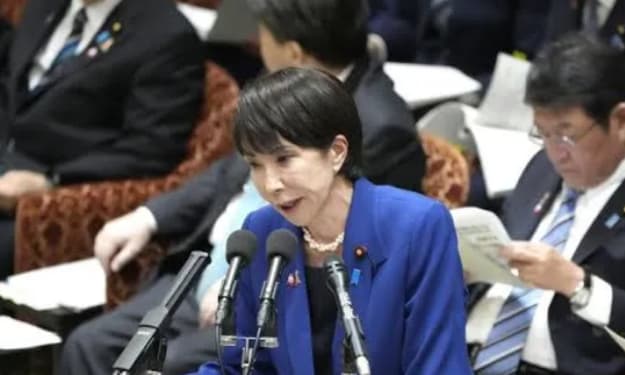
In a move that has sent ripples across Asia and global markets, China has announced a ban on exporting certain rare earth elements and other strategic goods to Japan for military purposes. The decision comes in direct response to controversial remarks made by Japanese Prime Minister Sanae Takaichi regarding Taiwan and regional security.
By Aqib Hussain2 months ago in The Swamp
The Forsyth House Fire
Since 1851, Forsyth House has stood on the corner of Union Street and Gordon Street in the heart of Glasgow. Its iconic, or was... because on Sunday 8th of March, 2026, a fire broke out in a small, seemingly un-named shop in the building and tore all that history down. As I write, the rubble is still unsettled and the street is still blocked off. Central Station is quiet on the upper level, and around 30 small businesses have quite literally gone up in smoke.
By S. A. Crawford3 days ago in The Swamp
A Transparent Look at Vocal Challenges and Top Stories
Almost three years ago, we shared a resource article that served as a place for people to suggest new challenge prompts. We thought it would be a good idea to refresh that thread, and take the opportunity to answer a few common questions about top stories, how challenges are judged and how submissions are reviewed.
By Vocal Curation Team4 days ago in Resources


Comments
There are no comments for this story
Be the first to respond and start the conversation.