politics
Politics does not dictate our collective cultural mindset as much as it simply reflects it; We've got to look in the mirror sometimes, and we've got one.
Pak fan asks Varun Dhawan about Border 2 release in his nation, actor says: 'Sunny sir ke Pakistan mein bhi fans hain'. AI-Generated.
Bollywood actor Varun Dhawan recently sparked excitement among his Pakistani fans during an interaction that touched upon the much-anticipated sequel Border 2. Known for his charismatic presence on and off screen, Dhawan’s comments not only acknowledged the popularity of his peers but also highlighted the enduring cross-border appeal of Bollywood films. The interaction occurred during a live session on social media, where fans from different countries had the opportunity to ask Varun Dhawan questions directly. Among the queries, one fan from Pakistan asked when Border 2 would release in their country. This simple question led to a warm and respectful acknowledgment from the actor, who said, “Sunny sir ke Pakistan mein bhi fans hain,” referring to Bollywood veteran Sunny Deol, the lead in the Border franchise. Dhawan’s response quickly became viral, showcasing the deep connection Bollywood stars have with audiences beyond India. Bollywood’s Cross-Border Reach Bollywood has a long history of captivating audiences across the globe, particularly in South Asia. Despite political tensions, Indian films have consistently found a devoted fan base in Pakistan, where viewers eagerly watch releases ranging from masala entertainers to action-packed dramas. The original Border, released in 1997, was a patriotic war film that became an iconic success, not just in India but also among Pakistani audiences who appreciated its storytelling and performances. The discussion around Border 2’s potential release in Pakistan highlights how fans remain hopeful that cross-border cinematic experiences will continue. Varun Dhawan’s acknowledgment of Sunny Deol’s popularity in Pakistan was more than a casual remark; it was a nod to the longstanding cultural exchange and shared love for storytelling that transcends political boundaries. Varun Dhawan: Balancing New Projects and Fan Engagement Varun Dhawan has been one of the busiest actors in Bollywood, juggling multiple projects that span genres from action to romance. Despite his hectic schedule, he makes it a point to engage with fans directly on social media platforms, answering questions and sharing insights into his work. His candid acknowledgment of Pakistani fans reflects a growing trend among Bollywood stars to connect personally with audiences, fostering goodwill and maintaining cross-border fan loyalty. Dhawan also hinted that while he is focused on promoting his upcoming films in India first, he is aware of the excitement surrounding international releases. Border 2, expected to be an action-packed and patriotic sequel, is particularly anticipated due to the legacy of the original film. By mentioning Sunny Deol’s fan base in Pakistan, Dhawan acknowledged the broader appeal of the film, signaling that Bollywood stars are increasingly conscious of their international audiences. The Cultural Impact of Bollywood Across Borders The enduring popularity of Bollywood in Pakistan has often served as a bridge between cultures. Films like Border and actors like Sunny Deol, Shah Rukh Khan, and Salman Khan have created a shared cinematic language that transcends politics. Fans in Pakistan not only enjoy the entertainment value but also develop an appreciation for the craft, music, and narratives unique to Indian cinema. Varun Dhawan’s friendly acknowledgment highlights the role of cinema in promoting cultural dialogue. In times where political relations can be tense, the love for films remains a neutral ground where audiences connect over shared stories and characters. Such interactions between actors and fans help humanize celebrities and remind audiences of the universal appeal of art and storytelling. Fan Excitement and Expectations The response to Dhawan’s comment was overwhelmingly positive. Social media platforms were flooded with reactions from fans in Pakistan, expressing excitement and anticipation for Border 2. Many appreciated the actor’s acknowledgment, calling it a respectful and thoughtful nod to his cross-border supporters. Some fans even started online petitions and discussions advocating for an official release of Border 2 in Pakistan, underscoring the power of fan engagement in shaping distribution decisions. Bollywood’s influence continues to be strong in South Asia, and the anticipation for Border 2 in Pakistan is a testament to the enduring appeal of films that combine action, patriotism, and human stories. Varun Dhawan’s interaction serves as a reminder that while cinema entertains, it also connects people across borders, fostering mutual appreciation and cultural exchange. Conclusion Varun Dhawan’s acknowledgment of Sunny Deol’s fans in Pakistan is more than a passing comment; it reflects the wider influence of Bollywood and the shared love for cinema that transcends political divides. As Border 2 prepares for its release, fans in both India and Pakistan eagerly await the film, hoping to experience the action, drama, and patriotism that made the original a classic. Actors like Dhawan, who take time to engage with international audiences, play a key role in keeping the magic of Bollywood alive across borders.
By Fiaz Ahmed Brohi19 days ago in The Swamp
Doug LaMalfa and the Quiet Power of Rural California Politics
Politics often feels loud, crowded, and distant from everyday life. Yet far from major cities and cable news studios, a different kind of political story unfolds. It happens in farming towns, water districts, and county meetings where decisions shape daily survival. Doug LaMalfa has spent years operating in that quieter space. His name rarely trends, but his influence reaches deep into rural California. To understand his role is to understand a part of America that often feels unseen. This article looks beyond headlines to explore how Doug LaMalfa built his political identity, what he represents to his supporters, and why his work continues to stir strong feelings across California’s agricultural heartland.
By Muqadas khan19 days ago in The Swamp
UK and France Would Send Troops to Ukraine if Peace Deal Is Signed, Starmer Confirms After Paris Talks. AI-Generated.
The prospect of Western military involvement in Ukraine took a notable turn this week as UK Labour leader Keir Starmer stated that both the United Kingdom and France would be willing to deploy troops to the country if a peace agreement is reached. Starmer, speaking after high-level discussions in Paris, emphasized that such a commitment would be contingent on a formal and internationally recognized accord between Ukraine and Russia. Context of Starmer’s Statement The statement comes amid ongoing tensions in Eastern Europe, with the war in Ukraine entering its fourth year. Starmer, who is widely viewed as a potential future Prime Minister, met with French political and military leaders to discuss coordinated responses to the conflict, as well as the role Europe could play in post-war reconstruction and security guarantees. While the UK and France have already provided Ukraine with military aid, including equipment, intelligence, and training, this is the first time a major UK opposition figure has publicly committed to sending ground troops in the event of a peace deal. Starmer clarified that the deployment would not be unilateral but coordinated with NATO allies and under international legal frameworks. Why Troop Deployment Is Being Considered Experts say that Starmer’s comments reflect a broader recognition of the need for security guarantees for Ukraine if negotiations result in a ceasefire or peace treaty. According to analysts, Ukraine’s military, while resilient, may require a stabilizing international presence to ensure that agreed terms are respected, particularly in regions previously occupied by Russian forces. “This is about deterrence and assurance,” says Dr. Fiona Clarke, a European security analyst. “The presence of UK and French troops, even in a limited capacity, could provide a framework for enforcing agreements, monitoring borders, and preventing renewed hostilities.” Reaction From Political Circles The comments have sparked a mix of support and skepticism. Some British lawmakers have praised Starmer for presenting a concrete plan for post-conflict support, suggesting that it could strengthen the UK’s role on the global stage. Others, however, have expressed caution, noting the potential risks of committing troops to an active conflict zone, even under the guise of peacekeeping. In France, President Emmanuel Macron and his defense team welcomed discussions of coordinated European involvement, though French officials have yet to confirm whether Paris would formally commit troops until a peace deal is finalized. The proposal also raises questions about the role of NATO and international legal frameworks. Any deployment would require approval from multiple stakeholders and a clear mandate defining the troops’ responsibilities, rules of engagement, and exit strategy. Implications for Ukraine For Ukraine, the prospect of Western troops on the ground could be a significant bargaining tool in peace negotiations. It would signal strong international backing and potentially reduce the risk of violations by opposing forces. Ukrainian officials have long sought guarantees that any settlement would be enforceable and that their territorial integrity would be respected in the long term. “Having allied troops present could dramatically alter the negotiation dynamics,” says Ivan Petrov, a Kyiv-based political analyst. “It reassures Ukraine that peace terms would be monitored and upheld, rather than relying solely on Russian compliance.” Challenges Ahead Despite the potential benefits, implementing such a plan would not be without challenges. Logistics, political consensus, and the ever-present risk of escalation remain critical considerations. Additionally, public opinion in the UK and France may be divided, with many citizens wary of foreign military engagements following previous conflicts in Iraq, Afghanistan, and Libya. There is also the delicate balance of sending a stabilizing force without provoking renewed tensions with Russia. Diplomats note that careful messaging and clear rules of engagement would be essential to prevent misunderstandings or accidental escalations. Looking Forward Starmer’s comments underscore the evolving nature of Western support for Ukraine. While military aid has been the primary focus, the potential for troop deployment highlights the broader strategy of preparing for both wartime contingencies and post-conflict stabilization. The coming months are likely to involve continued diplomatic negotiations, careful planning, and ongoing consultation with NATO allies. Should a peace deal materialize, the decisions made by the UK, France, and their allies could define the security landscape of Eastern Europe for decades to come. Ultimately, Starmer’s proposal signals a willingness among Western powers to go beyond material support and commit to tangible, on-the-ground security measures—a development that could prove pivotal in shaping the post-war reality for Ukraine and the broader European region.
By Fiaz Ahmed Brohi20 days ago in The Swamp
Israel, Syria Agree to Dedicated Communication Line in US-Brokered Talks. AI-Generated.
In a rare diplomatic breakthrough in the volatile Middle East, Israel and Syria have agreed to establish a dedicated communication line, aimed at preventing accidental military confrontations and improving crisis management between the two nations. The agreement, brokered by the United States, comes amid heightened regional tensions and marks a subtle yet significant step toward stabilizing one of the world’s most conflict-prone borders. Bridging a Historical Divide Israel and Syria have long shared a turbulent history marked by wars, territorial disputes, and decades of mistrust. While the countries have technically remained at war since 1948, various periods of ceasefire have punctuated their relations, often brokered by external powers. The creation of a direct communication channel represents a pragmatic move to reduce misunderstandings, particularly in the tense and militarized Golan Heights region. For years, incidents along the border have risked escalating into larger conflicts, with accidental airstrikes, miscommunications, and proxy actions by regional allies adding to the volatility. Analysts suggest that a dedicated line can act as a lifeline to prevent minor incidents from spiraling out of control, providing both nations with an immediate platform to verify intentions and de-escalate tensions. The Role of US Diplomacy The agreement was facilitated by US officials, who have been actively mediating between Israel and its neighbors in recent months. Washington’s approach emphasizes crisis management and conflict prevention rather than full diplomatic normalization, reflecting the delicate realities on the ground. A senior US diplomat involved in the talks stated, “The goal is simple: prevent accidental clashes and provide a mechanism for dialogue in moments of tension. Both sides recognized the potential benefits of having a direct line of communication.” The US sees this development as a strategic win, enhancing its influence in the region while contributing to broader stability efforts. Practical Implications The dedicated communication line is expected to function much like traditional military hotlines seen in other high-tension regions, such as the India-Pakistan Line of Control or US-Russia Cold War-era channels. Military officials on both sides will have immediate access to counterparts in the event of border incidents, including airspace violations, troop movements, or drone activity. In addition to preventing accidental clashes, the line could facilitate coordination on humanitarian issues. With the ongoing Syrian civil war and complex involvement of multiple regional actors, there are frequent scenarios where civilians, aid convoys, or displaced persons might inadvertently enter conflict zones. Prompt communication can ensure such situations are handled safely and efficiently. Cautious Optimism Among Analysts While the development is being hailed as a positive step, experts urge caution. Dr. Leila Haddad, a Middle East policy analyst, notes, “A communication line is a practical tool, not a peace treaty. It reduces the risk of unintended escalation but doesn’t address the underlying political and territorial disputes between Israel and Syria.” The Syrian government has indicated that the hotline is a confidence-building measure rather than a sign of improved diplomatic relations. Meanwhile, Israel views the line as an operational necessity, particularly as it continues to monitor Iranian-backed militias and other actors in Syrian territory. Regional Repercussions The agreement could have wider implications for the Middle East. Neighboring countries and international observers are closely monitoring the arrangement, viewing it as a potential model for other tense borders in the region. Experts suggest that while the hotline is a modest step, its successful implementation could pave the way for more comprehensive agreements, including intelligence sharing, border monitoring, or limited coordination on security threats. Looking Ahead Both nations face significant challenges in maintaining trust and stability. The success of the dedicated communication line will depend on consistent engagement, clear protocols, and the willingness of military leadership to prioritize conflict prevention over political signaling. Nonetheless, the agreement signals a willingness to explore pragmatic solutions amid a region historically defined by entrenched animosities. In the short term, the hotline may not resolve the decades-long disputes between Israel and Syria, but it represents a tangible mechanism to prevent unnecessary escalation and safeguard lives on both sides of the border. Conclusion The establishment of a dedicated communication line between Israel and Syria underscores the importance of crisis management in a region fraught with volatility. While not a political breakthrough or a step toward normalization, the US-brokered initiative highlights how even small, operational measures can play a crucial role in reducing the risks of unintended conflict. For a part of the world often defined by instability, the line may serve as a modest yet meaningful bridge toward greater security and understanding.
By Fiaz Ahmed Brohi20 days ago in The Swamp
Yemeni Separatists to Attend Saudi Talks After Losing Key Southern Sites. AI-Generated.
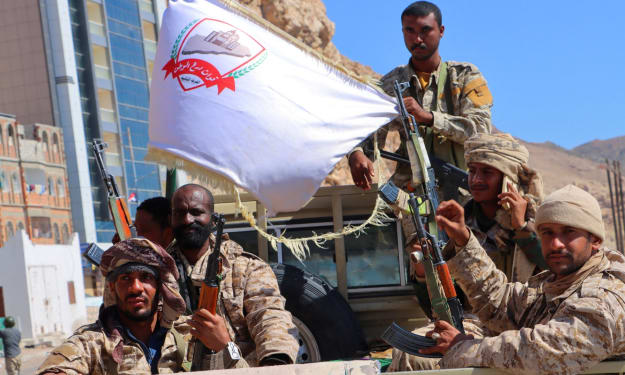
In a notable turn of events in Yemen’s protracted conflict, southern separatist leaders have agreed to attend talks in Saudi Arabia following the loss of several strategically significant sites in the south. This development marks a crucial moment in the ongoing efforts to stabilize the region and underscores the growing influence of Saudi-mediated diplomacy in Yemen’s fractured political landscape. The separatists, who have long pursued an independent South Yemen, recently suffered setbacks as government forces, supported by a coalition of regional allies, reclaimed key towns and ports. These losses have not only diminished the separatists’ territorial control but also undermined their leverage in political negotiations. Recognizing the precariousness of their position, the leaders of the Southern Transitional Council (STC) have signaled their willingness to participate in talks hosted in Riyadh, aimed at reaching a more lasting resolution to the conflict. The Context of the Conflict Yemen’s southern separatists, primarily represented by the STC, have been engaged in intermittent clashes with the internationally recognized Yemeni government over control of the south. Their struggle intensified after the 2015 escalation of Yemen’s civil war, which also drew in the Saudi-led coalition against the Iran-aligned Houthi rebels in the north. The STC has consistently maintained that the south deserves autonomy or full independence, citing historical grievances dating back to the 1990 unification of North and South Yemen. However, repeated confrontations with government forces and rival factions have fragmented their influence, leading to strategic vulnerabilities that are now prompting a shift toward negotiation. Saudi Arabia’s Role as Mediator Saudi Arabia has positioned itself as a key mediator in Yemen’s complex political arena. The Kingdom’s role involves balancing the interests of multiple factions, including the Yemeni government, southern separatists, and tribal leaders, while simultaneously countering Houthi expansion in the north. Riyadh’s efforts aim to prevent further destabilization along its southern border and to ensure that Yemen does not become a battleground for regional proxy wars. The upcoming talks will likely focus on territorial disputes, political representation, and power-sharing arrangements. Analysts suggest that the Saudi-led negotiations could pave the way for temporary ceasefires, the consolidation of administrative control in the south, and the potential integration of separatist leaders into formal governance structures. Implications of Separatist Losses The loss of key southern sites has far-reaching implications for the separatist movement. Control over strategic ports, transport hubs, and urban centers is critical not only for military operations but also for economic leverage. With these assets lost, the separatists face reduced revenue streams, limited access to supplies, and a weakened ability to sustain prolonged conflict. Moreover, these territorial setbacks place the separatists in a position where negotiation is no longer optional but necessary. Participating in Saudi-hosted talks allows them to maintain political relevance, protect remaining strongholds, and potentially secure concessions that safeguard the interests of their constituencies. Challenges to the Peace Process While the decision to attend talks is a positive development, significant challenges remain. Mistrust between the separatists and the Yemeni government runs deep, fueled by years of intermittent conflict and competing ambitions. Past negotiation attempts have repeatedly stalled, raising questions about whether Saudi-led diplomacy can achieve durable results this time. Additionally, the presence of multiple local militias, tribal factions, and external actors with divergent goals complicates the negotiation landscape. Any agreement will require careful balancing to ensure that concessions do not embolden rivals or trigger new rounds of violence. Looking Ahead Despite these obstacles, the upcoming discussions in Saudi Arabia offer a rare opportunity to address the fragmentation of southern Yemen and work toward a more stable governance framework. Success in these talks could strengthen Yemen’s path toward a unified political process, reduce the likelihood of renewed clashes, and signal to the international community that diplomacy remains viable even amid ongoing conflict. For the southern separatists, participation in the talks represents a pragmatic acknowledgment that military gains alone are insufficient for long-term objectives. By engaging in dialogue, they may secure political influence, protect civilian populations, and preserve their vision for southern Yemen within a negotiated settlement. Conclusion The announcement that Yemeni separatists will attend Saudi-hosted talks marks a significant shift in the country’s long-running conflict. Following territorial losses, the STC is seeking a pathway to maintain influence through dialogue rather than continued confrontation. While challenges remain, the move highlights the potential of diplomatic intervention to reshape power dynamics in Yemen, offering a glimmer of hope for stability in a region long plagued by unrest and uncertainty.
By Fiaz Ahmed Brohi20 days ago in The Swamp
Germany News: Merz Issues Business SOS in Letter to Allies. AI-Generated.
Germany, long regarded as the economic engine of Europe, is facing mounting pressures that have prompted an unusually direct appeal from one of its most influential political figures. Friedrich Merz, leader of the Christian Democratic Union (CDU), has reportedly issued what many are calling a “business SOS” in a letter addressed to Germany’s allies. The message is clear: Germany’s economic model is under strain, and without coordinated action and strategic support, the country risks losing its competitive edge in an increasingly fragmented global economy. A Warning From the Heart of Europe Merz’s letter comes at a critical moment. Germany is grappling with sluggish growth, high energy costs, declining industrial output, and growing concerns among businesses about long-term stability. For decades, German prosperity has rested on strong exports, reliable energy supplies, and deep integration into global supply chains. Recent shocks—ranging from geopolitical conflicts and energy disruptions to trade tensions and technological competition—have exposed vulnerabilities in that model. By reaching out directly to allies, Merz signals that Germany’s challenges are no longer purely domestic. Instead, they have broader implications for Europe and the transatlantic partnership. A weakened German economy could ripple across the European Union, affecting everything from employment and investment to political stability. The Core Concerns of German Business At the heart of Merz’s message is the growing alarm among German businesses. Industrial leaders have repeatedly warned that energy prices remain uncompetitive compared to those in the United States and parts of Asia. The transition away from Russian gas, while necessary from a security standpoint, has imposed significant costs on manufacturers—particularly energy-intensive sectors such as chemicals, steel, and automotive production. In addition, companies are struggling with bureaucratic hurdles, labor shortages, and slow digitalization. Many firms report that investment decisions are being delayed or redirected abroad, raising fears of deindustrialization. Merz’s letter reflects these anxieties, emphasizing that Germany cannot afford to lose its status as a manufacturing powerhouse. A Call for Allied Cooperation Rather than framing the situation as a purely national failure, Merz stresses the importance of allied cooperation. He reportedly urges Germany’s partners to recognize the interconnected nature of modern economies. Coordinated energy strategies, fair trade policies, and aligned industrial frameworks are presented as essential tools to stabilize Europe’s economic core. This appeal also carries a strategic undertone. As the United States invests heavily in domestic industry through subsidies and incentives, European businesses worry about being left behind. Merz’s message implicitly calls for closer coordination to ensure that global competition does not undermine European unity or distort markets in ways that disadvantage German and EU firms. Political Implications at Home Domestically, the letter strengthens Merz’s position as a champion of business interests and economic realism. As Germany debates its future economic direction, the CDU leader is positioning himself as a voice of urgency and pragmatism. His intervention contrasts with what critics describe as slower, more cautious approaches from the current governing coalition. By publicly raising the alarm, Merz also puts pressure on policymakers to accelerate reforms. Issues such as tax competitiveness, infrastructure investment, and regulatory simplification are likely to gain renewed attention. The “business SOS” framing suggests that incremental changes may no longer be sufficient. Europe’s Broader Economic Crossroads Germany’s struggles reflect a wider European dilemma. The continent is navigating a complex transition toward greener energy, digital transformation, and strategic autonomy—all while competing with major powers that are willing to deploy aggressive industrial policies. Merz’s letter highlights the risk that Europe could fall behind if coordination falters. For many observers, the appeal underscores the need for a more coherent European economic strategy. If Germany weakens, the EU’s ability to act as a global economic and political force could diminish. In that sense, the letter is not just about Germany’s businesses, but about Europe’s place in a rapidly changing world. What Comes Next? The immediate impact of Merz’s letter will depend on how allies respond. Whether it leads to concrete policy shifts or remains a symbolic gesture is yet to be seen. However, it has already succeeded in drawing attention to the severity of Germany’s economic challenges. For German businesses, the hope is that this public warning accelerates action—both at home and abroad. For Europe, the message is sobering: the stability of its largest economy cannot be taken for granted. Conclusion Friedrich Merz’s business SOS letter marks a significant moment in Germany’s economic debate. It reflects deep concern within the business community and signals that Germany’s challenges have become a shared international issue. As economic uncertainty grows, the call for allied cooperation may prove crucial in determining whether Germany—and Europe—can adapt and thrive in the face of global competition.
By Fiaz Ahmed Brohi20 days ago in The Swamp
Latin America Fears What Comes Next After the Venezuela Raid. AI-Generated.
Across Latin America, governments and citizens alike are grappling with deep unease following the U.S. raid on Venezuela that led to the capture of President Nicolás Maduro. While Washington has framed the operation as a decisive blow against authoritarian rule, much of the region is focused on a different question: what happens next?
By Aarif Lashari20 days ago in The Swamp
Swiss Bar Owners ‘Overwhelmed With Grief’ in First Public Comments Since 40 Killed in Fire. AI-Generated.
The owners of Le Constellation, a popular bar in the alpine resort town of Crans-Montana, have spoken publicly for the first time since a devastating fire killed 40 people earlier this month. In a brief but emotional statement released through their lawyer, the owners said they were “overwhelmed with grief” and struggling to come to terms with the scale of the tragedy.
By Aarif Lashari20 days ago in The Swamp
US May Intercept and Seize Oil Tanker Heading for Europe, Reports Say. AI-Generated.
The United States is reportedly considering intercepting and seizing an oil tanker bound for Europe, according to multiple media reports citing officials familiar with the matter. The development has sparked concern among diplomats, shipping companies, and energy analysts, who warn that such an action could significantly escalate tensions in an already fragile global energy and security environment.
By Aarif Lashari20 days ago in The Swamp
White House Says Using US Military Is ‘Always an Option’ for Acquiring Greenland. AI-Generated.
The White House has ignited international controversy after stating that using the U.S. military is “always an option” for acquiring Greenland, a remark that has alarmed European leaders, Greenlandic officials, and foreign policy experts worldwide. While U.S. officials later attempted to frame the comment as hypothetical, the statement has revived fears of coercive diplomacy and raised fundamental questions about sovereignty, international law, and the future of Arctic geopolitics.
By Aarif Lashari20 days ago in The Swamp
Miniature Mind Musings #11:
Are there infinite levels to this lowness, or is there a sale on somewhere? Blink for one minute… Sheesh! I don’t think words like “politics” or “leadership” are gonna be definitions that leave the masses feeling all warm and fuzzy inside anymore for a long time.
By The Dani Writer20 days ago in The Swamp
HMRC Hits 300,000 Taxpayers With “Trivial” Bills — Why Small Tax Errors Are Becoming a Big Problem
Thousands of people across the UK were surprised — and in many cases frustrated — after receiving unexpected letters from HMRC demanding payment for what many are calling “trivial” tax bills. According to recent reports, around 300,000 taxpayers have been contacted by HM Revenue & Customs over small underpayments, some as low as just a few pounds. While the amounts may seem minor, the impact has been anything but small.
By Waqar Khan20 days ago in The Swamp