politics
Politics does not dictate our collective cultural mindset as much as it simply reflects it; We've got to look in the mirror sometimes, and we've got one.
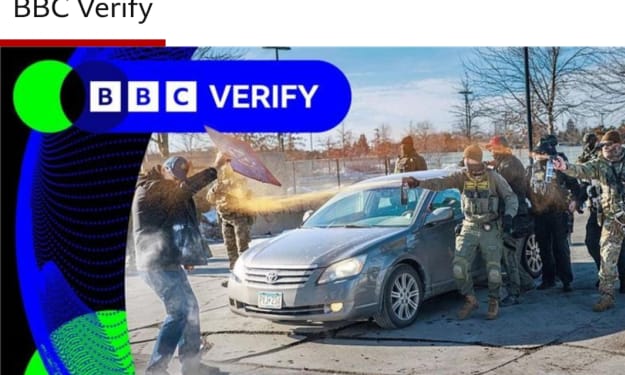
Examining ICE Tactics in Minnesota After the Renee Good Shooting. AI-Generated.
The shooting of Renee Good during an encounter involving U.S. Immigration and Customs Enforcement (ICE) agents has intensified scrutiny of federal immigration enforcement tactics in Minnesota. While investigations into the incident are ongoing and key facts remain contested, the case has sparked renewed debate over how ICE operates, how force is used, and how federal actions affect local communities. For many Minnesotans, the shooting has become a flashpoint in a broader conversation about accountability, transparency, and public safety.
By Aarif Lashari8 days ago in The Swamp
Bill and Hillary Clinton Refuse to Testify in House Epstein Investigation. AI-Generated.
Former President Bill Clinton and former Secretary of State Hillary Clinton have refused to testify in a House investigation examining the late financier Jeffrey Epstein and his network of associates. The decision has reignited political controversy and public debate, as lawmakers continue to probe how Epstein was able to evade accountability for years despite serious allegations of sex trafficking and abuse. The Clintons’ refusal has drawn sharp reactions from critics and supporters alike, underscoring the sensitivity and high stakes of the congressional inquiry.
By Aarif Lashari8 days ago in The Swamp
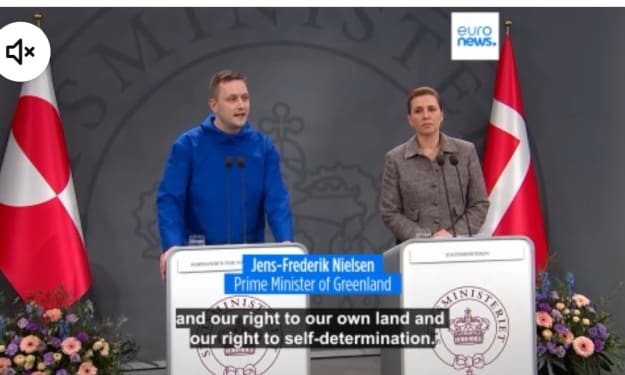
Danish and Greenlandic Foreign Ministers to Meet US Vice President JD Vance and Secretary of State Marco Rubio in Washington. AI-Generated.
The Danish and Greenlandic foreign ministers are set to meet US Vice President JD Vance and Secretary of State Marco Rubio in Washington on Wednesday, signaling a significant moment in transatlantic diplomacy. The talks are expected to focus on Arctic security, economic cooperation, climate change, and the evolving geopolitical importance of Greenland. As global interest in the Arctic intensifies, this meeting highlights how a once-remote region has become central to international strategy and great-power competition.
By Aarif Lashari8 days ago in The Swamp
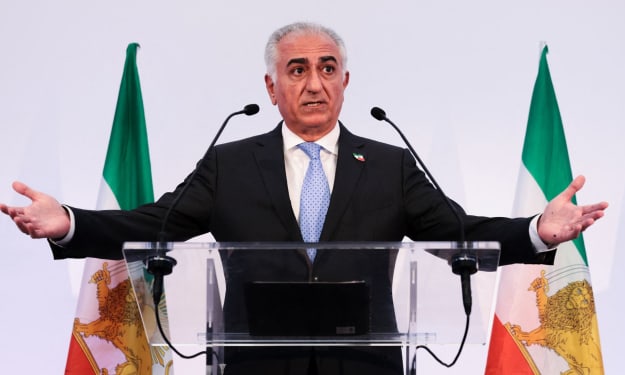
Hundreds of Gunshot Eye Injuries Found in One Iranian Hospital Amid Brutal Crackdown on Protests. AI-Generated.
As protests continue to challenge Iran’s leadership, a disturbing medical discovery has drawn international attention. Doctors at a major Iranian hospital have reported treating hundreds of patients with gunshot wounds to the eyes, injuries believed to be the result of a violent crackdown by security forces. The findings have intensified global concern over human rights abuses and raised urgent questions about the methods used to suppress dissent across the country.
By Aarif Lashari8 days ago in The Swamp
An Isolated Iran Finds China’s Friendship Has Limits. AI-Generated.
When strategic alliances are tested amid sanctions, unrest, and shifting global priorities For decades, Iran has positioned itself as a key geopolitical player in West Asia, often standing at odds with the United States and Western powers. Over that time, China has emerged as Tehran’s most important ally — economically, diplomatically, and rhetorically. Yet, as Iran faces widespread protests, economic collapse, and mounting external pressure, its relationship with Beijing is revealing cracks. What Iran once saw as a dependable lifeline is increasingly perceived as limited and transactional, with Beijing’s restraint reshaping Tehran’s strategic calculus. �
By Fiaz Ahmed Brohi8 days ago in The Swamp
How the UK Ended Up Building the World’s Most Expensive Railway. AI-Generated.
When people talk about ambitious infrastructure projects, the United Kingdom’s new high-speed rail network often tops the list—not for speed, but for cost. What began as a bold vision to modernize the nation’s rail system has become controversial for its massive price tag, complex delays, and shifting political support. Today, as the UK builds what critics have dubbed the world’s most expensive railway, it’s worth asking: how did the UK get here? The Vision: A Modern Railway for the 21st Century The story begins in the early 2000s, when Britain’s rail network was facing growing pains. Congestion on the West Coast Main Line and other key routes was worsening, freight capacity was limited, and there was little room for growth. Passengers faced overcrowded trains and slow journey times, especially compared with high-speed services in France, Spain, and Japan. The idea of a high-speed rail link between major cities wasn’t new, but it gained real momentum after the success of continental projects like France’s TGVs. A national network promised faster journeys, increased capacity, and economic growth outside the capital—especially in regions long waiting for infrastructure investment. HS2: Promise and Purpose The centerpiece of the UK’s grand plan became High Speed 2 (HS2), intended to connect London with Birmingham, Manchester, and eventually Leeds. Promoters said trains would cut travel times in half, boost regional economies, and take pressure off crowded commuter lines. HS2 was pitched as more than just a railway: a catalyst for regional development a greener alternative to domestic flights a long-term investment in the UK’s economic future The plan certainly struck a chord. In theory, a high-speed network could transform connectivity across Britain—reducing travel times, encouraging investment outside London, and knitting together major cities in a modern transport web. Why the Costs Ballooned But ambitious infrastructure rarely comes cheap, and HS2’s projected price tag has grown dramatically. Several key factors contributed: 1. Changing Scope and Political Shifts HS2 didn’t emerge fully formed. Its route, phases, and design changed multiple times as governments of different political stripes revised priorities. These revisions added design complexity and contractual overhead, meaning early cost estimates quickly proved optimistic. 2. Construction Complexity Unlike flat plains where high-speed rail thrives, much of the UK is built up, with dense urban areas, protected landscapes, and ancient infrastructure. Building through these environments requires thousands of bridges, tunnels, and engineered embankments, each one adding millions to the tally. 3. Inflation and Supply Costs Rising inflation, especially in the wake of global supply chain disruptions and pandemic recovery spending, boosted material and labor costs. What might have been affordable a decade ago became significantly more expensive mid-project. 4. Contract and Project Management Challenges HS2’s scale required complex contracting across multiple regions and suppliers. Coordinating these elements proved difficult, and disagreements over timelines and specifications led to disputes, delays, and cost escalation. 5. Political Controversy and Delays HS2 has never lacked critics. Community groups, environmental activists, and political opponents argued that costs outweighed benefits—citing damage to woodlands, uncertain economic impacts, and questions over whether better upgrades to existing lines might be smarter. Prolonged debate and legal challenges delayed progress and, in turn, drove costs up further. Comparing Costs: Not Just Construction When analysts describe HS2 as the world’s most expensive railway, they are not just talking about track miles. The total figure includes: land acquisition in high-value areas environmental mitigation and restoration compensation for affected homeowners and businesses the technological systems that support high-speed safety and operations High-speed rail is expensive everywhere—but HS2’s integrated approach to social and environmental issues adds layers of cost that projects in other countries sometimes ignore. Has It Been Worth It? Supporters of HS2 argue that cost alone doesn’t capture the long-term value: faster connections create economic opportunities jobs are generated in construction and related industries rail shifts travelers from cars and planes, reducing emissions Early sections of the project are on track to open sooner than later, offering a hint of the benefits to come. Yet sceptics point out that the business case depends on sufficiently high passenger numbers, sustained economic growth outside London, and timely completion of later phases. The Broader Legacy Whatever HS2’s final cost and impact, the project has already reshaped how Britain thinks about infrastructure. It sparked: debates about regional inequality discussions about public investment versus austerity renewed focus on how to build large-scale projects responsibly HS2 is forcing policymakers to ask tough questions about how the UK balances cost, community impact, climate goals, and economic ambition. Conclusion: A Pricey Path Forward The UK’s journey to build the world’s most expensive railway reflects both the promise and pitfalls of modern infrastructure. What started as a bold answer to a crowded rail network has become a symbol of complexity in the age of political polarization, regional demands, and rising costs. As the first trains begin service in the coming years, HS2 will finally put its benefits to the test. But the lessons learned—about planning, priorities, and public support—will continue to shape Britain’s transport policy for generations.
By Fiaz Ahmed Brohi8 days ago in The Swamp