
Iran Protests: Rising Casualties Draw International Scrutiny and US Warning
As domestic unrest continues, the treatment of detainees becomes a focal point for foreign condemnation.

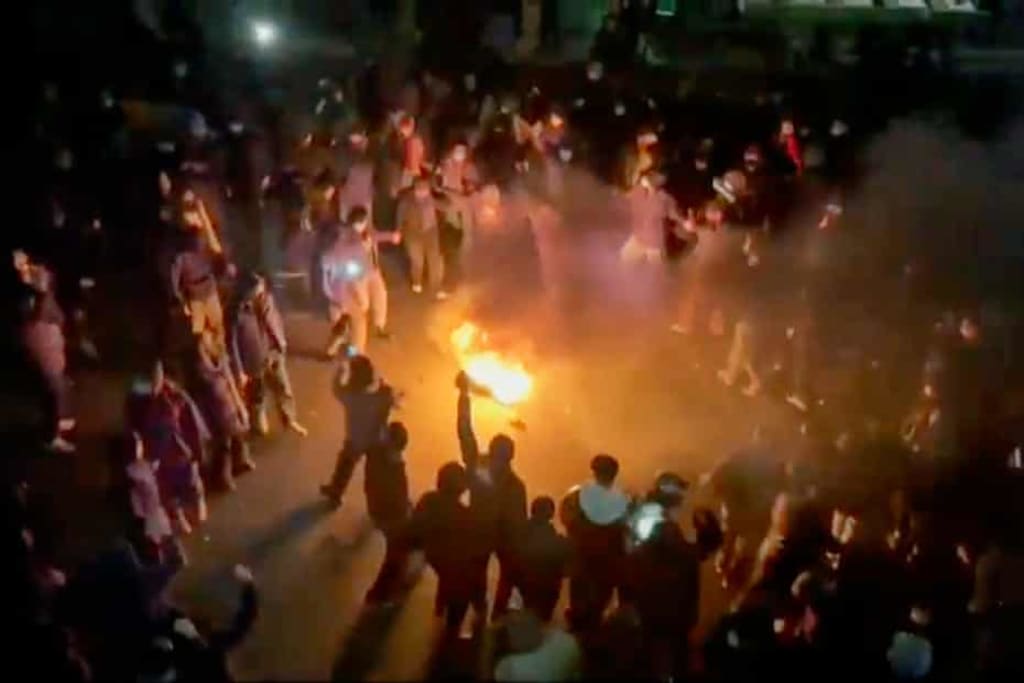
The death toll from ongoing protests in Iran continues to rise, drawing sharper international condemnation and a specific warning from former US President Donald Trump regarding the treatment of detainees. The unrest, now in its third week, represents one of the most sustained challenges to Iran’s theocratic government in recent years.
The protests began on September 16, following the death of 22-year-old Mahsa Amini in the custody of the country’s morality police. She was detained for allegedly violating Iran’s strict hijab laws. Authorities stated she suffered a heart attack, but her family and protesters allege she was beaten.
What started as outrage over her death has rapidly evolved into a broader movement. Public demonstrations, led largely by women and youth, have spread to over 80 cities. Protesters are now voicing grievances against the system itself, with chants directly criticizing Supreme Leader Ayatollah Ali Khamenei.
The government response has been severe. Security forces, including the Islamic Revolutionary Guard Corps and Basij militia, have deployed in strength. They have used live ammunition, metal pellets, and tear gas against crowds. Internet access remains heavily restricted, a tactic used to slow the spread of information and organize rallies.
Independent human rights groups outside Iran are struggling to verify numbers due to the digital blackout. However, the Oslo-based Iran Human Rights organization estimates that at least 76 people have been killed by security forces. This figure includes some children and teenagers. State media has acknowledged a lower number of deaths, including members of the security forces.
Hundreds, possibly thousands, have been arrested. This includes prominent activists, journalists, and students. The treatment of these detainees is now a central concern. Reports from inside the country, though difficult to confirm, suggest detainees face harsh conditions. Families of those arrested have gathered outside prisons seeking information, often met with silence or threats.
It is within this context that former US President Donald Trump issued a statement. He warned Iranian officials that "the world is watching" their handling of detainees. He specifically mentioned reports of abuse and called for their immediate release. While current President Joe Biden’s administration has expressed solidarity with protesters and imposed new sanctions on the morality police, Trump’s remarks were notable for their direct focus on prisoner welfare.
The international reaction extends beyond the United States. Canada has imposed sanctions on Iranian officials. The United Kingdom has summoned Iran's chargé d'affaires. The United Nations Human Rights Council has voted to create a fact-finding mission to investigate the crackdown. Several European nations are also considering further measures.
The Iranian government has dismissed the protests as "riots" instigated by foreign enemies. State television has broadcast purported confessions from arrested individuals, a practice widely condemned by rights groups as coerced. Officials have blamed the United States, Israel, and Saudi Arabia for stirring unrest. They have not shown signs of compromise on the core issue of mandatory hijab laws.
The economic situation in Iran provides a backdrop to the anger. Years of stringent US sanctions, coupled with domestic mismanagement and corruption, have crippled the economy. Inflation is rampant and unemployment, particularly among the educated youth, is high. For many protesters, Amini’s death was a catalyst for expressing this deeper economic and social frustration.
The protest movement appears decentralized, lacking a clear leadership structure. This makes it resilient in some ways, as there are no figureheads to arrest, but it also raises questions about its long-term goals and sustainability. Actions range from large street marches to symbolic acts like women publicly cutting their hair or burning headscarves.
The government has the advantage of organized force and control over state institutions. Past protest waves in 2009, 2017, and 2019 were ultimately suppressed with significant violence. Analysts are watching to see if the current, more geographically widespread movement can maintain its momentum against this pressure.
The internet shutdown is a critical battleground. Protesters use virtual private networks (VPNs) to bypass blocks and share footage of protests and crackdowns. This digital documentation has been crucial in informing the outside world. The government, aware of this, continues its efforts to sever this link.
The situation remains highly volatile. Each reported death or act of violence risks further inflaming public sentiment. Conversely, a large-scale security operation could temporarily clear the streets but may store up greater resentment for the future.
For the international community, options are limited. Diplomatic expulsions and targeted sanctions on officials are the primary tools. A more forceful intervention is not on the table. The effectiveness of these measures in altering the behavior of the Iranian state is historically low.
The coming days will be decisive. The government may seek to escalate its crackdown to break the protest cycle before it consolidates. Alternatively, if the demonstrations persist, it may be forced into some form of concession, however minor, to de-escalate the crisis. The treatment of those already detained will be a key indicator of the regime's next steps.
The protests have underscored a deep generational and societal divide in Iran. A large segment of the population, born after the 1979 Revolution, appears to have different aspirations for social freedom and governance. Their slogans target the very foundations of the Islamic Republic's ideological project.
For now, the streets of Iran remain a tense arena. The death of Mahsa Amini has ignited a fire that shows no sign of extinguishing. The growing number of casualties has moved the issue from a domestic incident to an international human rights crisis. The world continues to watch, with many leaders, past and present, now framing their response around the fate of the detained.
About the Creator
Saad
I’m Saad. I’m a passionate writer who loves exploring trending news topics, sharing insights, and keeping readers updated on what’s happening around the world.
Bethany Beyond the Jordan: The Sacred Place of Jesus’ Baptism
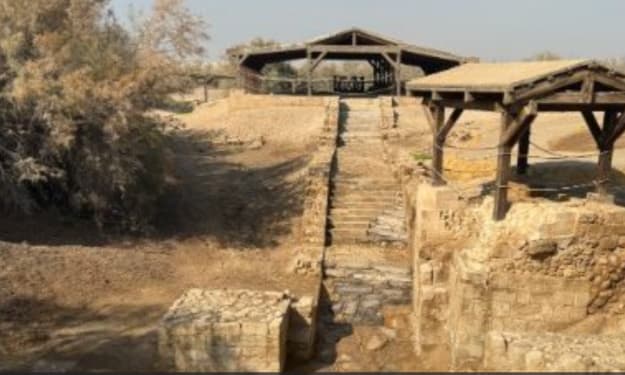
A Sacred Place Hidden in Plain Sight Along the eastern bank of the Jordan River, just a short distance from the Dead Sea, lies a place revered by millions of Christians around the world: Bethany Beyond the Jordan. Known in Arabic as Al-Maghtas, this site is widely recognized as the location where Jesus Christ was baptized by John the Baptist. Though modest in appearance, its spiritual weight is immense, making it one of the holiest places in Christianity. Unlike grand cathedrals or bustling pilgrimage cities, Bethany Beyond the Jordan offers something rare—silence, simplicity, and a powerful sense of sacred history. It is here, according to Christian tradition and strong archaeological evidence, that Jesus’ public ministry began. Biblical Roots of Bethany Beyond the Jordan The Gospel of John provides the clearest reference to this site, describing it as “Bethany beyond the Jordan, where John was baptizing.” For centuries, scholars debated the exact location of this biblical Bethany. Some believed it lay west of the river, while others argued for the eastern bank. Modern archaeology has largely settled the debate. Excavations in Jordan uncovered ancient baptism pools, churches, monasteries, and water systems dating back to the Roman and Byzantine periods—all pointing to this area as the original baptism site. Early Christian pilgrims also recorded journeys to this very location, strengthening its authenticity. John the Baptist and the Meaning of Baptism Bethany Beyond the Jordan is inseparable from the figure of John the Baptist, a prophet who preached repentance and spiritual renewal. His act of baptizing Jesus transformed baptism from a symbol of repentance into a cornerstone sacrament of Christianity. The baptism of Jesus represents humility, obedience, and divine affirmation. According to scripture, the heavens opened, the Holy Spirit descended like a dove, and a voice declared Jesus as God’s beloved Son. This moment marks the beginning of Jesus’ mission and gives the site its profound theological importance. For believers, standing near the waters of the Jordan is not just about history—it is about reconnecting with faith at its source. Archaeology That Brings Scripture to Life What sets Bethany Beyond the Jordan apart from many holy sites is the strength of its archaeological record. Researchers have uncovered: Ruins of early Christian churches built to honor the baptism site Monastic cells where early monks lived and prayed Large baptism pools used by pilgrims Ancient water channels connecting the site to the Jordan River These findings show that Christians revered this location from the earliest centuries of the faith. Rather than relying solely on tradition, Bethany Beyond the Jordan is supported by physical evidence that aligns closely with biblical descriptions. Recognition as a World Heritage Site In 2015, UNESCO officially recognized Bethany Beyond the Jordan as a World Heritage Site, citing its outstanding universal value and deep religious significance. This recognition placed the site alongside the world’s most important cultural and spiritual landmarks. Jordan’s role in preserving and promoting the site has been widely praised. Despite being located in a region often associated with conflict, Bethany Beyond the Jordan stands as a symbol of peace, coexistence, and shared heritage among Christians, Muslims, and Jews. A Place of Pilgrimage and Papal Visits Over the years, Bethany Beyond the Jordan has welcomed pilgrims from every corner of the world. Many describe their visit as deeply emotional, even transformative. The quiet landscape, combined with the slow flow of the Jordan River, creates an atmosphere of reflection rarely found at more crowded holy sites. Several popes, including Pope John Paul II, Pope Benedict XVI, and Pope Francis, have visited the site, reinforcing its importance within the global Christian community. These visits also elevated international awareness of Jordan as a custodian of Christian holy places. The Jordan River: More Than Just Water The Jordan River itself holds immense symbolic power. In the Bible, it represents transition, renewal, and divine intervention. From the Israelites crossing into the Promised Land to Jesus’ baptism, the river is a recurring setting for spiritual turning points. At Bethany Beyond the Jordan, the river becomes more than geography—it becomes theology. For many pilgrims, touching or seeing its waters is a reminder of spiritual cleansing and new beginnings, echoing the meaning of baptism itself. Interfaith Importance and Cultural Harmony While Bethany Beyond the Jordan is a Christian holy site, its significance extends beyond one faith. Jordan, a Muslim-majority country, has actively protected Christian heritage, offering a powerful example of interfaith respect. The site demonstrates how sacred spaces can unite rather than divide. In a region often portrayed through the lens of conflict, Bethany Beyond the Jordan tells a different story—one of shared history, mutual reverence, and peaceful coexistence. Visiting Bethany Beyond the Jordan Today Today, the site is carefully managed to preserve its spiritual atmosphere. Modern walkways guide visitors through ruins without disturbing the landscape. Informational signs explain both the biblical and archaeological significance, making the experience educational as well as devotional. Unlike many major pilgrimage destinations, Bethany Beyond the Jordan remains calm and uncluttered. This simplicity allows visitors to focus not on spectacle, but on meaning. Why Bethany Beyond the Jordan Still Matters In a fast-paced, modern world, Bethany Beyond the Jordan offers something timeless. It reminds believers of humility, faith, and beginnings. It reminds historians that ancient texts can align with physical evidence. And it reminds the global community that sacred heritage deserves protection, regardless of borders or beliefs. More than a historical landmark, Bethany Beyond the Jordan is a living testament to the moment when a quiet act in a river changed the course of religious history. Final Reflections Bethany Beyond the Jordan is not defined by grandeur, but by depth. It stands as a sacred bridge between scripture and soil, faith and history. For Christians, it marks the beginning of Jesus’ mission. For the world, it stands as a symbol of spiritual heritage preserved with dignity and care. In the stillness of the Jordan’s waters, the story of baptism continues to flow—inviting reflection, renewal, and reverence for generations to come
By Muhammad Hassan6 days ago in The Swamp



Comments
There are no comments for this story
Be the first to respond and start the conversation.