addiction
The realities of addition; the truth about living under, above and beyond the influence of drugs and alcohol.
Your Body Definitely Keeps The Score . Top Story - October 2025.
That is one massive (albeit alarming) statistic. No wonder why we can all feel a bit f*cked up, or the world certainly does, if our garden has been watered accordingly, and all of the relevant weeds have been pulled out - metaphorically speaking of course. The author of the book by the same title (The Body Keeps The Score), Bessel van der Kolk paves the way for a grounding, heavy, eye opening yet awesome read into the human psyche; and (of course) trauma plays a significant role. All of our not so positive thoughts and setbacks to teach us lesson after lesson are all the epitome of trauma. This is why life can feel like smooth sailing for a small percentage of people; while for the majority of us, life is blighted with issue after issue, all thanks to the subconscious. (And that includes all of those circumstances in the opening image of this article.)
By Justine Crowley4 months ago in Psyche
Showing Up
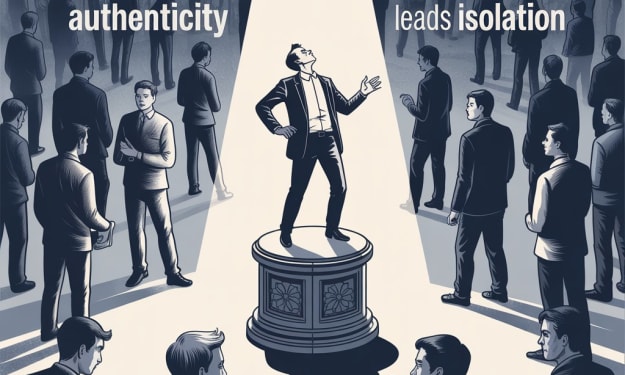
Human beings are social creatures, and much of our identity is built on how others perceive us. Most of us want to be respected, admired, and included. Yet for some people, this need turns into a compulsion. They develop the habit of “showing up”— inserting themselves into situations not to contribute meaningfully, but to be noticed, admired, or seen as superior. To observers, this behavior often comes across as arrogant or ignorant. But psychology shows that behind such attention-seeking displays lie complex motivations, insecurities, and social dynamics.
By Life Hopes4 months ago in Psyche
Run Forrest, run!
The other day, I finally watched “Forrest Gump” , and noticed a theme that, to my knowledge, isn’t part of the mainstream conversation about this film - namely the developmental psychology thread running through the storyline and shaping the lives of the main characters.
By Eva Smitte4 months ago in Psyche
Quitting Smoking
How We Start Smoking There are many reasons people start smoking. The top three reasons I hear are: "I started because my parents smoked and cigarettes were easily accessible.", "I thought it would make me look grown up.", and "The people I hung around with smoked and I thought they were cool, (or wanted to fit in) so I wanted to do it too."I fell into the latter two of those three.
By Lorelei Nettles4 months ago in Psyche
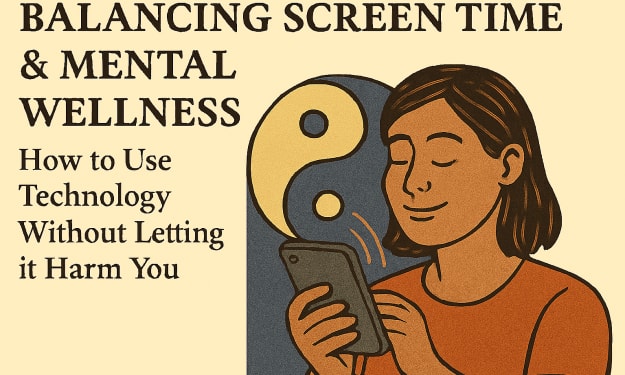
Balancing Screen Time & Mental Wellness: How to Use Technology Without Letting It Harm You. AI-Generated.
Screens have become an inseparable part of daily life. From checking work emails on your laptop to scrolling through social media on your phone, the average person spends several hours a day in front of a screen. While technology provides convenience, entertainment, and connection, too much of it can take a toll on mental health. Prolonged screen time has been linked to stress, anxiety, poor sleep, and feelings of isolation.
By JP Psychiatry4 months ago in Psyche
The Echo of Silence
The Echo of Silence Evelyn sat in the dimly lit room, her hands resting on the oak desk where old letters lay scattered. The silence of the house pressed against her like a suffocating blanket. She had always feared silence, not because it was empty, but because it was never truly empty. For Evelyn, silence had a voice.
By Article Master 4 months ago in Psyche
full life details of Jeffrey Dahmer Cannibalism
Jeffrey Lionel Dahmer, infamously known as the "Milwaukee Cannibal" or "Milwaukee Monster," was one of America's most notorious serial killers. His life was a tragic confluence of deep-seated psychological disorders, profound isolation, and horrific violence that culminated in the murders of 17 young men and boys between 1978 and 1991.
By Faheem ullah4 months ago in Psyche
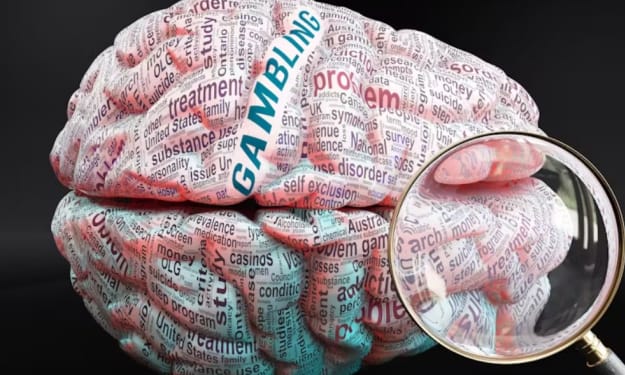
Neuroscience Insights: How Our Brain Processes Gambling Risks
Why do we go skydiving, invest in the stock market, or bet on a game? The allure of risk is an inherent part of human nature. The feeling that accompanies uncertainty—a mix of excitement, hope, and tension—has fascinated philosophers, psychologists, and, more recently, neuroscientists for centuries. It turns out that our propensity for risk-taking isn't just a matter of personality or conscious calculation. It's a complex biochemical process, deeply embedded in the structure and function of our brain. Understanding these mechanisms sheds new light on why gambling can be so captivating and how the brain processes the odds of winning.
By Shabbir Ahmad4 months ago in Psyche