
I Tried the Viral ‘Bed Rotting’ Trend for a Week – Here’s What Actually Happened to My Mental Health
Spent a week “bed rotting” so you don’t have to. Spoiler alert: it wasn’t the self-care miracle TikTok promised. Here’s what really happened.

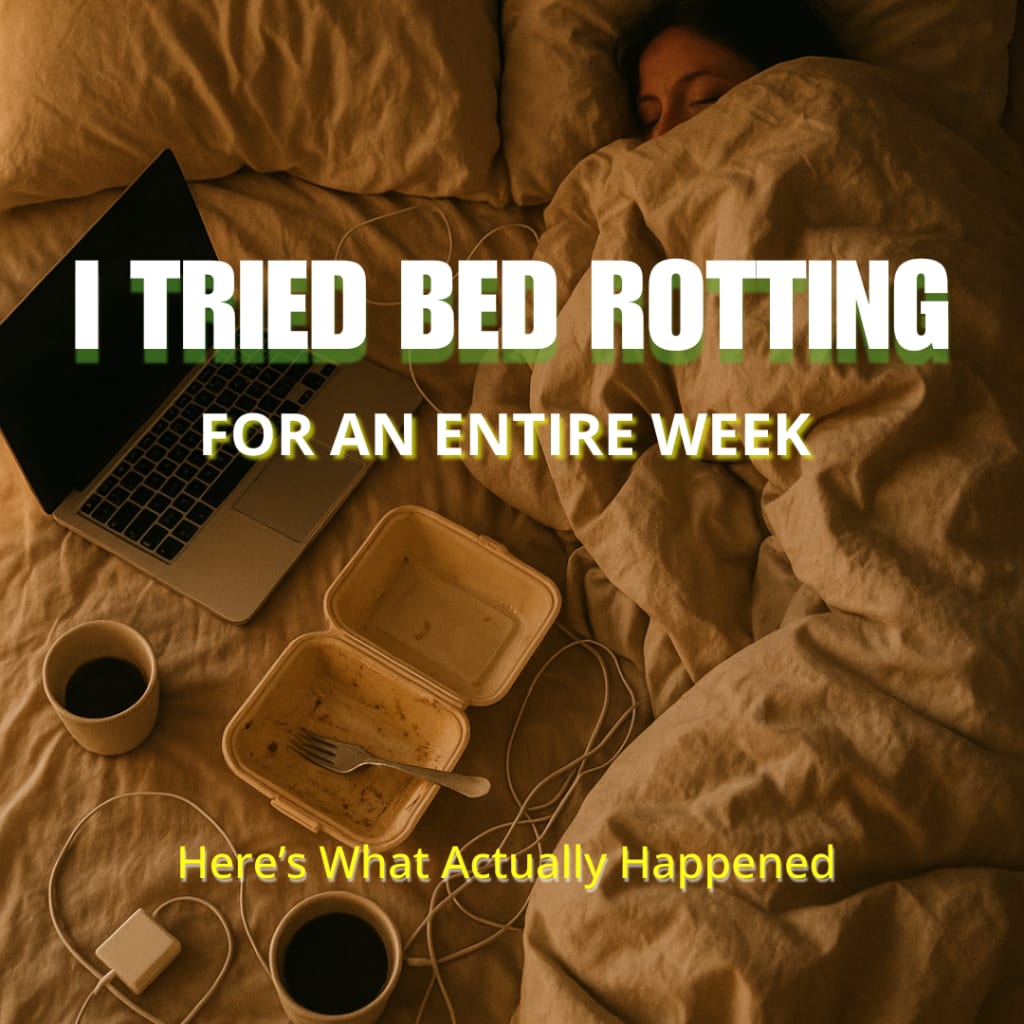
When TikTok Convinced Me to Become a Professional Couch Potato
So there I was, Sunday night at 11 PM, doing that thing we all do – pretending to be productive while actually watching TikToks about people who gave up on productivity entirely. My laptop was open to a half-finished project, my coffee had gone cold three hours ago, and Monday morning was looming like a personal attack.
That’s when the algorithm served me exactly what my burnt-out brain wanted to see: a girl wrapped in her comforter like a human burrito, proudly announcing she’d been in bed for 14 straight hours. And the comments? Pure gold. People calling it “revolutionary self-care” and “the only way to survive capitalism.”
I laughed at first. Isn’t this just… being lazy with extra steps? But then I kept scrolling (because obviously), and suddenly everyone was talking about “bed rotting self care” like it was the cure for modern life. People claiming it fixed their burnout, improved their mental health, gave them back control over their lives.
My skeptical ass was intrigued. What if this wasn’t just glorified laziness? What if this was actually… research?
So I made a decision that seemed brilliant at midnight and questionable by morning: I was going to spend an entire week bed rotting and document everything. The good, the bad, and the inevitable regret. Because someone had to find out if this trend is actually therapeutic or just an excuse to eat chips in bed without judgment.
Spoiler alert: it was complicated.
What Even Is “Bed Rotting” Anyway?
Before we dive into my week of questionable life choices, let me explain what the bed rotting trend actually is – because yes, people have managed to turn lying in bed into a whole movement.
The bed rotting trend basically took our natural human instinct to hide under blankets when life gets overwhelming and turned it into intentional self-care. Instead of feeling guilty about that Saturday where you never left your mattress, you embrace it. You lean in. You become one with your sheets.
What is bed rotting in practice? Picture this: you wake up, grab some snacks, maybe order food delivery, and then just… exist in your bed. Netflix marathons, TikTok spirals, multiple naps, eating meals horizontally – basically everything your parents told you not to do, but make it “wellness.”
The rules aren’t official (because who’s gonna enforce them, the bed police?), but the general vibe is:
- Stay in bed as much as humanly possible
- Avoid anything that resembles productivity
- Order food instead of cooking
- Let yourself scroll mindlessly without guilt
- Nap whenever you want
- Ignore your responsibilities like they’re spam calls
It sounds ridiculous when you write it out, but here’s the thing – millions of people are doing this and swearing it’s changed their lives. The “bed rotting mental health” crowd says it’s the antidote to burnout culture. A way to hit pause on the endless pressure to be productive every waking moment.
Critics say it’s just depression with better marketing, but honestly? After the week I’ve had, I think the truth is somewhere in between.
My Week as a Professional Bed Dweller (AKA: The Experiment Nobody Asked For)
Day 1: Living My Best Sloth Life
Monday morning, 9 AM: Instead of getting dressed like a functional human, I made coffee and crawled right back into bed. The rebellion felt intoxicating. Take that, societal expectations!
I ordered pancakes for breakfast (because why not start strong), opened Netflix, and settled in for what I thought would be the most relaxing day of my life. For the first few hours, it was actually amazing. I watched three episodes of a show I’d been meaning to catch up on, scrolled through TikTok without time pressure, and ate way too many pancakes without anyone judging me.
But then evening hit, and the guilt started creeping in like a hangover. My brain kept going: “Shouldn’t you be cleaning something? Responding to emails? Being a productive member of society?”
I shut it up by ordering Chinese food and telling myself this was “research for my mental health.” The denial was strong with this one.
Day 2: Finding My Groove (Or Losing My Mind)
Tuesday was when I really committed to the bit. I’d prepared like I was going on a camping trip, except the destination was my mattress. Snacks: check. Drinks: check. Phone charger: double check.
My day looked like this: wake up around 10 (already sleeping in longer), eat cereal in bed while watching YouTube documentaries about serial killers (as one does), take a nap, order lunch, scroll social media, take another nap, order dinner, repeat.
And you know what? I felt… lighter? Like someone had lifted this invisible weight of “you should be doing something useful right now” off my shoulders. The constant background anxiety about productivity just… paused.
Of course, my back was starting to feel like I’d been hit by a truck, and I hadn’t spoken to another human all day, but hey – priorities, right?
Day 3: The Social Media Black Hole
Wednesday was the day I realized how addictive this whole thing could be. I spent approximately 47 hours on TikTok (okay, maybe it just felt that long), watching other people bed rot while I was actively bed rotting. It was like inception, but lazier.
I barely spoke out loud all day except to say “thank you” to the delivery guy, and even that felt like too much human interaction. My world had shrunk to the size of my phone screen, and honestly? It was kind of peaceful in a dystopian way.
Dinner was fried chicken that I ate lying down, getting crumbs in my sheets like some kind of feral raccoon. Not my finest moment, but we’re being honest here.
Day 4: When Your Body Starts Filing Complaints
Thursday morning I woke up feeling like I’d been run over by a very slow, very comfortable steamroller. My sleep schedule was completely wrecked, falling asleep at 3 AM, waking up at 11, feeling groggy all day despite doing literally nothing.
My back hurt, my neck was stiff, and I had that weird heavy feeling you get when you’ve been horizontal for too long. It’s like my body was staging a protest: “We were not built for this level of inactivity, human!”
But I was committed to the experiment, so I doubled down. Three movies back-to-back, more delivered food, two naps that somehow made me more tired. By evening, I noticed my mood was starting to shift. The peaceful feeling was being replaced by something… heavier.
Day 5: The Emotional Crash
Friday hit me like a brick wall made of regret and takeout containers.
I woke up feeling genuinely awful not just tired, but emotionally drained. The novelty had completely worn off, and now I just felt… stuck. Like I was trapped in my own bed by my own stupid experiment.
I snapped at a friend over text for no reason, ignored calls from my family, and basically turned into a hermit crab who’d forgotten how to interact with the outside world. The bed had somehow become both my safe space and my prison.
The irony was not lost on me: I’d started this to improve my mental health, and now I felt worse than when I began. But I was five days in – might as well see it through to the bitter, crumb-filled end.
Day 6: Trying to Convince Myself This Was Still a Good Idea
Saturday, I attempted to salvage the experience. I lit a fancy candle, got my favorite snacks, put on a comfort show – basically tried to Marie Kondo my bed rotting experience.
But I couldn’t shake this gnawing feeling that I was just… avoiding life. My laundry was threatening to achieve sentience, my inbox was a digital wasteland, and I hadn’t seen sunlight since Monday. The guilt was eating me alive, which completely defeated the purpose of this supposed “self-care.”
That night, I couldn’t sleep. Too much rest had made me restless – how’s that for ironic?
Day 7: The Great Escape
Sunday morning, I cracked. I woke up literally craving movement and fresh air like they were illegal drugs. I forced myself out of bed and took a walk around the block, and let me tell you – that sunlight hit different after a week of artificial lighting.
Coming back to my unmade bed, surrounded by empty containers and random snacks, I had a moment of clarity: this experiment had taught me something important, but maybe not what I expected.
What the Science Actually Says (It’s Complicated)
Before you write me off as someone who clearly doesn’t understand self-care, let me share what actual experts say about all this, because the research is actually pretty interesting.
Rest is legitimately important for mental health. Studies show that periods of deep rest can lower cortisol (that’s your stress hormone), help regulate mood, and genuinely aid in recovering from burnout. So the basic premise of the bed rotting trend isn’t total nonsense.
The problem is the execution. Short-term rest like a lazy Saturday or a mental health day can be incredibly restorative. Your nervous system needs breaks from constant stimulation, and giving yourself permission to do nothing can be genuinely therapeutic.
But here’s where it gets tricky: too much bed time can actually backfire. Prolonged inactivity messes with your sleep cycles, can worsen anxiety and depression, and leads to physical problems like back pain and poor circulation. Your body literally needs movement to function properly.
Mental health experts I researched for this piece say the key difference is intention versus avoidance. If you’re using “bed rotting self care” as an occasional reset, it can be helpful. But if it becomes your default coping mechanism especially if you’re using it to avoid dealing with stress, responsibilities, or underlying mental health issues, it can actually make things worse.
The sweet spot seems to be intentional rest that has clear boundaries and doesn’t completely derail your life. Revolutionary concept, I know.
Why Everyone’s So Heated About This Trend
The bed rotting controversy makes more sense when you realize it’s not really about beds at all – it’s about how we think about rest and productivity in general.
Team Pro-Bed Rotting argues: We live in a society that’s completely obsessed with productivity and hustle culture. Taking a day to lie in bed is a radical act of self-care, a middle finger to the idea that your worth is tied to your output. In a world that demands constant achievement, bed rotting is revolutionary.
Team Anti-Bed Rotting counters: This is just glamorizing unhealthy behavior. Calling depression symptoms “self-care” doesn’t make them healthy. Plus, avoiding responsibilities doesn’t make them disappear, it just makes them worse.
Team Middle Ground (where I apparently live now) says: Context matters. Occasional intentional rest? Great. Using bed rotting to avoid dealing with your problems indefinitely? Probably not so great.
The real debate isn’t about beds – it’s about whether we’ve swung too far toward toxic productivity that any rest feels revolutionary, or if we’ve started romanticizing avoidance behaviors that might actually be harmful.
After my week-long experiment, I think both sides have valid points, which is probably the most unsatisfying conclusion ever, but here we are.
My Brutally Honest Results (The Good, The Bad, The Ugly)
Alright, let’s talk about what actually happened to me after seven days of professional bed dwelling.
The Physical Damage:
My sleep schedule went from “slightly night owl” to “basically vampire.” I was falling asleep at 3 AM and dragging myself awake at 11, feeling groggy all day despite theoretically getting plenty of rest. My back felt like I’d been sleeping on concrete, and I developed this weird stiffness in my neck from looking down at my phone for hours.
Also, eating every meal in bed turns out to be less glamorous than TikTok makes it look. Crumbs become your new roommates, and your sheets start to smell like whatever you had for lunch three days ago.
The Mental Rollercoaster:
Days 1-2 felt genuinely amazing. Like I’d discovered some secret cheat code for life. The pressure to be constantly productive just… lifted. It was peaceful in a way I hadn’t experienced in ages.
But by Day 4, that peace turned into something heavier. Instead of feeling refreshed, I felt trapped. My anxiety didn’t disappear – it just shifted from “I have too much to do” to “I’m not doing anything and everything is falling apart.” The guilt was real, and it made it harder to enjoy the rest I was supposedly giving myself.
The Productivity Avalanche:
Here’s what nobody tells you about bed rotting: your responsibilities don’t pause just because you do. They pile up like snow, and when you finally emerge from your blanket cocoon, you’re facing an avalanche of stuff you avoided. Emails, laundry, basic life maintenance – it all snowballed into this overwhelming mess that was worse than what I started with.
The Social Isolation Factor:
I basically became a hermit. I avoided calls, barely texted people back, and lost touch with my normal social routine. Humans are social creatures, and cutting yourself off from that – even temporarily – has consequences. By the end of the week, I felt disconnected from everyone in my life.
A little bed rotting felt indulgent and restorative. A whole week turned into a cycle of avoidance, disrupted sleep, and worse mental health than when I started. It’s like the wellness equivalent of eating candy for every meal – great at first, but you’re gonna feel awful pretty quickly.
So Should You Try Bed Rotting?
After this whole experiment, would I recommend the bed rotting trend? The answer is… it depends, which I know is the most annoying response ever, but hear me out.
If you’re completely burnt out, overwhelmed, or running on empty, taking a day or even a weekend to intentionally rest can be genuinely helpful. Give yourself permission to order takeout, binge your comfort show, and exist without pressure. Think of it as a mental reset button.
But and this is a big but – moderation is key. More than a day or two, and you risk the negative effects I experienced. Your body needs movement, your mind needs stimulation, and your responsibilities need… well, responsibility.
My advice for anyone curious about trying this:
Do try it if:
- You’re genuinely exhausted and need a reset
- You can set clear boundaries (like “just this weekend”)
- You’re not avoiding serious mental health issues that need professional help
Don’t try it if:
- You’re already struggling with depression or anxiety
- You tend to avoid problems rather than face them
- You can’t handle the guilt of unfinished responsibilities
Better alternatives I discovered:
- Gentle rest days with some movement (even just stretching)
- Mindful screen time instead of endless scrolling
- Actual naps instead of lying in bed all day
- Mixing rest with light activities like reading or journaling
The real lesson from my week of bed rotting? Rest is essential, but like everything else in life, balance matters. I’ll definitely have lazy Sundays again, but maybe not lazy Sun-through-Saturdays.
Your mental health deserves better than extremes – whether that’s burning out from overwork or rotting away from under activity .
So there you have it – my completely honest, slightly embarrassing, and hopefully helpful deep dive into the bed rotting trend that’s taking over social media.
Did it cure my burnout? Not exactly. Did it teach me something valuable about rest, mental health, and the importance of balance? Absolutely.
The bed rotting trend isn’t inherently good or bad , it’s a tool. And like any tool, it can be helpful or harmful depending on how you use it. A screwdriver is great for screws, terrible for soup. Bed rotting is great for short-term rest, questionable for long-term mental health strategy.
If you do decide to try it, set boundaries, listen to your body, and don’t let social media convince you that any extreme behavior is automatically self-care just because it feels good initially.
Now I’m curious – have you tried bed rotting? Did it feel like the self-care miracle TikTok promised, or did you have a similar reality check? What’s your take on the whole rest versus productivity debate?** Drop a comment and let me know, because after a week of isolation, I’m ready for some actual human interaction.
And maybe next time I need a mental health break, I’ll try something radical like… going for a walk. Wild concept, I know.
About the Creator
Top tipple tricks
Been thinking a lot about drinking, lately. Not least because of a recent episode of over-indulgence and the inevitable after effects. Some readers may recall the earlier articles I wrote about beating the booze. Here I set out an experiment in techniques for cutting down on my alcohol intake. The experiment was successful, the techniques worked, and I have armed myself with an arsenal of weapons in the war against the demon drink. I have yet to fire the first round however. It's all a question of timing (perhaps procrastination).
By Raymond G. Taylor7 days ago in Psyche



Comments
There are no comments for this story
Be the first to respond and start the conversation.