
Is it okay for a dog to sleep in a harness?
Just because your dog can sleep in a harness doesn’t mean they should. Think of it like sleeping in your hiking boots—possible, but weirdly uncomfortable. In this post, we’ll break down when it’s okay, when it’s not, and why giving your pup some gear-free snooze time is one of the kindest things you can do. From crate safety to skin health, we’ll cover it all with real talk, pro tips, and a bit of dog-loving common sense. Whether you're raising a new pup or dealing with a harness-clinger, this guide has your tail—uh, back—covered.
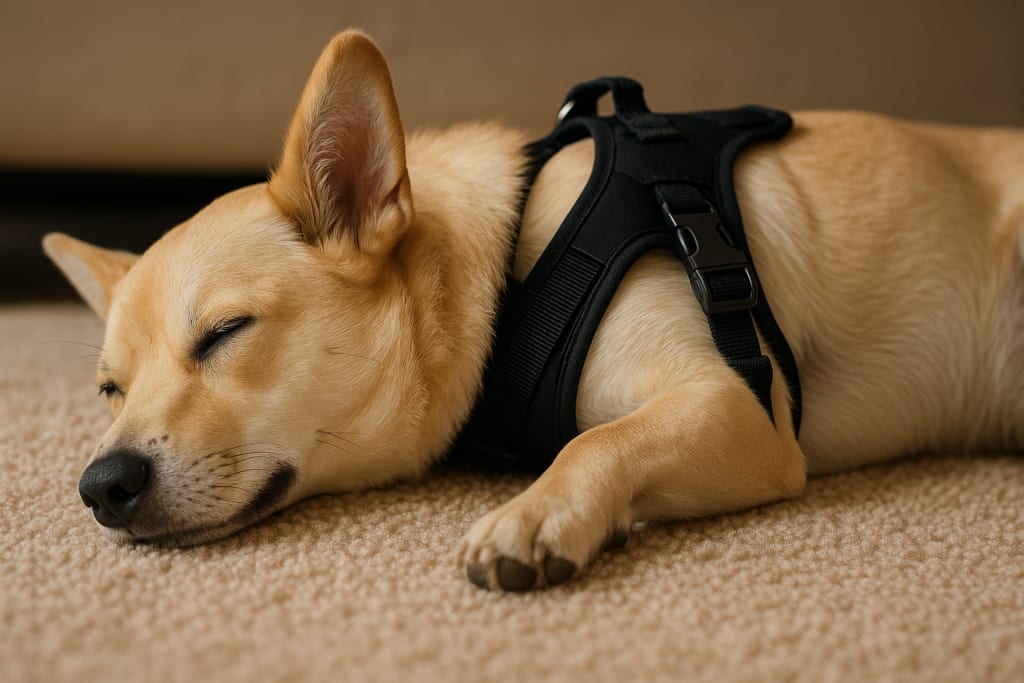
Can a Dog Sleep in a Harness? Technically, Yes. But Should They? Usually, No.
Let’s talk straight. Your dog can sleep in a harness. It won’t melt. It won’t suddenly catch fire. But just because it’s possible doesn’t mean it’s ideal. Kind of like falling asleep in jeans—doable, but not your best decision.
Here’s the full picture:
Why You Might Leave the Harness On
There are a few legit reasons why your pup might snooze in their harness:
1. Training a Puppy or New Dog
If you just brought home a new pup or rescue, a harness might help you keep quick control in early days. Dogs in training sometimes need a little extra management. Quick grab? Boom—harness is right there.
2. Medical or Recovery Reasons
If your dog is recovering from surgery or has mobility issues, keeping the harness on makes it easier to assist them without poking sore spots. Vets sometimes recommend this, especially for dogs who need help standing or walking.
3. Late-Night Potty Runs or Camping Trips
If you’re camping or in a hotel, you might leave the harness on overnight for those emergency 3 a.m. potty breaks. You don’t want to fumble around in the dark trying to clip in a wiggly dog while half-asleep.
Why It's Better to Take It Off
But let’s be honest, in 95% of situations—home, bedtime, snuggled on the couch—it’s better to take the harness off.
1. Skin Irritation and Chafing
Even the comfiest harness can rub the wrong way if worn too long. Think about your dog rolling around, shifting positions, maybe scratching. Straps can dig in, especially behind the legs or across the chest. Long-term pressure can lead to sores, especially for short-haired breeds.
2. Matted Fur and Hot Spots
Fur under a harness doesn’t get much airflow. If it’s compressed for hours (especially overnight), it can cause matting or even hot spots—those angry red patches that itch like crazy and need treatment.
3. Dogs Need to Breathe (and Stretch)
Metaphorically and literally. Sleeping is when their body resets, just like us. A harness puts light pressure on the chest, back, and shoulders. Would you wear a backpack while you sleep? Probably not, right?
4. Harness Damage
Dogs who wear harnesses constantly might chew on the straps, especially when bored or alone. I’ve seen some clever pups turn a $40 harness into confetti during a nap. Take it off at night to extend its life.
My Professional Rule: "On During Action, Off for Rest"
I train by a simple principle: Gear is for purpose, not for 24/7.
Harness = Walk, adventure, training.
No harness = Relax, sleep, roll around like a goofball.
Dogs are smart. They understand the rhythm of on and off. When the harness goes on, it's go-time. When it comes off, it's relax-time. This routine gives structure, and dogs love structure (even if they pretend they don’t).
Hygiene Tip: Clean That Harness!
While we're here: if your dog wears their harness a lot—even just during the day—it should be cleaned. Dog sweat (yes, they sweat a little) and dirt build up. Wash it weekly or biweekly. Most fabric harnesses can be hand-washed or tossed in a laundry bag and run through a gentle cycle.
Pro tip: Dry it fully before putting it back on. Damp harness = skin irritation city.
One Big No-No: Crate + Harness
Please, for the love of kibble, never leave a harness on your dog inside a crate. That’s not just discomfort—it’s dangerous.
Straps can get caught on crate bars, clasps, or hooks. I’ve known clients who had to rush their dog to the ER because a pup twisted themselves trying to get free. Best case? Bent crate bars. Worst case? Injury or worse.
Harnesses = off in the crate. Always.
Real Talk From the Field
I've worked with over a thousand dogs—nervous rescues, high-drive working dogs, spoiled Pomeranians—and here's what I’ve seen:
- Dogs sleep better when they’re free of gear.
- Owners who remove gear regularly notice fewer skin issues.
- Dogs seem to understand “off” time is safe time.
One of my clients had a German Shepherd mix who wore his harness 24/7 because “he looked handsome in it.” (And he did.) But he developed a deep sore under the armpit area that required daily cleaning and vet visits. A few weeks of sleeping gear-free, and boom—back to belly rubs and chasing squirrels.
When It’s Okay (and How to Do It Right)
If you have to leave a harness on while your dog sleeps, make sure it:
- Fits snugly, but not tightly—two fingers should slide underneath.
- Is made of soft, padded material (avoid rough nylon overnight).
- Doesn’t have hanging buckles or rings that can poke.
- Gets checked daily for irritation or pressure spots.
Also: Try to limit it to short-term situations (travel, recovery, early training). Don’t let it become the default.
What Dogs Really Want at Bedtime
Dogs aren’t complicated. At night, they want:
- A cozy bed (or your bed, let’s be real)
- Peace and quiet
- Freedom to stretch, scratch, and sigh
A harness gets in the way of that. Let your pup sleep like nature intended: naked and happy.
Final Thoughts: Trust, Comfort, and Common Sense
Training dogs is about building trust. Part of that is knowing when to gear up and when to let them just be. If you feel like your dog is more comfortable without a harness, you’re probably right.
Let bedtime be their break. You wouldn’t want to sleep in a sports bra or belt, right? Same goes for your best furry friend.
Thanks for your reading.
About the Creator
Off the Leash: The Essential Gear Guide for Adventurous Dogs
There’s something wildly freeing about unclipping the leash and letting your dog move the way they were built to. If you’re hiking in areas that truly allow off-lead exploration, your gear list shifts. No harness. No leash dragging through dust. Instead, it’s about smart, lightweight essentials that keep your dog safe, hydrated, and easy to manage when adventure gets messy. Long walks off lead are less about control and more about preparation.
By Shabbir Ahmad7 days ago in Petlife
The Ones Left Behind:
Shelters overflow every week with wagging tails and hopeful eyes. The young ones—the puppies and kittens—disappear within hours, scooped up by families eager for a blank slate. The old ones stay behind. They wait days, then weeks, often in silent confusion, still listening for footsteps they recognize.
By Dr. Mozelle Martin5 days ago in Petlife
Top tipple tricks
Been thinking a lot about drinking, lately. Not least because of a recent episode of over-indulgence and the inevitable after effects. Some readers may recall the earlier articles I wrote about beating the booze. Here I set out an experiment in techniques for cutting down on my alcohol intake. The experiment was successful, the techniques worked, and I have armed myself with an arsenal of weapons in the war against the demon drink. I have yet to fire the first round however. It's all a question of timing (perhaps procrastination).
By Raymond G. Taylor7 days ago in Psyche



Comments
There are no comments for this story
Be the first to respond and start the conversation.