
How to train a dog not to jump on people
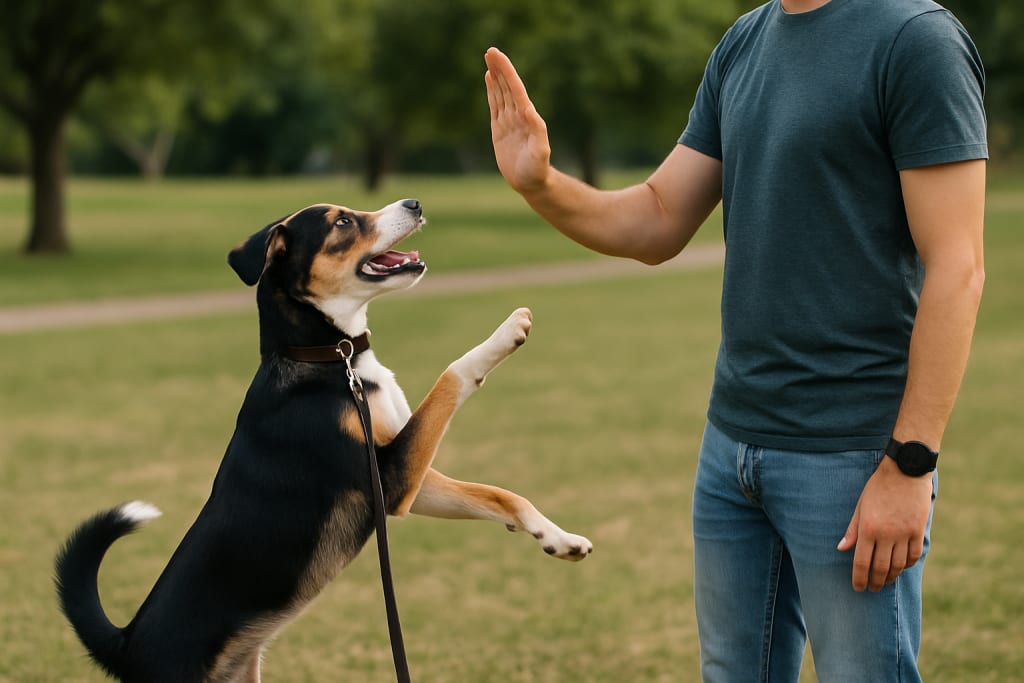
No gimmicks. No nonsense. Just a dog that keeps all four paws on the floor. Let’s face it: most dogs aren’t jerks. They’re just excited. You come home smelling like every corner of the outside world, and your dog loses their mind. Next thing you know, you’ve got paws on your chest, maybe a wet nose in your mouth, and a delivery guy who’s two steps away from suing. Jumping is common, but it’s not harmless. It ruins clothes, knocks down kids, scares people, and teaches your dog that wild behavior = attention. So what do we do about it? We teach them a better way to say "hello."
Understand the Jumping Problem at Its Core
Before you jump into training (pun intended), it helps to know why dogs jump in the first place.
It’s a Greeting Ritual
Dogs greet each other face-to-face. You're taller than them. So they jump to say hi on your level.
Excitement Has Nowhere to Go
Dogs that don’t know how to channel excitement will do what feels natural: bounce.
Jumping Gets Attention
Even a “No!” or shove gives them a reaction. And to a dog, any reaction = success.
It’s Been Accidentally Reinforced
You may not realize it, but chances are someone — maybe even you — has petted the dog while they were jumping. That moment becomes locked in their memory like, “Oh! Jumping gets me love!”
Why You Should Care (Even If It’s ‘Cute’)
Safety First
Big dogs can knock people over. Even small ones can cause scratches or knock down a toddler.
Not Everyone Likes Dogs
Hard to believe, but true. Some folks are afraid of dogs. Jumping makes that fear worse.
It Sets a Bad Pattern
Jumping is a gateway behavior. Dogs that think they run the front door often go on to other rude habits — barking, mouthing, ignoring commands.
The Mindset Shift — You’re Teaching a New Language
This isn’t about punishment. It’s about communication.
You’re showing your dog, “Hey, if you want love and attention, you don’t have to act like a caffeinated kangaroo. Sit calmly, and I’ll give you everything you want.”
Foundation Training – The Basics to Stop Jumping
These techniques work for puppies, adult dogs, small breeds, large breeds — even rescue dogs with zero training history.
Rule #1 – No Attention for Jumping
Turn your body. Don’t talk. Don’t touch. Don’t even make eye contact.
To a dog, this is like the Wi-Fi going out mid-video.
Rule #2 – Reward Calm Behavior Fast
As soon as all four paws hit the floor, say a quiet “Yes” and reward — either with a pet, praise, or a small treat.
Do it the moment they stop jumping. Timing is everything.
Rule #3 – Teach “Sit” as the Default Greeting
Sit is the best alternative to jumping. If your dog sits, they’re calm, grounded, and focused.
Practice this at the door every single day — not just when guests are over.
Step-by-Step Training Routine
Here’s a real-world method you can follow:
Step 1 – Training Without Distractions
Start in a quiet room. Stand. Let the dog approach. If they jump, turn your back. Don’t say a word. Don’t touch.
Wait. As soon as paws hit the ground, calmly say “Yes” and reward.
If they jump again? Repeat. You might do this 30 times in one session. That’s okay.
Step 2 – Add Movement
Walk into the room like you just came home. See if they jump.
- Jump? Turn around.
- Stay down? Jackpot. Praise and reward.
This mimics real life.
Step 3 – Add Triggers
Put on your coat. Pick up your keys. Knock on a door.
Dogs connect those events with excitement. Rehearse calmly.
Step 4 – Practice With Visitors
Use a leash. Ask the dog to sit before they greet a guest.
Coach your guests: no touch, no talk, no eye contact unless the dog sits.
Training Tools That Help
Leash
Use a short leash during greetings to manage jumping. Especially useful for strong or overly enthusiastic dogs.
Baby Gates or Barriers
Control access to guests. Only let your dog greet when they’re calm.
Treat Pouch
Keep treats on you during the early weeks. Fast rewards = faster learning.
What to Avoid – Common Mistakes That Backfire
Don’t Push the Dog Off
They think it’s play. Now you're part of the game.
Don’t Yell “NO!”
Dogs hear the excitement in your voice, not the meaning.
Don’t Reward the Jump by Accident
Don’t pet, look at, or speak to your dog while they’re jumping. Even scolding reinforces the act.
Special Cases – What About…?
Rescue Dogs Who Have No Manners
Rescues often jump from stress or excitement. They’re not bad — they’re uncertain.
Start with calm, structured greetings. Keep training short and sweet. Be patient.
Small Dogs
People often let it slide. “She’s tiny, who cares?”
Care. Jumping is still rude, and it still sends the wrong message.
Kids and Dogs
Teach children how to behave around the dog. They must follow the same rules. No petting a jumping dog. Period.
Troubleshooting – If Progress Stalls
You’ve Been Inconsistent
Dogs learn through patterns. If some people allow jumping and others don’t, the dog won’t get it.
Make a house rule. Stick to it.
You’re Not Rewarding Fast Enough
If you wait too long to reward calm behavior, your dog won’t connect the dots. Keep treats handy.
Your Dog Is Overstimulated
Some dogs can’t learn when they're too excited. That’s a state management issue, not a training problem.
In those cases, use a timeout. Let the dog settle before trying again.
How Long Does It Take?
Every dog is different. Some learn in a week. Others take a month or more.
But if you stay consistent, 95% of dogs can learn not to jump within 3–6 weeks.
Reinforcement for Life
Don’t stop once your dog “gets it.”
Practice Often
Do 5-minute sessions a few times a week, even after they’re trained. Skills fade without use.
Keep the Rules Consistent
Don't relax the rules during holidays or parties. That just confuses the dog.
Replace the Behavior With Connection
Dogs jump to get close to you. Give them that closeness — just in the right way. Kneel. Cuddle. Reward the calm.
Real-Life Scenario Breakdown
You Walk Through the Door After Work
Your dog jumps. You:
- Turn away.
- Say nothing.
- Wait.
- Dog lands? “Good.” Give calm pets.
- Repeat. Every. Day.
Guests Arrive
- Dog goes on leash.
- Guest enters, ignores the dog.
- You ask the dog to sit.
- If they sit, guest rewards.
- If they jump, guest turns away.
- Repeat until they can greet politely.
The Dog Gets Overexcited
- You remove them to another room.
- Let them calm down.
- Try again.
- Success = calm access to people.
What It Feels Like (The Emotional Side)
You’ll get frustrated. That’s normal.
You’ll think, “He knows better than this!” He doesn’t — not yet.
Your consistency is the compass. When your dog sees that calm behavior gets them what they want, they’ll choose it.
And the first time your dog sits quietly while your friend walks in, tail wagging but body grounded?
That’s the moment you realize you built something better than obedience. You built trust.
Conclusion: Good Dogs Are Made, Not Born
Jumping may seem like a small problem. But solving it teaches your dog one of the most valuable lessons they’ll ever learn:
Self-control earns rewards.
It makes them safer. It makes your life easier. It makes guests less nervous.
And it’s not about dominance, punishment, or “showing who’s boss.” It’s about connection.
You’re shaping a dog that knows how to live in your world. One calm greeting at a time.
Thanks for your reading.
About the Creator
A Dart at Dusk
Seconds ago, the sullen sun set on the two of us… my exuberant furry companion and me. A fresh breeze embraces us, delivering welcome relief from the day’s oppressive heat. His typical stumbling and staggering along — apace with a sloth — has turned into trip-trapping, high-stepping, almost skipping along.
By Angie the Archivist 📚🪶5 days ago in Petlife
Miss Persephone's Manual to a Seemingly Ordinary Life
Miss Persephone was found at the dining table, her blue eyes swollen, her tears arriving and retreating like the tides of the ocean. Earlier that day, her family had visited her in the retirement home where she had lived for eight years. It was her eightieth birthday.
By Imola Tóth3 days ago in Fiction


Comments
There are no comments for this story
Be the first to respond and start the conversation.