
How can you help your dog feel less nervous around people
Some dogs love everyone. Others? Not so much. If your pup hides, growls, or trembles when people come near, you’re not alone—and you’re not failing. Nervous dogs don’t need to be “fixed.” They need leadership, clarity, and space to grow. This guide walks you through real-world steps from a trainer who’s worked with thousands of scared, shy, and reactive dogs. No gimmicks. No sugar-coating. Just calm advice that works—because your dog deserves peace, and you deserve to enjoy life together without walking on eggshells. Let’s turn fear into trust, one step at a time.

Dogs Get Nervous. That’s Not the Problem.
Look, I’ve trained dogs for years. I’ve worked with police K9s, rescue pups who’ve never seen a kind human, and spoiled suburban dogs who still think Aunt Karen is the Grim Reaper.
Nervousness in dogs isn’t rare. It’s not even a flaw. It’s feedback. It’s your dog saying:
“I don’t feel safe, and I don’t know how to handle this moment.”
Your job isn’t to erase that nervousness. Your job is to lead.
To show your dog:
“You’re safe. I’ve got this. Follow me.”
That’s how we start. Not with fancy tricks. Not with dominance games. But with understanding, and action.
First, Know What You’re Looking At
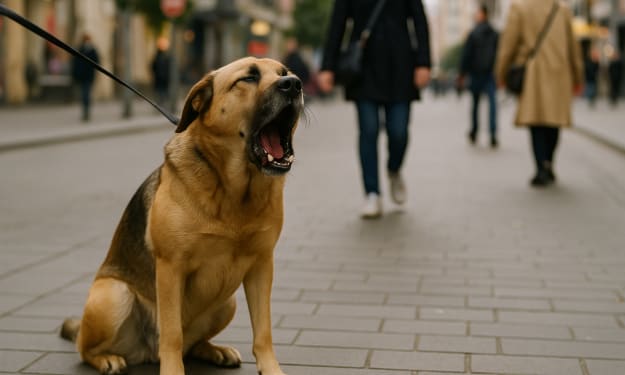
Nervousness in dogs doesn’t always look like fear. Sometimes it looks like:
- Barking like a maniac when someone walks in
- Hiding under the table and shaking
- Growling with tail tucked
- Peeing when a stranger bends over to pet them
- Pacing in circles or looking to escape
A lot of owners say:
“I think my dog was abused before I got him.”
Maybe. But maybe not. Nervous dogs aren’t always traumatized. Some are just under-socialized. Some have poor genetics. Some had one bad experience and decided “Nope. Humans = danger.”
The good news is: almost every nervous dog can get better. Some faster than others, sure. But better? Yes.
The Golden Rule — Never Force It
Here's where most people mess up.
They mean well. They say:
“Oh, he’s just shy. Come say hi, Max!”
And then they drag Max toward the human he’s terrified of.
That’s like forcing a kid who hates clowns to hug one.
No trust. No control. No chance.
Dogs don’t learn calm by being forced into chaos.
Instead, give them what they need: space, time, and safe structure.
You know what builds confidence?
- Choosing to approach, not being dragged
- Watching the world safely from a distance
- Knowing their owner is calm and in control
We don’t train nervous dogs with pressure. We train them with leadership and patience.
Desensitization 101 – The Confidence Gym
You want your dog to be more comfortable around people?
You don’t start in the living room with five guests, loud laughter, and Aunt Karen’s perfume choking the air.
You start at a distance.
Here’s how I’ve helped dozens of nervous dogs gain confidence around strangers:
1. Find neutral ground
Don’t bring people into your home yet. That’s your dog’s territory. Too risky.
Go to a park or parking lot where people pass by but don’t stop.
2. Sit. Watch. Feed.
Keep your dog at a distance where they notice people but don’t react.
Every time a person passes — calmly feed a treat. No command. No hype. Just:
Person = something good happens.
3. Slowly move closer over time
When your dog can sit calmly 30 feet away, move to 25. Then 20.
Go slow. You’re not in a rush. You’re building a stable mind.
4. Avoid petting
Don’t let strangers touch your dog. Nervous dogs don’t want hugs from strangers.
They want predictability. Give them that first.
5. Reward engagement, not retreat
If your dog glances at a person and then looks back at you — reward that.
That’s called a “check-in.” It means: “I saw them. I’m choosing to focus on you.”
That’s golden.
This is not a one-day fix. It’s like going to the gym.
You don’t walk in weak and walk out jacked. But if you keep showing up — progress happens.
Your Energy = Their Energy
This is where the emotional stuff matters.
I’ve seen it again and again:
Owners who are anxious... have dogs who are anxious.
Owners who over-apologize for their dog… have dogs who never feel grounded.
If you tense up every time someone approaches, your dog reads that.
If you start yanking the leash, your dog learns:
“People make you crazy, so I better freak out too.”
What works better?
- Calm tone
- Slow movements
- Short leash but loose hand
- Clear boundaries
It’s okay to block someone from petting your dog. It’s okay to say,
“He’s in training right now, not ready to be touched.”
Your job is not to make people happy.
Your job is to help your dog feel safe.
Obedience Builds Confidence
Training isn’t just about “sit” and “stay.”
It’s about creating clarity in your dog’s world.
When a dog knows:
- What’s expected
- What gets rewarded
- What to do instead of panicking
… they begin to relax.
Here are three core skills I teach every nervous dog:
1. “Look at me” on command
Teach your dog to make eye contact when asked. This is a grounding behavior.
It says: “Ignore the world. I’m your anchor.”
2. Place command
A mat or bed your dog stays on, even when people enter the room.
It’s safe. It’s consistent. It gives structure.
3. Heel or loose-leash walking
Walking calmly near you teaches them to follow, not lead.
And that makes them feel protected.
You don’t need fancy gear.
You need consistency, timing, and heart.
Supplements, Vets, and When to Get Help
Sometimes a dog’s nervous system is just overloaded.
In those cases, training alone might not be enough — at least not at first.
Things to consider:
- Veterinary check-up — rule out pain, thyroid issues, or neurological concerns.
- Supplements — like L-theanine, CBD (vet-approved), or calming chews. Can take the edge off.
- Professional trainer — look for someone who understands behavior, not just obedience.
- Behaviorist — for extreme anxiety, sometimes you need a vet behaviorist who can prescribe meds.
And before you say, “I don’t want to drug my dog,” — I get it.
But ask yourself: Is your dog suffering daily? Are they scared every time a human appears?
Sometimes a little medical help gives the brain a window to learn.
That’s not weakness. That’s compassion.
What Not to Do
Let’s be blunt for a second. These are the things that make nervous dogs worse:
- Yelling
- Punishing barking without understanding the cause
- Letting strangers “just try to pet him once”
- Using shock collars on fear-based behaviors
- Flooding them with people to “get used to it”
Every one of these breaks trust.
You don’t want obedience based on fear. You want confidence based on clarity.
How Long Does It Take?
I get this question a lot.
The honest answer?
As long as it takes your dog to trust again.
Some dogs take weeks. Some take months. A few take years.
But every step counts.
One day your dog goes from hiding behind you to sniffing a stranger’s shoes.
Then one day, he lets someone toss him a treat.
Then maybe — months later — he sits calmly in a room with guests.
That’s the journey. And it’s worth it.
Conclusion: Your Dog’s Fear Is Real — But So Is Your Leadership
Nervous dogs aren’t broken.
They’re scared. Confused. Sometimes hurt.
But they’re also brilliant learners.
They watch you more than you know.
They crave structure more than affection.
And the moment they see that you can handle the world…
…they start to believe they can too.
Help them build confidence — one calm walk, one soft “yes,” one quiet boundary at a time.
You’re not raising a robot. You’re raising a soul.
And every soul heals with time, love, and leadership.
Thanks for your reading.
About the Creator
Authenticity and Presence: What Animals Can Teach Actors About Emotional Truth
Actors spend years searching for authenticity. Acting schools teach technique, rehearsal methods focus on emotional preparation, and directors guide performers toward believable moments on screen. Yet sometimes the most meaningful lessons about authenticity come from unexpected places.
By Andreas Szakacs2 days ago in Petlife


Comments
There are no comments for this story
Be the first to respond and start the conversation.