
The Navadurga Path of Meditation: A Practical Framework for Spiritual, Mental, and Physical Growth
By a seeker of the Divine Mother


For years, I have walked the path of the Goddess, seeking her guidance not only in ritual but in meditation. Over time, I have come to see the Navadurga the nine forms of Goddess Durga as a complete framework of transformation. Worshipping them is not merely a festival custom but a way of shaping life physically, mentally, and spiritually.
Through meditation, each form of the Goddess reveals a distinct quality that gradually purifies and strengthens the practitioner. What others today describe as “energy awakening” or “chakra opening” was already present in the ancient path of the Navadurga, without needing such technical names.
Below, I share my own method of meditation on the Navadurga a method I have refined through study of the scriptures, years of practice, and devotion.
The Navadurga Framework for Life Transformation
Each goddess is worshipped on one day of Navaratri, and each embodies a stage of inner development. Their mantras are simple invocations found in the Devi Kavacha (Markandeya Purana) and related texts, easy to use for meditation.

1. Shailaputri (Strength & Grounding)
- Scriptural Basis: Mentioned in Devi Kavacha as the daughter of the mountains.
- Mantra: Om Devi Shailaputryai Namah
- Transformation: Cultivates stability, courage, and resilience.
- Practical Life Impact: Builds emotional grounding, resilience against setbacks, and a sense of belonging in the world. Helps overcome fear and insecurity.
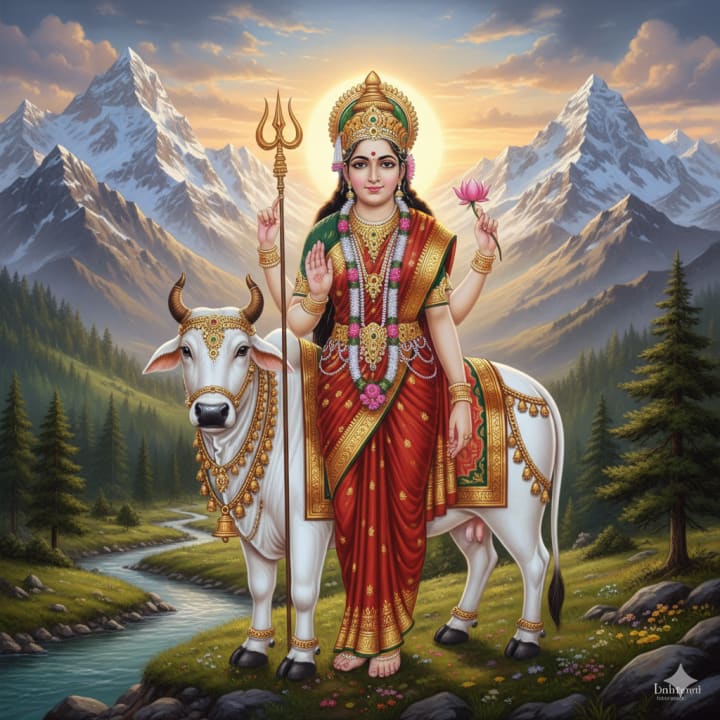
2. Brahmacharini (Discipline & Austerity)
- Scriptural Basis: Revered for her tapas (penance) and unwavering devotion.
- Mantra: Om Devi Brahmacharinyai Namah
- Transformation: Instills self-control, perseverance, and purity of intention.
- Practical Life Impact: Improves focus in studies/work, strengthens patience, reduces distractions and indulgences, builds endurance in long-term goals.

3. Chandraghanta (Balance & Alertness)
- Scriptural Basis: Described with a crescent moon, radiating readiness for battle.
- Mantra: Om Devi Chandraghantayai Namah
- Transformation: Develops awareness, courage, and emotional balance.
- Practical Life Impact: Helps maintain calm under stress, sharpens intuition in decision-making, reduces anxiety, and fosters a composed presence.
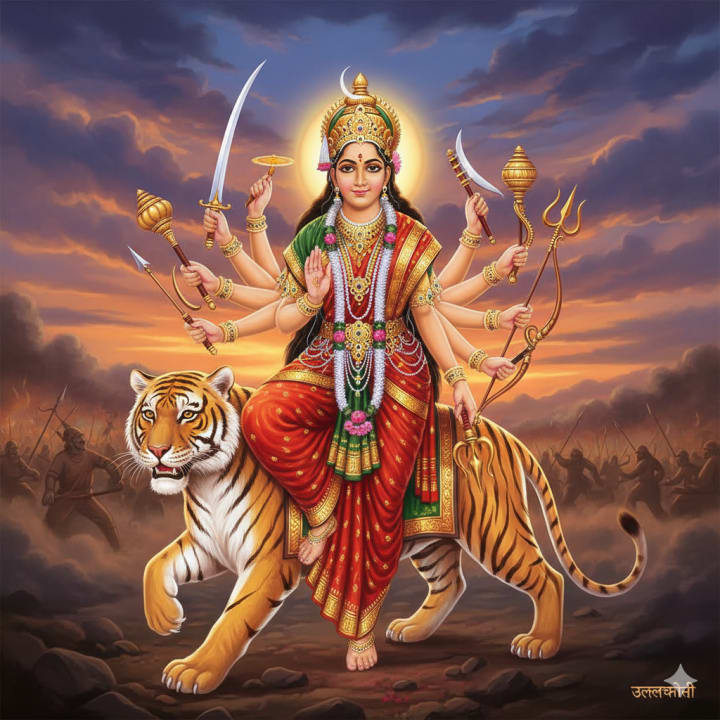
4. Kushmanda (Vitality & Radiance)
- Scriptural Basis: The creatrix who radiates cosmic energy.
- Mantra: Om Devi Kushmandayai Namah
- Transformation: Awakens inner vitality, positivity, and creative energy.
- Practical Life Impact: Enhances health and vigor, inspires innovation, boosts optimism, and improves leadership presence.

5. Skandamata (Nurturing & Selfless Love)
- Scriptural Basis: Mother of Skanda (Kartikeya), nurturing yet protective.
- Mantra: Om Devi Skandamatayai Namah
- Transformation: Encourages compassion, selfless service, and care.
- Practical Life Impact: Strengthens family and social bonds, increases empathy, and promotes collaborative and ethical leadership.
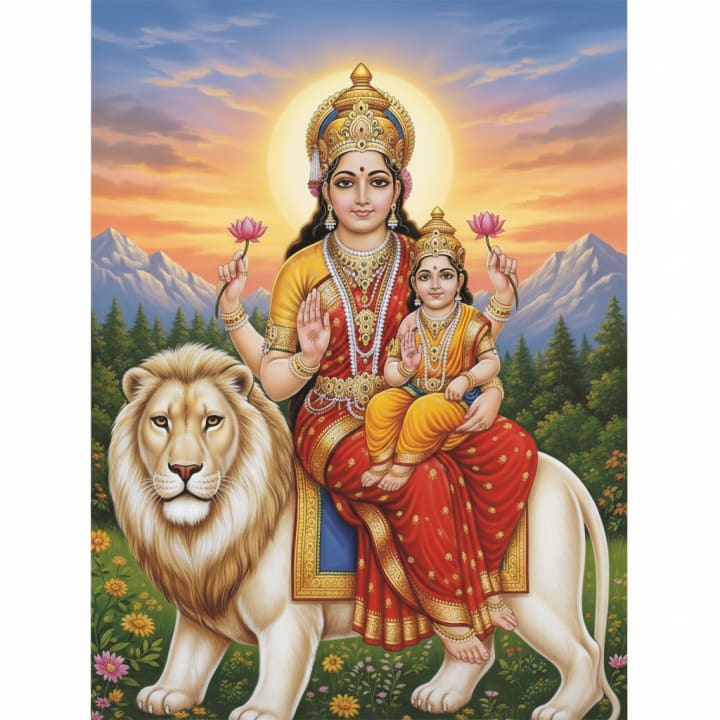
6. Katyayani (Inner Strength & Righteous Action)
- Scriptural Basis: Born of sage Katyayana’s austerities, fierce and warrior-like.
- Mantra: Om Devi Katyayanyai Namah
- Transformation: Represents moral courage, righteous anger, and action.
- Practical Life Impact: Helps overcome injustice, strengthens ethical decision-making, empowers assertiveness in work and relationships.

7. Kalaratri (Fearlessness & Inner Purification)
- Scriptural Basis: Fierce dark form who destroys ignorance and evil.
- Mantra: Om Devi Kalaratryai Namah
- Transformation: Burns away fear, illusions, and deep-seated negativity.
- Practical Life Impact: Builds resilience in crises, helps confront trauma or limiting beliefs, dismantles harmful patterns, strengthens inner freedom.

8. Mahagauri (Purity & Renewal)
- Scriptural Basis: Radiant and serene, representing cleansing and peace.
- Mantra: Om Devi Mahagauryai Namah
- Transformation: Symbolizes forgiveness, serenity, and spiritual renewal.
- Practical Life Impact: Promotes mental clarity, emotional healing, and simplicity of lifestyle. Helps in letting go of guilt and unnecessary attachments.
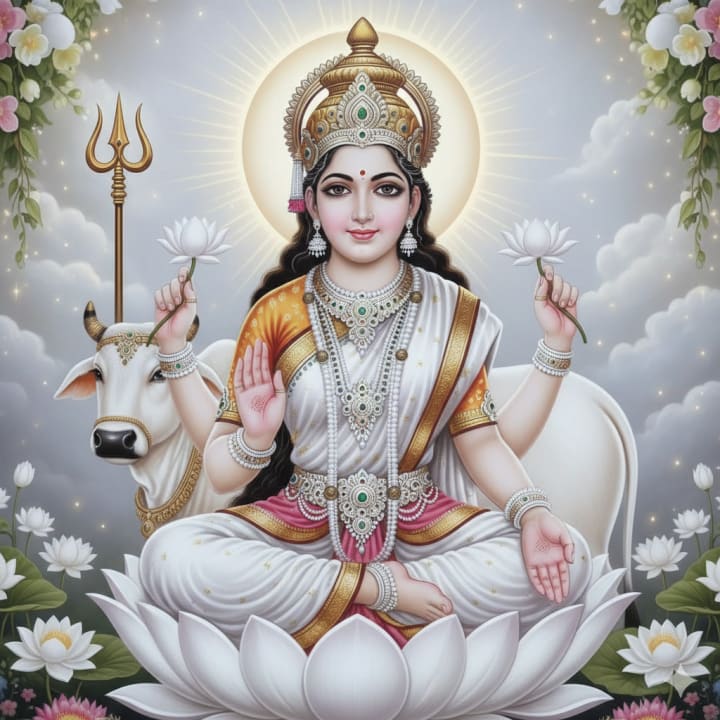
9. Siddhidatri (Wisdom & Fulfillment)
- Scriptural Basis: The bestower of siddhis (perfections), seated in bliss.
- Mantra: Om Devi Siddhidatryai Namah
- Transformation: Grants completeness, wisdom, and integration of divine qualities.
- Practical Life Impact: Deepens spiritual insight, provides clarity of purpose, harmonizes material and spiritual life, and enables guiding others.

My Method of Navadurga Meditation
Over time, I realized that meditation on the Goddess requires not only mantra and visualization, but also careful preparation of body and mind. This is the framework I follow:
Preparation
- Drink water to cleanse internal organs.
- Bathe and empty the body (urination, stomach if needed).
- Wear light, comfortable clothes. No ornaments or restrictive garments.
- Sit in Padmasana (or any stable seated posture).
- Ground and keep the spine straight.
- Place the Goddess image before you as the focus.
Meditative Process
- Sit in Dhyan Mudra or Bhairava Mudra.
- Close the eyes, take 10 deep breaths expanding lungs and chest fully. (This breathing alone is healing for both mind and body.)
- Begin the mantra silently in the mind, then gradually let it sink to the heart, and if possible, to the navel area circulating awareness gently up and down.
- Visualize the Goddess form in front of you, as shown in the image before you. Before beginning, bow with eyes open to the image; after finishing, open eyes again before her.
- If thoughts intrude, immediately return to the goddess image in the mind. With practice, distractions dissolve.
- Continue mantra and visualization until the mind grows calm and still.

Restrictions During Practice
- No tight clothes, ornaments, or heavy meals.
- No meat, alcohol, sugar, or excess salt before practice (especially on fasting or morning sessions).
- Do not imagine the Goddess moving or speaking let her remain as the still focus.
- Do not mix multiple goddess forms; keep one sacred image throughout.
The Goal of the Practice
The purpose of Navadurga meditation is stillness a silence beyond thought, where only the presence of the Goddess remains.
When you reach this state, there are no thoughts only peace, quiet, and inner vastness. At times, it may feel like waves calming on the shore, followed by a surge of creative energy and renewed motivation in daily life.
This is how worship of the Navadurga shapes the whole being:
Body: purified and strengthened
Mind: calmed and sharpened
Spirit: uplifted and illuminated
In this way, the Navadurga do not remain distant deities but become living companions in your daily growth, guiding both your worldly responsibilities and your inner liberation.

The path of the Navadurgas is a journey of inner transformation — one that harmonizes the spiritual, mental, and material aspects of life. Each step of this framework has been shared from years of study, practice, and lived experience.
If you feel called to walk this path and would like personal assistance or guidance, you are welcome to reach out to me directly. I will be glad to support you in achieving clarity, balance, and your spiritual goals.
About the Creator
Navinder Dinesh Ram
Kritrima Buddhimattā
Keep reading
More stories from Navinder Dinesh Ram and writers in Longevity and other communities.
Echoes of Stone
The prehistoric figurine known as the Venus de Losange is a small but potent testament to the symbolic world of early Homo sapiens. Carved during the Upper Paleolithic period, estimated at 25,000–30,000 years ago, this enigmatic artifact offers more than artistic intrigue—it opens a rare window into the social, emotional, and spiritual dimensions of our distant ancestors.
By Navinder Dinesh Ram8 months ago in History
Day 4 of Quitting
If this is how sobriety feels, maybe it’s better to go through life a little buzzed… this, along with other hits like, I want to kill myself, I wish I was dead, and I’m going to throw myself off a bridge have been the only thoughts on rotation these past few days. I promise myself that if, in a month, I still feel like this (‘this’ meaning despondent, full of rage, and simultaneously numb) I can go back to smoking. Until mid-February though? Nicotine is off the table.
By sleepy drafts4 days ago in Longevity
United States Stoma or Ostomy Care Market Size & Forecast 2025–2033
United States Stoma or Ostomy Care Market Overview The United States Stoma or Ostomy Care Market is projected to experience steady and resilient growth over the forecast period, expanding from US$ 896.98 million in 2024 to US$ 1,380.81 million by 2033. This upward trajectory reflects a Compound Annual Growth Rate (CAGR) of 4.91% from 2025 to 2033, as estimated by Renub Research.
By jaiklin Fanandish4 days ago in Longevity


Comments
There are no comments for this story
Be the first to respond and start the conversation.