
🎭 The Mask We Wear: How Social Media Changes Our Identity
Are We Who We Say We Are? The Digital Illusion of Identity

Introduction: The Faces We Show, The Faces We Hide
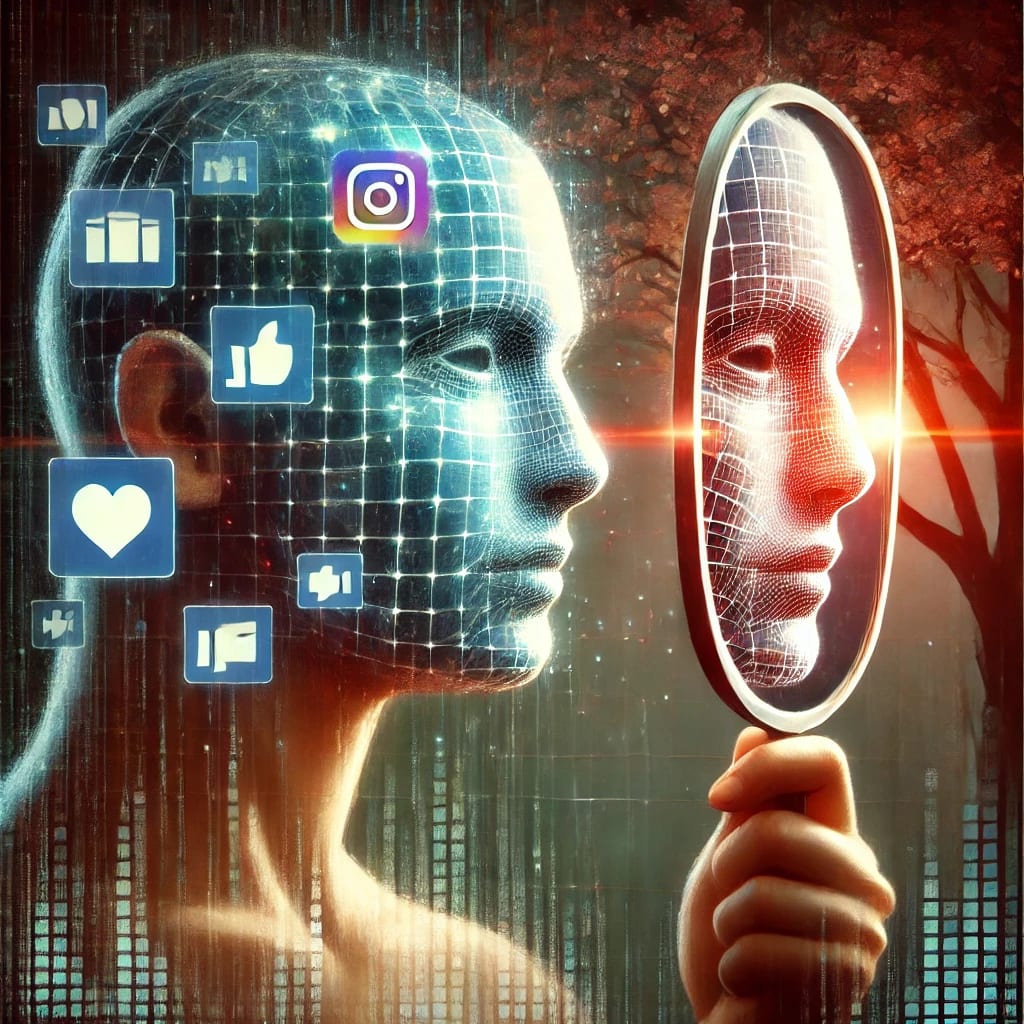
Imagine standing in front of a mirror, adjusting a mask. It’s a version of yourself—flawless, confident, perfectly curated. But as you turn away, another mask appears, a different version for a different audience.
Social media has become our modern masquerade ball—we present who we wish to be, not always who we are. Our online identities are carefully constructed, filtered, and edited, often masking insecurities, fears, and truths we hesitate to share. But at what cost?
This article explores the psychological impact of social media on identity, the science behind digital self-presentation, and how we can reclaim authenticity in a world that rewards the curated over the real.
1. The Digital Self vs. The Real Self
We are no longer just ourselves; we are now brands, personas, projections of what we believe will be liked, shared, and validated. Psychologists call this self-presentation theory, the idea that we shape our identities based on the reactions of those around us.
✅ The Digital Self: The polished, filtered version we show online.
✅ The Real Self: The unfiltered, unedited reality of who we are.
Studies show that the gap between these two selves creates a psychological disconnect, leading to:
- Lower self-esteem (comparing ourselves to unrealistic portrayals of others)
- Anxiety and depression (feeling the pressure to maintain a perfect image)
- Loss of true identity (forgetting who we really are beneath the mask)
The more we sculpt our online selves, the more distant we become from our authentic selves.
2. The Social Comparison Trap: Are We Ever Enough?
Humans naturally compare themselves to others—it’s how we evaluate success, beauty, and happiness. But in the age of social media, we’re no longer comparing ourselves to real people—we’re comparing ourselves to highlights, to curated perfection.
🔴 The Negative Effects of Social Comparison:
- Scrolling through highlight reels makes our own lives seem dull.
- Seeing only success stories makes our failures feel heavier.
- Unrealistic beauty standards fuel dissatisfaction with our bodies and self-worth.
The irony? Most people feel the same way. We envy a life that even the person posting it doesn’t fully live.
3. The Dopamine Addiction: Why We Crave Validation
Why do we keep coming back for more? The answer lies in dopamine, the brain’s reward chemical.
Every like, comment, and share gives us a small dopamine hit, reinforcing the cycle of posting, checking, and seeking approval. This constant validation loop hijacks our sense of self-worth, making external approval more important than internal confidence.
Signs of social media addiction:
✔️ Checking notifications obsessively
✔️ Feeling anxious if a post doesn’t get enough engagement
✔️ Measuring self-worth by online validation
Social media platforms are designed to be addictive—but we can break the cycle.
4. How to Reclaim Your Identity in the Digital Age
Social media isn’t evil—but how we use it determines its impact. Here’s how to balance the digital self with the real self:
1. Digital Detox: Step Away from the Mask
Challenge yourself to take breaks from social media and observe how you feel. Even one day per week without scrolling can help reconnect with your real identity.
2. Curate Reality, Not Perfection
Instead of only sharing highlight moments, consider posting authentic, unfiltered content. Share real experiences, struggles, and joys, not just the picture-perfect ones.
3. Engage with Social Media Consciously
✅ Follow accounts that make you feel empowered, not inadequate.
✅ Unfollow pages that promote toxic comparison.
✅ Use platforms for connection, not validation.
By taking control of how we engage with social media, we shift from chasing approval to embracing authenticity.
Final Thoughts: Beyond the Mask
Social media should be a window, not a mask. A tool to connect, not a performance to maintain.
Next time you find yourself scrolling, ask:
Am I presenting myself as I am—or as I think I should be?
Because the most powerful thing you can be—online or offline—is real.
About the Creator
Ahmet Kıvanç Demirkıran
As a technology and innovation enthusiast, I aim to bring fresh perspectives to my readers, drawing from my experience.
Keep reading
More stories from Ahmet Kıvanç Demirkıran and writers in Longevity and other communities.
Day 4 of Quitting
If this is how sobriety feels, maybe it’s better to go through life a little buzzed… this, along with other hits like, I want to kill myself, I wish I was dead, and I’m going to throw myself off a bridge have been the only thoughts on rotation these past few days. I promise myself that if, in a month, I still feel like this (‘this’ meaning despondent, full of rage, and simultaneously numb) I can go back to smoking. Until mid-February though? Nicotine is off the table.
By sleepy drafts9 days ago in Longevity
STD Self-Testing Market Size and Forecast 2025–2033
Introduction: A Quiet Revolution in Sexual Health The way people approach sexual health is undergoing a significant transformation. Once bound by social stigma, long clinic wait times, and concerns over privacy, diagnostic testing for sexually transmitted diseases (STDs) is increasingly moving into the home. At the center of this shift is the rapidly expanding STD self-testing market, which empowers individuals to screen for infections in a private, convenient, and accessible manner.
By Janine Root 3 days ago in Longevity


Comments
There are no comments for this story
Be the first to respond and start the conversation.