
🚀 The Hidden Power of Boredom: Why Doing Nothing is Actually Productive
How Embracing Boredom Unlocks Creativity, Focus, and Mental Clarity

Introduction: The Fear of Doing Nothing
Picture this: You’re standing in a long line, waiting for your coffee. The first thing you do? Pull out your phone.
A free moment appears, and instead of letting your mind wander, you reach for a distraction. We fear boredom. We avoid it at all costs. But what if boredom isn’t the enemy? What if, instead of being wasted time, boredom is actually a gateway to creativity, problem-solving, and deep thinking?
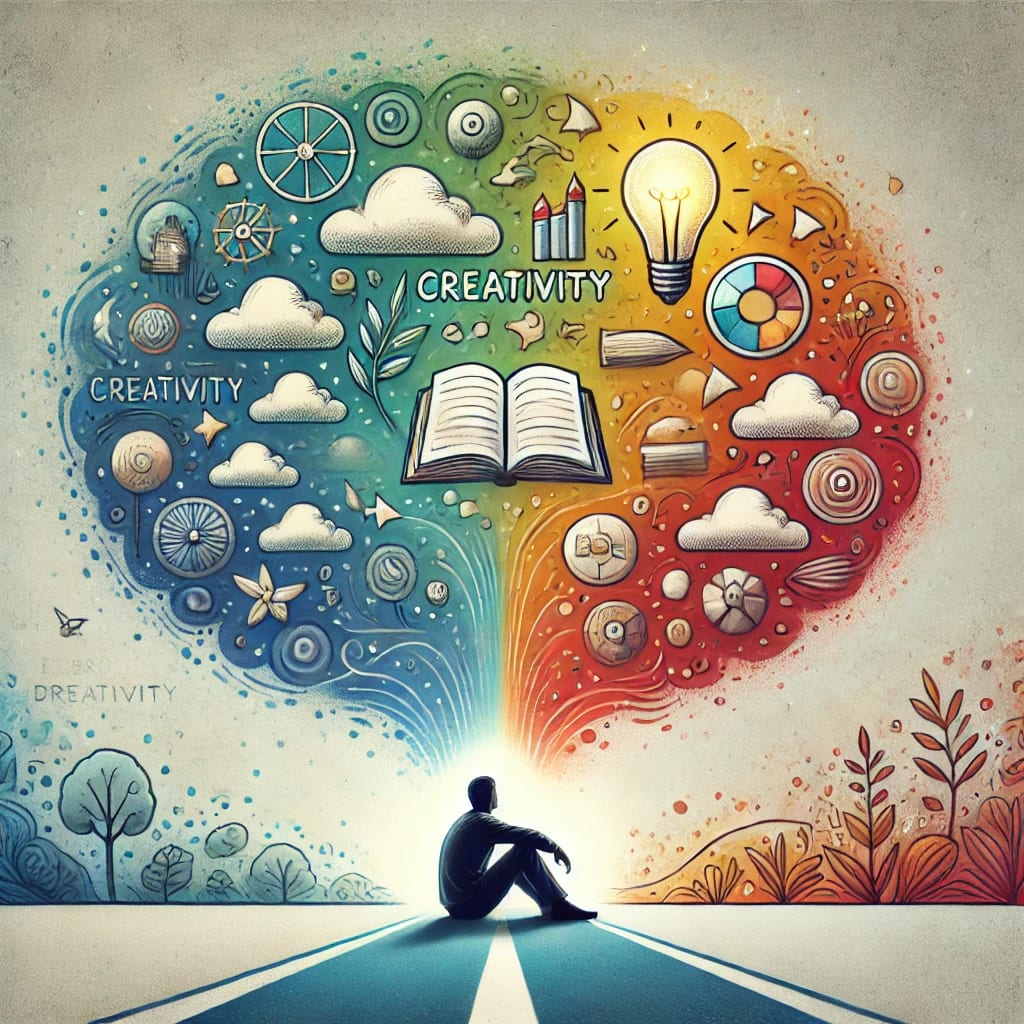
In a world of endless entertainment and constant notifications, our brains are overstimulated. Yet, neuroscientists have discovered that boredom—doing absolutely nothing—can be one of the most productive states we can enter. It triggers the default mode network (DMN) in the brain, the same neural system responsible for creativity, introspection, and big-picture thinking.
In this article, we’ll explore why boredom is powerful, how our modern dopamine addiction suppresses it, and how we can use boredom as a tool for productivity and mental clarity.
1. The Science of Boredom: What Happens in the Brain?
When we experience boredom, something fascinating happens in the brain. Instead of shutting down, the mind switches to a different mode of thinking—activating the default mode network (DMN).
The DMN is responsible for:
✅ Creative Problem-Solving: Ever had a breakthrough idea in the shower? That’s the DMN at work.
✅ Self-Reflection & Identity Formation: Helps us process emotions and understand ourselves better.
✅ Big-Picture Thinking: Allows us to make connections between ideas and long-term goals.
However, every time we escape boredom by mindlessly scrolling, watching videos, or multitasking, we suppress the DMN and block deep creative insights from emerging.
2. The Dopamine Trap: Why We Avoid Boredom
Modern technology has hijacked our dopamine system. Dopamine, the brain’s reward chemical, is released when we experience pleasure, novelty, and instant gratification.
🔴 Bad Dopamine Triggers (Instant Gratification):
- Social Media: Endless scrolling keeps the brain hooked.
- Short-Form Content: TikTok, Reels, and viral clips overload the dopamine system.
- Multitasking: Switching between tasks constantly gives micro-doses of stimulation.
🟢 Good Dopamine Triggers (Deep Focus & Creativity):
- Unstructured Thinking: Letting the mind wander without distractions.
- Long-Form Reading: Engaging deeply with a book or an article.
- Creative Work: Painting, writing, brainstorming, or problem-solving.
When we are constantly entertained, we numb our ability to tolerate boredom, making it harder to focus on deep, meaningful work.
3. How to Use Boredom to Boost Creativity and Productivity
Instead of avoiding boredom, we can harness it as a tool for better thinking. Here’s how:
1. The Boredom Challenge: 10 Minutes of Doing Nothing
Set a timer for 10 minutes and do absolutely nothing. No phone, no distractions—just sit with your thoughts. It will feel uncomfortable at first, but this discomfort is where deep ideas emerge.
2. Digital Detox: Reducing Dopamine Overload
Try a dopamine detox by taking breaks from constant stimulation:
- ✅ No phone during meals—engage in mindful eating instead.
- ✅ Silent walks without music or podcasts—let your thoughts flow naturally.
- ✅ One day a week without social media—reconnect with real-world experiences.
3. Boredom as a Gateway to Deep Work
Instead of filling empty time with distractions, use it for:
✔️ Journaling: Writing down thoughts to gain clarity.✔️ Mind Mapping: Letting ideas flow without structure.✔️ Daydreaming: Allowing the mind to freely wander and make creative connections.
4. The Power of Embracing Stillness
History is full of examples of brilliant ideas born from boredom:
- 🧠 Albert Einstein: His theory of relativity emerged from long walks and deep thought.
- 🧠 J.K. Rowling: The idea for Harry Potter came to her while staring out of a train window.
- 🧠 Steve Jobs: Known for taking silent retreats to gain clarity and vision.
Boredom is not wasted time. It is the birthplace of genius, self-discovery, and big ideas.
Final Thoughts: Why Doing Nothing is the Key to Doing More
- In a world that demands constant productivity, we must reclaim the power of boredom.
- By embracing stillness, resisting distractions, and allowing our minds to wander, we tap into the deepest levels of creativity and self-awareness.
- So the next time you feel the itch to check your phone… pause.
- Sit with the silence. Let your mind wander. You might just unlock something extraordinary.
About the Creator
Ahmet Kıvanç Demirkıran
As a technology and innovation enthusiast, I aim to bring fresh perspectives to my readers, drawing from my experience.
Keep reading
More stories from Ahmet Kıvanç Demirkıran and writers in Longevity and other communities.
🧠 Grit vs. Talent: Why Persistence Wins Every Time
Introduction: The Late Bloomer Who Proved Everyone Wrong In 1995, a high school basketball coach made a decision that would change sports history. He cut a sophomore from the varsity team, deeming him not talented enough. That student? Michael Jordan.
By Ahmet Kıvanç Demirkıran11 months ago in Longevity
Day 4 of Quitting
If this is how sobriety feels, maybe it’s better to go through life a little buzzed… this, along with other hits like, I want to kill myself, I wish I was dead, and I’m going to throw myself off a bridge have been the only thoughts on rotation these past few days. I promise myself that if, in a month, I still feel like this (‘this’ meaning despondent, full of rage, and simultaneously numb) I can go back to smoking. Until mid-February though? Nicotine is off the table.
By sleepy drafts10 days ago in Longevity
A Dart at Dusk
Seconds ago, the sullen sun set on the two of us… my exuberant furry companion and me. A fresh breeze embraces us, delivering welcome relief from the day’s oppressive heat. His typical stumbling and staggering along — apace with a sloth — has turned into trip-trapping, high-stepping, almost skipping along.
By Angie the Archivist 📚🪶3 days ago in Petlife


Comments (4)
Mind matter always intrigues me. Thank you for this.
This reminds me of articles that Cody Dakota Wooten publishes here on Vocal: https://shopping-feedback.today/authors/cody-dakota-wooten-c-b-c%3C/span%3E%3C/span%3E%3C/span%3E%3C/a%3E%3C/p%3E%3C/div%3E%3C/div%3E%3C/div%3E%3Cdiv class="css-w4qknv-Replies">
good job
Fabulous ✍️🏆🏆🏆💙💙💙