
I Studied the Latest Research on Obesity and Heart Disease — Here's the Surprising Truth No One Talks About
Rethinking weight, redefining heart health.

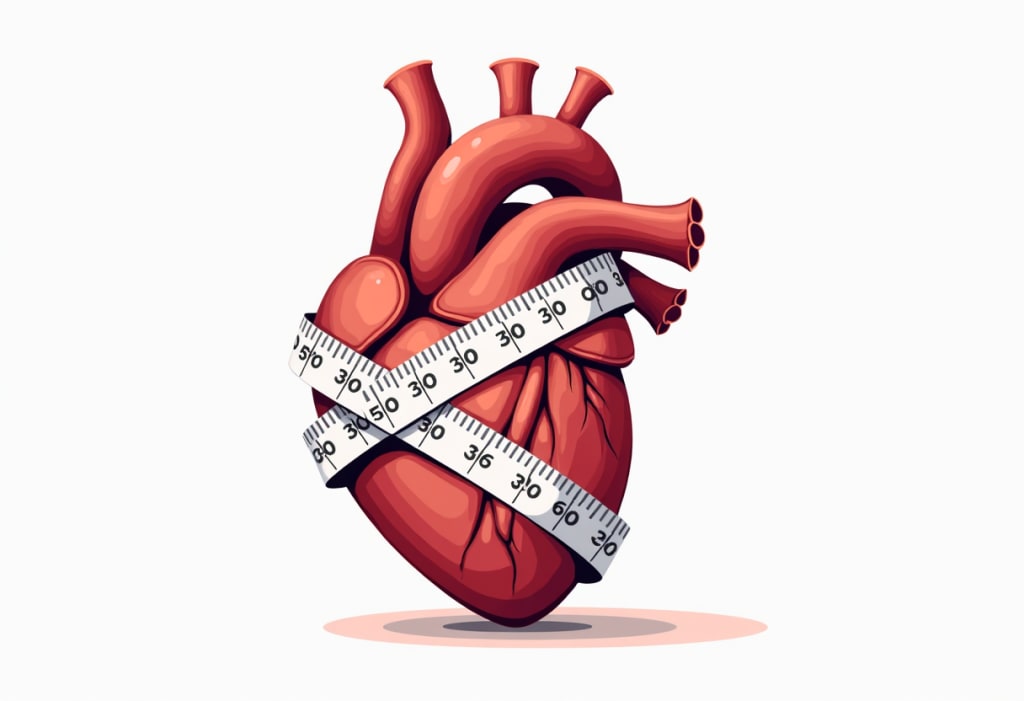
Okay, friends, grab your coffee—or your panic snacks—because I'm about to tell you something that sounds completely bananas.
According to a 2025 study published in Current Diabetes Reports, overweight and mildly obese people with heart disease might actually live longer than those with "normal" weight.
I know. Song to my ears as an obese person.
1. The Big Plot Twist
So here's the deal: if you have type 2 diabetes and cardiovascular disease, carrying a few extra pounds could be protective.
Scientists are calling it the "obesity paradox," and yes, that's the actual medical term.
It's like the universe is messing with us after decades of being told that thin = healthy and anything else = ticking time bomb
The researchers at Rush University Medical Center found this pattern showing up again and again in hospital data.
People in the "overweight" or "mildly obese" BMI categories were **surviving heart failure, cardiac events, and hospitalisations better than people with normal BMIs.
Me, sitting here with my muffin top: "Wait, so I've been stressing for nothing?"
Spoiler: it's more complicated than that. But let's dig in.
2. Why This Isn't Just "Eat Cake and Live Forever" Science
Before you throw your gym membership out the window, let me be the friend who gives you the full story.
Because—of course—nothing is ever that simple.
Here's what the researchers actually found:
The paradox is real... but context matters.
Some studies showed that people with diabetes who were heavier had lower mortality rates.
But (and this is a big but), it's not because fat itself is protective.
It's because:
- Sick people lose weight. If someone's really unwell—cancer, heart failure, chronic illness—they often drop pounds. So the "normal weight" group sometimes includes people who are thin because they're already very sick. Scientists call this "reverse causality," and it skews the data.
- BMI is a terrible measure. Body Mass Index doesn't tell you whether your weight is muscle, bone, or visceral fat wrapped around your organs. A gym bro and someone with metabolic syndrome could have the same BMI and wildly different health profiles.
- Fitness is the real MVP. The studies that looked at cardiorespiratory fitness found that fit people at higher weights did way better than unfit people at "normal" weights. So it's not about the number on the scale—it's about whether you can climb stairs without needing an oxygen tank.
3. Where the Belly Fat Hides Matters More Than You Think
Here's the tea: not all fat is created equal.
The American Heart Association (because yes, I read their reports for fun now) explains that visceral fat—the kind that wraps around your liver, pancreas, and intestines—is the troublemaker.
It's inflammatory, messes with your insulin, and increases heart disease risk.
But subcutaneous fat? That squishy stuff you can pinch on your hips and thighs? Less of a villain. Some researchers even think it might have a protective role in certain contexts.
So when doctors just look at your BMI and freak out, they're missing the whole picture.
Your waist circumference, your fitness level, and where your body stores fat matter way more than whether you're a size 8 or a size 16.
4. The Diabetes + Heart Disease Double Whammy
The obesity paradox gets especially weird when diabetes enters the chat.
Type 2 diabetes already increases your heart disease risk—like, a lot.
It messes with your blood vessels, increases inflammation, and makes your heart work harder.
According to the research from Current Diabetes Reports, obesity is a well-established risk factor for getting diabetes and heart disease in the first place.
But once you have those conditions? The rules seem to flip.
Epidemiological studies showed that among people already diagnosed with type 2 diabetes and cardiovascular disease, those with a bit of extra weight had better survival rates.
It's like your body's saying, "Okay, we're in crisis mode now, and having some reserves might actually help."
Think of it like this: if you're stuck on a deserted island, you'd rather have a little extra body fat to burn than be running on empty, right?
5. What Scientists Are Still Figuring Out
Researchers are being honest about the fact that they don't totally understand this yet.
Some of the theories floating around include:
- Energy reserves: Extra body weight might provide metabolic reserves during illness or recovery from surgery.
- Anti-inflammatory effects: In some contexts, adipose tissue (fat) releases protective hormones.
- Medication dosing: Heavier patients might tolerate higher doses of life-saving medications.
- Statistical quirks: Selection bias, collider bias, and other nerdy epidemiology stuff might make the data look rosier than reality.
The study authors from Rush University are clear: this does NOT mean obesity is good for you.
It means the relationship between weight, disease, and outcomes is way more nuanced than we thought.
6. So... What Are We Supposed to Do With This Information?
I can hear you asking: Okay, cool science story, but what does this mean for me on a Saturday afternoon when I'm deciding whether to eat the cookie?
Here's what I'm taking away from this research—and what I think actually matters:
- Stop obsessing over the scale. BMI is not the ultimate measure of health. If your doctor is only looking at your weight and not asking about your fitness, your energy levels, your waist circumference, or your metabolic markers, push back a little.
- Move your body in ways that feel good. Cardiorespiratory fitness—how well your heart and lungs work—is one of the strongest predictors of longevity, way more than weight. You don't have to run marathons. Walking, dancing, swimming, even gardening counts.
- Get the right tests. If you have diabetes or heart disease, ask about waist-to-hip ratio, body composition analysis, and metabolic health markers—not just your BMI.
- Don't panic if you're not thin. If you're managing chronic conditions, stable weight might actually be a good sign. Rapid weight loss without trying? That's when doctors start paying attention.
- Be kind to yourself. Bodies are complex. Health is not a moral issue, and weight is not a character flaw.
What I'm Taking From This (And What You Can, Too)
Look, I'm not a doctor. I'm just someone who fell down a research rabbit hole and came back with some surprisingly hopeful news.
Here's what I learned:
✅ Health is more than a number on the scale. Your fitness level, where you store fat, and how your body functions matter way more than BMI.
✅ If you have diabetes and heart disease, a bit of extra weight might not be the villain you thought it was. But that doesn't mean intentionally gaining weight—it means stop beating yourself up if you're not thin.
✅ Cardiorespiratory fitness is king. Moving your body regularly—even gently—can be more protective than being thin but sedentary.
✅ Context matters. The "ideal" weight is different for someone managing chronic illness versus someone who's healthy. Medicine is finally catching up to that reality.
✅ Your body is trying its best. Even when it feels like it's betraying you, it's working hard to keep you alive. Maybe it's time we gave it a little more credit.
So here's my gentle (motivational?) nudge for you: What if, instead of asking "Am I thin enough?" you started asking "Am I strong enough, energised enough, and taking care of myself in ways that feel good?"
Because at the end of the day, science is messy, bodies are complicated, and the goal isn't perfection—it's living a life you actually enjoy.
About the Creator
Anie the Candid Mom Abroad
Hi, nice to meet you. I'm Anie. The anonymous writer trying to make sense of the complicated world, sharing tips and tricks on the life lessons I've learned from simple, ordinary things, and sharing ideas that change me.
Keep reading
More stories from Anie the Candid Mom Abroad and writers in Longevity and other communities.
Pulmonary Embolism: Symptoms, Causes, Treatment, and Prevention of a Silent Killer
Introduction Pulmonary embolism (PE) is a serious, potentially life-threatening condition that occurs when a blood clot blocks one or more arteries in the lungs. It is one of the most critical emergencies in cardiovascular health, ranking just after heart attacks and strokes in terms of morbidity and mortality. PE often originates from deep vein thrombosis (DVT), a blood clot in the veins of the legs or pelvis, that travels through the bloodstream to the lungs. Understanding the risk factors, early symptoms, diagnostic methods, treatment options, and preventive strategies is essential to improving outcomes and saving lives.
By Story Prism6 days ago in Longevity
How to Keep Your Brain 20 Years Younger: Science-Backed Habits That Actually Work
Michael didn’t notice it all at once. It started with small things he could easily laugh off. Walking into the kitchen and standing there a little too long, trying to remember why he came in. Forgetting the name of someone he worked with every day. Losing his train of thought halfway through a story he had told many times before.
By Junaid Khan7 days ago in Longevity
I Don't Need My Phone... Wait, Is That Actually True?
My parents gave me my first cell phone when I was twelve years old. It wasn't a fancy iPhone or anything, not even close. Just a simple black flip phone for when I needed to call or text them after school.
By Madison "Maddy" Newton3 days ago in Humans


Comments
There are no comments for this story
Be the first to respond and start the conversation.