
I Thought Plants Were the Secret to Living Longer… Then I Read This Recent Study...
Surprising facts that may change your life forever

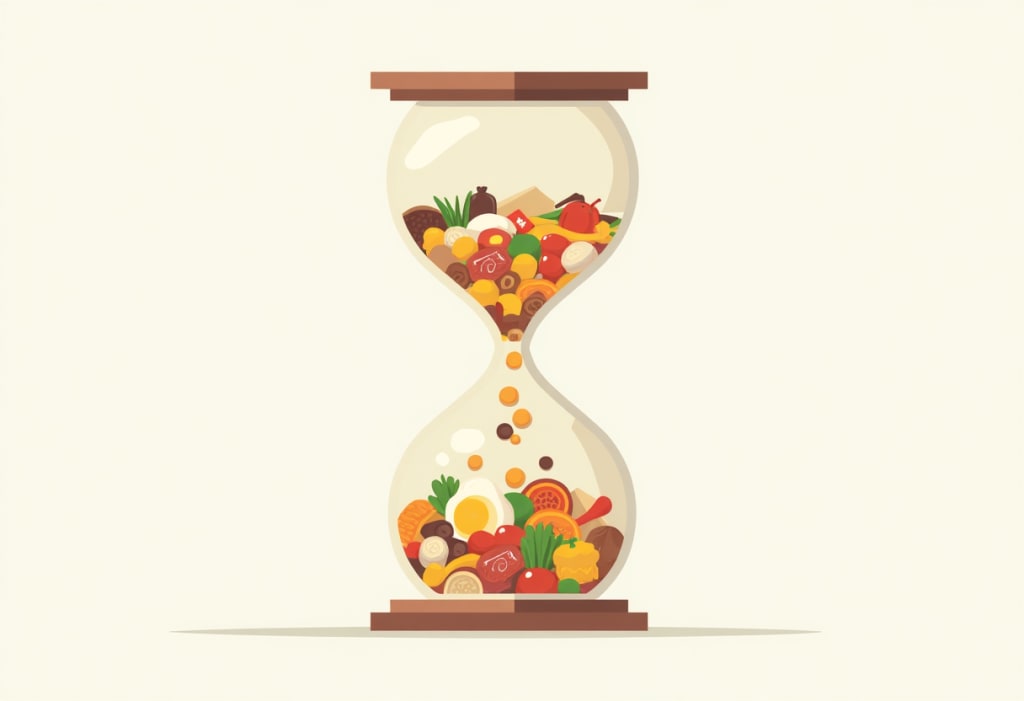
So apparently, meat eaters might be more likely to hit 100 than people who avoid meat… and honestly, my first reaction was the same as yours:
“Wait. Did decades of nutrition advice just… lie to me?”
Let’s talk about what this recent study actually means, what it doesn’t, and what I’d tell my younger “all-or-nothing about food” self (and maybe you) so we don’t spiral every time a new headline drops.
1. The Plot Twist: Meat vs. 100 Years Old
Here’s the basic story: researchers followed over 5,000 Chinese adults who were already 80+ years old.
They checked who ate meat, who didn’t, and who eventually made it to 100.
Quick version:
Older adults who didn’t eat meat were less likely to hit 100 than those who did.
But (and this is the huge but the headlines whisper very softly), this was only true for people who were underweight.
For older adults with a healthy weight, not eating meat did not make them less likely to reach 100.
So no, the moral is not: “Drop your tofu, salvation is in steak.”
It’s more like: “If you’re 85, tiny, and barely eating, cutting out nutrient-dense foods might not be your best move.”
Younger me would’ve freaked out and gone: “So… all my plant-based years were pointless??”
Current me: “Relax. Context, my friend.”
2. Dear Younger Me: Your 25-Year-Old Body ≠ Your 90-Year-Old Body
One of the biggest things I wish I’d understood sooner is this: your nutritional needs do not stay the same forever.
In this study, everyone was 80 or older. That’s a totally different phase of life from the one most of us picture when we talk about “healthy eating.”
As you age:
Your energy needs drop (your body burns fewer calories just existing).
Your muscle mass and bone density tend to slide downhill if you ignore them.
Your appetite often shrinks, which sounds fun until you realise “not feeling hungry” plus “needing nutrients” is a rough combo.
So when you’re older, the priority quietly shifts from “avoid long-term disease at all costs” to “please don’t lose more muscle, weight, or essential nutrients because that’s what keeps you functioning.”
3. The Underweight Plotline (a.k.a. It’s Not Just About Meat)
Here’s the juicy part the article makes very clear: the “non-meat eaters lived shorter” thing only showed up in people who were underweight.
Important bits:
Being underweight in older age is strongly tied to higher frailty and higher risk of death.
That alone can make it harder to reach 100, regardless of whether you love lentils or lamb.
So it’s not simply “no meat = bad.” It’s more like:
“No meat + very low body weight + age 80+ + possible difficulty getting enough protein, calcium, B12, vitamin D = higher risk.”
4. So… Were All Those Plant-Based Health Claims Wrong?
Nope. This study doesn’t suddenly cancel years of research like a bad sequel.
For younger and middle-aged adults, plant-based diets still show:
- Lower risk of heart disease and stroke.
- Lower risk of type 2 diabetes.
- Lower rates of obesity in many groups.
A lot of those benefits come from more fibre and less saturated fat.
Very normal, very uncontroversial.
This new study is basically saying:
“In very old adults, especially those who are underweight, a strict no-meat approach might make it harder to get enough nutrients to stay strong and make it to 100.”
Different age, different priorities.
5. The Nuance Zone: Fish, Eggs, Dairy, and That Famous “Paradox”
There’s another detail I wish I’d had on a billboard earlier: not all non-meat diets in this study were equal.
The reduced chance of reaching 100 was not seen in older adults who:
Skipped meat but did eat fish, dairy, or eggs.
Why? Because those foods bring:
- High-quality protein.
- Vitamin B12.
- Calcium.
- Vitamin D.
All the fun stuff your muscles and bones quietly demand when you’re older and trying not to fall apart like an old office chair.
And then there’s the “obesity paradox”: in older age, a slightly higher body weight is often linked to better survival.
6. So.. Here's My Take On This Study
If I had to turn all of this into a little toolkit for my younger, rigid-food-rule self—and for you—it would look like this:
1. Don’t marry a label, marry flexibility.
Vegan, vegetarian, flexitarian, omnivore—none of these are moral badges; they’re tools.
Over a lifetime, you might need to adjust how you eat as your body changes, and that’s not “failure,” that’s just… biology doing its thing.
2. Plant-based can be amazing—if you actually plan it.
Especially when you’re younger, plant-based diets can be great for heart health and metabolic health.
But you still need to think about protein, B12, calcium, iron, all that boring-but-important stuff. “Vegan” isn’t a magic word; it’s a logistics project.
3. Older you will care more about strength than aesthetics.
In advanced age, the priority is muscle mass, strength, balance, and not unintentionally losing weight.
That means making sure you get enough protein and key nutrients—whether that’s through plants only, or with some animal foods like eggs, fish, or dairy.
4. Underweight in old age is a red flag, not a goal.
If you’re 80+ and underweight, the conversation shifts from “cutting things out” to “what can we add back in so you stay strong and nourished?”
That might include rethinking a very restrictive plant-only approach if it’s leaving gaps.
5. One study is a plot point, not the whole story.
This was an observational study, meaning it shows a link, not proof that “not eating meat causes shorter life.”
Context matters: age, weight, lifestyle, and overall diet pattern all sit in the mix.
7. Your Takeaway (Before You Rewrite Your Entire Diet)
If you’re younger or middle-aged and leaning plant-based: you’re probably still doing your future self a favour—just keep an eye on protein and key nutrients instead of surviving solely on fries and vibes.
If you picture yourself at 90+, the goal isn’t to be the most “disciplined” eater in the nursing home; it’s to be the one who can still stand up, walk around, and enjoy food without stressing over every bite.
That might mean more protein, more flexibility, and yes, maybe some animal-source foods or very intentionally planned plant-based nutrition.
And if your brain tries to panic-scroll every time a new study makes a dramatic headline, you can tell it this:
“I don’t need a perfect diet for every age. I need an adaptable one.”
You don’t have to choose between “salad saint” and “steak forever.”
You just have to keep learning, keep adjusting, and keep feeding the version of you that exists right now—while leaving some room for the 90-year-old you who will absolutely want strong legs, decent bones, and a good lunch.
About the Creator
Anie Liban
Hi, nice to meet you. I'm Anie Liban. The anonymous writer trying to make sense of the complicated world, sharing tips and tricks on the life lessons I've learned from simple, ordinary things, and sharing ideas that change me.
Keep reading
More stories from Anie Liban and writers in Longevity and other communities.
Day 4 of Quitting
If this is how sobriety feels, maybe it’s better to go through life a little buzzed… this, along with other hits like, I want to kill myself, I wish I was dead, and I’m going to throw myself off a bridge have been the only thoughts on rotation these past few days. I promise myself that if, in a month, I still feel like this (‘this’ meaning despondent, full of rage, and simultaneously numb) I can go back to smoking. Until mid-February though? Nicotine is off the table.
By sleepy drafts17 days ago in Longevity
A First in 100 Years: A Chinook Salmon Returns to Its Native California River
For the first time in more than a century, a Chinook salmon has been documented returning to its native river in California—a moment that conservationists are calling historic, symbolic, and deeply hopeful. This single fish represents far more than a biological curiosity. It is living proof that decades of environmental restoration, policy reform, and community activism can slowly reverse even the most severe ecological damage. A Journey Once Thought Impossible Chinook salmon, also known as king salmon, are famous for their extraordinary life cycle. Born in freshwater rivers, they migrate thousands of miles into the Pacific Ocean before returning—often to the exact stream of their birth—to spawn and die. This instinct, known as natal homing, is one of nature’s most remarkable feats. Yet for many California rivers, that cycle was broken long ago. The construction of large dams in the early 20th century blocked salmon from reaching their historic spawning grounds. Combined with overfishing, pollution, water diversion for agriculture, and urban development, Chinook populations collapsed. Some rivers saw salmon disappear entirely, becoming ecologically silent for generations. That is why the recent sighting of a Chinook salmon in a river where it had been absent for 100 years has stunned scientists. It was not stocked, released, or guided by humans. It found its way back on its own. What Changed After a Century? This return did not happen by accident. Over the past few decades, California has invested heavily—though not without controversy—in river restoration projects. Aging dams have been removed or modified, fish ladders installed, water flows restored, and riparian habitats rehabilitated. Environmental regulations have reduced industrial pollution, while fishing limits have given depleted stocks a chance to recover. Climate science has also improved water management. Agencies now release colder water from reservoirs at strategic times to mimic natural river conditions that salmon need to survive. In some regions, tribes and local communities have played a leading role, drawing on generations of ecological knowledge to guide restoration efforts. The return of a single Chinook suggests that these fragmented efforts are finally beginning to connect. Why One Fish Matters Skeptics may ask: what difference does one salmon make? Ecologists answer clearly—everything starts with one. Salmon are a keystone species. Their bodies transport ocean nutrients far inland, feeding not just fish but birds, mammals, insects, and even forests. When salmon disappear, entire ecosystems weaken. When they return, ecological networks slowly rebuild. More importantly, this salmon demonstrates that the river itself is becoming viable again. Chinook are highly sensitive to water temperature, oxygen levels, and habitat quality. Their presence signals improving river health—conditions good enough not just for salmon, but for countless other species, including humans. Cultural and Historical Significance For Indigenous communities in California, salmon are not just wildlife; they are relatives, teachers, and central figures in cultural identity. Many tribes have fought for decades to restore salmon runs that were lost due to colonial-era infrastructure projects. The return of this Chinook has therefore been met with emotion as well as scientific excitement. Elders describe it as a reminder of what the land once was—and what it could be again. It also strengthens legal and moral arguments for continued dam removal and river protection. Challenges Still Ahead Despite this milestone, conservationists warn against complacency. One fish does not mean the crisis is over. Climate change continues to threaten salmon through warming waters, drought, and altered ocean conditions. Many rivers remain blocked, degraded, or over-allocated. There is also the question of whether this return can become a trend. For a self-sustaining population to reestablish, many salmon must follow this path consistently over years. That will require long-term funding, political will, and cooperation between environmental groups, farmers, energy producers, and governments. A Rare Moment of Environmental Optimism In an era dominated by headlines about extinction, climate disasters, and ecological collapse, the return of a Chinook salmon after 100 years offers something rare: credible hope. It shows that nature has not forgotten its pathways—and that if given even a narrow opening, it will try to heal itself. This single fish is not the end of the story. It is the opening line of a possible recovery—one written slowly, against great odds, but now undeniably underway.
By Fiaz Ahmed 7 days ago in Longevity


Comments
There are no comments for this story
Be the first to respond and start the conversation.