Latest Stories
Most recently published stories on Vocal.
Behind the Curtain: The AI Future Is Here. AI-Generated.
For years, artificial intelligence lived behind a curtain. It was something we associated with science fiction, distant futures, or experimental labs filled with glowing screens and genius engineers. But that curtain has been pulled back — and what’s behind it is no longer theoretical. The AI future isn’t coming. It’s already here. From the phones in our pockets to the systems guiding global markets, artificial intelligence has slipped into daily life with astonishing speed. Often invisible, sometimes misunderstood, and frequently underestimated, AI is reshaping how we work, learn, create, and even think. The transformation is happening quietly — but its impact is anything but small. AI Didn’t Arrive Overnight — It Slipped In One of the most surprising things about AI’s rise is how subtle it has been. There was no single moment when the world “switched on” artificial intelligence. Instead, it crept in through convenience: Recommendation algorithms deciding what we watch Navigation apps predicting traffic before it forms Smart assistants responding to our voices Software filtering spam, editing photos, and translating languages instantly Each improvement felt minor. Together, they rewired modern life. Behind the curtain, AI systems were learning — absorbing massive amounts of data, improving through patterns, and becoming more capable without demanding much attention from the public. By the time people realized how advanced these tools had become, AI was already deeply embedded. The Workplace Is Being Rewritten Few areas reveal AI’s impact more clearly than work. Automation once threatened mostly factory jobs. Today, AI reaches into offices, studios, classrooms, and hospitals. Writing assistants draft emails and reports. AI tools analyze legal documents, generate marketing copy, design graphics, and even help write computer code. For businesses, the appeal is obvious: AI is fast, scalable, and available 24/7. For workers, the picture is more complicated. Some roles are being enhanced — productivity boosted rather than replaced. Others are quietly disappearing, absorbed into algorithms that can do the same work in seconds. The future of work is no longer about humans versus machines. It’s about humans working alongside systems that never sleep — and never stop learning. Creativity Meets Code Perhaps the most controversial development in AI is its move into creative spaces. Music, art, writing, and film were once considered uniquely human. Now, AI can compose songs, generate paintings, and write stories that are surprisingly convincing. This has sparked both excitement and fear. Supporters argue that AI is a tool — one that expands creativity rather than replacing it. Critics worry that originality is being diluted, and that human creators are being overshadowed by machines trained on their own work. Behind the curtain, the question isn’t whether AI can create — it clearly can. The real question is how society defines creativity when machines participate in it. Power, Control, and Invisible Decisions One of AI’s most profound impacts is also its least visible: decision-making. AI systems now influence: Loan approvals Job recruitment screening Medical risk assessments Policing and surveillance patterns Social media visibility These systems don’t just process data — they shape outcomes. And yet, many operate as “black boxes,” making decisions that even their creators struggle to fully explain. This raises urgent concerns about bias, accountability, and transparency. When algorithms influence who gets hired, who gets watched, or who gets denied opportunities, who is responsible for mistakes? Behind the curtain, AI isn’t neutral. It reflects the data it’s trained on — including society’s inequalities. Governments Are Playing Catch-Up While tech companies race ahead, governments are struggling to keep pace. Regulation moves slowly. Innovation does not. Policymakers around the world are now scrambling to define rules for AI — from data protection and privacy to deepfake detection and job displacement. The challenge is enormous: regulate too harshly, and innovation stalls; regulate too loosely, and power concentrates in the hands of a few corporations. The AI future is forcing governments to confront questions they’ve never had to answer before: Who owns data? Who is liable for AI-driven harm? How do you protect democracy in an age of synthetic media? Behind the curtain, AI development has already outpaced traditional political structures. Education in an AI World Classrooms are changing too. AI tutors can personalize learning, adapt to student pace, and provide instant feedback. At the same time, concerns about cheating, dependency, and critical thinking are growing. If AI can instantly generate answers, essays, and solutions, what should education focus on next? Many educators argue the answer lies in creativity, reasoning, ethics, and problem-solving — skills that AI can support, but not fully replace. The goal is no longer memorization, but understanding. The curtain is lifting on a future where learning is continuous — and deeply intertwined with intelligent tools. Fear, Hope, and the Human Question Public reactions to AI swing between extremes: utopian dreams and apocalyptic fears. Some see AI as humanity’s greatest ally — curing diseases, solving climate problems, and unlocking productivity. Others fear mass unemployment, loss of control, and erosion of human identity. The truth likely lies somewhere in between. AI is not an unstoppable force of destiny. It is a human-made system, shaped by choices, incentives, and values. What happens next depends less on the technology itself and more on how society chooses to use it. The Curtain Is Open — Now What? The most important realization is this: we are no longer watching the AI future from a distance. We are living inside it. The curtain has been pulled back. The systems are active. The decisions are being made — sometimes with us, sometimes without us. The challenge ahead is not stopping AI, but guiding it. Demanding transparency. Protecting human dignity. Ensuring that progress benefits many, not just a few. Because the AI future is here — and what happens next is still being written.
By Muhammad Hassan14 days ago in The Swamp
The Prince and the Bald Dwarfs
One day, Prince Anreeq set out for a leisurely walk in the land of Anreeqistan. As he wandered through the countryside, he noticed a strange sight. A large group of dwarfs was walking toward him, and every one of them looked deeply unhappy. What caught the prince’s attention most was that none of them wore the long, crooked hats that dwarfs were famous for. Instead, all their heads were completely bald, shining in the sunlight like peeled boiled eggs.
By Sudais Zakwan14 days ago in Longevity
Buc-ee’s Announces Plans to Build the World’s Largest Convenience Store. AI-Generated.
For millions of American road-trippers, Buc-ee’s is not just a convenience store — it’s a destination. Known for its massive locations, spotless bathrooms, cult-favorite snacks, and unmistakable beaver mascot, the Texas-based chain has turned a simple pit stop into an experience. Now, Buc-ee’s is taking that reputation to an entirely new level. The company has officially announced plans to build what it says will be the world’s largest convenience store, once again pushing the boundaries of size, spectacle, and ambition in an industry that most people associate with quick stops and small footprints. The announcement has sparked excitement, disbelief, and curiosity, raising a bigger question: how did a gas station chain become one of America’s boldest retail success stories? What Buc-ee’s Is Planning According to company statements, the new Buc-ee’s location will surpass all existing stores in sheer size, potentially covering more than 75,000 square feet — larger than many supermarkets and even some shopping malls. Like other Buc-ee’s locations, the store is expected to include: Dozens (or even hundreds) of fueling stations An enormous retail floor packed with food, merchandise, and regional products Freshly prepared meals made on-site Buc-ee’s famous ultra-clean restrooms Branded apparel, home goods, and souvenirs While Buc-ee’s has not yet revealed every design detail, the company has made it clear: this store is meant to be a landmark, not just a convenience stop. How Buc-ee’s Became a Cultural Phenomenon Founded in Texas in 1982, Buc-ee’s quietly built a loyal following by doing something radical in the convenience store world: raising standards. Instead of cramped aisles and questionable restrooms, Buc-ee’s focused on: Cleanliness that rivals hotels Friendly, well-paid staff Massive selections of food and merchandise A fun, family-friendly atmosphere The chain became especially famous for items like Beaver Nuggets, brisket sandwiches, fresh fudge, and jerky bars stretching longer than entire gas stations elsewhere. Over time, Buc-ee’s locations turned into roadside attractions. People plan trips around them. Families stop not because they have to, but because they want to. Why Size Is Part of the Strategy Building the world’s largest convenience store is not just a publicity stunt — it’s a calculated business move. Large stores allow Buc-ee’s to: Serve huge volumes of travelers efficiently Offer unmatched product variety Keep customers inside longer Create a memorable brand experience In an era where many retailers are shrinking footprints or moving online, Buc-ee’s is doubling down on physical presence. The company understands that convenience stores don’t have to be forgettable. They can be immersive, entertaining, and profitable at scale. Bigger also means busier — and Buc-ee’s thrives on traffic. The Economic Impact on Local Communities Every new Buc-ee’s location brings significant economic ripple effects. The company is known for: Creating hundreds of local jobs Paying wages above typical convenience store standards Attracting tourism traffic to surrounding areas Local businesses often benefit from increased foot traffic, while municipalities gain tax revenue. However, critics argue that such massive stores can also put pressure on smaller, independent gas stations and diners nearby. Still, many towns actively compete to attract Buc-ee’s, viewing it as a long-term economic anchor. A Changing Definition of Convenience Retail Buc-ee’s expansion reflects a broader shift in how Americans travel and shop. Today’s drivers want more than fuel. They want: Clean restrooms Quality food Safe, welcoming environments A reason to stop rather than rush through Buc-ee’s meets those expectations — and then exceeds them. By building the world’s largest convenience store, the company is effectively saying that convenience retail can be experiential, not transactional. This approach stands in sharp contrast to traditional gas station models focused solely on speed and turnover. Not Without Criticism Despite its popularity, Buc-ee’s growth has not been free from controversy. Some critics raise concerns about: Environmental impact from massive developments Traffic congestion around new locations Pressure on small, local competitors Others question whether such enormous stores are sustainable in the long term, especially as electric vehicles reduce the need for frequent fuel stops. Buc-ee’s leadership, however, appears confident that its model is adaptable — emphasizing food, retail, and hospitality rather than relying solely on gasoline sales. What This Means for the Future of Road Travel As road trips evolve, so do the places that support them. The planned mega-store signals that Buc-ee’s sees itself not just as a convenience brand, but as a roadside lifestyle destination. It’s betting that people will continue to crave physical experiences — especially ones that feel familiar, fun, and uniquely American. If successful, the world’s largest convenience store could further cement Buc-ee’s status as a category-defining brand, forcing competitors to rethink what a gas stop should look like in the modern age. More Than a Store — A Statement Buc-ee’s announcement isn’t just about square footage. It’s about confidence. At a time when many retailers are cautious, Buc-ee’s is expanding boldly. At a time when digital dominates, it’s investing in real-world experience. And at a time when convenience stores are expected to blend into the background, Buc-ee’s is building something impossible to ignore. Whether you see it as excessive or ingenious, one thing is certain: the world’s largest convenience store won’t just sell snacks and fuel — it will sell the idea that even the most ordinary stops can be extraordinary.
By Muhammad Hassan14 days ago in The Swamp
These Prophets of Economic Doom Are Worried About Another Collapse. AI-Generated.
Every economic cycle has its optimists — and its doomsayers. But when warnings about another possible financial collapse come not from fringe voices, but from respected economists, veteran investors, and former policymakers, markets tend to listen more closely. In recent months, a familiar group of economic pessimists — often labeled “prophets of doom” — have resurfaced with renewed urgency. Their message is unsettlingly consistent: the global economy may be heading toward another major shock, one that could rival or even surpass past crises. While critics accuse them of crying wolf, supporters argue that many of these figures have been right before — sometimes painfully so. So why are these economic skeptics sounding the alarm again, and what exactly are they worried about? Who Are the ‘Prophets of Economic Doom’? The term “prophets of economic doom” is often used dismissively, but it typically refers to economists, hedge fund managers, and analysts known for consistently warning about systemic risks. These include figures who foresaw: The 2008 global financial crisis The dot-com bubble burst Sovereign debt crises in Europe Inflation surges following prolonged stimulus Their credibility doesn’t come from optimism, but from an ability to identify imbalances and excesses before they unravel. Today, many of these same voices are once again warning that the foundations of the global economy look disturbingly fragile. Debt: The Biggest Red Flag One of the loudest concerns centers on record-breaking global debt. Governments, corporations, and households have borrowed aggressively over the past decade, especially after the pandemic. Ultra-low interest rates made debt cheap, encouraging spending and investment — but also creating massive vulnerabilities. Now, as interest rates remain higher for longer, servicing that debt is becoming increasingly expensive. Some economists warn that: Governments may face fiscal stress Companies could struggle to refinance loans Households may reduce spending sharply The fear is not just high debt, but how interconnected it is. A shock in one sector or country could ripple across financial systems faster than regulators can respond. Asset Bubbles and Overvalued Markets Another major warning sign is what skeptics see as dangerously inflated asset prices. Stock markets, housing, and even alternative assets have surged in recent years, often disconnected from underlying economic fundamentals. Critics argue that markets have been propped up by: Central bank liquidity Speculative trading Excessive optimism around technology and AI Some analysts point to similarities with previous bubbles, where prices kept rising until confidence suddenly collapsed. When valuations are stretched, even a small trigger — geopolitical tension, a banking failure, or unexpected policy shift — can spark a rapid sell-off. The Interest Rate Dilemma Central banks now find themselves trapped between two bad options. On one hand, cutting interest rates too quickly could reignite inflation. On the other, keeping rates high risks slowing growth, weakening banks, and triggering defaults. Economic pessimists argue that policymakers have already delayed tough decisions for too long. By flooding economies with stimulus during crises, they may have postponed — rather than prevented — a deeper reckoning. The result is what some call a “policy exhaustion” problem: central banks have fewer effective tools left if another major downturn hits. Geopolitics and Global Fragmentation Unlike past financial crises, today’s risks are amplified by geopolitical instability. Trade tensions, regional conflicts, and political polarization are disrupting supply chains and undermining global cooperation. Economic doom-watchers warn that the world is becoming: More fragmented Less predictable More vulnerable to shocks Globalization once acted as a stabilizing force. Now, economic nationalism and strategic competition are making coordination harder — precisely when it is needed most. Banking System Stress Beneath the Surface While headline banking crises have been avoided so far, skeptics argue that stress remains hidden within financial institutions. Rapid interest rate hikes have reduced the value of long-term bonds held by banks. At the same time, tighter credit conditions are increasing default risks among borrowers. Some analysts fear that problems are being masked by accounting rules and emergency support measures. If confidence falters, they warn, the system could face sudden pressure — just as it has in past crises. Why Many People Still Dismiss These Warnings Despite these concerns, many investors and policymakers remain confident. They point to: Resilient job markets Continued consumer spending Strong corporate profits Critics of the “doom prophets” argue that pessimists underestimate innovation, adaptability, and the ability of governments to intervene when needed. Yet even optimists admit that the margin for error is shrinking. The debate is no longer about whether risks exist — but about how severe the consequences could be if something goes wrong. Are These Warnings Just Fear — or a Necessary Wake-Up Call? History suggests that economic collapses rarely happen because of one single event. Instead, they occur when multiple vulnerabilities collide — excessive debt, policy mistakes, asset bubbles, and loss of confidence. The prophets of economic doom are not predicting an exact date or trigger. Rather, they argue that the system has become increasingly unstable, and that complacency itself may be the greatest risk. Even if a full-scale collapse never materializes, their warnings serve a purpose: forcing policymakers, investors, and ordinary citizens to confront uncomfortable realities. What This Means for the Future Whether or not another economic collapse occurs soon, the concerns raised by these pessimists highlight a deeper issue: the global economy is operating with less room for mistakes than ever before. For governments, this means careful policy choices. For investors, it calls for realism rather than blind optimism. And for everyday people, it underscores the importance of financial resilience in an uncertain world. The prophets of economic doom may not be right about everything — but history shows that ignoring systemic warnings entirely can be far more dangerous than listening too closely.
By Muhammad Hassan14 days ago in The Swamp
Book Review: "On 1984" by D.J Taylor
I was almost not going to review this book because I felt it was a bit short. But it is something that was interesting to read and so, why not? The story of 1984 by George Orwell does not stand alone in the world of dystopian literature, we know that. It was definitely a reflection of its time. However, what many do not know is that it didn't even stand alone in the author's life. It is an amalgamation, a fusion, a mirror of everything he had written up to that point. From Winston Smith being inspired by aspects of himself all the way to the way in which rats are used as a symbol of terror and disgust. There is something about how 1984 is a product of connected thinking that makes us see it in a whole new light through this text...
By Annie Kapur14 days ago in Geeks
Greenland News
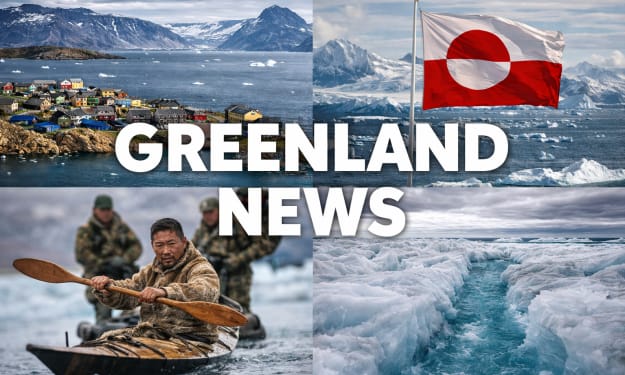
Greenland News Greenland has increasingly drawn global attention in recent years due to its political developments, environmental changes, and growing strategic importance. As the world looks more closely at the Arctic region, news from Greenland reflects a unique mix of local priorities and international interest. From climate-related challenges to economic opportunities and governance issues, Greenland continues to shape its own path while remaining closely connected to global affairs.
By America today 14 days ago in Earth
EU and Mercosur Seal Historic Trade Deal. AI-Generated.
After more than two decades of negotiations, delays, political resistance, and diplomatic resets, the European Union and the Mercosur bloc have finally sealed a historic trade deal. The agreement, hailed by supporters as one of the most ambitious trade pacts ever negotiated, promises to reshape economic ties between Europe and South America while redefining how global trade aligns with climate goals, labor standards, and geopolitical realities. The deal links the EU — one of the world’s largest single markets — with Mercosur, a South American trade bloc comprising Brazil, Argentina, Uruguay, and Paraguay, representing a combined population of over 780 million people. Together, they form a massive economic zone with the potential to influence global supply chains, agricultural markets, and industrial trade for decades to come. What Is the EU–Mercosur Trade Deal? At its core, the EU–Mercosur agreement is designed to reduce or eliminate tariffs on a wide range of goods and services, making trade between the two regions cheaper and more efficient. For European exporters, the deal opens access to South American markets for products such as cars, machinery, pharmaceuticals, chemicals, and industrial equipment — many of which currently face high import duties. For Mercosur countries, the agreement improves access to the EU market for agricultural products, including beef, poultry, sugar, ethanol, soy, and coffee. The European Commission estimates that the deal could save European companies billions of euros annually in tariffs, while boosting economic growth and strengthening strategic ties between the two regions. Why This Deal Took So Long Negotiations between the EU and Mercosur began in 1999, but progress was repeatedly stalled by disagreements over agriculture, environmental protection, labor rights, and political shifts on both sides of the Atlantic. European farmers, particularly in France and Ireland, have long opposed the deal, fearing competition from cheaper South American agricultural imports. Environmental groups raised alarms about deforestation in the Amazon, arguing that increased beef and soy exports could accelerate forest loss. On the Mercosur side, concerns centered on protecting domestic industries and ensuring fair access to European markets without being overwhelmed by EU industrial powerhouses. Only in recent years — amid rising global trade tensions, supply chain disruptions, and geopolitical competition — did momentum return. Both blocs increasingly saw strategic value in diversifying partnerships beyond China and the United States. Economic Impact: Who Stands to Gain? Supporters argue that the agreement is a win-win for both regions. For the European Union, the deal strengthens export opportunities for manufacturers and service providers while reinforcing Europe’s role as a global trade leader. European carmakers, engineering firms, and pharmaceutical companies are expected to benefit significantly. For Mercosur countries, the agreement provides stable access to one of the world’s wealthiest consumer markets. Agricultural exporters, in particular, stand to gain from reduced tariffs and predictable trade rules. Supporters say the deal could stimulate investment, create jobs, and modernize industries across South America. Economists also highlight that the agreement sends a strong signal in favor of rules-based international trade at a time when protectionism is rising globally. Environmental and Climate Concerns Despite the economic promise, the deal remains controversial — especially in Europe. Environmental organizations warn that increased agricultural exports from South America could intensify deforestation, biodiversity loss, and carbon emissions, particularly in Brazil’s Amazon region. Critics argue that previous environmental commitments have not been adequately enforced and fear the trade deal could undermine the EU’s climate leadership. In response, the European Commission has emphasized that the final agreement includes binding sustainability provisions, commitments to the Paris Climate Agreement, and mechanisms to address environmental violations. Supporters argue that engagement — rather than isolation — gives the EU more leverage to promote sustainable practices. Still, skepticism remains strong among green groups and some EU lawmakers, who insist that enforcement will be key. Political Resistance Inside the EU Even after sealing the deal, ratification is far from guaranteed. Several EU member states, including France, Austria, and Ireland, have expressed strong reservations. Farmers’ unions worry about unfair competition, while political leaders face domestic pressure to protect local agriculture and environmental standards. Because the agreement requires approval from all EU member states and the European Parliament, even a small number of dissenting countries could delay or derail implementation. This political reality means that while the deal has been sealed at the diplomatic level, its future still depends on intense political negotiation within Europe. Why the Deal Matters Globally Beyond trade volumes and tariff reductions, the EU–Mercosur agreement carries geopolitical significance. It strengthens ties between Europe and South America at a time when global power dynamics are shifting. China has significantly expanded its economic footprint in Latin America, and the EU sees the deal as a way to remain relevant and competitive in the region. The agreement also reinforces the EU’s ambition to shape global trade rules around sustainability, labor rights, and environmental standards, even if critics question how effective those safeguards will be in practice. In a world marked by trade wars, sanctions, and fragmented supply chains, the deal stands as a rare example of multilateral cooperation. What Happens Next? The next phase involves legal review, translation into all EU languages, and the ratification process across member states. This could take several years, and political opposition may still reshape or delay parts of the agreement. Meanwhile, businesses on both sides are already preparing for potential opportunities, assessing new markets, and planning long-term strategies around the expected changes. Whether the deal ultimately fulfills its promise will depend not only on economic performance but also on enforcement, transparency, and political will. A Turning Point for Trade Relations The EU–Mercosur trade deal marks a historic turning point in relations between Europe and South America. It reflects a growing recognition that global challenges — from climate change to economic resilience — require cooperation across continents. Yet the agreement also highlights the tensions between economic growth and environmental responsibility, free trade and local protection, ambition and accountability. As the world watches the ratification process unfold, one thing is clear: this deal is more than a trade agreement. It is a test of how global partnerships can evolve in an increasingly complex and divided world.
By Muhammad Hassan14 days ago in The Swamp
Trump Announces Tariffs on European Countries Opposing Greenland Takeover. AI-Generated.
In a move that has reignited global debate and unsettled international markets, former U.S. President Donald Trump has announced the possibility of imposing new tariffs on European countries that oppose what he describes as America’s “strategic interest” in Greenland. The statement, delivered during a recent political rally and later reinforced through campaign surrogates, has once again placed Greenland, European unity, and transatlantic trade relations at the center of global attention.
By Aqib Hussain14 days ago in The Swamp
Avalanches Kill Five Off-Piste Skiers in the Austrian Alps. AI-Generated.
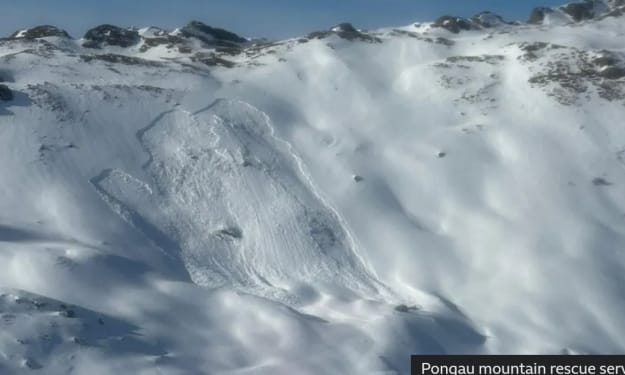
The Austrian Alps are often portrayed as a winter paradise — a place of pristine white slopes, thrilling descents, and breathtaking mountain views. Every year, thousands of skiers and snowboarders travel from across the world to experience Austria’s famous alpine resorts. But over the weekend, that dream turned into a nightmare when five off-piste skiers lost their lives in two separate avalanche incidents, once again reminding the world that nature can be as unforgiving as it is beautiful. The deadly avalanches struck the Salzburg region, one of Austria’s most popular winter sports areas, despite clear warnings about dangerous snow conditions. As rescue teams worked tirelessly in freezing temperatures, the tragedy raised serious questions about off-piste skiing, risk awareness, and the limits of human control in extreme environments. What Happened in the Austrian Alps? According to Austrian authorities, the fatal incidents occurred on Saturday in two different locations within the Salzburg Alps. The first and deadliest avalanche struck a group of off-piste skiers in the Gastein Valley. A large mass of snow broke loose on a steep slope, sweeping through the area and burying multiple people. Four skiers were killed, while two others were injured, one of them critically. One person in the group managed to escape without injuries. Roughly 90 minutes earlier, a separate avalanche occurred near Bad Hofgastein, another well-known alpine destination. In that incident, a female skier was buried under snow at an altitude of around 2,200 meters. Despite rapid rescue efforts, she did not survive, bringing the death toll to five. Emergency services responded immediately, deploying multiple rescue helicopters, mountain rescue teams, search dogs, and medical personnel. However, avalanches move with terrifying speed, often leaving rescuers with only minutes to locate victims before survival chances drop dramatically. Avalanche Warnings Were Already in Place One of the most troubling aspects of this tragedy is that avalanche warnings had already been issued across much of the Austrian Alps. In the days leading up to the weekend, heavy snowfall combined with shifting temperatures created unstable snow layers. Avalanche experts warned that conditions were particularly dangerous, especially in ungroomed and off-piste areas. Some regions were placed under high avalanche risk levels, signaling that even experienced skiers could trigger deadly slides. Local mountain rescue officials later emphasized that the danger was well known. They described the incident as a painful reminder that avalanche bulletins are not theoretical — they exist to save lives. The Risk of Off-Piste Skiing Off-piste skiing, sometimes called backcountry skiing, has grown increasingly popular in recent years. Many skiers are drawn to untouched snow, quieter slopes, and the thrill of adventure beyond resort boundaries. But unlike marked ski runs, off-piste terrain is not controlled or secured against avalanches. Ski resorts routinely use explosives and monitoring systems to reduce avalanche risk on official slopes. Outside those boundaries, however, skiers are fully exposed to natural conditions. Snowpack stability can change suddenly due to wind, temperature shifts, or the weight of a single skier. Even with modern equipment like avalanche beacons and airbags, survival is never guaranteed. Once a person is buried, compacted snow can harden quickly, making self-rescue nearly impossible. A Pattern of Tragedy Across the Alps Sadly, this is not an isolated incident. Avalanche fatalities occur every winter across Europe’s mountain regions, and this season has already seen multiple deadly events. Earlier in the week, a 13-year-old boy was killed in an avalanche at another Austrian resort. In separate incidents, skiers have died in Tyrol, Switzerland, and France, all during periods of elevated avalanche risk. Austria alone records an average of around 20 avalanche-related deaths each year, depending on snow conditions and winter tourism levels. Experts warn that climate change may further complicate the issue by creating more unpredictable weather patterns and unstable snowpacks. Rescue Efforts and Emotional Toll Mountain rescue teams are highly trained and deeply committed, but avalanches remain one of the most challenging emergencies they face. In the Salzburg incidents, rescuers worked under intense pressure, racing against time and extreme weather. Beyond the physical danger, such events take an enormous emotional toll on rescuers, local communities, and families of the victims. Alpine towns rely heavily on tourism, and tragedies like this cast a long shadow over what should be a joyful winter season. Authorities have expressed condolences while also urging visitors to reflect seriously on the risks involved in off-piste activities. What Can Be Learned from This Tragedy? While no lesson can undo the loss of five lives, experts consistently highlight several key points: Respect avalanche warnings and bulletins These alerts are based on scientific analysis and real-time data, not guesswork. Understand that experience does not equal immunity Even skilled skiers can misjudge conditions. Stick to groomed slopes during high-risk periods Official ski runs are actively monitored and controlled. Avoid peer pressure and “powder fever” The desire for untouched snow can cloud judgment. Ultimately, the mountains will always involve risk — but informed decisions can mean the difference between life and death. A Sobering Reminder from the Mountains The Austrian Alps remain one of the world’s most spectacular winter destinations. Yet, as this heartbreaking weekend shows, they demand humility and respect. Nature does not negotiate, and it does not forgive recklessness. As investigations continue and families mourn their loved ones, the tragedy serves as a sobering reminder: adventure should never come at the cost of ignoring clear danger. For skiers and snowboarders everywhere, the message is painfully clear — no descent is worth a life.
By Muhammad Hassan14 days ago in Earth
The Rip
The Rip The term “the rip” has gained attention in fitness and training communities, especially among people interested in strength, conditioning, and functional movement. While the name may sound simple, the rip refers to a powerful pulling and extension movement that focuses on explosive strength, coordination, and full-body engagement. Many people search for its meaning, benefits, and correct execution, making it a popular topic among athletes and fitness enthusiasts. This article explains the concept clearly and answers the most common questions people ask, using rephrased and natural subheadings.
By America today 14 days ago in Families