
Book Review: "On 1984" by D.J Taylor
5/5 - an insightful, short and analytical book about one of the most politically-charged books ever written...

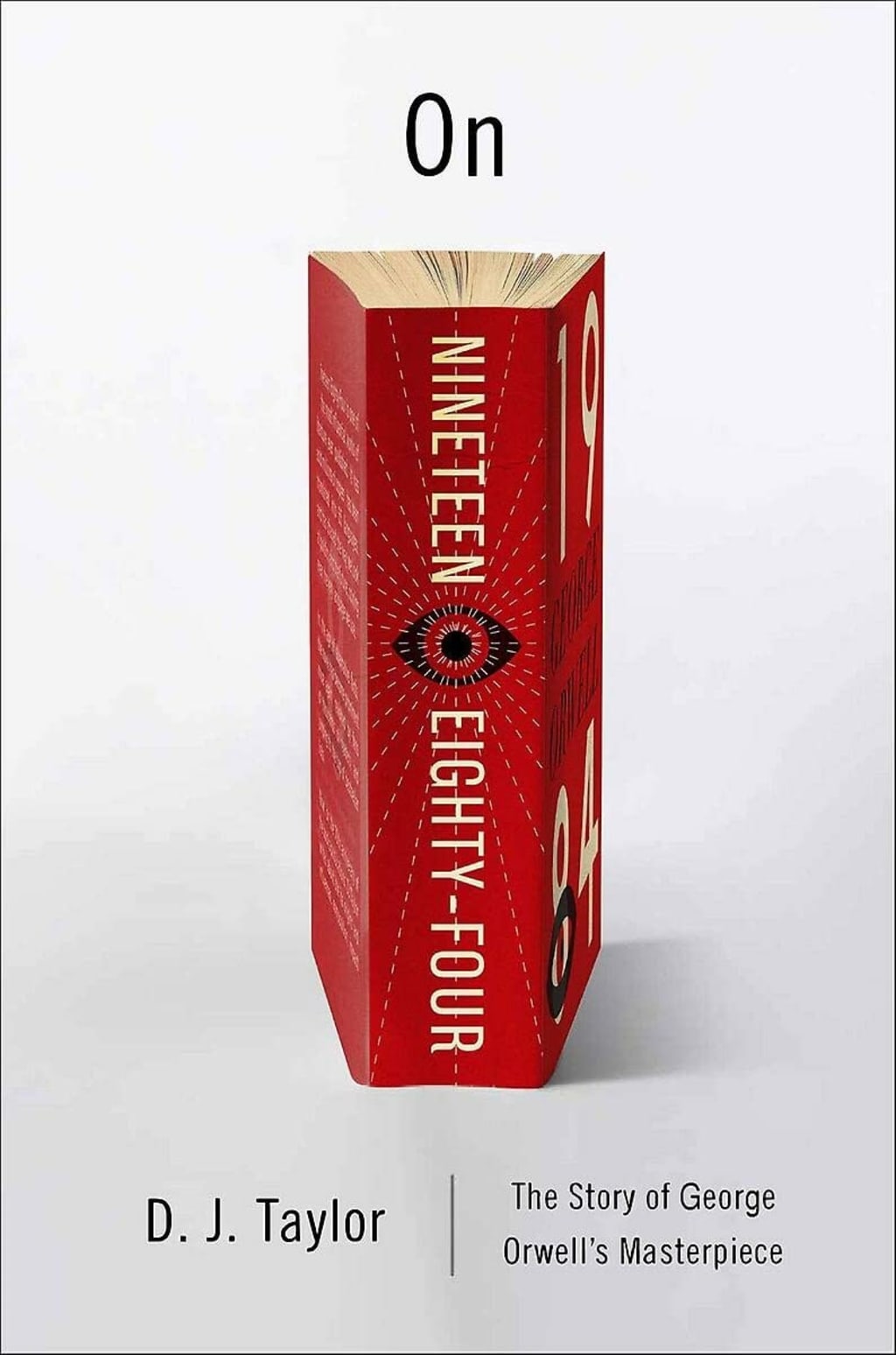
I was almost not going to review this book because I felt it was a bit short. But it is something that was interesting to read and so, why not? The story of 1984 by George Orwell does not stand alone in the world of dystopian literature, we know that. It was definitely a reflection of its time. However, what many do not know is that it didn't even stand alone in the author's life. It is an amalgamation, a fusion, a mirror of everything he had written up to that point. From Winston Smith being inspired by aspects of himself all the way to the way in which rats are used as a symbol of terror and disgust. There is something about how 1984 is a product of connected thinking that makes us see it in a whole new light through this text...
There's two things about this text we should dissect before getting into the review: there's a chronology and there are points. These two things involve: Orwell's own life and writing, the state of the post-war world at the time, and the way in which 1984 was constantly revered and reviewed by critics throughout time. These are all interwoven with each other and I'm not sure whether that makes it more difficult for someone to read. I do have to say though I don't think this was the wisest way of doing things due to the fact that the book is short and already split into three parts. These three parts though cover the before, during and after the writing of the novel. I will therefore, go through my three points because I feel it would make more sense this way.
The first point concerns Orwell's life and writing. We go through his distance from his father, his work in Burma, his observance of the Spanish Civil War and the fact he got shot. We also take a look at the fact that he often regarded himself as a failure due to the fact that unlike many of the peers he had at school, he was unable to secure work through connections as his family was not as rich as others. Throughout this, we read about how Orwell was constantly collecting experiences. He would use these in (my personal favourite book by him) Down and Out in Paris and London and of course, Homage to Catalonia.
The author states that Orwell would constantly recall the Spanish Civil War, noting how the revolution of the people could have inspired aspects of his magnum opus novel towards the end of his life. We observe Orwell finishing and trimming the ends of 1984 from his hospital bed and how he would eventually die without completing his next story. It is quite extraordinary for a man who believed himself to be a giant failure.
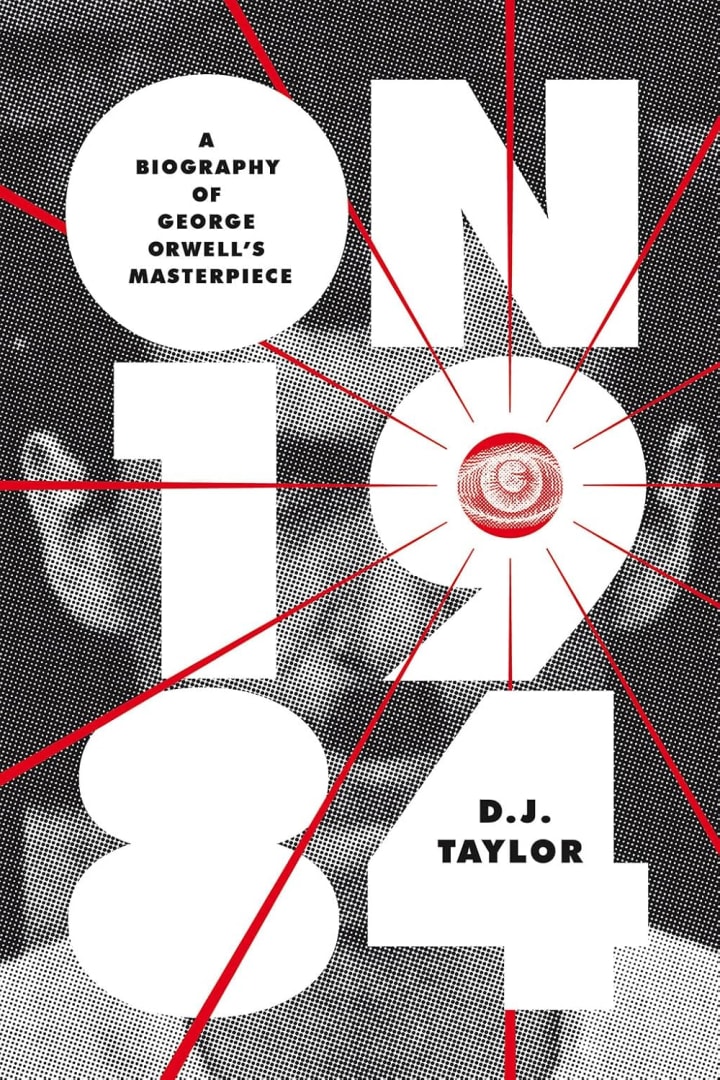
The second point covers the aspects of life in post-war Europe. We get drawn into the Second World War and the way in which it changed politics forever. We also see how figures like Stalin and Hitler were observed by Orwell in his writings. Famously, we read about Animal Farm and how it was banned in the Soviet Union. But, whilst Animal Farm had an obviousness in its allegory, 1984 was more inspired by the way in which history is written by the political power in office at the time. The author is very clearly making a point about how 1984 could apply to both the fascist and the the communist government as it was apparent at this time that both of them were the same thing.
We learn about the way in which 1984 was disseminated secretly in various places where Orwell's works were banned and the way in which it was inspired by a bunch of other books including We by Yevgeny Zamyatin and of course, Brave New World by Aldous Huxley. After the death of the author, we also see how it inspired people to discuss and comment on governing and politics, looking at quotations by Christopher Hitchens and filmmakers who wanted to shoot the movie to the book.
There's a huge bunch of stuff I have learned from this book and honestly, I loved the way it taught me about how 1984 was an accumilation of all of Orwell's life events and his writings. Another thing I enjoyed was the way he had a huge impact on culture - especially on the works of David Bowie. We as readers, are at the receiving end of learning that Orwell's biggest fear was rats (just like Winston Smith) and how his protagonists always end up having to contend with the very thing they were fighting against - no matter which piece of fiction they are featured in. It is quite telling that this is the way his final book ends as well. I don't think Orwell could have predicted how big his novel would become - it was evident at the end of his life that it was popular, but now it is one of the most popular books of all time.
About the Creator
Annie Kapur
I am:
🙋🏽♀️ Annie
📚 Avid Reader
📝 Reviewer and Commentator
🎓 Post-Grad Millennial (M.A)
***
I have:
📖 300K+ reads on Vocal
🫶🏼 Love for reading & research
🦋/X @AnnieWithBooks
***
🏡 UK
Keep reading
More stories from Annie Kapur and writers in Geeks and other communities.
Jacob’s Room by Virginia Woolf
Published in 1922, Jacob’s Room was Virginia Woolf’s third novel and marked a significant departure from her earlier, more traditional narratives. The book is considered Woolf’s first major experimental work, foreshadowing the stream-of-consciousness style that would define Mrs Dalloway (1925) and To the Lighthouse (1927). Jacob’s Room was published by the Hogarth Press, the small publishing house founded by Woolf and her husband, Leonard Woolf.
By Annie Kapur2 months ago in Geeks
A Knight of the Seven Kingdoms Series Review (Season 1)
As one of the biggest properties in fantasy, A Song of Ice and Fire remains immensely popular with audiences. After reaching far into the past with House of the Dragon, a second spin-off was on the cards. A Knight of the Seven Kingdoms serves up a bite-sized slice of action and drama, but it still claims a spot among the best small-screen titles.
By Robert Cain12 days ago in Geeks
My Top 10 Favorite Movie Dragons
#1 - Smaug (from The Hobbit: The Desolation of Smaug) He is fire. He is death. While I am not a huge fan of The Hobbit movie series (I think the movies are extremely slow-paced), I was in awe when I first saw Smaug on-screen. Benedict Cumberbatch did an exceptional job with the motion capture facial expressions and movements, and his voice acting for the wicked wyvern is chilling. Smaug is brought to life in a terrifying way that leaves a lasting impression.
By Madison "Maddy" Newtonabout 2 hours ago in Geeks
Hottest in the Office
Dear Rafi, You’re very distracting to work around. For the first second I saw you the other day, I thought you were some type of executive. It took a moment to realize no, you were just the new guy, dressed up for the job he wants. Be still, my heart.
By Gabriel Shamesabout 16 hours ago in Pride



Comments
There are no comments for this story
Be the first to respond and start the conversation.