
EU and Mercosur Seal Historic Trade Deal
A Long-Awaited Agreement That Could Reshape Global Trade

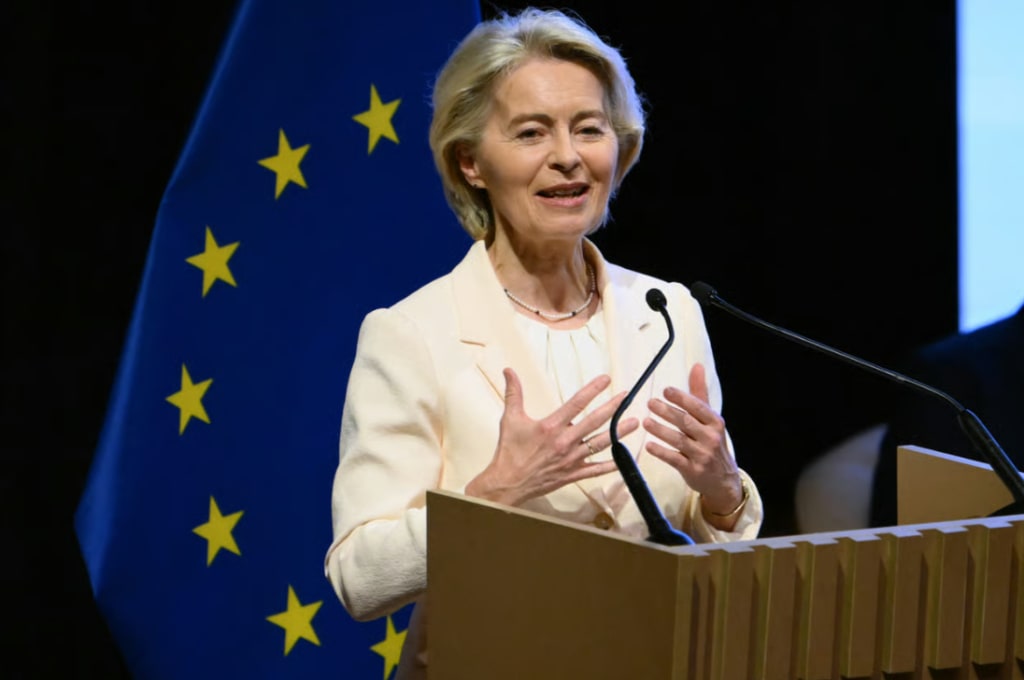
After more than two decades of negotiations, delays, political resistance, and diplomatic resets, the European Union and the Mercosur bloc have finally sealed a historic trade deal. The agreement, hailed by supporters as one of the most ambitious trade pacts ever negotiated, promises to reshape economic ties between Europe and South America while redefining how global trade aligns with climate goals, labor standards, and geopolitical realities.
The deal links the EU — one of the world’s largest single markets — with Mercosur, a South American trade bloc comprising Brazil, Argentina, Uruguay, and Paraguay, representing a combined population of over 780 million people. Together, they form a massive economic zone with the potential to influence global supply chains, agricultural markets, and industrial trade for decades to come.
What Is the EU–Mercosur Trade Deal?
At its core, the EU–Mercosur agreement is designed to reduce or eliminate tariffs on a wide range of goods and services, making trade between the two regions cheaper and more efficient.
For European exporters, the deal opens access to South American markets for products such as cars, machinery, pharmaceuticals, chemicals, and industrial equipment — many of which currently face high import duties. For Mercosur countries, the agreement improves access to the EU market for agricultural products, including beef, poultry, sugar, ethanol, soy, and coffee.
The European Commission estimates that the deal could save European companies billions of euros annually in tariffs, while boosting economic growth and strengthening strategic ties between the two regions.
Why This Deal Took So Long
Negotiations between the EU and Mercosur began in 1999, but progress was repeatedly stalled by disagreements over agriculture, environmental protection, labor rights, and political shifts on both sides of the Atlantic.
European farmers, particularly in France and Ireland, have long opposed the deal, fearing competition from cheaper South American agricultural imports. Environmental groups raised alarms about deforestation in the Amazon, arguing that increased beef and soy exports could accelerate forest loss.
On the Mercosur side, concerns centered on protecting domestic industries and ensuring fair access to European markets without being overwhelmed by EU industrial powerhouses.
Only in recent years — amid rising global trade tensions, supply chain disruptions, and geopolitical competition — did momentum return. Both blocs increasingly saw strategic value in diversifying partnerships beyond China and the United States.
Economic Impact: Who Stands to Gain?
Supporters argue that the agreement is a win-win for both regions.
For the European Union, the deal strengthens export opportunities for manufacturers and service providers while reinforcing Europe’s role as a global trade leader. European carmakers, engineering firms, and pharmaceutical companies are expected to benefit significantly.
For Mercosur countries, the agreement provides stable access to one of the world’s wealthiest consumer markets. Agricultural exporters, in particular, stand to gain from reduced tariffs and predictable trade rules. Supporters say the deal could stimulate investment, create jobs, and modernize industries across South America.
Economists also highlight that the agreement sends a strong signal in favor of rules-based international trade at a time when protectionism is rising globally.
Environmental and Climate Concerns
Despite the economic promise, the deal remains controversial — especially in Europe.
Environmental organizations warn that increased agricultural exports from South America could intensify deforestation, biodiversity loss, and carbon emissions, particularly in Brazil’s Amazon region. Critics argue that previous environmental commitments have not been adequately enforced and fear the trade deal could undermine the EU’s climate leadership.
In response, the European Commission has emphasized that the final agreement includes binding sustainability provisions, commitments to the Paris Climate Agreement, and mechanisms to address environmental violations. Supporters argue that engagement — rather than isolation — gives the EU more leverage to promote sustainable practices.
Still, skepticism remains strong among green groups and some EU lawmakers, who insist that enforcement will be key.
Political Resistance Inside the EU
Even after sealing the deal, ratification is far from guaranteed.
Several EU member states, including France, Austria, and Ireland, have expressed strong reservations. Farmers’ unions worry about unfair competition, while political leaders face domestic pressure to protect local agriculture and environmental standards.
Because the agreement requires approval from all EU member states and the European Parliament, even a small number of dissenting countries could delay or derail implementation.
This political reality means that while the deal has been sealed at the diplomatic level, its future still depends on intense political negotiation within Europe.
Why the Deal Matters Globally
Beyond trade volumes and tariff reductions, the EU–Mercosur agreement carries geopolitical significance.
It strengthens ties between Europe and South America at a time when global power dynamics are shifting. China has significantly expanded its economic footprint in Latin America, and the EU sees the deal as a way to remain relevant and competitive in the region.
The agreement also reinforces the EU’s ambition to shape global trade rules around sustainability, labor rights, and environmental standards, even if critics question how effective those safeguards will be in practice.
In a world marked by trade wars, sanctions, and fragmented supply chains, the deal stands as a rare example of multilateral cooperation.
What Happens Next?
The next phase involves legal review, translation into all EU languages, and the ratification process across member states. This could take several years, and political opposition may still reshape or delay parts of the agreement.
Meanwhile, businesses on both sides are already preparing for potential opportunities, assessing new markets, and planning long-term strategies around the expected changes.
Whether the deal ultimately fulfills its promise will depend not only on economic performance but also on enforcement, transparency, and political will.
A Turning Point for Trade Relations
The EU–Mercosur trade deal marks a historic turning point in relations between Europe and South America. It reflects a growing recognition that global challenges — from climate change to economic resilience — require cooperation across continents.
Yet the agreement also highlights the tensions between economic growth and environmental responsibility, free trade and local protection, ambition and accountability.
As the world watches the ratification process unfold, one thing is clear: this deal is more than a trade agreement. It is a test of how global partnerships can evolve in an increasingly complex and divided world.
About the Creator
Muhammad Hassan
Muhammad Hassan | Content writer with 2 years of experience crafting engaging articles on world news, current affairs, and trending topics. I simplify complex stories to keep readers informed and connected.
Keep reading
More stories from Muhammad Hassan and writers in The Swamp and other communities.
Pakistan’s Demand for Grid Electricity Is Falling as Solar Net-Metering Surges 4×
For decades, Pakistan’s electricity story has been one of shortages, rising bills, and unreliable supply. Load-shedding schedules became part of daily life, and households learned to plan their routines around power cuts. But quietly, without massive government campaigns or headline-grabbing megaprojects, a major shift is taking place. Pakistan’s demand for grid electricity is falling — and at the same time, solar net-metering is growing nearly four times faster than before. Rooftops across cities and towns are filling with solar panels, fundamentally changing how energy is produced and consumed in the country. This is not just an energy trend. It is a financial decision, a survival strategy, and for many, a path to independence from an increasingly expensive power system. What Is Net-Metering, and Why Does It Matter? Net-metering allows households and businesses to install solar panels and feed excess electricity back into the national grid. Instead of wasting unused power during the day, consumers earn credits that reduce their electricity bills at night or during low-sunlight hours. In simple terms, the grid becomes a two-way system rather than a one-directional supply line. For Pakistan, where sunshine is abundant and electricity costs are high, this model is proving extremely attractive. Over the past two years, net-metering connections have multiplied rapidly, turning private rooftops into a significant source of national power generation. Why Grid Electricity Demand Is Falling The decline in grid demand does not mean Pakistan suddenly needs less energy. Instead, it reflects a shift in where that energy is coming from. 1. Soaring Electricity Prices Electricity tariffs in Pakistan have risen sharply due to fuel costs, capacity payments, and circular debt. For many households, monthly bills became unbearable. Solar offered a one-time investment with long-term relief. Once installed, solar systems dramatically cut reliance on the grid, especially during daylight hours when consumption is highest. 2. Unreliable Supply Even today, power outages remain common in many areas. Solar systems — especially those paired with batteries or hybrid inverters — provide stability that the grid often cannot. For businesses, uninterrupted power means survival. For households, it means dignity and comfort. 3. Falling Solar Panel Prices Global oversupply and local market competition have pushed solar panel prices down. What once seemed like a luxury is now within reach of middle-income families. As costs dropped, adoption surged. A People-Led Solar Boom One of the most striking features of Pakistan’s solar growth is that it is not driven by large state projects. Instead, it is led by individuals, shop owners, factories, and housing societies. Entire neighborhoods now feature rows of panels shimmering in the sun. Schools, mosques, offices, and even small workshops are generating their own electricity. This bottom-up transition is changing Pakistan’s energy landscape faster than policy alone ever could. How Net-Metering Is Growing 4× Faster The four-fold rise in net-metering is fueled by a combination of urgency and opportunity. Households see solar as protection against future tariff hikes Businesses view it as a way to control operating costs Investors see solar installations as a safer long-term asset than many financial instruments Once early adopters demonstrated success, word spread quickly. Solar installers multiplied, financing options expanded, and social proof did the rest. In many areas, installing solar is no longer a bold decision — it’s the obvious one. The Impact on the Power Sector While solar users benefit, the falling demand for grid electricity presents serious challenges for Pakistan’s power sector. Revenue Pressure on Utilities Power distribution companies still must pay fixed costs for power plants and infrastructure, even when less electricity is sold. As more consumers reduce grid usage, the burden shifts to those who cannot afford solar. Rising Inequality Low-income households without rooftop access may face higher tariffs as utilities try to recover losses. This creates a difficult policy dilemma: how to encourage clean energy without punishing the most vulnerable. Grid Stability Concerns Solar energy is intermittent. Without storage upgrades and smarter grids, managing supply and demand becomes more complex. Environmental and Economic Benefits Despite the challenges, the benefits of this shift are undeniable. Reduced fuel imports save foreign exchange Lower emissions improve air quality Decentralised power increases national resilience Household savings stimulate local economies Solar energy is helping Pakistan move toward climate goals without waiting for international funding or massive reforms. What Comes Next? Pakistan is approaching a crossroads. The solar boom cannot be stopped — nor should it be. But it must be managed wisely. Possible future steps include: Smarter net-metering policies Investment in battery storage Time-of-use tariffs Grid modernisation The goal should not be to protect an outdated system, but to adapt it to a new reality where consumers are also producers. Conclusion: A Quiet Energy Revolution Pakistan’s falling grid electricity demand and explosive growth in solar net-metering signal a historic shift. Ordinary citizens, driven by necessity, are reshaping the nation’s energy future one rooftop at a time. This quiet revolution shows that when systems fail to serve people, people find alternatives. Solar power has become more than an energy source — it is a statement of independence. If supported with smart policies and fair reforms, Pakistan’s solar surge could become one of the most powerful success stories in the country’s modern history.
By Muhammad Hassan2 months ago in The Swamp
The Forsyth House Fire
Since 1851, Forsyth House has stood on the corner of Union Street and Gordon Street in the heart of Glasgow. Its iconic, or was... because on Sunday 8th of March, 2026, a fire broke out in a small, seemingly un-named shop in the building and tore all that history down. As I write, the rubble is still unsettled and the street is still blocked off. Central Station is quiet on the upper level, and around 30 small businesses have quite literally gone up in smoke.
By S. A. Crawford3 days ago in The Swamp
Tater Tots and Transgender Penguins:
I have my first cup of coffee for the day in hand, and my laptop on the coffee-table in front of me, opened to my favorite government tracking site: https://www.govtrack.us/. I’m settled into my favorite spot on the couch, with Kai my 2-year old Golden Retriever and trusty research partner next to me, just a couple of political junkies, who are cruising the internet, and looking for a political good-time. Ok... I'm the political-wonk... Kai's just there for the treats and belly-rubs... and then we find what we're looking for.
By Meko James 4 days ago in The Swamp



Comments
There are no comments for this story
Be the first to respond and start the conversation.