
Buc-ee’s Announces Plans to Build the World’s Largest Convenience Store
How a Texas Roadside Giant Is Redefining What a “Gas Stop” Means

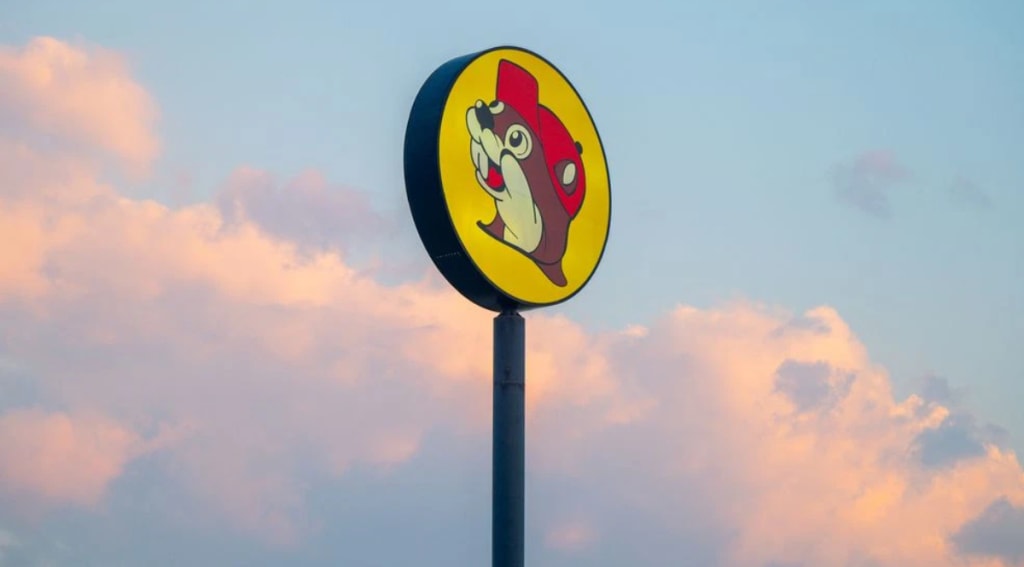
For millions of American road-trippers, Buc-ee’s is not just a convenience store — it’s a destination. Known for its massive locations, spotless bathrooms, cult-favorite snacks, and unmistakable beaver mascot, the Texas-based chain has turned a simple pit stop into an experience. Now, Buc-ee’s is taking that reputation to an entirely new level.
The company has officially announced plans to build what it says will be the world’s largest convenience store, once again pushing the boundaries of size, spectacle, and ambition in an industry that most people associate with quick stops and small footprints.
The announcement has sparked excitement, disbelief, and curiosity, raising a bigger question: how did a gas station chain become one of America’s boldest retail success stories?
What Buc-ee’s Is Planning
According to company statements, the new Buc-ee’s location will surpass all existing stores in sheer size, potentially covering more than 75,000 square feet — larger than many supermarkets and even some shopping malls.
Like other Buc-ee’s locations, the store is expected to include:
Dozens (or even hundreds) of fueling stations
An enormous retail floor packed with food, merchandise, and regional products
Freshly prepared meals made on-site
Buc-ee’s famous ultra-clean restrooms
Branded apparel, home goods, and souvenirs
While Buc-ee’s has not yet revealed every design detail, the company has made it clear: this store is meant to be a landmark, not just a convenience stop.
How Buc-ee’s Became a Cultural Phenomenon
Founded in Texas in 1982, Buc-ee’s quietly built a loyal following by doing something radical in the convenience store world: raising standards.
Instead of cramped aisles and questionable restrooms, Buc-ee’s focused on:
Cleanliness that rivals hotels
Friendly, well-paid staff
Massive selections of food and merchandise
A fun, family-friendly atmosphere
The chain became especially famous for items like Beaver Nuggets, brisket sandwiches, fresh fudge, and jerky bars stretching longer than entire gas stations elsewhere.
Over time, Buc-ee’s locations turned into roadside attractions. People plan trips around them. Families stop not because they have to, but because they want to.
Why Size Is Part of the Strategy
Building the world’s largest convenience store is not just a publicity stunt — it’s a calculated business move.
Large stores allow Buc-ee’s to:
Serve huge volumes of travelers efficiently
Offer unmatched product variety
Keep customers inside longer
Create a memorable brand experience
In an era where many retailers are shrinking footprints or moving online, Buc-ee’s is doubling down on physical presence. The company understands that convenience stores don’t have to be forgettable. They can be immersive, entertaining, and profitable at scale.
Bigger also means busier — and Buc-ee’s thrives on traffic.
The Economic Impact on Local Communities
Every new Buc-ee’s location brings significant economic ripple effects.
The company is known for:
Creating hundreds of local jobs
Paying wages above typical convenience store standards
Attracting tourism traffic to surrounding areas
Local businesses often benefit from increased foot traffic, while municipalities gain tax revenue. However, critics argue that such massive stores can also put pressure on smaller, independent gas stations and diners nearby.
Still, many towns actively compete to attract Buc-ee’s, viewing it as a long-term economic anchor.
A Changing Definition of Convenience Retail
Buc-ee’s expansion reflects a broader shift in how Americans travel and shop.
Today’s drivers want more than fuel. They want:
Clean restrooms
Quality food
Safe, welcoming environments
A reason to stop rather than rush through
Buc-ee’s meets those expectations — and then exceeds them. By building the world’s largest convenience store, the company is effectively saying that convenience retail can be experiential, not transactional.
This approach stands in sharp contrast to traditional gas station models focused solely on speed and turnover.
Not Without Criticism
Despite its popularity, Buc-ee’s growth has not been free from controversy.
Some critics raise concerns about:
Environmental impact from massive developments
Traffic congestion around new locations
Pressure on small, local competitors
Others question whether such enormous stores are sustainable in the long term, especially as electric vehicles reduce the need for frequent fuel stops.
Buc-ee’s leadership, however, appears confident that its model is adaptable — emphasizing food, retail, and hospitality rather than relying solely on gasoline sales.
What This Means for the Future of Road Travel
As road trips evolve, so do the places that support them.
The planned mega-store signals that Buc-ee’s sees itself not just as a convenience brand, but as a roadside lifestyle destination. It’s betting that people will continue to crave physical experiences — especially ones that feel familiar, fun, and uniquely American.
If successful, the world’s largest convenience store could further cement Buc-ee’s status as a category-defining brand, forcing competitors to rethink what a gas stop should look like in the modern age.
More Than a Store — A Statement
Buc-ee’s announcement isn’t just about square footage. It’s about confidence.
At a time when many retailers are cautious, Buc-ee’s is expanding boldly. At a time when digital dominates, it’s investing in real-world experience. And at a time when convenience stores are expected to blend into the background, Buc-ee’s is building something impossible to ignore.
Whether you see it as excessive or ingenious, one thing is certain: the world’s largest convenience store won’t just sell snacks and fuel — it will sell the idea that even the most ordinary stops can be extraordinary.
About the Creator
Muhammad Hassan
Muhammad Hassan | Content writer with 2 years of experience crafting engaging articles on world news, current affairs, and trending topics. I simplify complex stories to keep readers informed and connected.
Keep reading
More stories from Muhammad Hassan and writers in The Swamp and other communities.
These Prophets of Economic Doom Are Worried About Another Collapse
Every economic cycle has its optimists — and its doomsayers. But when warnings about another possible financial collapse come not from fringe voices, but from respected economists, veteran investors, and former policymakers, markets tend to listen more closely. In recent months, a familiar group of economic pessimists — often labeled “prophets of doom” — have resurfaced with renewed urgency. Their message is unsettlingly consistent: the global economy may be heading toward another major shock, one that could rival or even surpass past crises. While critics accuse them of crying wolf, supporters argue that many of these figures have been right before — sometimes painfully so. So why are these economic skeptics sounding the alarm again, and what exactly are they worried about? Who Are the ‘Prophets of Economic Doom’? The term “prophets of economic doom” is often used dismissively, but it typically refers to economists, hedge fund managers, and analysts known for consistently warning about systemic risks. These include figures who foresaw: The 2008 global financial crisis The dot-com bubble burst Sovereign debt crises in Europe Inflation surges following prolonged stimulus Their credibility doesn’t come from optimism, but from an ability to identify imbalances and excesses before they unravel. Today, many of these same voices are once again warning that the foundations of the global economy look disturbingly fragile. Debt: The Biggest Red Flag One of the loudest concerns centers on record-breaking global debt. Governments, corporations, and households have borrowed aggressively over the past decade, especially after the pandemic. Ultra-low interest rates made debt cheap, encouraging spending and investment — but also creating massive vulnerabilities. Now, as interest rates remain higher for longer, servicing that debt is becoming increasingly expensive. Some economists warn that: Governments may face fiscal stress Companies could struggle to refinance loans Households may reduce spending sharply The fear is not just high debt, but how interconnected it is. A shock in one sector or country could ripple across financial systems faster than regulators can respond. Asset Bubbles and Overvalued Markets Another major warning sign is what skeptics see as dangerously inflated asset prices. Stock markets, housing, and even alternative assets have surged in recent years, often disconnected from underlying economic fundamentals. Critics argue that markets have been propped up by: Central bank liquidity Speculative trading Excessive optimism around technology and AI Some analysts point to similarities with previous bubbles, where prices kept rising until confidence suddenly collapsed. When valuations are stretched, even a small trigger — geopolitical tension, a banking failure, or unexpected policy shift — can spark a rapid sell-off. The Interest Rate Dilemma Central banks now find themselves trapped between two bad options. On one hand, cutting interest rates too quickly could reignite inflation. On the other, keeping rates high risks slowing growth, weakening banks, and triggering defaults. Economic pessimists argue that policymakers have already delayed tough decisions for too long. By flooding economies with stimulus during crises, they may have postponed — rather than prevented — a deeper reckoning. The result is what some call a “policy exhaustion” problem: central banks have fewer effective tools left if another major downturn hits. Geopolitics and Global Fragmentation Unlike past financial crises, today’s risks are amplified by geopolitical instability. Trade tensions, regional conflicts, and political polarization are disrupting supply chains and undermining global cooperation. Economic doom-watchers warn that the world is becoming: More fragmented Less predictable More vulnerable to shocks Globalization once acted as a stabilizing force. Now, economic nationalism and strategic competition are making coordination harder — precisely when it is needed most. Banking System Stress Beneath the Surface While headline banking crises have been avoided so far, skeptics argue that stress remains hidden within financial institutions. Rapid interest rate hikes have reduced the value of long-term bonds held by banks. At the same time, tighter credit conditions are increasing default risks among borrowers. Some analysts fear that problems are being masked by accounting rules and emergency support measures. If confidence falters, they warn, the system could face sudden pressure — just as it has in past crises. Why Many People Still Dismiss These Warnings Despite these concerns, many investors and policymakers remain confident. They point to: Resilient job markets Continued consumer spending Strong corporate profits Critics of the “doom prophets” argue that pessimists underestimate innovation, adaptability, and the ability of governments to intervene when needed. Yet even optimists admit that the margin for error is shrinking. The debate is no longer about whether risks exist — but about how severe the consequences could be if something goes wrong. Are These Warnings Just Fear — or a Necessary Wake-Up Call? History suggests that economic collapses rarely happen because of one single event. Instead, they occur when multiple vulnerabilities collide — excessive debt, policy mistakes, asset bubbles, and loss of confidence. The prophets of economic doom are not predicting an exact date or trigger. Rather, they argue that the system has become increasingly unstable, and that complacency itself may be the greatest risk. Even if a full-scale collapse never materializes, their warnings serve a purpose: forcing policymakers, investors, and ordinary citizens to confront uncomfortable realities. What This Means for the Future Whether or not another economic collapse occurs soon, the concerns raised by these pessimists highlight a deeper issue: the global economy is operating with less room for mistakes than ever before. For governments, this means careful policy choices. For investors, it calls for realism rather than blind optimism. And for everyday people, it underscores the importance of financial resilience in an uncertain world. The prophets of economic doom may not be right about everything — but history shows that ignoring systemic warnings entirely can be far more dangerous than listening too closely.
By Muhammad Hassanabout 6 hours ago in The Swamp
Australian Arts Festival Apologizes for Disinviting Palestinian Writer Who Lauded Oct. 7
Hey readers, buckle up — Australia’s arts scene has just been through one of its most dramatic shake-ups in years. If you’ve been following the news, you might have heard about the Adelaide Festival and its controversial decision to disinvite Palestinian Australian writer Randa Abdel‑Fattah. Let’s unpack what happened, why it mattered, and what it tells us about art, politics, and free speech today.
By Aqib Hussaina day ago in The Swamp


Comments
There are no comments for this story
Be the first to respond and start the conversation.