
These Prophets of Economic Doom Are Worried About Another Collapse
Why Veteran Economists and Investors Say the Global Economy Is on Thin Ice

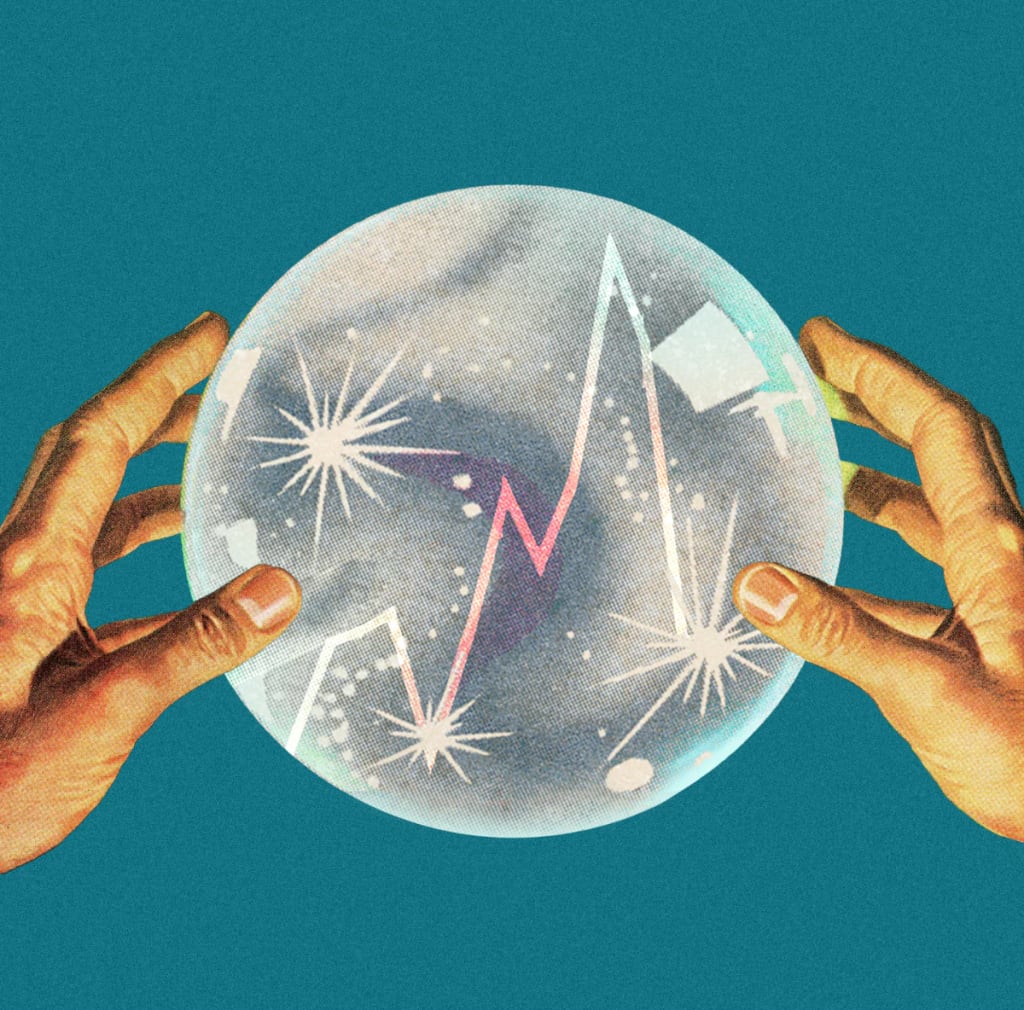
Every economic cycle has its optimists — and its doomsayers. But when warnings about another possible financial collapse come not from fringe voices, but from respected economists, veteran investors, and former policymakers, markets tend to listen more closely.
In recent months, a familiar group of economic pessimists — often labeled “prophets of doom” — have resurfaced with renewed urgency. Their message is unsettlingly consistent: the global economy may be heading toward another major shock, one that could rival or even surpass past crises. While critics accuse them of crying wolf, supporters argue that many of these figures have been right before — sometimes painfully so.
So why are these economic skeptics sounding the alarm again, and what exactly are they worried about?
Who Are the ‘Prophets of Economic Doom’?
The term “prophets of economic doom” is often used dismissively, but it typically refers to economists, hedge fund managers, and analysts known for consistently warning about systemic risks.
These include figures who foresaw:
The 2008 global financial crisis
The dot-com bubble burst
Sovereign debt crises in Europe
Inflation surges following prolonged stimulus
Their credibility doesn’t come from optimism, but from an ability to identify imbalances and excesses before they unravel. Today, many of these same voices are once again warning that the foundations of the global economy look disturbingly fragile.
Debt: The Biggest Red Flag
One of the loudest concerns centers on record-breaking global debt.
Governments, corporations, and households have borrowed aggressively over the past decade, especially after the pandemic. Ultra-low interest rates made debt cheap, encouraging spending and investment — but also creating massive vulnerabilities.
Now, as interest rates remain higher for longer, servicing that debt is becoming increasingly expensive. Some economists warn that:
Governments may face fiscal stress
Companies could struggle to refinance loans
Households may reduce spending sharply
The fear is not just high debt, but how interconnected it is. A shock in one sector or country could ripple across financial systems faster than regulators can respond.
Asset Bubbles and Overvalued Markets
Another major warning sign is what skeptics see as dangerously inflated asset prices.
Stock markets, housing, and even alternative assets have surged in recent years, often disconnected from underlying economic fundamentals. Critics argue that markets have been propped up by:
Central bank liquidity
Speculative trading
Excessive optimism around technology and AI
Some analysts point to similarities with previous bubbles, where prices kept rising until confidence suddenly collapsed. When valuations are stretched, even a small trigger — geopolitical tension, a banking failure, or unexpected policy shift — can spark a rapid sell-off.
The Interest Rate Dilemma
Central banks now find themselves trapped between two bad options.
On one hand, cutting interest rates too quickly could reignite inflation. On the other, keeping rates high risks slowing growth, weakening banks, and triggering defaults.
Economic pessimists argue that policymakers have already delayed tough decisions for too long. By flooding economies with stimulus during crises, they may have postponed — rather than prevented — a deeper reckoning.
The result is what some call a “policy exhaustion” problem: central banks have fewer effective tools left if another major downturn hits.
Geopolitics and Global Fragmentation
Unlike past financial crises, today’s risks are amplified by geopolitical instability.
Trade tensions, regional conflicts, and political polarization are disrupting supply chains and undermining global cooperation. Economic doom-watchers warn that the world is becoming:
More fragmented
Less predictable
More vulnerable to shocks
Globalization once acted as a stabilizing force. Now, economic nationalism and strategic competition are making coordination harder — precisely when it is needed most.
Banking System Stress Beneath the Surface
While headline banking crises have been avoided so far, skeptics argue that stress remains hidden within financial institutions.
Rapid interest rate hikes have reduced the value of long-term bonds held by banks. At the same time, tighter credit conditions are increasing default risks among borrowers.
Some analysts fear that problems are being masked by accounting rules and emergency support measures. If confidence falters, they warn, the system could face sudden pressure — just as it has in past crises.
Why Many People Still Dismiss These Warnings
Despite these concerns, many investors and policymakers remain confident. They point to:
Resilient job markets
Continued consumer spending
Strong corporate profits
Critics of the “doom prophets” argue that pessimists underestimate innovation, adaptability, and the ability of governments to intervene when needed.
Yet even optimists admit that the margin for error is shrinking. The debate is no longer about whether risks exist — but about how severe the consequences could be if something goes wrong.
Are These Warnings Just Fear — or a Necessary Wake-Up Call?
History suggests that economic collapses rarely happen because of one single event. Instead, they occur when multiple vulnerabilities collide — excessive debt, policy mistakes, asset bubbles, and loss of confidence.
The prophets of economic doom are not predicting an exact date or trigger. Rather, they argue that the system has become increasingly unstable, and that complacency itself may be the greatest risk.
Even if a full-scale collapse never materializes, their warnings serve a purpose: forcing policymakers, investors, and ordinary citizens to confront uncomfortable realities.
What This Means for the Future
Whether or not another economic collapse occurs soon, the concerns raised by these pessimists highlight a deeper issue: the global economy is operating with less room for mistakes than ever before.
For governments, this means careful policy choices. For investors, it calls for realism rather than blind optimism. And for everyday people, it underscores the importance of financial resilience in an uncertain world.
The prophets of economic doom may not be right about everything — but history shows that ignoring systemic warnings entirely can be far more dangerous than listening too closely.
About the Creator
Muhammad Hassan
Muhammad Hassan | Content writer with 2 years of experience crafting engaging articles on world news, current affairs, and trending topics. I simplify complex stories to keep readers informed and connected.
Keep reading
More stories from Muhammad Hassan and writers in The Swamp and other communities.
EU and Mercosur Seal Historic Trade Deal
After more than two decades of negotiations, delays, political resistance, and diplomatic resets, the European Union and the Mercosur bloc have finally sealed a historic trade deal. The agreement, hailed by supporters as one of the most ambitious trade pacts ever negotiated, promises to reshape economic ties between Europe and South America while redefining how global trade aligns with climate goals, labor standards, and geopolitical realities. The deal links the EU — one of the world’s largest single markets — with Mercosur, a South American trade bloc comprising Brazil, Argentina, Uruguay, and Paraguay, representing a combined population of over 780 million people. Together, they form a massive economic zone with the potential to influence global supply chains, agricultural markets, and industrial trade for decades to come. What Is the EU–Mercosur Trade Deal? At its core, the EU–Mercosur agreement is designed to reduce or eliminate tariffs on a wide range of goods and services, making trade between the two regions cheaper and more efficient. For European exporters, the deal opens access to South American markets for products such as cars, machinery, pharmaceuticals, chemicals, and industrial equipment — many of which currently face high import duties. For Mercosur countries, the agreement improves access to the EU market for agricultural products, including beef, poultry, sugar, ethanol, soy, and coffee. The European Commission estimates that the deal could save European companies billions of euros annually in tariffs, while boosting economic growth and strengthening strategic ties between the two regions. Why This Deal Took So Long Negotiations between the EU and Mercosur began in 1999, but progress was repeatedly stalled by disagreements over agriculture, environmental protection, labor rights, and political shifts on both sides of the Atlantic. European farmers, particularly in France and Ireland, have long opposed the deal, fearing competition from cheaper South American agricultural imports. Environmental groups raised alarms about deforestation in the Amazon, arguing that increased beef and soy exports could accelerate forest loss. On the Mercosur side, concerns centered on protecting domestic industries and ensuring fair access to European markets without being overwhelmed by EU industrial powerhouses. Only in recent years — amid rising global trade tensions, supply chain disruptions, and geopolitical competition — did momentum return. Both blocs increasingly saw strategic value in diversifying partnerships beyond China and the United States. Economic Impact: Who Stands to Gain? Supporters argue that the agreement is a win-win for both regions. For the European Union, the deal strengthens export opportunities for manufacturers and service providers while reinforcing Europe’s role as a global trade leader. European carmakers, engineering firms, and pharmaceutical companies are expected to benefit significantly. For Mercosur countries, the agreement provides stable access to one of the world’s wealthiest consumer markets. Agricultural exporters, in particular, stand to gain from reduced tariffs and predictable trade rules. Supporters say the deal could stimulate investment, create jobs, and modernize industries across South America. Economists also highlight that the agreement sends a strong signal in favor of rules-based international trade at a time when protectionism is rising globally. Environmental and Climate Concerns Despite the economic promise, the deal remains controversial — especially in Europe. Environmental organizations warn that increased agricultural exports from South America could intensify deforestation, biodiversity loss, and carbon emissions, particularly in Brazil’s Amazon region. Critics argue that previous environmental commitments have not been adequately enforced and fear the trade deal could undermine the EU’s climate leadership. In response, the European Commission has emphasized that the final agreement includes binding sustainability provisions, commitments to the Paris Climate Agreement, and mechanisms to address environmental violations. Supporters argue that engagement — rather than isolation — gives the EU more leverage to promote sustainable practices. Still, skepticism remains strong among green groups and some EU lawmakers, who insist that enforcement will be key. Political Resistance Inside the EU Even after sealing the deal, ratification is far from guaranteed. Several EU member states, including France, Austria, and Ireland, have expressed strong reservations. Farmers’ unions worry about unfair competition, while political leaders face domestic pressure to protect local agriculture and environmental standards. Because the agreement requires approval from all EU member states and the European Parliament, even a small number of dissenting countries could delay or derail implementation. This political reality means that while the deal has been sealed at the diplomatic level, its future still depends on intense political negotiation within Europe. Why the Deal Matters Globally Beyond trade volumes and tariff reductions, the EU–Mercosur agreement carries geopolitical significance. It strengthens ties between Europe and South America at a time when global power dynamics are shifting. China has significantly expanded its economic footprint in Latin America, and the EU sees the deal as a way to remain relevant and competitive in the region. The agreement also reinforces the EU’s ambition to shape global trade rules around sustainability, labor rights, and environmental standards, even if critics question how effective those safeguards will be in practice. In a world marked by trade wars, sanctions, and fragmented supply chains, the deal stands as a rare example of multilateral cooperation. What Happens Next? The next phase involves legal review, translation into all EU languages, and the ratification process across member states. This could take several years, and political opposition may still reshape or delay parts of the agreement. Meanwhile, businesses on both sides are already preparing for potential opportunities, assessing new markets, and planning long-term strategies around the expected changes. Whether the deal ultimately fulfills its promise will depend not only on economic performance but also on enforcement, transparency, and political will. A Turning Point for Trade Relations The EU–Mercosur trade deal marks a historic turning point in relations between Europe and South America. It reflects a growing recognition that global challenges — from climate change to economic resilience — require cooperation across continents. Yet the agreement also highlights the tensions between economic growth and environmental responsibility, free trade and local protection, ambition and accountability. As the world watches the ratification process unfold, one thing is clear: this deal is more than a trade agreement. It is a test of how global partnerships can evolve in an increasingly complex and divided world.
By Muhammad Hassanabout 10 hours ago in The Swamp
Historic Meeting in Caracas: CIA Director and Venezuela’s New Leader Discuss Future Cooperation
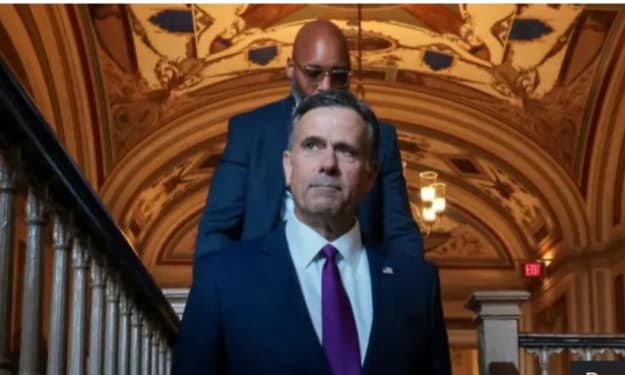
In a rare and highly significant diplomatic engagement, CIA Director John Ratcliffe traveled to Caracas, Venezuela, for a two-hour meeting with the country’s interim president, Delcy Rodríguez. The encounter — held on Thursday and confirmed by multiple international media outlets — marks the highest-level dialogue between the United States and Venezuelan leadership since the recent political upheaval in the country. �
By Ayesha Lashariabout 5 hours ago in The Swamp
Miss Persephone's Manual to a Seemingly Ordinary Life
Miss Persephone was found at the dining table, her blue eyes swollen, her tears arriving and retreating like the tides of the ocean. Earlier that day, her family had visited her in the retirement home where she had lived for eight years. It was her eightieth birthday.
By Imola Tóth3 days ago in Fiction


Comments
There are no comments for this story
Be the first to respond and start the conversation.