Latest Stories
Most recently published stories on Vocal.
Global Books Market Size & Forecast 2025–2033: A Timeless Industry Reinventing Itself for the Digital Age. AI-Generated.
Introduction: The Enduring Power of Books in a Rapidly Changing World Books have shaped civilizations, preserved cultures, and passed knowledge from one generation to the next for centuries. Even in an age dominated by short-form videos, social media, and artificial intelligence, the written word continues to hold its ground. The global books market is no longer just about ink and paper—it is a diverse ecosystem that spans printed books, e-books, audiobooks, academic texts, and digital platforms, serving readers of every age and background.
By Sakshi Sharma10 days ago in Journal
Learning as Love and the Unlearning of Human Ways
To say that learning is a form of love is to make a profound claim about the nature of the soul, the nature of truth, and the nature of the Divine. It suggests that learning is not merely the accumulation of information or the refinement of intellect, but an act of devotion, an opening of the heart, a willingness to be changed. It implies that the soul learns not to become more knowledgeable in the worldly sense, but to become more aligned with the Divine. And it suggests that the greatest obstacle to this alignment is not ignorance but the deeply ingrained habits, assumptions, and defenses that constitute what we call “human ways.” To embrace divinity, we must unlearn these ways. We must release the patterns that keep us bound to fear, separation, and illusion. We must allow ourselves to be taught by something greater than the mind. Learning becomes love when it becomes surrender.
By Julie O'Hara - Author, Poet and Spiritual Warrior10 days ago in Humans
Huston, Australia has 99 problems.. Content Warning.
Huston! We have a problem. It's a big problem. It's not one I can sit still observing anymore. Honestly, I have adrenaline writing this as I feel I am going to be firstly, trying hard not to upset any one person. I am here attempting to do the unthinkable. I am not a hero. I am just a relentless force that is attempting to bring down too many walls so people can start seeing the argument clearly, of course after the dust has settled. I am not here to silence any group. I am here to bring a discussion and unite groups back together. I have always been a fence sitter, up until lately I can see the fence but I am no longer sitting on it.
By Louise Spathonis10 days ago in Humans
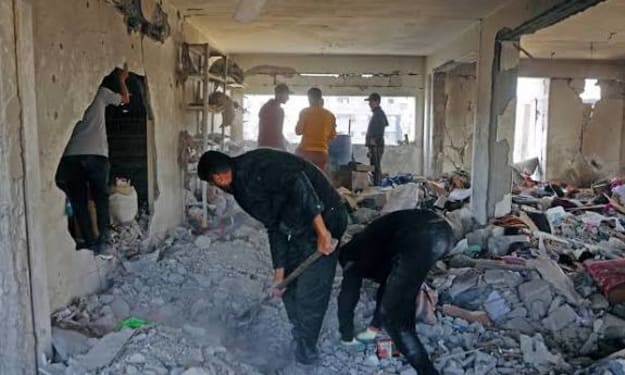
Israeli Airstrikes Kill at Least 30 in Gaza as Tensions Escalate Despite Ceasefire Hopes. AI-Generated.
Children and police officers among the dead as renewed violence shakes the fragile calm in the region Fresh Israeli airstrikes on Gaza have killed at least 30 people, including children and police officers, according to Palestinian health officials. The attacks come at a time when international mediators were pushing for calm, raising fears that the conflict may be entering another dangerous phase. Residents of Gaza City reported hearing multiple explosions overnight as fighter jets struck several neighborhoods. Buildings were damaged, roads were blocked with debris, and hospitals quickly became overwhelmed with injured civilians. Emergency crews worked through the night to pull survivors from the rubble. The Israeli military stated that the strikes were aimed at what it described as “militant infrastructure” and locations used by armed groups. Officials said the operations were launched in response to rocket fire and other security threats originating from Gaza. However, Palestinian authorities insist that many of the casualties were civilians who had no connection to militant activities. Civilians Caught in the Middle Among the victims were children and local police officers who were reportedly on duty when the strikes occurred. Families rushed their wounded relatives to nearby hospitals, where doctors struggled with limited medical supplies and overcrowded wards. A doctor at Al-Shifa Hospital said the situation was critical. “We are seeing severe injuries, including burns and shrapnel wounds. Many of the victims are women and children. We are running out of space and equipment,” he said. Eyewitnesses described scenes of panic as residents fled their homes in fear of further bombardment. Entire neighborhoods were plunged into darkness after electricity lines were damaged during the attacks. International Reaction The renewed violence has drawn swift reactions from the international community. Several countries called for restraint and urged both sides to prevent further civilian casualties. The United Nations issued a statement expressing deep concern over the rising death toll and the impact on civilians. A spokesperson said, “The loss of innocent life is unacceptable. We urge all parties to respect international humanitarian law and avoid actions that could worsen the crisis.” Human rights organizations also criticized the escalation, warning that Gaza’s already fragile humanitarian situation could deteriorate further if the fighting continues. Fragile Ceasefire in Danger Just days earlier, there were signs of potential calm after indirect talks aimed at reducing hostilities. However, these latest strikes have cast doubt on the future of any ceasefire arrangement. Analysts say both sides appear trapped in a cycle of retaliation. Each new attack increases pressure for a stronger response, making de-escalation more difficult. “The region is walking on a razor’s edge,” said a Middle East political analyst. “Without strong international mediation, this could easily spiral into a wider confrontation.” Life Under Constant Threat For Gaza’s residents, the situation feels tragically familiar. Years of conflict have left much of the population traumatized and struggling to rebuild their lives. Schools have been closed in several areas due to security concerns, and many families are once again taking shelter in safer zones or with relatives. Parents fear sending their children outside, unsure when the next explosion may occur. A local resident shared his fear: “We don’t know when it will end. Every time we think there is hope, the bombs return. Our children are growing up in fear.” Israel’s Position Israeli officials maintain that their military operations are necessary for national security. They claim that armed groups in Gaza continue to plan attacks and launch rockets toward Israeli territory, forcing them to act in self-defense. In a brief statement, the Israeli military said it would continue operations as long as threats remain. “We are targeting terror networks that pose a danger to Israeli civilians,” the statement read. However, critics argue that military action in densely populated areas inevitably leads to civilian casualties and worsens humanitarian suffering. Calls for Immediate Action Aid agencies have urged for humanitarian corridors to allow medical supplies and emergency aid to reach affected areas. They warn that Gaza’s healthcare system is already stretched beyond capacity. Several Middle Eastern and European nations have called for emergency talks to prevent further bloodshed. Diplomatic efforts are reportedly underway to restore calm and revive negotiations. A Region at a Crossroads The latest violence highlights the deep-rooted tensions that continue to plague the region. Despite repeated ceasefire attempts over the years, lasting peace remains elusive. As night fell again over Gaza, the sound of drones and aircraft filled the sky, reminding residents that the danger was far from over. With at least 30 lives already lost, the human cost of renewed conflict is painfully clear. Unless decisive diplomatic steps are taken, observers fear that more civilians will pay the price for a conflict that shows no sign of ending soon.
By Fiaz Ahmed 10 days ago in The Swamp
Global Sour Cream Powder Market Size & Forecast 2026–2034. AI-Generated.
Introduction: A Small Ingredient with Big Global Impact The global food industry is undergoing a major transformation, driven by changing consumer lifestyles, urbanization, and the rapid expansion of processed and convenience foods. In this evolving environment, shelf-stable ingredients are gaining strategic importance. One such ingredient—often overlooked but increasingly essential—is sour cream powder.
By Sakshi Sharma10 days ago in Trader
Tom Morello: The Revolutionary Guitar Legend Shaping Modern Rock Music
Who Is Tom Morello? Born Thomas Baptist Morello on May 30, 1964, in Harlem, New York, Tom Morello grew up in Illinois before moving to Los Angeles to pursue music. He studied political science at Harvard University, a background that would later deeply influence his songwriting and activism.
By youssef mohammed10 days ago in Art
The Veil of Nothingness: Reality, Meaning, and the Hidden Architecture of Existence
The phrase “veil of nothingness” carries a strange and paradoxical power. It evokes both emptiness and concealment, both the absence of substance and the presence of a barrier. It suggests that something essential is hidden not behind a wall or a curtain, but behind a kind of metaphysical emptiness—a void that obscures the deeper nature of reality. Throughout history, mystics, philosophers, theologians, and psychologists have wrestled with this idea in different forms. Whether described as maya in Hindu philosophy, sunyata in Buddhism, the cloud of unknowing in Christian mysticism, or das Nichts in existential philosophy, the veil of nothingness has served as a metaphor for the limits of human perception and the mysterious ground from which meaning arises.
By Julie O'Hara - Author, Poet and Spiritual Warrior10 days ago in Humans
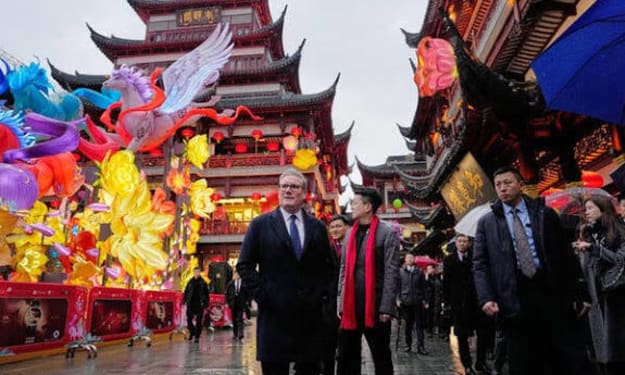
U.S. Allies Are Drawing Closer to China, but on Beijing’s Terms. AI-Generated.
In recent years, a noticeable shift has emerged in global diplomacy: several traditional allies of the United States are strengthening their economic and political ties with China. While these nations continue to value their long-standing partnerships with Washington, growing economic dependence on Beijing and changing geopolitical realities are pushing them closer to China’s sphere of influence. However, this growing relationship is not happening on equal footing. Instead, many of these partnerships are developing largely on Beijing’s terms, raising concerns about sovereignty, strategic autonomy, and the future balance of power. China’s rapid economic rise has transformed it into the world’s second-largest economy and a central player in global trade. For many U.S. allies, especially in Asia, Africa, and parts of Europe, China represents an essential market for exports and a critical source of investment. Through initiatives such as the Belt and Road Initiative (BRI), Beijing has financed major infrastructure projects including ports, highways, railways, and power plants. These projects have provided much-needed development for emerging economies, but they have also increased China’s leverage over partner countries. Economic necessity is one of the main reasons U.S. allies are drawing closer to China. Nations facing slow growth, debt challenges, or limited access to Western financing often turn to Beijing for support. Chinese loans are typically offered with fewer political conditions compared to those from Western institutions like the International Monetary Fund or World Bank. This makes China an attractive alternative, especially for governments seeking quick solutions to economic problems. However, closer ties often come with expectations. Beijing increasingly demands political loyalty or diplomatic support in return for economic cooperation. Countries that benefit from Chinese investment may feel pressure to align with China on sensitive issues such as Taiwan, Hong Kong, or human rights. In some cases, governments have avoided criticizing Beijing in international forums to protect their economic relationships. This trend has raised alarms in Washington, where officials worry that China is reshaping global norms and weakening U.S. influence. In Europe, several U.S. allies have expanded trade and technology partnerships with China despite security concerns. While the European Union remains committed to its alliance with the United States, individual countries often prioritize economic interests. Germany, for example, has deep trade links with China, particularly in the automotive and manufacturing sectors. France and Italy have also explored economic cooperation with Beijing, viewing China as a key market for their exports. These decisions highlight a growing divide between security policy and economic strategy. In the Asia-Pacific region, the situation is even more complex. Countries such as South Korea, Japan, and Australia remain strong U.S. security partners but rely heavily on China for trade. China is the largest trading partner for most Asian economies, creating a difficult balancing act. These nations seek to maintain U.S. military support while avoiding confrontation with Beijing. As a result, they often pursue neutral or cautious diplomatic positions, even as tensions rise in the South China Sea and around Taiwan. Africa and the Middle East also illustrate how China’s influence is expanding. Many U.S. partners in these regions have welcomed Chinese investment in energy, transportation, and telecommunications. Chinese companies have built ports, roads, and digital networks that are now critical to national infrastructure. While these projects support development, critics argue that they can lead to long-term dependency and give China strategic control over key assets. The United States has responded by urging its allies to reduce dependence on China and strengthen cooperation with democratic partners. Washington has launched initiatives focused on supply chain security, clean energy investment, and technology alliances. However, these efforts often compete with China’s faster and more flexible financial approach. For many countries, the choice is not between the U.S. and China, but between economic survival and political alignment. Another concern is that Beijing’s terms often emphasize non-interference and state-to-state cooperation, which can weaken international standards related to transparency, labor rights, and environmental protection. Unlike Western agreements that include regulatory and human rights conditions, Chinese partnerships focus primarily on economic results. This model appeals to governments seeking rapid growth but can undermine long-term governance reforms. Despite these challenges, most U.S. allies are not abandoning Washington. Instead, they are attempting to manage relationships with both powers. This strategy, sometimes called “strategic hedging,” allows countries to benefit from China’s economy while maintaining security ties with the United States. However, as rivalry between Washington and Beijing intensifies, maintaining this balance will become increasingly difficult. The growing closeness between U.S. allies and China reflects a changing global order. Power is becoming more multipolar, and nations are making pragmatic decisions based on their immediate needs. Yet, the reality remains that China often sets the rules in these relationships. Its economic strength enables it to shape agreements in ways that serve its strategic interests. In conclusion, while U.S. allies are drawing closer to China, the nature of these relationships reveals a shift in global influence toward Beijing. Economic dependence, political pressure, and strategic calculations are redefining alliances around the world. The challenge for these countries will be to protect their independence while navigating the competing demands of two superpowers. The outcome of this balancing act will play a crucial role in shaping international politics in the years ahead.
By Fiaz Ahmed 10 days ago in The Swamp