
The Veil of Nothingness: Reality, Meaning, and the Hidden Architecture of Existence

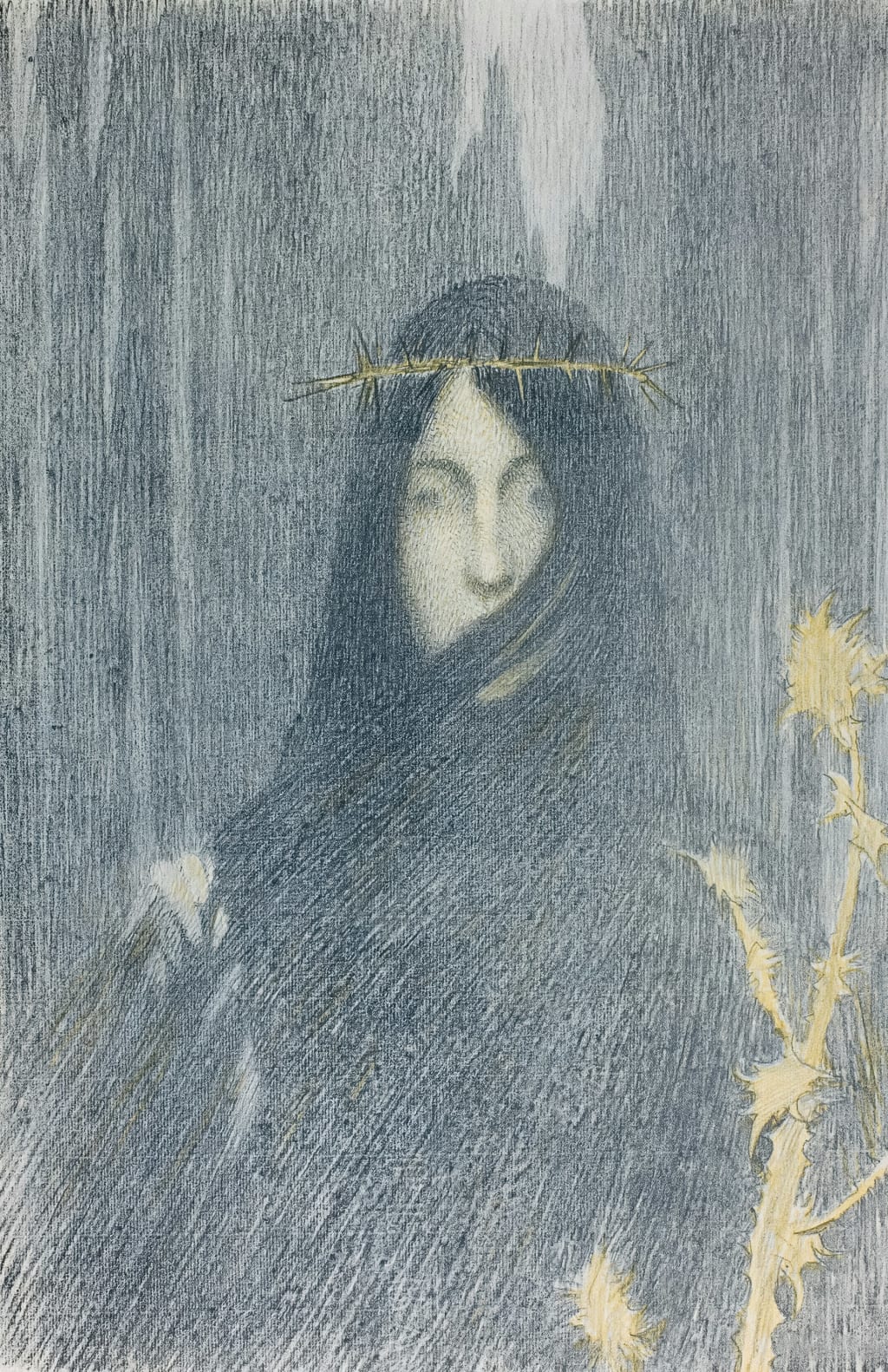
The phrase “veil of nothingness” carries a strange and paradoxical power. It evokes both emptiness and concealment, both the absence of substance and the presence of a barrier. It suggests that something essential is hidden not behind a wall or a curtain, but behind a kind of metaphysical emptiness—a void that obscures the deeper nature of reality. Throughout history, mystics, philosophers, theologians, and psychologists have wrestled with this idea in different forms. Whether described as maya in Hindu philosophy, sunyata in Buddhism, the cloud of unknowing in Christian mysticism, or das Nichts in existential philosophy, the veil of nothingness has served as a metaphor for the limits of human perception and the mysterious ground from which meaning arises.
To understand the veil of nothingness, one must first understand the human impulse to seek meaning. Human beings are meaning‑making creatures. We interpret, categorize, narrate, and explain. We build stories around our experiences and project patterns onto the world. Yet beneath this activity lies a deeper truth: the world does not present itself to us directly. Our senses, our cognition, our language, and our cultural frameworks all mediate our experience of reality. We do not see things as they are; we see them as they appear to us. This gap between appearance and essence is the space where the veil of nothingness resides.
Historically, the metaphor of a veil has been used to describe the boundary between the visible and the invisible, the known and the unknown, the finite and the infinite. In the ancient Greek mystery traditions, initiates were said to pass through veils of illusion to encounter the hidden truths of the cosmos. Plato’s allegory of the cave describes prisoners who mistake shadows for reality, unable to see the world beyond the cave’s walls. When one prisoner escapes and sees the sun, he realizes that the shadows were mere illusions. The cave itself becomes a kind of veil, obscuring the true nature of reality. Plato’s insight is foundational: human beings often mistake appearances for truth, and the journey toward wisdom requires piercing the veil that separates perception from reality.
In the Hebrew scriptures, the veil appears as a literal and symbolic barrier. The veil of the Temple separated the Holy of Holies—the dwelling place of the Divine—from the rest of the world. Only the high priest could pass through it, and only once a year. The veil represented the boundary between the human and the divine, the known and the unknowable. When the Gospel of Matthew describes the veil tearing at the moment of Jesus’s death, it symbolizes the removal of the barrier between humanity and God. The tearing of the veil is an unveiling of reality, a revelation of divine presence.
In Eastern traditions, the veil takes on a different form. In Hindu philosophy, maya is the cosmic illusion that makes the world appear separate, solid, and independent. It is not that the world is unreal, but that our perception of it is incomplete. The Upanishads teach that beneath the veil of maya lies Brahman, the ultimate reality, the ground of all being. The Chandogya Upanishad declares, “Tat tvam asi”—“You are That.” This statement reveals that the veil of illusion hides not only the nature of the world but the nature of the self. The veil of nothingness, in this context, is the illusion of separateness.
Buddhism offers another perspective. The concept of sunyata, often translated as “emptiness,” does not mean nothingness in the nihilistic sense. Rather, it means that all phenomena are empty of inherent, independent existence. Everything arises in dependence on everything else. The veil of nothingness, from a Buddhist perspective, is the mistaken belief that things possess fixed, permanent identities. The Heart Sutra famously declares, “Form is emptiness, emptiness is form.” This paradox reveals that the veil is not something to be removed but something to be understood. Emptiness is not a void but the dynamic interdependence of all things.
In Christian mysticism, the veil appears as a cloud. The anonymous author of The Cloud of Unknowing describes the soul’s journey toward God as a movement through a cloud of forgetting and a cloud of unknowing. The cloud of forgetting requires the seeker to release attachment to worldly concerns. The cloud of unknowing requires the seeker to surrender the desire for intellectual certainty. God cannot be grasped by the mind, only encountered through love. The veil of nothingness, in this tradition, is the recognition that the intellect cannot penetrate the mystery of the Divine. As the mystic Meister Eckhart wrote, “God is a word unspoken.” The veil is the boundary between conceptual knowledge and direct experience.
In Islamic mysticism, the Sufi tradition speaks of hijab, the veils that separate the seeker from God. These veils are not external barriers but internal ones—ego, desire, fear, and attachment. The poet Rumi writes, “Your task is not to seek for love, but merely to seek and find all the barriers within yourself that you have built against it.” The veil of nothingness, in this context, is the illusion of the separate self. When the ego dissolves, the veil lifts, and the seeker experiences unity with the Divine.
In medieval Jewish mysticism, the Kabbalistic tradition describes the process of creation as a withdrawal of divine light, known as tzimtzum. God contracts to create space for the world to exist. This contraction creates a kind of metaphysical void—a nothingness that allows for the emergence of form. The veil of nothingness, in this tradition, is the space between the infinite and the finite, the hidden dimension that makes creation possible.
In modern philosophy, the veil of nothingness takes on existential and phenomenological dimensions. Søren Kierkegaard, the father of existentialism, described the experience of confronting the infinite as a kind of dizziness. He wrote, “Anxiety is the dizziness of freedom.” This anxiety arises when the individual confronts the nothingness beneath the structures of meaning. Jean‑Paul Sartre expanded on this idea, arguing that human beings are “condemned to be free.” We create meaning in a world that does not provide it. The veil of nothingness, in existential philosophy, is the recognition that meaning is not given but made.
Martin Heidegger, one of the most influential philosophers of the twentieth century, explored the concept of das Nichts—the Nothing. In his essay “What Is Metaphysics?” he wrote, “The Nothing itself nothings.” This strange phrase captures the idea that nothingness is not mere absence but an active force that reveals the nature of Being. Heidegger argued that human beings encounter the Nothing in moments of profound anxiety, when the familiar world loses its meaning. In these moments, the veil of nothingness reveals the groundlessness of existence. Yet this revelation is not despair but possibility. When the structures of meaning dissolve, the individual becomes open to new ways of being.
In psychology, the veil of nothingness appears in the work of Carl Jung. Jung described the unconscious as a vast, mysterious realm that contains both personal and collective elements. The shadow, the anima and animus, the archetypes—all exist beneath the surface of consciousness. The veil of nothingness, in Jungian terms, is the boundary between the conscious ego and the unconscious depths. When the ego encounters the unconscious, it often experiences fear, confusion, or disorientation. But Jung insisted that this encounter is essential for individuation—the process of becoming whole. The veil of nothingness is not a barrier to be feared but a threshold to be crossed.
Across these traditions, the veil of nothingness serves a similar function: it marks the boundary between the known and the unknown, the visible and the invisible, the finite and the infinite. It is the space where meaning dissolves and reconstitutes itself. It is the threshold of transformation.
To understand the importance of the veil of nothingness, one must understand the nature of reality itself. Reality is not a fixed, static entity. It is dynamic, relational, and participatory. Quantum physics has revealed that the observer plays a role in shaping the observed. The act of measurement collapses the wave function, bringing a particular reality into being. This does not mean that reality is subjective, but that the relationship between observer and observed is more complex than previously imagined. The veil of nothingness, in this context, is the boundary between potentiality and actuality. It is the space where possibilities exist before they become manifest.
Meaning arises in a similar way. Meaning is not inherent in objects or events; it emerges through interpretation. The philosopher Viktor Frankl, a Holocaust survivor and the founder of logotherapy, argued that the search for meaning is the primary motivation of human life. In his book Man’s Search for Meaning, he wrote, “Those who have a ‘why’ to live can bear almost any ‘how.’” Meaning is the lens through which we interpret our experiences. The veil of nothingness appears when meaning dissolves—when the frameworks that once made sense of the world no longer hold. This dissolution can be terrifying, but it can also be liberating. It creates space for new meaning to emerge.
The veil of nothingness is important because it reveals the limits of human knowledge. It reminds us that reality is larger than our concepts, that truth is deeper than our beliefs, that meaning is more fluid than our narratives. It humbles the ego and opens the heart. It invites us to approach the world with curiosity, reverence, and wonder.
The veil of nothingness also plays a crucial role in spiritual development. Every spiritual tradition recognizes that the path to awakening involves a kind of unknowing. The mystic John of the Cross described the “dark night of the soul” as a period of profound spiritual emptiness that precedes union with God. The dark night is not a punishment but a purification. It strips away illusions, attachments, and false certainties. It reveals the nothingness beneath the ego’s constructions. But this nothingness is not empty; it is full of potential. It is the space where the soul encounters the Divine.
In Buddhism, the experience of emptiness is not a void but a liberation. When the practitioner realizes that all phenomena are empty of inherent existence, they become free from attachment and aversion. The veil of nothingness lifts, revealing the interdependence of all things. This realization leads to compassion, wisdom, and inner peace.
In Hinduism, the dissolution of the ego reveals the unity of Atman and Brahman—the individual self and the universal Self. The veil of nothingness is the illusion of separateness. When the veil lifts, the seeker realizes that they are not a separate entity but a manifestation of the Divine.
In Sufism, the dissolution of the self leads to fana—the annihilation of the ego—and baqa—the subsistence in God. The veil of nothingness is the ego’s illusion of autonomy. When the ego dissolves, the seeker experiences unity with the Divine.
In Kabbalah, the seeker moves through successive veils of illusion to encounter the hidden light of the Divine. The veil of nothingness is the space created by God’s withdrawal, the space that allows creation to exist. This space is both a concealment and a revelation.
In existential philosophy, the encounter with nothingness reveals the freedom and responsibility of the individual. The veil of nothingness is the recognition that meaning is not given but created. This recognition can lead to despair, but it can also lead to authenticity.
In psychology, the encounter with the unconscious reveals the hidden dimensions of the self. The veil of nothingness is the boundary between the conscious and the unconscious. When the veil lifts, the individual becomes more whole.
Across these traditions, the veil of nothingness is not an obstacle but a gateway. It is the threshold between illusion and truth, between fragmentation and wholeness, between ignorance and wisdom. It is the space where transformation occurs.
The importance of reality and meaning becomes clear when we understand the function of the veil. Reality is not something we possess; it is something we participate in. Meaning is not something we discover; it is something we create. The veil of nothingness reminds us that our understanding is always partial, always evolving. It invites us to approach reality with humility and meaning with openness.
The veil of nothingness also protects us. If we were to encounter the full truth of reality all at once, it would overwhelm us. The veil allows us to grow gradually, to expand our understanding at a pace we can handle. It is a mercy, not a punishment. It is a teacher, not an enemy.
In the end, the veil of nothingness is a paradox. It conceals and reveals. It obscures and illuminates. It is empty and full. It is the boundary between the known and the unknown, the visible and the invisible, the finite and the infinite. It is the space where meaning dissolves and reconstitutes itself. It is the threshold of transformation.
To live with the veil of nothingness is to live with mystery. It is to recognize that reality is larger than our concepts, that truth is deeper than our beliefs, that meaning is more fluid than our narratives. It is to embrace the unknown with courage, humility, and wonder. It is to trust that beneath the veil lies not emptiness but fullness, not chaos but order, not despair but possibility.
The veil of nothingness is not something to be feared. It is something to be honored. It is the space where the soul encounters the mystery of existence. It is the doorway to wisdom, compassion, and awakening. It is the reminder that we are part of something vast, ancient, and exquisitely alive.
About the Creator
Julie O'Hara - Author, Poet and Spiritual Warrior
Thank you for reading my work. Feel free to contact me with your thoughts or if you want to chat. [email protected]
Keep reading
More stories from Julie O'Hara - Author, Poet and Spiritual Warrior and writers in Humans and other communities.
The Shadow That Follows the Seeker
The phrase “the shadow of doubt” is so deeply woven into our language that we rarely pause to consider what it actually means. It appears in literature, philosophy, psychology, and sacred texts across cultures, always pointing toward a particular kind of inner experience—an obscuring, a dimming, a sense that something once clear has become partially hidden. Doubt is not described as a wall, a storm, or a wound, though it can feel like all of these. It is described as a shadow. That metaphor is not accidental. It reveals something profound about the nature of doubt itself, the structure of the human psyche, and the way spiritual growth unfolds. To understand why doubt takes the form of a shadow, we must explore the interplay between light and obscurity, certainty and uncertainty, ego and humility, and the ancient human struggle to discern truth from illusion.
By Julie O'Hara - Author, Poet and Spiritual Warriorabout 12 hours ago in Humans
Time to change your life.
Is it even possible for you to change your life? A lot of people, more than there should be, are unhappy with their lives. But what are they doing about it? Usually nothing. People talk about how shitty their lives are and want change, but are they not taking the actions to change?
By Jen Phillipsabout 7 hours ago in Humans
One Unchecked Box
"Republished" because it was the only way to add the embed for the newly recorded audio version of this story due to the Top Story badge. Plus it serves as a nice, informal announcement of the podcast's revival for another season (go subscribe!):
By Stephen A. Roddewig4 days ago in Fiction


Comments
There are no comments for this story
Be the first to respond and start the conversation.