science
The Science Behind Relationships; Humans Media explores the basis of our attraction, contempt, why we do what we do and to whom we do it.
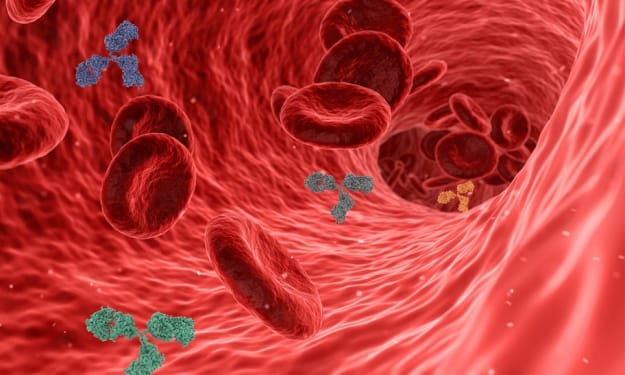
Researchers Identify New Blood Group After 50 Year Mystery
When a pregnant woman had her blood sampled back in 1972, doctors discovered it was mysteriously missing a surface molecule found on all other known red blood cells at the time. After 50 years, this strange molecular absence finally led to researchers from the UK and Israel describing a new blood group system in humans. The team published their paper about the discovery in 2024. "It represents a huge achievement, and the culmination of a long team effort, to finally establish this new blood group system and be able to offer the best care to rare, but important, patients," UK National Health Service hematologist Louise Tilley said last September, after nearly 20 years of personally researching this bloody quirk.
By Sajib Mridha10 months ago in Humans
article World must act with urgency to save Palestinians in Gaza
To save Palestinians in Gaza, the world must act immediately. Gaza is swollen. Everybody is watching. Not only is the situation in the Gaza Strip a humanitarian emergency, but it is also a full-blown catastrophe brought on by unrelenting violence, political stagnation, and neglect from the international community. As civilian casualties mount and critical infrastructure collapses under the weight of relentless bombardment and blockade, it has become clear that platitudes and passive diplomacy are no longer acceptable. The time for urgent, coordinated global action is now.
By Samudra Nandan10 months ago in Humans
Title: The Power of Observation: How Your Consciousness Shapes Reality . AI-Generated.
Have you ever noticed how just watching something changes the way you experience it? Like when you’re being watched — suddenly you become aware of your every move. Or when you observe your own thoughts — and they start to shift, almost like they know you're paying attention.
By Sohel Zain10 months ago in Humans
The Lost Art of Boredom:
In a world addicted to productivity and stimulation, boredom has become almost taboo. We’ve developed an allergic reaction to empty moments. Stuck in line at the coffee shop? Check Instagram. Commercial break? Scroll through TikTok. Waiting for a friend to arrive? Fire off a couple of emails. There’s an unspoken rule in modern life: never be idle.
By SHADOW-WRITES10 months ago in Humans
5 Takeaways From New Research About A.D.H.D.
The term "attention deficit hyperactivity disorder" (A.D.H.D.) has long been misunderstood and frequently oversimplified to mean only that it affects children who are hyperactive and unable to focus. However, recent research is shedding new light on the complexity of A.D.H.D., revealing that it’s a far more nuanced neurodevelopmental disorder that can affect people of all ages in varied and sometimes subtle ways.
By Nahian ebne10 months ago in Humans
Why do people have sex?
Sex has become a more discussed topic around the world recently than at any other time. Sex is also called a basic human need. If a person's sex or sex is interrupted, it affects the person's creativity, fluency and even health. Sexual intercourse brings a feeling of happiness in married life The relationship is so sweet that the husband and wife can not leave each other In a word, healthy normal physical relations are the key to the happiness of married life People usually engage in sex for three reasons: to have children, to satisfy sexual appetite, and to maintain good relationships. But there are many other reasons behind sex. For example, overcoming depression, exercise, curiosity, or attraction and love for a partner, increasing social status, selfishness, etc. Another special reason is ancestral sexual culture. Which we have been carrying in our brains since ancient times. Physical needs are the biggest reason. Because secondary sexual characteristics develop in the body during adolescence. At this time, teenagers want to know many things. At this time, they are not only encouraged by the changes in their bodies, but also curious about the changes that are happening in the opposite sex. Which makes them interested in their future sex life and it continues to grow day by day.
By Md. Rasel Ahmed10 months ago in Humans
The Future of Medicine
The future of medicine is on the cusp of a revolution, driven by rapid advancements in technology and a deeper understanding of the human body. Innovations in genetics, artificial intelligence, nanotechnology, and personalized healthcare are poised to redefine how we diagnose, treat, and prevent diseases. Here’s a look at some of the most promising developments that will shape the future of medicine.
By Gustavo Woltmann10 months ago in Humans
Embracing Human Illnesses and Breaking Free from Perfectionism Part 2
Embracing Human Illnesses and Breaking Free from Perfectionism Introduction Many of us are instructed to strive for perfection from an early age. We’re praised for getting the highest grades, winning awards, or looking flawless. In a world that celebrates idealism and perfection, anything less can feel like failure. However, the cost of striving for perfection is frequently anxiety, self-doubt, exhaustion, and a separation from our true selves. Reclaiming your humanity is at the heart of this article, not just about the dangers of perfectionism. It’s about freeing yourself from the heavy burden of always needing to be perfect and stepping into the beautiful, messy, and real experience of being human. What perfectionism actually is, how it affects your life, and, most importantly, how to break free and accept your imperfection are all covered in this article. We'll walk through a comprehensive journey—from defining perfectionism and exploring its roots, to applying practical strategies and learning how to heal.
By Afia Sikder10 months ago in Humans
Breaking Free from Perfectionism: Embracing the Imperfections of Being Human
Breaking Free from Perfectionism: Embracing the Imperfections of Being Human Introduction From the earliest days of childhood, many of us are taught to strive for perfection. We get high marks, awards, and praise for our flawless appearance. In a world that celebrates idealism and perfection, anything less can feel like failure. But this pursuit of flawlessness often comes at a cost: anxiety, self-doubt, exhaustion, and a disconnect from our authentic selves.
By Afia Sikder10 months ago in Humans