humanity
For better or for worse, relationships reveal the core of the human condition.
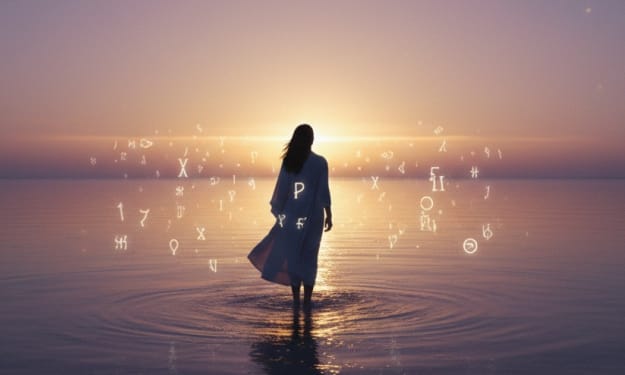
A Piece With No Beginning
Somewhere beyond the edges of memory, before the world had even begun its first exhale, there was a story. But like the night before the dawn, it had no beginning. It existed only in fragments — unspoken, unnamed, unnoticed. Yet, it shaped everything. Every thought. Every action. Every life.
By Jhon smith15 days ago in Humans
7 Ways to Stop Those Annoying Robocalls
If you are like most people, you want those robocalls to stop. Instead of decreasing, they have increased. The Federal Communications Commission (FCC) estimates that about 163 million robocalls are made every day. YouMail is a company that tracks robocalls and blocks them. The company estimated there were 4.9 billion unwanted U.S. calls last month. Last year, there was an average of 48 billion robocalls. This year, there will be even more.
By Margaret Minnicks15 days ago in Humans
The Clean Up
The holidays are done and reality has returned, along with those pounds you lost during the entire year and now have to lose all over again. Don’t cringe. We all do it. It’s the holidays, when all the things you have gone without all year, come seeping out of every corner of everyone’s kitchens.
By Alexandra Grant15 days ago in Humans
Why Some Wounds Never Fully Heal
My mother died on a Tuesday in March, three weeks after her diagnosis. Cancer moved through her body with terrifying speed, leaving no time for goodbyes, no space for preparation, no chance to say all the things I'd always assumed I'd have time to say. She was here, and then she wasn't. Everyone told me the same thing: "Time heals all wounds." They meant well. But they were wrong. Fifteen years later, I still reach for the phone to call her when something good happens. Fifteen years later, I still feel the absence like a phantom limb—a presence that's missing but somehow still aches. Fifteen years later, I'm still waiting for the day when thinking about her doesn't hurt. I've finally accepted that day isn't coming. And somehow, that acceptance has brought more peace than all the years of waiting for the pain to end. The Myth of Complete Healing We're sold a particular narrative about grief, about trauma, about loss: if you do the work, if you process it correctly, if you're strong enough, you'll heal completely. The wound will close. The pain will end. You'll be whole again. But some wounds are too deep for that kind of closure. Some losses are too profound to ever fully recover from. And pretending otherwise doesn't help—it just makes us feel like failures when we're still hurting years later. I spent the first five years after my mother's death trying to heal "correctly." I went to therapy. I joined support groups. I read books about grief. I talked about my feelings. I did everything I was supposed to do. And yet, the wound remained open. I'd have months where I felt okay, where I'd think, "Finally, I'm healing." Then something small—a song, a scent, Mother's Day—would rip everything open again, and I'd be back at square one, sobbing in parking lots and grocery stores, feeling like I'd failed at grief. "Why can't I get past this?" I asked my therapist during one particularly difficult session. "It's been five years. Shouldn't I be better by now?" She leaned forward, her eyes kind. "What if this isn't about getting past it? What if it's about learning to carry it?" The Wounds That Change Us Some experiences fundamentally alter who we are. They create a before and after in our lives so profound that we can never return to the person we were. Before my mother died, I believed the world was basically safe. I believed people I loved would be around for a long time. I believed I had control over my life in ways that made me feel secure. After she died, all those beliefs shattered. I learned that safety is an illusion. That people you need can vanish without warning. That control is a story we tell ourselves to feel less terrified of existence. These weren't lessons I could unlearn. This wasn't damage I could repair. My mother's death didn't just hurt me—it changed me at a cellular level. The wound wasn't something on me; it became part of me. I spent years trying to get back to who I was before. I'd look at old photos and barely recognize the carefree woman smiling back at me. Where had she gone? Could I ever find her again? The answer, I eventually realized, was no. And that wasn't a failure. It was just the truth.
By Ameer Moavia15 days ago in Humans
The Weight of Being "Too Much": How I Learned My Sensitivity Was Never the Problem
I was seven years old the first time someone told me I was too sensitive. I'd come home from school crying because my best friend said she didn't want to play with me anymore. My father looked up from his newspaper, irritation flickering across his face. "You're being too sensitive," he said, turning the page. "Kids say things. You need to toughen up." So I tried. I swallowed my hurt. I forced a smile. I pretended it didn't matter. That moment became a blueprint for the next three decades of my life. By the time I was thirty-seven, married with two kids and a successful career, I'd perfected the art of not feeling too much. I'd learned to laugh off insults, minimize my pain, and apologize for my emotions before anyone else could criticize them. But the cost of all that toughening up? I'd become a stranger to myself. The Education of Emotional Suppression The messages came from everywhere, each one teaching me that my natural way of being was somehow wrong. When I cried during a sad movie: "It's just a movie. Why are you so emotional?" When a friend's thoughtless comment hurt my feelings: "You're overreacting. I was just joking." When I needed time to process conflict: "You're being too dramatic. Just get over it." When I was moved to tears by beauty—a sunset, a piece of music, an act of kindness: "You cry at everything. What's wrong with you?" Each time, the same lesson: Your feelings are excessive. Your responses are inappropriate. You are too much. I learned to preface every emotional expression with an apology. "I know I'm being ridiculous, but..." "I'm probably overreacting, but..." "Sorry, I'm just too sensitive..." I became an expert at minimizing my own experience, at gaslight myself before anyone else could do it for me. The Slow Erosion of Self What happens when you spend decades being told your emotions are wrong? You start to believe it. I stopped trusting my own reactions. When something hurt me, my first thought wasn't "that was hurtful," but "I'm being too sensitive." When I felt uncomfortable in a situation, I'd override my instincts and force myself to stay, convinced my discomfort was a character flaw rather than valuable information. I became everyone's emotional support system while denying myself the same care. Friends would call me for hours when they were upset, and I'd listen with endless patience and compassion. But when I was hurting? I'd minimize it, laugh it off, handle it alone. In my marriage, I'd absorb my husband's bad moods without comment, adjust my behavior to keep the peace, and swallow my hurt when he was dismissive or short with me. "You're too sensitive" became his go-to response whenever I expressed that something bothered me. Eventually, I stopped expressing it at all. I taught my children to share their feelings, while simultaneously teaching them through my example that their mother's feelings didn't matter. I'd hide in the bathroom to cry, ashamed that I couldn't be stronger.
By Ameer Moavia15 days ago in Humans
Dating Contra: A Modern Perspective on Conflicting Dating Beliefs
Dating today feels like standing at a crossroads, doesn’t it? On one side, there are traditional rules passed down for generations. On the other, there’s a growing wave of people who want freedom, flexibility, and emotional honesty. This is where dating contra enters the picture—a concept that challenges conventional dating norms and asks a simple but powerful question: Why should love follow fixed rules?
By Sophia Wilson15 days ago in Humans
Practical Magick: Applied metAlchemy
How wonderful it is that no one need wait one moment before starting to improve the world. -Anne Frank This simple, profound sentiment of personal responsibility and change underlies the second mantra of meta-alchemy. When energy is sufficient to facilitate it, grow and evolve as a person, as a professional, as a creator, and as a functional member of society. Take a class, go to therapy, work in your garden—evolution has myriad faces, determined only by the one you wish to see in the mirror. Just remember that you cannot take sustenance from stone; if you don't ensure sufficient energy to sustain your growth, it will fail to take root due to inhospitable conditions.
By Maia Gadwall the metAlchemist15 days ago in Humans
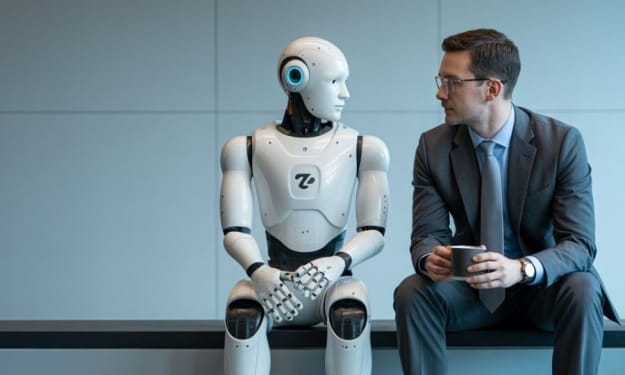
Will Technology Ever Replace Emotional Intelligence?
Technology has learned how to speak, write, predict, and respond. It can recognize faces, analyze emotions, and even simulate empathy through carefully designed language. As machines become more advanced, a quiet question begins to surface in many minds: Will technology ever replace emotional intelligence?
By Zeenat Chauhan15 days ago in Humans
The Fear of Becoming Irrelevant in a Rapidly Changing World
There is a quiet anxiety many people carry today, even if they rarely talk about it out loud. It shows up in small moments of doubt, in passing thoughts late at night, and in sudden comparisons we didn’t intend to make. It’s the fear that the world is moving forward too fast and that somehow, we are being left behind.
By Zeenat Chauhan15 days ago in Humans
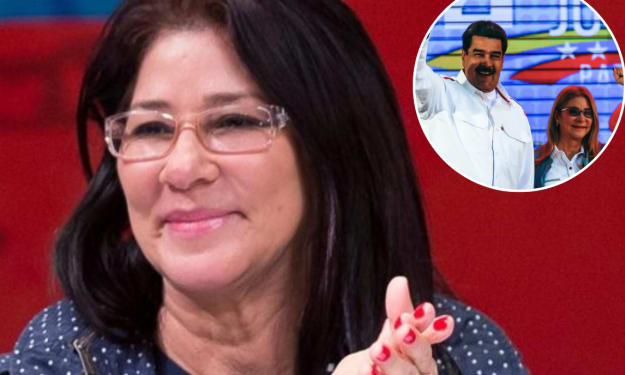
Who Is Maduro’s Wife? Power, Politics, Sanctions, and the U.S. Capture Claims Explained
When breaking news from Venezuela began rippling across the world, one unexpected phrase shot to the top of search trends: “Maduro’s wife.” Not “Venezuela president,” not “U.S. strike,” but a deeply personal question tied to power, secrecy, and uncertainty.
By Bevy Osuos15 days ago in Humans
To Know Others Is to Know Ourselves
Life's a crazy ride, right? It is like we are all just dancing around, trying to figure things out. And honestly, it is the people in our lives that really make it worth living. We are all connected, even if we can't always see it. Those short moments we share with others? That is when life feels real. We are always trying to understand each other, to feel connected. What even is a relationship, if not a plunge into the unknown with someone else, kind of like holding a mirror up to yourself?
By Baptiste Monnet15 days ago in Humans